

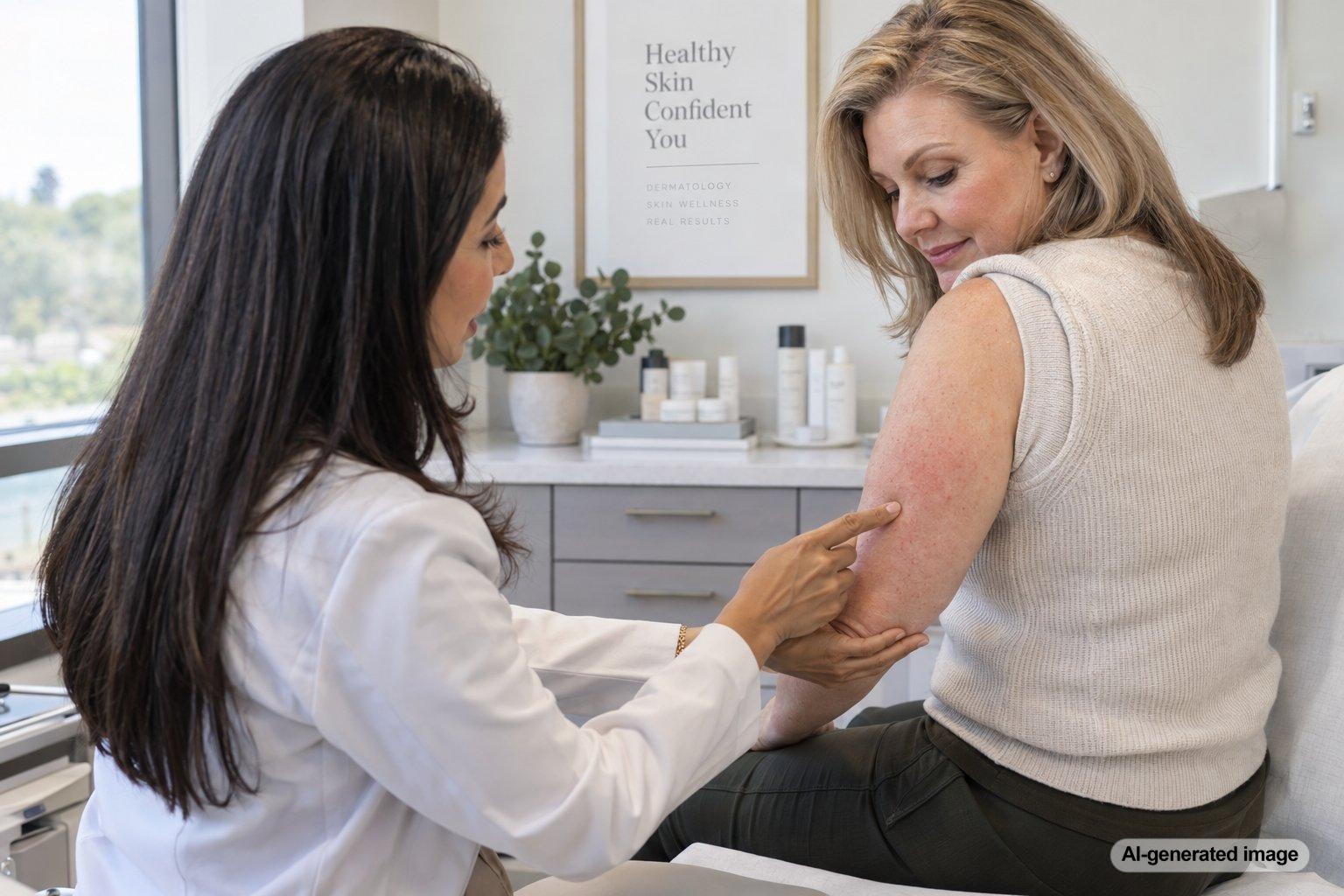
Red, rough skin on the backs of the upper arms is common and can have several possible explanations. One of the most familiar is keratosis pilaris, a harmless pattern of small, firm bumps that can make the skin feel like sandpaper or “chicken skin.” Dryness, friction, sensitive skin, and irritation from products can also contribute to a similar texture.
The appearance alone is not enough to determine the cause. A dermatologist can evaluate the skin if the bumps are persistent, uncomfortable, spreading, or difficult to distinguish from another type of rash.
Quick answer
- Small rough bumps on the backs of the arms are commonly associated with keratosis pilaris.
- Dry skin can make the texture and redness look more noticeable.
- Scrubbing aggressively often makes irritated skin feel worse rather than smoother.
- Gentle moisturizing and carefully selected exfoliating ingredients may help improve texture over time.
- If the area becomes painful, intensely itchy, crusted, rapidly changing, or otherwise concerning, a dermatologist can evaluate it.
What can make the backs of the upper arms feel rough?
A rough, dotted texture on the upper arms can develop when material builds up around hair follicles. With keratosis pilaris, keratin can collect near follicle openings and create many tiny bumps. The skin may look flesh-colored, pink, red, or slightly darker depending on skin tone and irritation.
Similar-looking roughness can also occur when the skin barrier is dry or irritated. That is why texture may seem more noticeable after hot showers, in dry environments, after friction from clothing, or when strong skincare products are used too frequently.
Common causes and triggers
- Keratosis pilaris: A common follicular texture that often appears on the upper arms, thighs, or cheeks.
- Dry skin: Low moisture levels can make existing bumps feel sharper and more visible.
- Friction: Tight sleeves, athletic clothing, or repeated rubbing may increase redness.
- Over-exfoliation: Frequent scrubs, rough cleansing tools, or multiple strong acids can irritate the skin barrier.
- Product sensitivity: Fragrance or other irritating ingredients may contribute to redness or discomfort in sensitive skin.
- Follicular irritation: Sweat, shaving, or other irritation around hair follicles can sometimes create bumps that resemble other conditions.
What can you do at home?
A simple, consistent routine is often easier on rough upper-arm skin than aggressive scrubbing. Consider using a gentle cleanser, keeping showers comfortably warm rather than very hot, and applying moisturizer while the skin is still slightly damp.
Some over-the-counter body moisturizers contain ingredients such as lactic acid, salicylic acid, or urea that may help soften rough texture. These ingredients can also irritate sensitive skin, so it can be helpful to introduce one product gradually rather than layering several exfoliating products at once.
Avoid picking or squeezing individual bumps. If the skin feels raw, stings, or becomes noticeably red after exfoliation, simplifying the routine and focusing on moisturizer may be more comfortable.
Professional options for persistent roughness
If the texture does not improve with a gentle home routine, a dermatologist can examine the area and help determine whether it looks consistent with keratosis pilaris, irritation, follicular inflammation, or another skin condition. Professional recommendations may include adjustments to topical skincare or other treatment categories based on the examination and your skin’s sensitivity.
For people mainly concerned with texture and appearance, an aesthetic skincare professional may also help with maintenance recommendations after the skin has been appropriately evaluated.
When should you see a dermatologist?
It is worth getting the area checked if the bumps are new, rapidly changing, painful, intensely itchy, draining, crusting, spreading, or accompanied by significant inflammation. An evaluation is also useful when you are unsure whether you are dealing with simple roughness or a different type of rash.
You may also want professional guidance if repeated attempts to exfoliate the area have made the skin more sensitive or if over-the-counter products consistently sting or cause worsening redness.
FAQ
Is rough skin on the backs of the arms always keratosis pilaris?
No. Keratosis pilaris is a common possibility, but dryness, irritation, follicular inflammation, and other skin conditions can look similar. A dermatologist can evaluate persistent or unusual changes.
Why do the bumps look redder sometimes?
Heat, friction, dryness, exercise, hot showers, or irritating products may temporarily make redness around the follicles more noticeable.
Should I scrub the bumps to remove them?
Usually, aggressive scrubbing is not a good approach because it can irritate the skin barrier and make redness more noticeable. Gentle skincare is generally better tolerated.
Can moisturizer help rough upper arms?
Moisturizer may help reduce dryness and make the skin feel smoother. Some formulas also contain gentle keratolytic ingredients designed to soften accumulated surface skin, but tolerance varies.
Can the texture come back after it improves?
Yes. Rough follicular texture can fluctuate with dryness, climate, friction, and skincare habits. Ongoing maintenance may be needed, and results vary from person to person.
Ready to get help?
Schedule an appointment or send a message and our team will get back to you.
Prefer to call? 954-666-3736
This article is for educational purposes and is not medical advice. For diagnosis and personalized treatment, please book an appointment with a board-certified dermatologist.
