

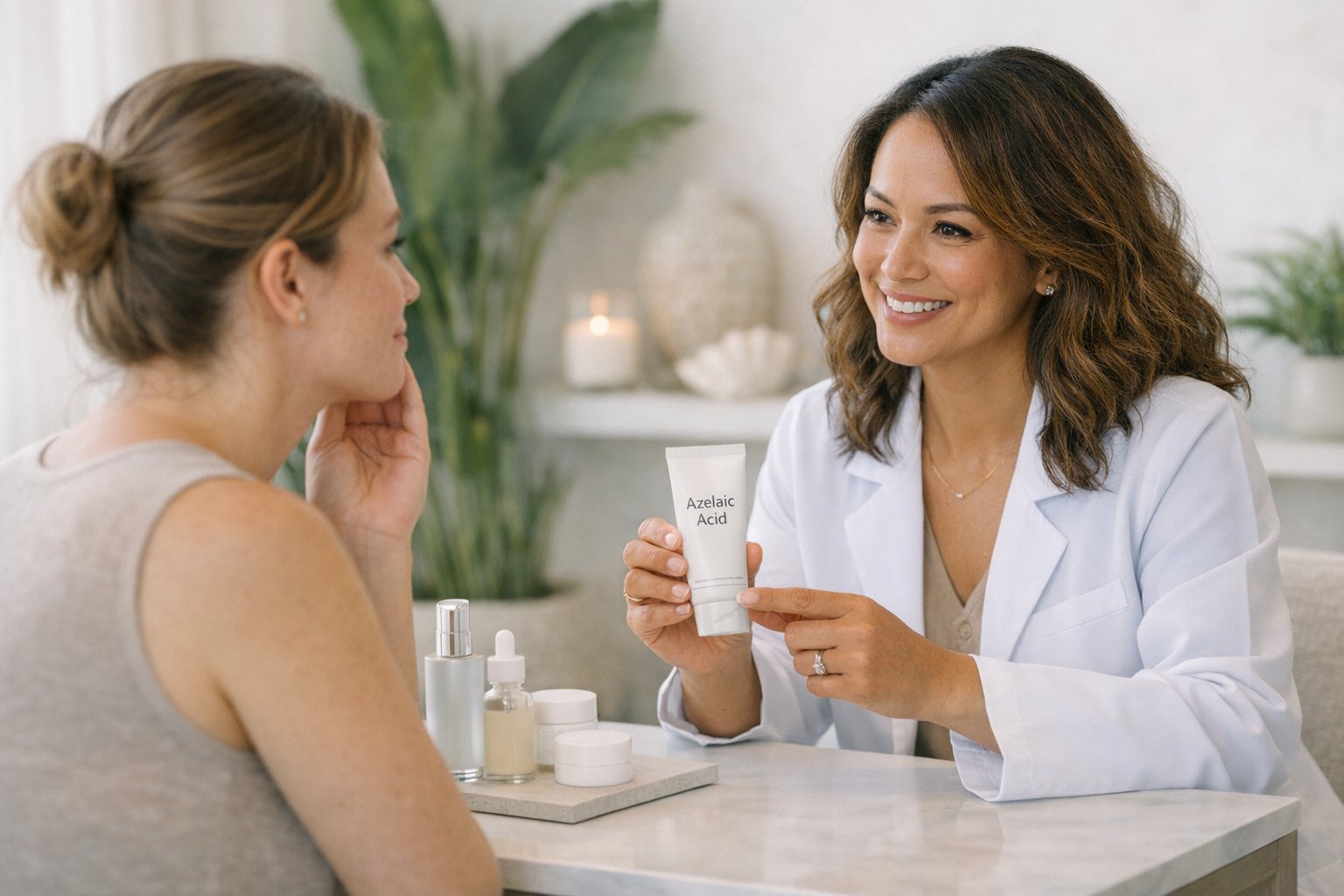
Discoloration can feel frustrating because it often lingers long after the original trigger has passed. Azelaic acid is popular because it fits into a thoughtful routine and may help the look of uneven tone without feeling harsh.
Quick answer
- Azelaic acid may help the appearance of dark spots and uneven tone by supporting smoother-looking, more even skin.
- It is often chosen for sensitive or reactive skin because many people find it easier to tolerate than stronger actives.
- Consistency and sun protection matter, since discoloration can return or deepen with UV exposure.
- If discoloration is new, changing, or stubborn, a dermatologist can evaluate the cause and guide options.
What it is (plain English)
Azelaic acid is a skincare ingredient used in topical products to support clearer-looking, more even-toned skin. In simple terms, it can help gently refine the look of surface buildup, calm the look of visible redness, and support a more uniform appearance in areas that look darker than the surrounding skin. Because it is often used in routines designed for sensitive skin, it has earned a reputation as a steady, minimalist option for people who want results without an overly aggressive feel.
Common causes and triggers of discoloration
- Post-inflammatory marks after breakouts or irritation (often called post-inflammatory hyperpigmentation)
- Sun exposure and daily UV exposure that deepens existing uneven tone
- Melasma, which can look like patchy discoloration that comes and goes
- Friction or repeated rubbing in certain areas
- Skin sensitivity that leads to frequent inflammation or visible redness
- Using multiple strong actives at once, which can disrupt the skin barrier and worsen uneven tone
What you can do at home
Start by keeping the routine calm and consistent. Azelaic acid is often used once daily or a few times per week at first, depending on how your skin responds. Apply it to clean, dry skin, then follow with a simple moisturizer. If you are layering other actives, consider spacing them out on different nights so your skin is not asked to do too much at once.
Sun protection is the quiet workhorse for discoloration. Even the best routine can feel like it stalls if UV exposure is not addressed. A broad-spectrum sunscreen used daily, plus shade and hats when you can, helps protect the progress you are working toward.
Keep expectations realistic and focus on trend-free basics: gentle cleansing, barrier-supporting moisturizing, and a consistent schedule. If your skin feels tight, stings, or looks persistently irritated, that is a sign to simplify and give your skin time to settle before adding more steps.
Professional options
If discoloration is persistent or complex, professional guidance can help you choose the most efficient path. Common in-office and prescription-level categories include:
- Customized topical plans, which may include prescription-strength options when appropriate
- Chemical peels selected for your skin tone and sensitivity level
- Laser and light-based treatments that target uneven tone and texture in a controlled setting
- Combination approaches that prioritize skin barrier support while addressing pigment
At Waverly DermSpa, your clinician can help evaluate what type of discoloration you are seeing and discuss options that match your skin, lifestyle, and tolerance level. The goal is a plan that is science-forward, measured, and easy to maintain.
When to see a dermatologist
- A spot is new, changing, growing, or looks very different from others
- Discoloration appears suddenly, spreads quickly, or comes with pain, bleeding, or significant itch
- You are not sure whether the color change is pigment, irritation, or something else
- At-home care is not helping and the discoloration is affecting your confidence
- You want a diagnosis and a tailored plan, especially for stubborn or recurrent patches
FAQ
Is azelaic acid only for dark spots?
No. It is often used for multiple concerns, including the look of uneven tone and visible redness. Many people like it because it can fit into a streamlined routine.
Can I use azelaic acid with vitamin C or retinoids?
Some routines combine them, but sensitivity varies. If your skin is reactive, consider alternating nights or keeping one active in the morning and one at night, and simplify if irritation shows up.
What should I do if it tingles?
A mild, short-lived sensation can happen, especially at the start. If discomfort is strong or ongoing, reduce frequency, focus on moisturizing, and consider checking in with a dermatologist for guidance.
Does it work for melasma?
Melasma can be complex and often benefits from a personalized plan. Azelaic acid may be part of that plan, along with strict sun protection and professional guidance.
Do I still need sunscreen if I use azelaic acid?
Yes. Daily sun protection is one of the most important steps for preventing discoloration from deepening and for supporting a more even-looking tone.
Ready to get help?
Schedule an appointment or send a message and our team will get back to you.
Prefer to call? 954-666-3736
Disclaimer
This article is for educational purposes and is not medical advice. For diagnosis and personalized treatment, please book an appointment with a board-certified dermatologist.
