

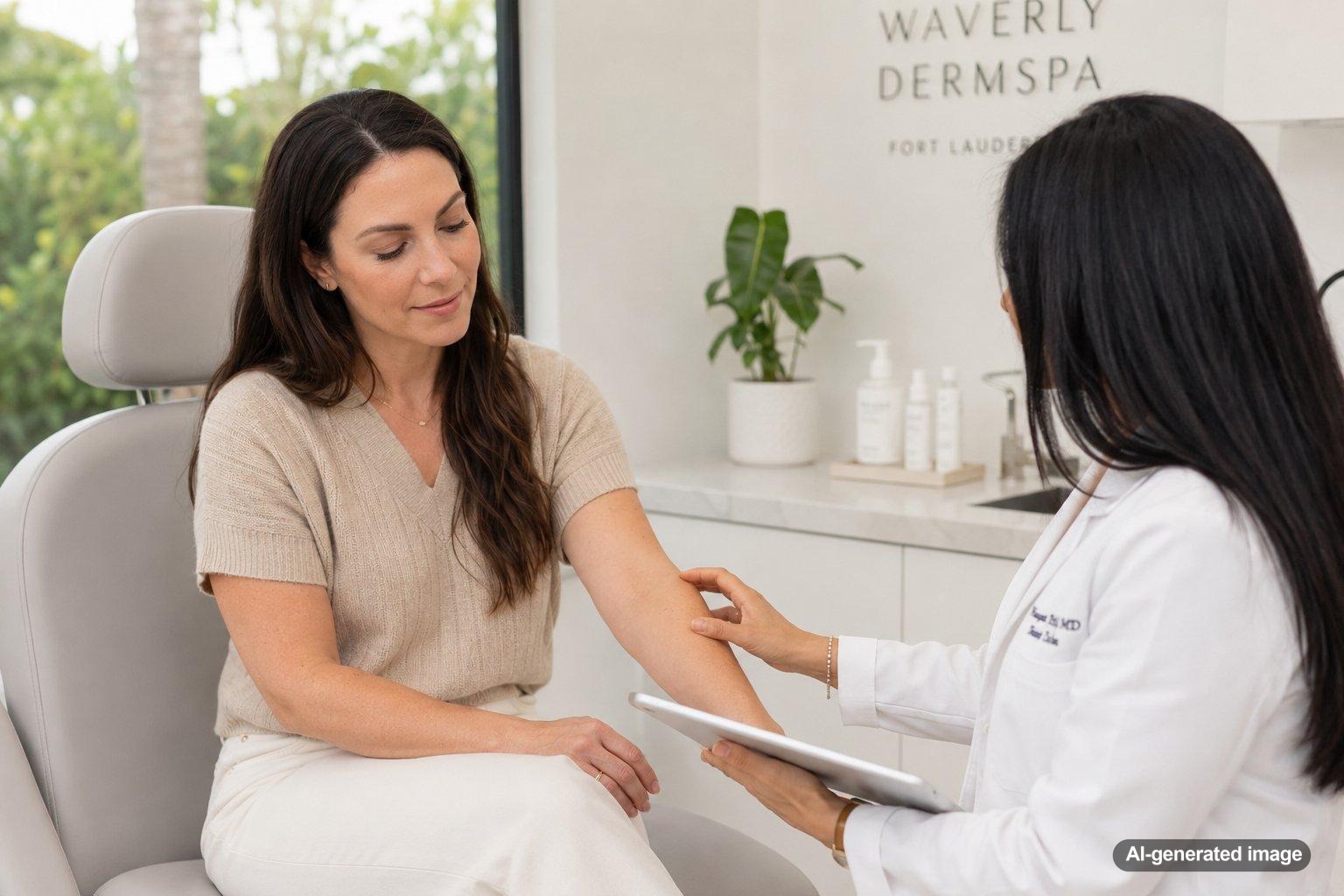
Atopic dermatitis can feel unpredictable. Skin may look calm one week, then become dry, itchy, red, or irritated after a change in weather, stress, travel, a new product, or even a long hot shower. The goal is not to chase every possible trigger. A calmer approach is to understand the patterns that commonly affect eczema-prone skin and build a routine that supports the skin barrier every day.
For patients in Fort Lauderdale, this can be especially relevant during seasonal humidity shifts, frequent sun exposure, travel, and visits from cooler climates. A dermatologist can help separate atopic dermatitis from other rashes and guide treatment when a simple routine is not enough.
Quick answer
- Atopic dermatitis is a chronic inflammatory skin condition often associated with dryness, itching, and a sensitive skin barrier.
- Common triggers may include fragrance, harsh cleansers, sweat, heat, stress, dry air, certain fabrics, and irritating skincare products.
- A gentle routine usually focuses on short lukewarm bathing, fragrance-free cleanser, regular moisturizer, and avoiding known irritants.
- Prescription options may be considered when itching, inflammation, sleep disruption, or repeated flares continue despite careful skincare.
- New, painful, crusted, oozing, spreading, or unclear rashes should be evaluated by a dermatologist.
What atopic dermatitis is
Atopic dermatitis is often called eczema, although eczema can refer to several related rash conditions. In atopic dermatitis, the skin barrier tends to be more reactive and less able to hold moisture comfortably. This can allow dryness, itching, redness, scaling, and irritation to develop more easily. It is not contagious, and it can affect children or adults.
Because many rashes can look similar, an in-person evaluation can be helpful when symptoms are new, persistent, changing, or not responding to a gentle routine. Your clinician can also consider whether contact dermatitis, psoriasis, infection, medication reactions, or another skin condition may be involved.
Common causes or triggers
Atopic dermatitis usually reflects a mix of skin barrier sensitivity, immune activity, genetics, and environmental exposures. Triggers vary from person to person, but common patterns include:
- Fragrance and irritating ingredients: Perfumed lotions, essential oils, scented detergents, and some active skincare ingredients may aggravate sensitive skin.
- Harsh cleansing: Long showers, hot water, scrubbing, and strong soaps can leave the skin feeling tighter and drier.
- Heat and sweat: Exercise, humidity, tight clothing, and overheating may contribute to itching or discomfort.
- Dry air or climate changes: Travel, air-conditioning, heated indoor air, and seasonal shifts may make the skin feel less resilient.
- Stress and poor sleep: Stress does not mean symptoms are imagined. It may be one of several factors that makes itching feel more intense.
- Fabrics and friction: Wool, rough seams, tight waistbands, and scratchy labels may bother eczema-prone skin.
- Allergens or irritants: Some people notice patterns with dust, pet dander, pollen, metals, cleaning products, or occupational exposures.
What you can do at home
A simple routine is often easier to follow and gentler on reactive skin. Consider starting with fewer products, then adding items only when there is a clear reason.
- Use lukewarm water rather than hot water for bathing or showering.
- Keep baths and showers brief, especially during a flare.
- Choose a mild, fragrance-free cleanser and avoid scrubbing the skin.
- Apply a bland, fragrance-free moisturizer soon after bathing while skin is still slightly damp.
- Use soft, breathable fabrics and rinse new clothing before wearing.
- Consider fragrance-free laundry detergent and avoid heavily scented fabric softeners.
- Keep nails short if scratching is a concern, especially at night.
- Track patterns instead of assuming one single cause. Notes about products, weather, travel, stress, sweating, and foods can help your dermatologist see the bigger picture.
Be careful with aggressive exfoliation, strong acids, retinoids, fragranced oils, and multi-step routines when the skin is irritated. These may be useful for some people at the right time, but they can be too much during an active eczema flare.
Professional options
When atopic dermatitis is persistent, widespread, very itchy, affecting sleep, or recurring despite a careful routine, a dermatologist can help build a plan. Common options may include prescription topical anti-inflammatory medications, non-steroid topical therapies, itch management strategies, evaluation for contact triggers, and, in more significant cases, discussion of advanced prescription treatments.
The right plan depends on the location, severity, age, medical history, pregnancy or nursing status when relevant, infection risk, and what has or has not helped in the past. A dermatologist can also help you understand how to use prescription products safely and when to taper, pause, or adjust a routine.
When to see a dermatologist
It is worth scheduling an evaluation if a rash is new, spreading, painful, disrupting sleep, repeatedly returning, or not improving with gentle skincare. Seek timely care if skin becomes warm, swollen, crusted, oozing, very tender, or associated with fever, because those changes may need medical attention. You should also be evaluated if the rash is near the eyes, involves open cracks, affects daily activities, or if you are unsure whether it is truly eczema.
For patients who travel often or split time between climates, bringing photos of flares and a list of current skincare products can make the visit more useful. Clear product names, medication history, and timing of symptoms can help your clinician identify patterns.
FAQ
Is atopic dermatitis the same as eczema?
Atopic dermatitis is the most common type of eczema. The word eczema can also describe several other inflammatory skin conditions, so a dermatologist may use your history and exam to clarify the diagnosis.
Can skincare products trigger atopic dermatitis?
They can. Fragrance, harsh cleansers, exfoliating acids, certain preservatives, and layered active ingredients may irritate sensitive skin. If symptoms repeatedly follow a product, stop using it and bring the product name to your dermatology visit.
Should I moisturize during a flare?
Moisturizer is often an important part of eczema-prone skin care, but choose a bland, fragrance-free option. If moisturizer stings or the skin is cracked, oozing, or very painful, a dermatologist can help determine whether additional treatment is needed.
Can food be a trigger?
Food can be part of the picture for some patients, but it is not the only explanation for most eczema patterns. Avoid making restrictive diet changes without guidance from a qualified clinician, especially for children or anyone with complex health needs.
When is prescription treatment considered?
Prescription treatment may be considered when itching, redness, scaling, sleep disruption, or repeated flares continue despite a gentle routine. A dermatologist can evaluate the rash and recommend an option based on your skin and medical history.
Ready to get help?
Schedule an appointment or send a message and our team will get back to you.
Prefer to call? 954-666-3736
This article is for educational purposes and is not medical advice. For diagnosis and personalized treatment, please book an appointment with a board-certified dermatologist.
Sources & further reading
- American Academy of Dermatology (AAD) – Eczema types: Atopic dermatitis skin care
- National Institute of Arthritis and Musculoskeletal and Skin Diseases (NIAMS) – Atopic Dermatitis-Eczema Symptoms & Causes
- National Eczema Association – Atopic Dermatitis (Eczema): Symptoms, Causes & Treatment
