

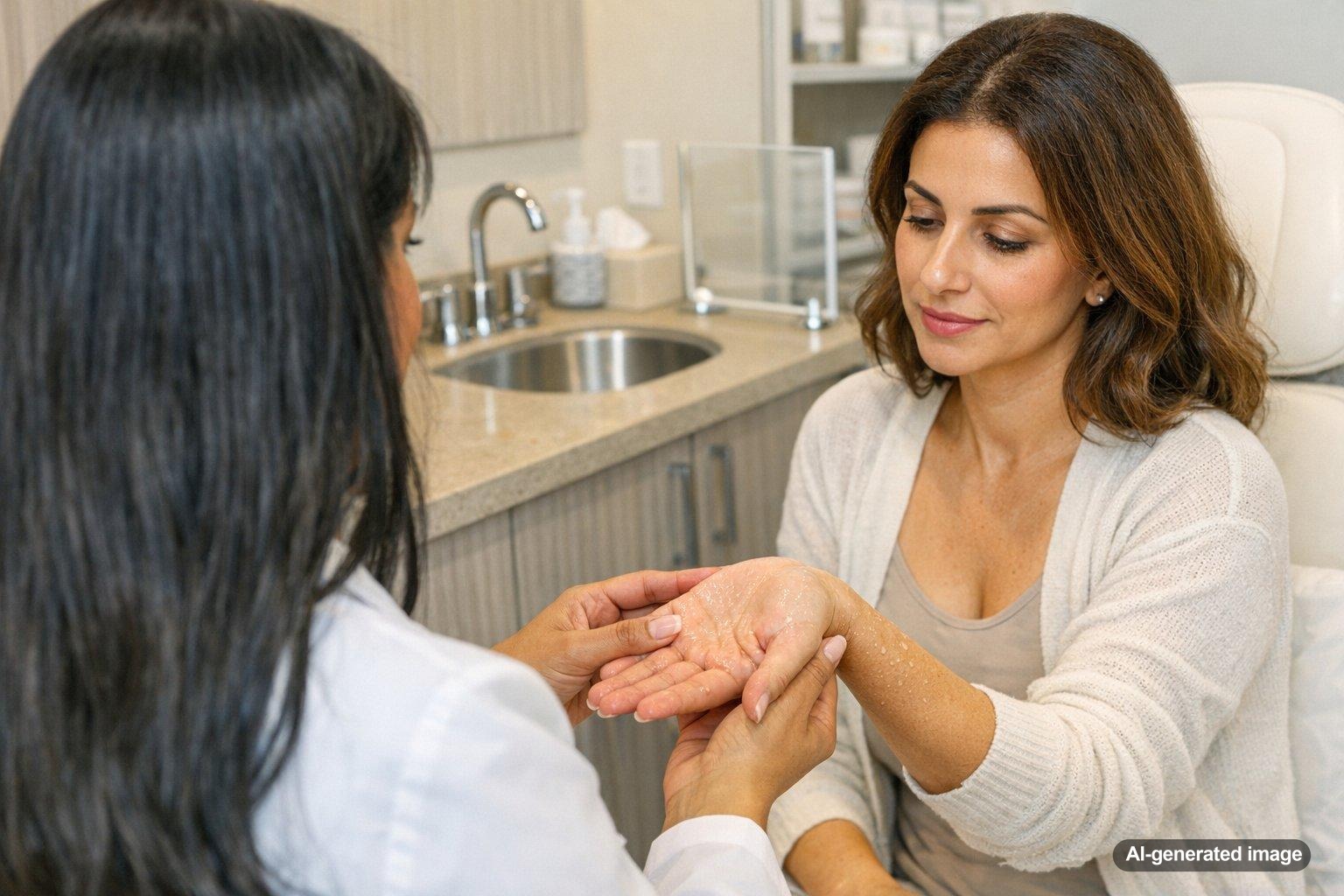
Aquagenic syringeal acrokeratoderma is a rare, water-triggered skin pattern that can cause temporary pale bumps, swelling, or exaggerated wrinkling on the hands after contact with water. It is also often discussed under related names such as aquagenic wrinkling of the palms or aquagenic palmoplantar keratoderma.
Although the name sounds complex, the experience is usually straightforward: the skin may look bumpy, whitish, thickened, or pruney shortly after washing hands, showering, swimming, or sweating. If bumps appear near the wrists, palms, or sides of the hands, a dermatologist can help determine whether this pattern fits aquagenic syringeal acrokeratoderma or whether another skin condition is involved.
Quick answer
- Aquagenic syringeal acrokeratoderma describes temporary skin changes that appear after water exposure.
- It most often affects the palms, but some people notice changes extending toward the fingers, sides of the hands, or wrist area.
- The skin may look pale, swollen, pebbly, wrinkled, or slightly thickened.
- Symptoms may include tightness, stinging, itching, or discomfort, although some people mainly notice the appearance.
- A dermatologist can evaluate the pattern, review possible associations, and discuss conservative or prescription options when appropriate.
What it is
Aquagenic syringeal acrokeratoderma is a descriptive dermatology term for a reaction in the outer skin that appears after contact with water. The word “aquagenic” means water-related. “Acro” refers to the hands and feet, and “keratoderma” refers to thickening or texture change in the skin.
Many cases are temporary. The skin changes may appear after a few minutes of water exposure and then gradually calm down after the skin dries. Because it can resemble ordinary water wrinkling, eczema, contact dermatitis, or irritation, a dermatologist may ask about timing, triggers, symptoms, medications, sweating, and whether the changes happen on one or both hands.
Common causes or triggers
The exact mechanism is not fully understood, but several patterns have been described. Triggers and associated factors may include:
- Frequent water exposure, including handwashing, dishwashing, showering, swimming, or humid environments.
- Sweating or heat, especially when the hands stay damp.
- Skin barrier irritation from cleansers, sanitizers, fragrances, or repeated friction.
- Excessive sweating, which may make the hands stay moist for longer periods.
- Medication history or medical conditions that a dermatologist may want to review.
- An association with cystic fibrosis or being a carrier of the cystic fibrosis gene, which does not mean every person with these skin changes has cystic fibrosis.
What you can do at home
At-home care should be gentle and practical. The goal is to reduce unnecessary irritation while keeping the skin comfortable.
- Pat the hands dry instead of rubbing after washing.
- Apply a bland, fragrance-free moisturizer after water exposure.
- Use gentle, fragrance-free cleansers when possible.
- Wear protective gloves for wet chores, especially dishwashing or cleaning.
- Avoid occlusive gloves for long periods if they trap sweat and worsen symptoms.
- Take photos of the skin before and after water exposure to help your dermatologist see the pattern.
These steps may help support the skin barrier, but they are not a substitute for an exam if the bumps are painful, spreading, persistent, or confusing.
Professional options
A dermatologist can evaluate whether the timing and appearance fit aquagenic syringeal acrokeratoderma. In some visits, the clinician may review photos or observe how the skin responds after brief water exposure. The discussion may also include sweating, irritation, allergies, medications, and whether any additional evaluation is appropriate.
Common professional options are individualized and may include barrier-focused skincare, guidance on reducing wet-work irritation, antiperspirant-style topical options for selected patients, or other prescription approaches when symptoms are bothersome. Because treatment depends on the full clinical picture, it is best to avoid self-diagnosing or starting stronger products without medical guidance.
When to see a dermatologist
It is worth getting checked if the skin changes are new, uncomfortable, worsening, or happening with other symptoms. You should also schedule an evaluation if the bumps do not fade after the skin dries, if there is cracking or bleeding, if only one area is affected, or if you are unsure whether the issue is eczema, infection, contact allergy, warts, or another rash.
A dermatologist can also help if the condition interferes with work, frequent handwashing, travel, swimming, or daily comfort. In Fort Lauderdale, this can be especially relevant for people who spend time in humid weather, pools, boats, gyms, or spa settings.
FAQ
Is aquagenic syringeal acrokeratoderma dangerous?
It is often a temporary skin reaction, but it should still be evaluated if it is new, uncomfortable, persistent, or associated with other symptoms. A dermatologist can help rule out other causes and decide whether any additional review is appropriate.
Why do my hands or wrists look bumpy after water exposure?
Water can temporarily change the texture of the outer skin. In aquagenic syringeal acrokeratoderma, this may appear as pale, pebbly, swollen, or wrinkled areas. Other conditions can look similar, so timing and an exam matter.
Can it affect the wrists?
It most commonly affects the palms, but some people notice changes near the edges of the hands, fingers, or wrist area. If the bumps are truly on the wrist rather than the palm-side hand, a dermatologist can check for other causes as well.
Should I stop washing my hands?
No. Hand hygiene is important. Instead, use a gentle cleanser, dry well, moisturize afterward, and ask a dermatologist for guidance if symptoms are disruptive.
Does this mean I have cystic fibrosis?
No. Aquagenic wrinkling of the palms can be associated with cystic fibrosis or carrier status, but skin changes alone do not diagnose it. Your clinician can help decide whether your history suggests any need for further evaluation.
Ready to get help?
Schedule an appointment or send a message and our team will get back to you.
Prefer to call? 954-666-3736
Disclaimer
This article is for educational purposes and is not medical advice. For diagnosis and personalized treatment, please book an appointment with a board-certified dermatologist.
