

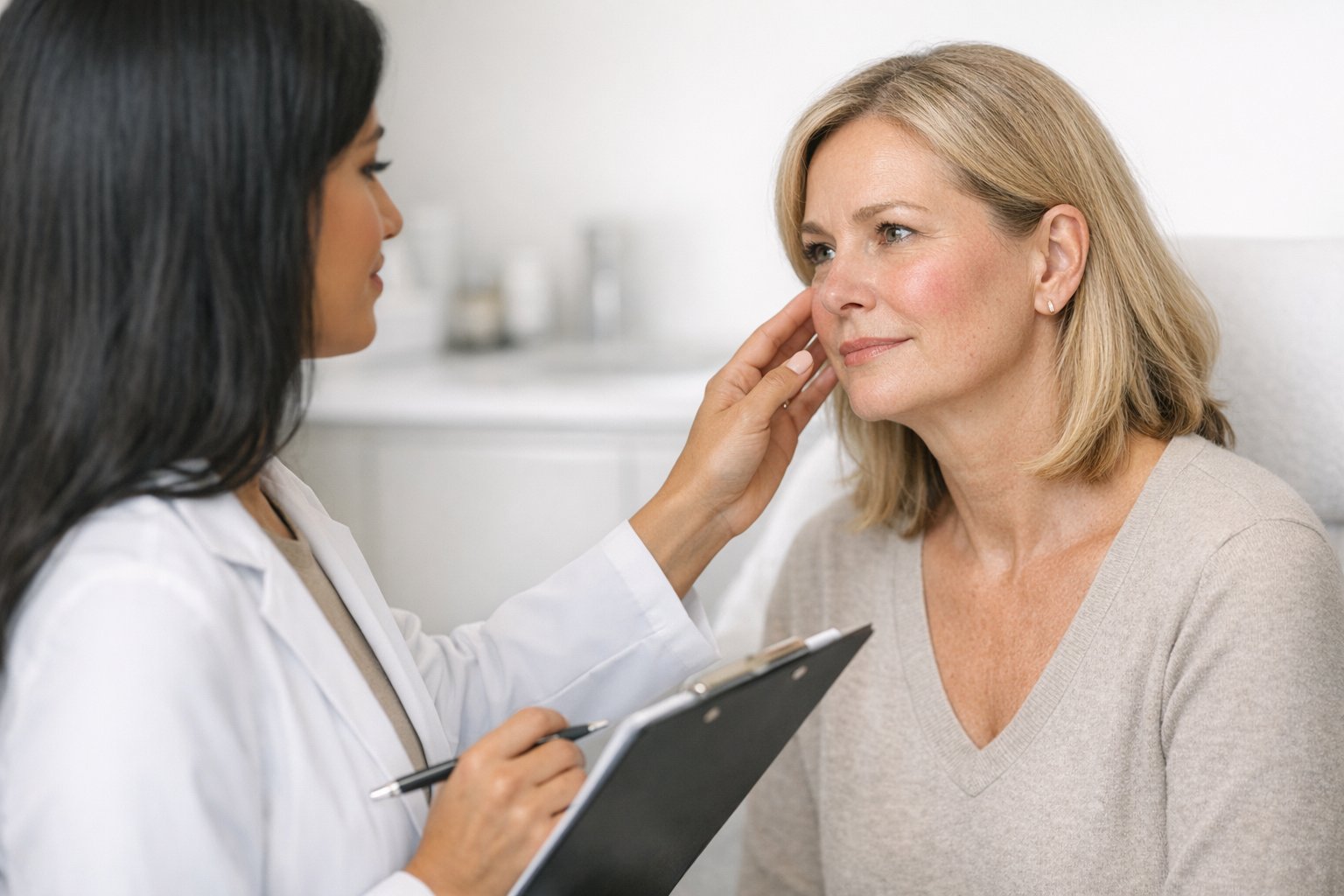
For many people with rosacea, alcohol is less about a dramatic reaction and more about a pattern they start to recognize over time. A glass of wine, a cocktail at dinner, or drinks during a social weekend may be followed by more redness, warmth, or a lingering flushed look that feels hard to calm down.
What people notice most is usually not one single symptom. It is the combination of visible redness, easy flushing, warmth, and skin that seems more reactive than usual. Rosacea triggers can vary from person to person, but alcohol is a common one that may make underlying redness more noticeable.
Quick answer
- Many people notice increased facial flushing and more visible redness after drinking alcohol.
- The skin may feel warmer, sting more easily, or look more irritated than usual.
- Not every type or amount of alcohol affects everyone the same way.
- Tracking patterns can help you figure out whether alcohol is one of your personal triggers.
- If redness is persistent or getting harder to manage, a dermatologist can evaluate your skin and discuss options.
What it is
Rosacea is a chronic inflammatory skin condition that commonly affects the central face. In plain English, it often shows up as redness that comes and goes at first, then may stick around more consistently over time. Some people also notice visible small blood vessels, acne-like bumps, swelling, sensitivity, or a burning sensation.
Alcohol does not cause rosacea by itself, but it can be associated with flares in people who are already prone to it. One reason is that alcohol may encourage facial flushing, which can make redness easier to see and harder to ignore.
Common causes or triggers
- Alcohol, especially when it seems to bring on flushing
- Heat, hot weather, steam, and hot showers
- Sun exposure
- Spicy foods
- Stress or strong emotions
- Exercise or overheating
- Skincare products that sting, burn, or over-dry the skin
What people notice most after alcohol
More flushing: The most common complaint is that the face gets red quickly, sometimes during drinking and sometimes later the same day. Cheeks and nose are often the first areas people notice.
Longer-lasting redness: Instead of a brief flush, the redness may linger into the evening or the next morning, making skin look more inflamed than usual.
Heat and sensitivity: Skin may feel hot, tight, or prickly. Products that usually feel fine can suddenly sting.
More visible blood vessels: When the skin repeatedly flushes, tiny surface vessels may become easier to notice over time.
A flare that seems out of proportion: Some people are surprised that even a small amount of alcohol seems to set off a bigger reaction than expected. That does not necessarily mean every drink will do this every time, but patterns are worth paying attention to.
What you can do at home
You do not need to panic or assume you have to avoid every social situation. A practical approach is usually most helpful.
- Keep a simple trigger log for a few weeks and note what you drank, how much, and how your skin looked and felt afterward.
- Pay attention to context. Alcohol combined with heat, sun, spicy food, or stress may be more likely to trigger a flare.
- Choose gentle skincare. Use a mild cleanser, a fragrance-free moisturizer, and daily sunscreen.
- Avoid harsh scrubs, strong acids, or aggressive products when your skin already feels reactive.
- If a certain type of drink seems to be a repeat trigger, scaling back or spacing it out may help you learn your personal threshold.
Professional options
If alcohol-related flushing or persistent redness is bothering you, professional guidance can help clarify what is going on. Common options include confirming whether rosacea is part of the picture, reviewing your triggers, and discussing treatment categories that may help calm inflammation or reduce visible redness.
Depending on your skin and goals, a dermatologist may talk with you about prescription topicals, other medical therapies, or laser-based approaches for visible redness and blood vessels. These decisions are individualized, and your clinician can help you decide what fits your skin best.
When to see a dermatologist
- Your redness is becoming more constant instead of occasional.
- You are developing bumps, irritation, burning, or swelling along with flushing.
- Your skin reacts to many products and feels difficult to manage.
- You are not sure whether it is rosacea, acne, sensitivity, or something else.
- Redness is affecting your confidence or daily routine.
FAQ
Does alcohol cause rosacea?
Alcohol is not the sole cause of rosacea, but it can be associated with flares in people who are prone to facial redness and flushing.
Does every kind of alcohol trigger rosacea the same way?
No. Many people notice that some drinks seem more likely to trigger flushing than others. Personal patterns matter more than broad rules.
If I flush when I drink, does that mean I have rosacea?
Not necessarily. Flushing can happen for different reasons. If the redness is frequent, persistent, or paired with sensitivity or bumps, it is worth getting checked.
Can skincare make alcohol-related redness worse?
Yes. If your skin is already reactive, harsh or overly active products may add to the irritation. A simple, gentle routine is often a better starting point.
Ready to get help?
Schedule an appointment or send a message and our team will get back to you.
Prefer to call? 954-666-3736
This article is for educational purposes and is not medical advice. For diagnosis and personalized treatment, please book an appointment with a board-certified dermatologist.
