

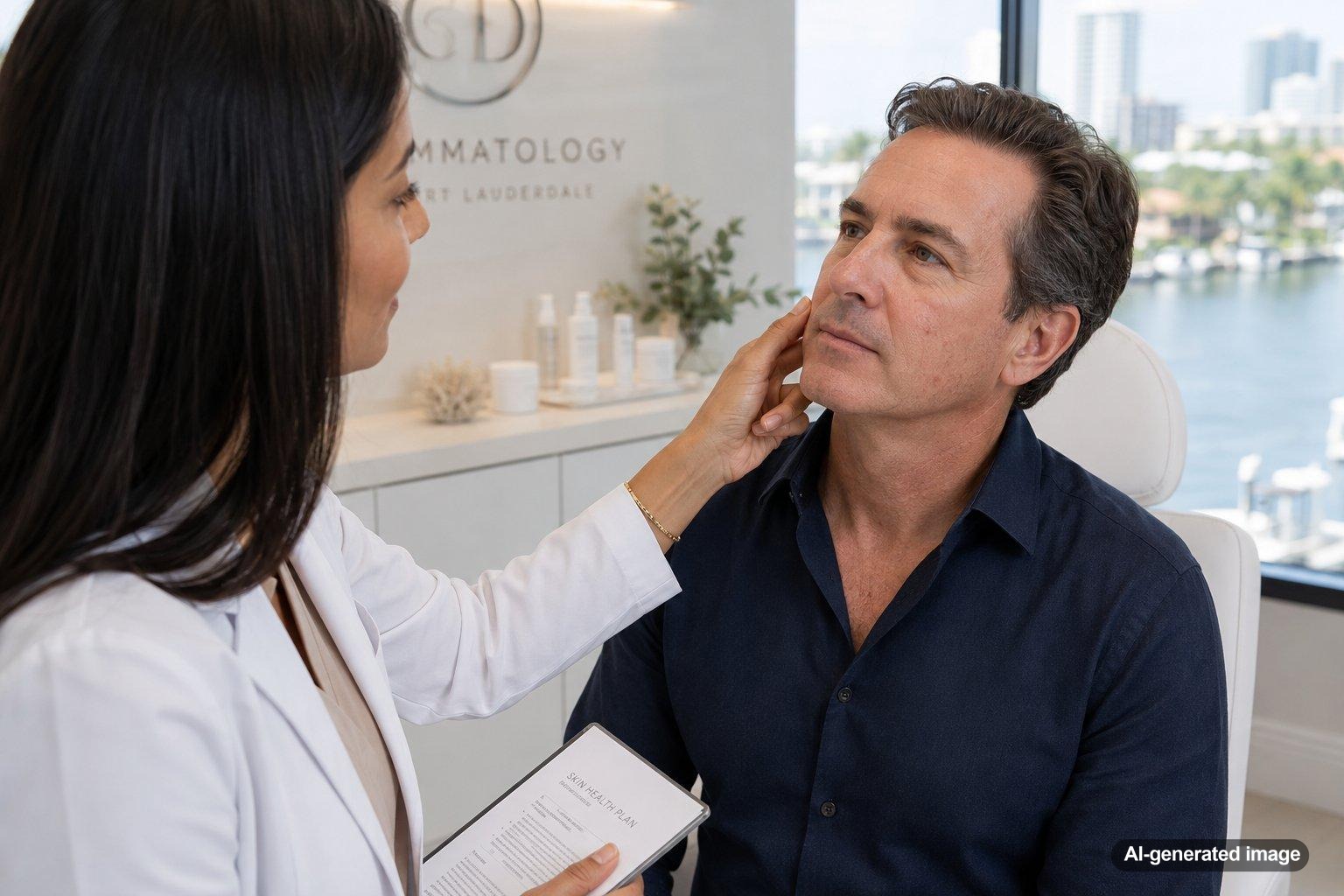
Adult acne can feel especially frustrating because it often appears at the exact stage of life when you expected breakouts to be behind you. It may show up along the chin and jawline, across the cheeks, on the forehead, or even on the chest and back. Some people notice small clogged pores. Others develop tender bumps that linger or leave dark marks.
The reason adult acne happens is usually not one single thing. Oil production, clogged pores, inflammation, bacteria on the skin, hormones, stress, skincare products, and certain medications can all play a role. The next step is not to scrub harder or try everything at once. A calmer, more consistent approach is often the better place to begin.
Quick answer
- Adult acne can be associated with hormones, clogged pores, oil, inflammation, stress, and pore-clogging products.
- A gentle routine with noncomedogenic products may help support acne-prone skin without over-stripping the barrier.
- Picking, harsh scrubs, and switching products too often can make irritation and marks more noticeable.
- Professional options may include topical prescriptions, oral medications, hormonal approaches, extractions, peels, or other office-based care after evaluation.
- A dermatologist can evaluate acne that is painful, scarring, worsening, persistent, or difficult to distinguish from rosacea, folliculitis, or another rash.
What adult acne is
Acne develops when pores become blocked with oil and dead skin cells. This can lead to blackheads, whiteheads, inflamed pimples, or deeper tender bumps. In adults, breakouts may be persistent, cyclical, or newly noticeable after years of relatively calm skin.
Adult acne is not a sign that your skin is dirty. In fact, aggressive cleansing can sometimes leave the skin barrier more irritated, which may make the overall picture look redder, drier, or more inflamed. The goal is to reduce congestion and inflammation while keeping the skin barrier supported.
Common causes or triggers
Adult acne can have more than one contributing factor. Common triggers and patterns include:
- Hormonal shifts: Breakouts around the lower face, chin, and jawline can be associated with hormonal patterns, especially when they flare cyclically.
- Stress and sleep disruption: Stress does not affect everyone the same way, but it can be part of the pattern for some adults.
- Pore-clogging skincare or makeup: Heavy moisturizers, certain oils, occlusive products, or makeup that is not labeled noncomedogenic may contribute for some people.
- Hair products: Pomades, oils, leave-in conditioners, and styling products can transfer to the forehead, temples, cheeks, neck, or back.
- Sweat and friction: Hats, helmets, masks, tight collars, workout clothing, and not rinsing after heavy sweating may aggravate acne-prone areas.
- Medication or health factors: Some medications or underlying changes can be associated with acne-like breakouts, which is one reason persistent adult acne is worth discussing with a dermatologist.
What you can do at home
At-home care should be steady, simple, and skin-barrier friendly. It is easy to overcorrect with adult acne, but more products do not always mean better results.
- Use a gentle cleanser: Wash without scrubbing. For many people, cleansing twice daily and after heavy sweating is enough.
- Choose noncomedogenic products: Look for makeup, sunscreen, and moisturizer labeled noncomedogenic or oil-free when appropriate.
- Do not skip moisturizer: Acne-prone skin can still become dry or irritated. A light moisturizer may help keep the barrier more comfortable.
- Introduce actives slowly: Ingredients such as benzoyl peroxide, salicylic acid, or adapalene may be used by some people, but starting gradually can help reduce irritation.
- Avoid picking: Picking can increase the chance of irritation, scabbing, dark marks, and scarring.
- Check product placement: Keep heavy hair products away from the face, and cleanse areas where sunscreen, makeup, or sweat builds up.
If you are pregnant, nursing, trying to become pregnant, or using prescription medications, ask a dermatologist or clinician before starting acne products or prescription therapies.
Professional options
Adult acne care is most helpful when it is matched to the type of acne, the skin’s sensitivity, the risk of marks or scars, and the person’s medical history. A dermatologist can evaluate whether the bumps are truly acne or whether another condition may be contributing.
Common professional options may include prescription topical medications, oral medications, hormonal approaches for appropriate candidates, careful comedone extraction, acne-safe skincare planning, and selected in-office treatments. For dark marks or texture changes after breakouts, the plan may be different than the plan for active acne. Your clinician can help you decide what is appropriate for your skin.
When to see a dermatologist
It is worth scheduling an evaluation if acne is painful, cyst-like, spreading, leaving scars, causing dark marks, or not improving with a careful routine. You should also seek care if breakouts appear suddenly in adulthood, flare around medication changes, or look different from typical acne.
Some conditions can mimic acne, including rosacea, folliculitis, perioral dermatitis, and certain rashes. A board-certified dermatologist can help clarify what is happening before you spend time and money on products that may not match the issue.
FAQ
Why am I getting acne as an adult?
Adult acne may be associated with hormones, oil production, clogged pores, inflammation, stress, skincare products, hair products, sweat, friction, or medication-related factors. Many people have more than one trigger.
Is adult acne always hormonal?
No. Hormones can be part of the picture, especially with lower-face or cyclical breakouts, but adult acne can also involve skincare products, inflammation, clogged pores, friction, or other factors.
Should I dry out my skin to stop breakouts?
Usually, no. Over-drying can make skin feel tight, irritated, and more sensitive. Acne-prone skin often does better with a balanced routine that includes gentle cleansing, targeted ingredients, moisturizer, and sunscreen.
Can adult acne leave marks?
Yes. Inflamed acne may leave temporary dark marks, redness, or texture changes, and deeper acne can increase the risk of scarring. Early evaluation may help reduce the chance of lasting marks.
When should I stop trying over-the-counter products?
If acne is persistent, painful, worsening, leaving scars or dark marks, or interfering with your confidence, it is reasonable to see a dermatologist. An evaluation can help narrow the plan and avoid unnecessary irritation.
Ready to get help?
Schedule an appointment or send a message and our team will get back to you.
Prefer to call? 954-666-3736
Disclaimer
This article is for educational purposes and is not medical advice. For diagnosis and personalized treatment, please book an appointment with a board-certified dermatologist.
