

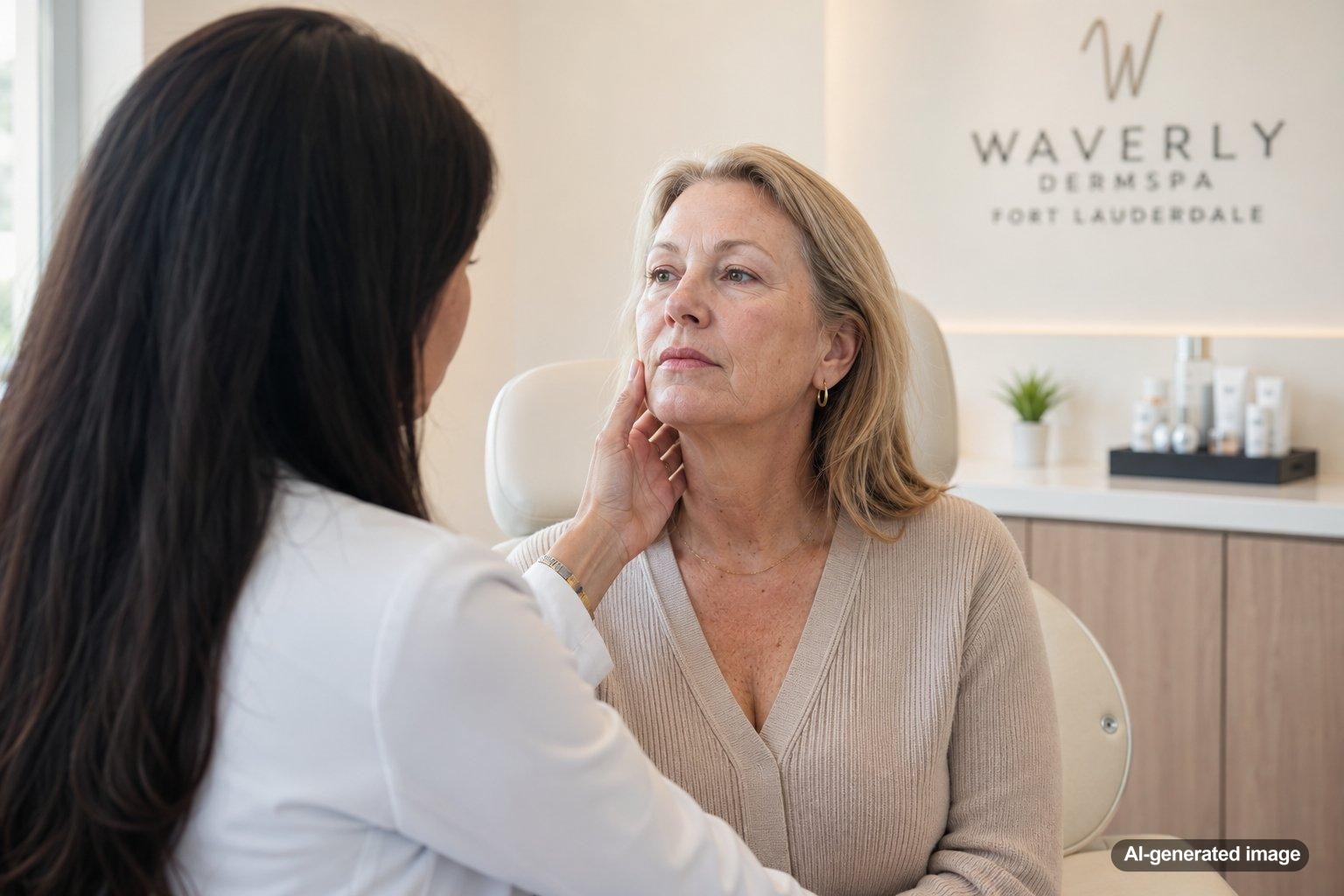
Acne in your 30s and 40s is common, and it can feel especially frustrating when it appears at a stage of life when you expected breakouts to be behind you. Adult acne may look like clogged pores, inflamed bumps, tender deeper pimples, or recurring breakouts around the chin, jawline, cheeks, chest, or back.
The reason is usually not one single mistake. Adult acne can be associated with hormones, stress, skincare products, makeup, hair products, sweating, medications, genetics, and changes in the skin barrier. The good news is that a dermatologist can evaluate the pattern and help you build a plan that is calmer, more targeted, and less guesswork-driven.
Quick answer
- Acne can continue or begin for the first time in your 30s and 40s.
- Hormonal shifts are a common factor, especially with breakouts along the lower face, chin, jawline, and neck.
- Heavy products, inconsistent routines, stress, friction, sweating, and skin barrier irritation can all contribute.
- Gentle, consistent skincare often helps more than harsh scrubbing or constantly switching products.
- If acne is painful, scarring, persistent, or affecting confidence, a dermatologist can help you understand your options.
What adult acne is
Acne develops when pores become clogged with oil and dead skin cells. Bacteria and inflammation can then play a role, which may lead to whiteheads, blackheads, papules, pustules, nodules, or cyst-like bumps. In adults, acne can be persistent, cyclical, and easily irritated by products that may have worked well in younger skin.
Adult acne does not always look dramatic. For some people, it appears as small clogged pores and texture. For others, it shows up as tender bumps along the lower face that seem to return around the same time each month. Some adults also experience post-breakout dark marks, redness, or uneven texture after the active blemish has calmed.
Why acne is common in your 30s and 40s
Adult skin is influenced by many moving parts. Hormone changes, stress, sleep disruption, perimenopause, certain medications, product choices, and lifestyle shifts can all affect oil production, inflammation, and the skin barrier. Acne during these decades does not mean you are doing something wrong. It means your skin may need a more tailored approach.
Many adults also use more skincare, makeup, sunscreen, hair products, or anti-aging products than they did as teenagers. Some of these products are helpful, but others may be too occlusive, irritating, or poorly matched for acne-prone skin. A routine that is too aggressive can also weaken the barrier, leaving the skin more reactive.
Common causes or triggers
- Hormonal changes: Breakouts around the chin, jawline, lower cheeks, and neck can be associated with hormonal patterns.
- Stress: Stress can influence inflammation, sleep, skin-picking habits, and consistency with skincare.
- Occlusive skincare or makeup: Heavy creams, oils, long-wear makeup, and certain sunscreens may clog pores in some acne-prone skin.
- Hair products: Styling creams, oils, sprays, and leave-in products can contribute to breakouts along the hairline, forehead, temples, neck, or back.
- Over-exfoliation: Too many acids, scrubs, retinoids, peels, or active products can irritate the barrier and make acne look more inflamed.
- Friction and sweat: Workout gear, hats, helmets, masks, and humid weather can trap sweat and oil against the skin.
- Medication or health factors: Some medications and medical conditions can be associated with acne-like breakouts, which is one reason evaluation matters when acne changes suddenly.
What you can do at home
A steady, gentle routine is usually a better starting point than an aggressive one. Choose a mild cleanser, a lightweight non-comedogenic moisturizer, and daily broad-spectrum sunscreen. If you use acne-focused over-the-counter products, introduce them slowly so you can tell what your skin tolerates.
- Wash your face gently once or twice daily, especially after sweating.
- Avoid scrubbing, harsh cleansing brushes, and drying toners that leave skin tight or stinging.
- Look for products labeled non-comedogenic or oil-free if you are prone to clogged pores.
- Change pillowcases regularly and keep hair products away from breakout-prone areas.
- Remove makeup before bed, but avoid stripping the skin.
- Do not pick or squeeze deeper bumps, since this can increase irritation and the chance of marks or scarring.
- Give a simple routine time to settle before adding multiple new products.
If you are unsure whether a product is helping or irritating your skin, simplify. A dermatologist can help identify which ingredients make sense for your pattern of acne and which may be making things worse.
Professional options
Professional acne care may include topical medications, oral medications, hormonal therapies for appropriate candidates, in-office treatments, or a combination approach. The right plan depends on the type of acne, severity, skin sensitivity, medical history, pregnancy plans, current medications, and whether scarring or post-inflammatory pigment changes are present.
Common professional categories include prescription topical therapies, short-term or longer-term medication strategies when appropriate, guidance for hormonal-pattern acne, and procedures that may support clogged pores, texture, or post-breakout discoloration. These options should be chosen after a clinician evaluates your skin rather than based only on a product trend.
At Waverly DermSpa, we offer Chemical Peels and can help you understand whether they may be appropriate.
When to see a dermatologist
It is worth seeing a dermatologist if acne is persistent, painful, cyst-like, leaving marks, or not responding to a consistent routine. You should also consider evaluation if breakouts begin suddenly, seem linked to a new medication, appear with new facial hair growth or menstrual changes, or are affecting your confidence.
- Deep, tender, or recurring bumps
- Scarring, dark marks, or texture changes after breakouts
- Acne that worsens despite careful skincare
- Frequent breakouts along the jawline, chin, neck, chest, or back
- Skin that is irritated from too many active products
- Breakouts that look unusual, itchy, rash-like, or sudden
A dermatologist can also help distinguish acne from look-alike conditions, such as rosacea, folliculitis, perioral dermatitis, or product-related irritation.
FAQ
Why am I getting acne in my 30s or 40s?
Adult acne can be associated with hormones, stress, genetics, skincare products, hair products, medications, sweat, friction, and skin barrier irritation. Often, several factors overlap.
Is jawline acne always hormonal?
Jawline acne can be associated with hormonal patterns, but it is not the only possible cause. Product buildup, friction, hair products, and other skin conditions can also affect the lower face and neck.
Should I stop using anti-aging products if I have acne?
Not always. Some ingredients may be useful, while others may be too irritating or too heavy for acne-prone skin. If your skin stings, flakes, or breaks out more, your routine may need adjustment.
Can moisturizer make acne worse?
Some rich or occlusive products can contribute to clogged pores in acne-prone skin, but skipping moisturizer can also make the skin barrier more reactive. A lightweight, non-comedogenic moisturizer is often a better fit.
When should I stop trying over-the-counter products?
If acne is painful, deep, persistent, spreading, scarring, or causing dark marks, it is reasonable to schedule a dermatology visit. You do not need to wait until acne feels severe to get help.
Ready to get help?
Schedule an appointment or send a message and our team will get back to you.
Prefer to call? 954-666-3736
Disclaimer
This article is for educational purposes and is not medical advice. For diagnosis and personalized treatment, please book an appointment with a board-certified dermatologist.
Sources & further reading
- American Academy of Dermatology (AAD) – Adult acne
- Mayo Clinic – Acne: Symptoms and causes
- Cleveland Clinic – Hormonal Acne
