

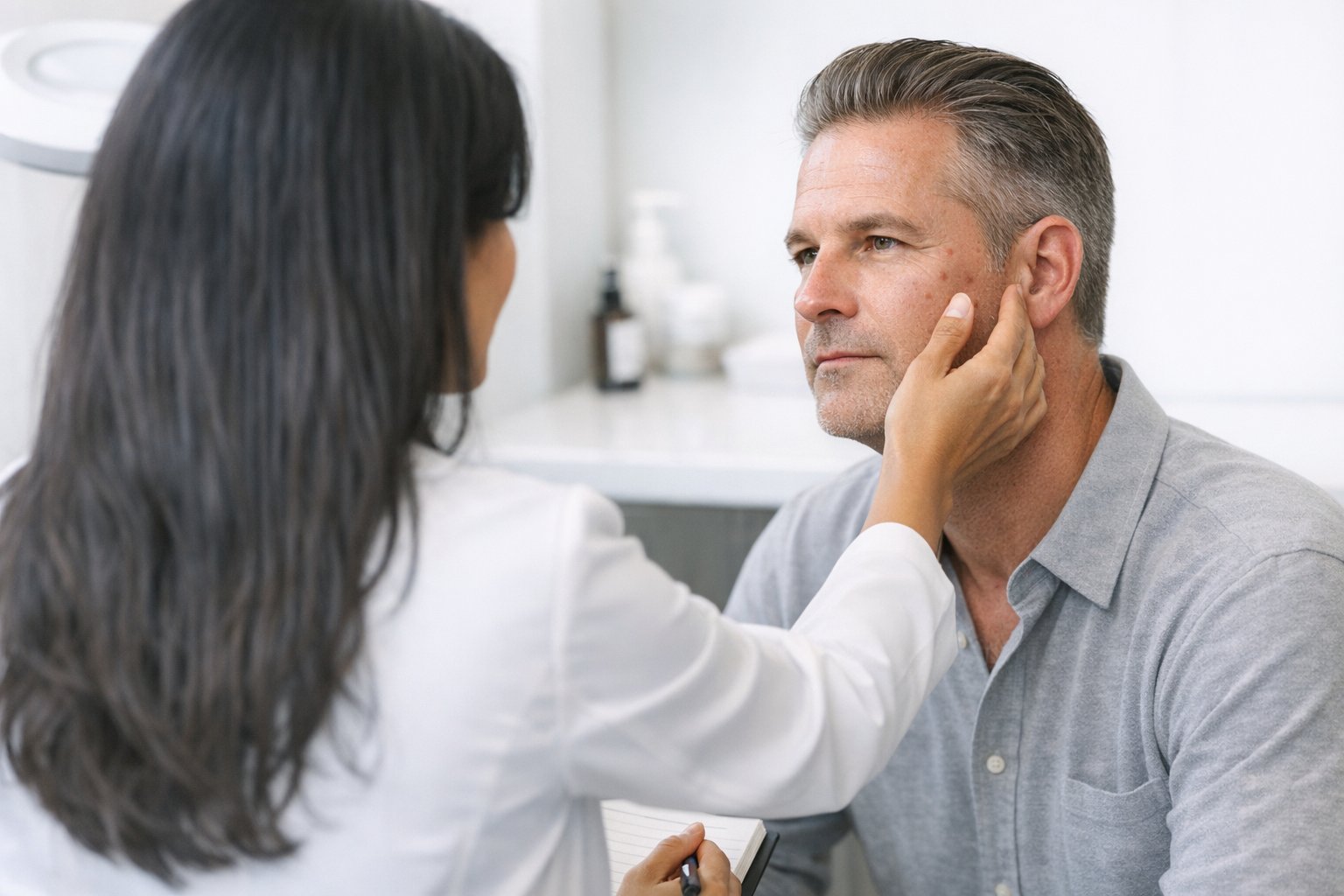
Breakouts along the forehead, temples, hairline, or upper cheeks can be frustrating, especially when your skincare routine seems consistent. In some cases, the trigger is not your cleanser or moisturizer at all. It may be the styling cream, oil, pomade, or leave-in product touching your skin throughout the day.
Pomade acne is a common term for acne-like breakouts linked to hair products. The good news is that once the pattern is recognized, small routine changes may help reduce ongoing irritation and clogged pores. If breakouts are persistent or worsening, a dermatologist can evaluate what is contributing and help you decide on the next steps.
Quick answer
- Pomade acne refers to breakouts that can be associated with hair products transferring onto the skin.
- It often shows up near the hairline, forehead, temples, and sometimes the upper back or neck.
- Heavy oils, waxes, and occlusive styling products are common triggers for some people.
- Washing the hairline gently, choosing lighter formulas, and keeping products off the skin may help.
- If bumps are painful, widespread, or not improving, a dermatologist can evaluate whether it is acne, folliculitis, or another condition.
What it is
In plain English, pomade acne happens when ingredients from hair products sit on the skin and contribute to clogged pores or irritation. This can happen with pomades, edge controls, oils, serums, leave-in conditioners, masks, and styling creams. Even products that make hair look smooth and shiny can be too rich for acne-prone skin.
The pattern matters. When breakouts cluster where hair touches the skin, or where products collect during sleep, exercise, or humid weather, hair products move higher on the list of possible triggers.
Common causes and triggers
- Heavy pomades, waxes, and oils applied close to the hairline
- Leave-in products that migrate onto the forehead or temples
- Edge control, hair sprays, and finishing products used daily
- Sleeping with product in the hair so it transfers to pillowcases and skin
- Heat, humidity, sweating, and hats that trap oil and residue against the skin
- Noticing breakouts after starting a new shampoo, conditioner, or styling routine
What you can do at home
Start by looking at placement. Try keeping styling products slightly farther back from the hairline when possible. If you use oils or pomades, a smaller amount may help reduce transfer onto the skin. It can also help to cleanse the forehead and hairline after workouts or at the end of the day, especially if products have mixed with sweat.
Choose lighter formulas when you can. Gel or lotion textures may be easier for some acne-prone skin types than thick waxes or greases. Washing pillowcases, hats, and headbands more often can also make a difference. If a product seems strongly linked to new breakouts, pausing it for a short time may help you notice whether the pattern changes.
Try not to scrub aggressively or layer many acne products at once. Overdoing treatment can irritate the skin barrier and make the area look and feel worse.
Professional options
If breakouts keep returning, a dermatologist can evaluate whether the issue is acne, irritation, folliculitis, or a combination of factors. Common options include reviewing your current hair and skincare products, adjusting your routine, and discussing prescription or in-office treatments at a high level when appropriate.
Because bumps around the hairline can sometimes resemble other skin conditions, an expert evaluation can be helpful when the pattern is unclear or when over-the-counter products are not helping.
When to see a dermatologist
- Breakouts are painful, deep, or leaving marks
- The rash is itchy, burning, or spreading beyond the usual areas
- You are not sure whether it is acne or something else
- You have tried simplifying products and the bumps keep coming back
- The breakout is affecting your confidence or daily routine
FAQ
Can shampoo or conditioner cause acne too?
They can be associated with breakouts for some people, especially if residue stays on the forehead, neck, chest, or back after rinsing.
Why is the breakout mostly along my hairline?
That pattern can happen when styling products, oils, sweat, and friction collect where hair regularly touches the skin.
Does pomade acne always look like classic pimples?
Not always. Some people notice tiny bumps, clogged pores, or irritated acne-like spots rather than larger inflamed blemishes.
Should I stop all hair products?
Not necessarily. Many people do better by switching textures, using less product, and keeping it off the skin rather than stopping everything.
Can a dermatologist help if it seems mild?
Yes. If you are unsure what is driving the breakout or it keeps returning, a dermatologist can help you sort out the pattern and build a simpler plan.
Ready to get help?
Schedule an appointment or send a message and our team will get back to you.
Prefer to call? 954-666-3736
This article is for educational purposes and is not medical advice. For diagnosis and personalized treatment, please book an appointment with a board-certified dermatologist.
