

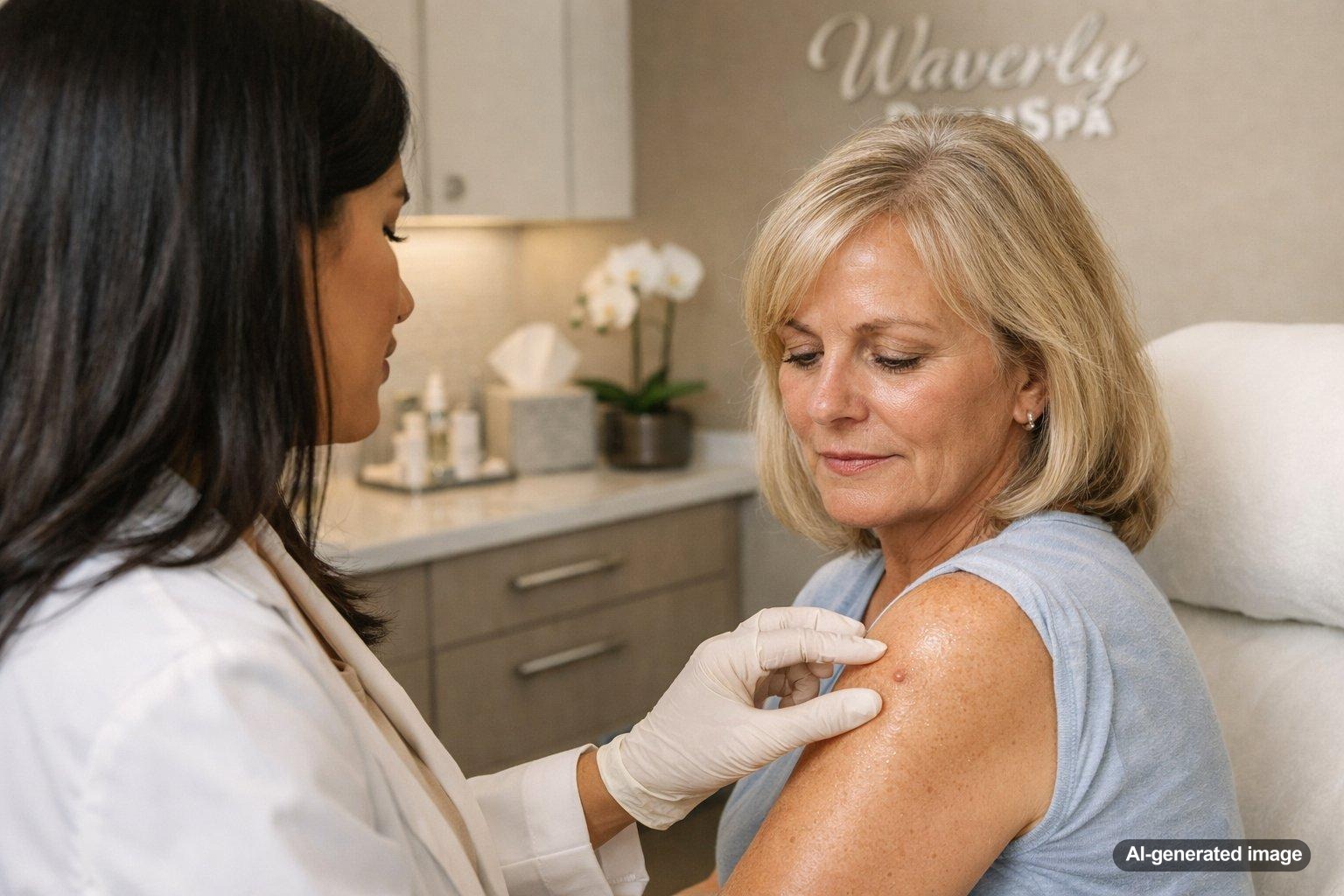
Yes, a bump that bleeds can be worth getting evaluated, especially if it bleeds more than once, does not heal, keeps crusting over, or seems to be changing. Not every bleeding bump is dangerous. Sometimes the cause is irritation, a picked blemish, a benign growth, or friction from shaving or clothing. But bleeding is also one of the reasons dermatologists take a closer look at certain spots.
The safest approach is simple: if a spot is new, changing, fragile, or just does not seem to behave like normal skin, do not ignore it. A board-certified dermatologist can examine it and decide whether it looks harmless, needs monitoring, or should be tested further.
Quick answer
- A bump that bleeds once after obvious irritation may be less concerning than one that bleeds repeatedly.
- A spot that will not heal, keeps scabbing, or returns after seeming to improve should be checked.
- Bleeding along with growth, color change, tenderness, or a rough surface deserves prompt evaluation.
- Lesions on sun-exposed skin, especially on the face, scalp, ears, chest, and hands, are worth extra attention.
- If you are unsure, it is reasonable to book an appointment rather than wait and watch for too long.
What it is
A bleeding bump is exactly what it sounds like: a raised or noticeable spot on the skin that becomes raw, crusted, or bloody. Sometimes the bleeding happens only after rubbing, washing, shaving, or scratching. In other cases, the spot seems delicate and bleeds with very little contact. That difference matters, because skin that becomes fragile for no clear reason may need a closer look.
Dermatologists think about the full picture, including where the bump is located, how long it has been there, whether it is changing, and whether it heals normally between episodes. The goal is not to assume the worst. It is to identify whether the spot is acting like a harmless irritation or something that should be examined more carefully.
Common causes or triggers
- Minor trauma: shaving, scratching, rubbing from clothing, or picking at a spot.
- Acne or inflamed follicles: especially if a bump is squeezed or repeatedly touched.
- Benign growths: some noncancerous spots can become irritated and bleed.
- Warts or other rough growths: these may bleed if friction breaks the surface.
- Sun-damaged skin changes: rough or fragile spots may crust or bleed more easily.
- Skin cancers: some basal cell, squamous cell, or melanoma lesions can bleed, crust, or fail to heal.
What you can do at home
If the area is actively bleeding, use gentle pressure with a clean cloth or gauze. Keep the skin clean, avoid picking, and try not to keep re-injuring the area through shaving or friction. A small amount of plain petroleum jelly and a simple bandage may help protect the surface while it settles.
It can also help to take a clear photo and note the date. If the bump changes in size, shape, texture, or color, that record can be useful at your visit. What you should not do is keep assuming a spot is fine if it repeatedly opens, scabs, and starts over. That pattern is one of the main reasons to schedule an evaluation.
Professional options
A dermatologist may examine the area with magnification, compare it with the rest of your skin, and ask how long it has been present. If the spot looks clearly irritated and benign, you may be advised to monitor it or treat the irritation. If it appears suspicious, a biopsy may be recommended so the diagnosis is based on tissue rather than guesswork.
Common next steps depend on what the lesion looks like. These may include observation, treatment of a benign growth, or biopsy of a concerning spot. If a lesion turns out to be skin cancer or precancerous change, your dermatologist can explain appropriate treatment options in a way that fits the exact diagnosis and location.
When to see a dermatologist
- The bump bleeds more than once without a clear reason.
- It does not heal within a reasonable period or keeps coming back.
- It is growing, changing color, developing a rough border, or becoming tender.
- It looks pearly, scaly, crusted, ulcerated, or unusually dark.
- It is on a sun-exposed area such as the face, scalp, ears, chest, or hands.
- You have a personal or family history of skin cancer, or a lot of sun exposure.
If a spot is bleeding heavily and will not stop with direct pressure, or if you feel unwell for any reason, seek urgent medical care.
FAQ
Can a harmless bump bleed?
Yes. Irritated acne, warts, benign growths, and picked or shaved spots can bleed. The concern rises when the bleeding keeps happening, the lesion does not heal, or the spot is changing.
Does bleeding always mean skin cancer?
No. Bleeding alone does not diagnose anything. It is simply one feature that can be associated with irritation or with a lesion that needs evaluation.
How long is too long to watch a bleeding spot?
There is no one timeline that fits every situation, but a bump that repeatedly scabs, bleeds again, or fails to heal normally should not be ignored. If you are unsure, it is worth getting checked.
What will a dermatologist do at the visit?
Your dermatologist will look at the lesion closely, ask about changes, and decide whether reassurance, monitoring, treatment, or biopsy makes the most sense.
Ready to get help?
Schedule an appointment or send a message and our team will get back to you.
Prefer to call? 954-666-3736
Disclaimer: This article is for educational purposes and is not medical advice. For diagnosis and personalized treatment, please book an appointment with a board-certified dermatologist.
Sources & further reading
- American Academy of Dermatology (AAD) – Basal cell carcinoma: From symptoms to treatments
- The Skin Cancer Foundation – Basal Cell Carcinoma Warning Signs and Images
- Mayo Clinic – Nonmelanoma skin cancer – Symptoms and causes
