

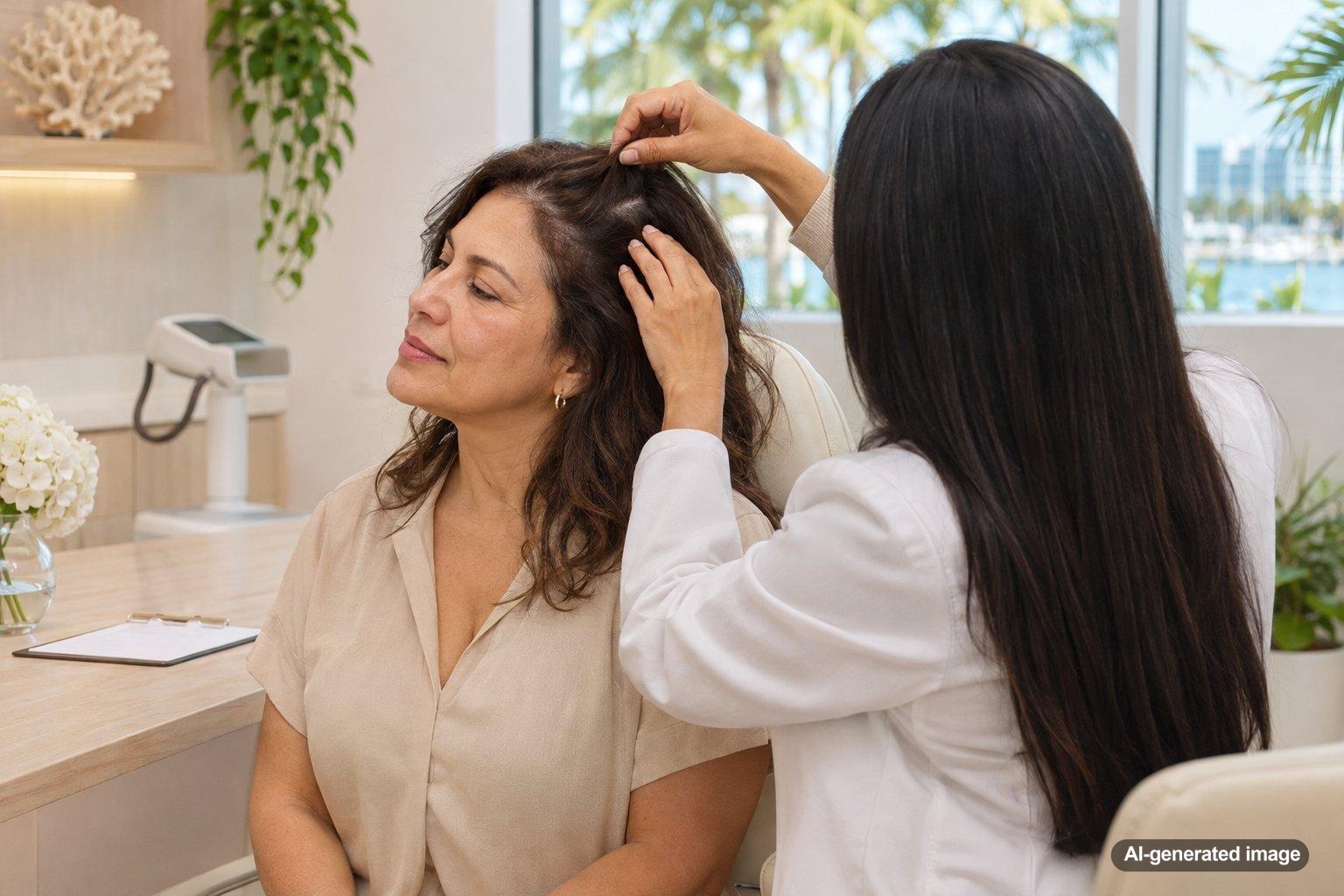
Yes, excimer light therapy may help treat scalp psoriasis, particularly when stubborn plaques affect specific areas of the scalp and haven’t responded adequately to topical treatments. This form of targeted phototherapy delivers carefully controlled ultraviolet B (UVB) light directly to affected skin. Unlike treatments that expose larger areas, excimer light can focus on individual psoriasis patches while limiting exposure to surrounding skin.
Scalp psoriasis can be especially frustrating because thick scales, itching, and irritation may interfere with everyday comfort and hair care. Hair also makes some treatments difficult to apply or deliver effectively. For appropriate patients, excimer light therapy offers another option to discuss with a dermatologist. Whether it makes sense depends on the extent of psoriasis, previous treatments, medical history, and the practical commitment involved in attending multiple sessions.
Quick Answer: Can Excimer Light Therapy Improve Scalp Psoriasis?
- Yes, it may help: Excimer light therapy can improve localized scalp psoriasis by exposing affected skin to targeted UVB light.
- It treats specific areas: The clinician directs light toward psoriasis plaques rather than routinely exposing the entire scalp.
- Multiple visits are usually needed: Treatment commonly involves sessions several times per week over multiple weeks.
- Results vary: Some patients experience meaningful improvement, while others need additional or alternative therapies.
- Dermatologist supervision matters: A specialist can assess suitability, adjust treatment, and monitor for adverse reactions.
What Is Excimer Light Therapy?
Excimer light therapy is a type of targeted phototherapy that uses ultraviolet B light at a wavelength of approximately 308 nanometers. It is delivered through a specialized device that concentrates light on selected areas of skin.
Psoriasis is a chronic, immune-mediated inflammatory condition that causes skin cells to accumulate more rapidly than normal. On the scalp, this process can produce thickened plaques, flaking, redness or other discoloration, itching, and discomfort.
UVB phototherapy helps regulate inflammatory activity in treated skin and slows the excessive buildup of skin cells associated with psoriasis. Excimer devices apply this approach to defined patches rather than relying on broad exposure.
The terms excimer laser and excimer light are sometimes used interchangeably, although particular devices may use different technologies to deliver targeted 308 nm UVB radiation. A dermatologist can explain which type of equipment is being considered and whether it is appropriate for a particular patient.
Why Might Excimer Light Be Useful for the Scalp?
The scalp presents a treatment challenge that is different from psoriasis on the arms or legs. Hair may block light from reaching affected skin, while thick scales can make topical medications difficult to distribute evenly.
Targeted excimer treatment offers several potential advantages:
- Focused treatment: Light can be directed toward plaques along the hairline, behind the ears, or within accessible areas of the scalp.
- Less exposure to unaffected skin: The clinician can concentrate treatment on affected patches.
- An alternative when topical treatment is insufficient: Excimer therapy may be considered when medicated shampoos, solutions, or other prescribed topical treatments haven’t provided adequate improvement.
- Compatibility with combination treatment: A dermatologist may recommend phototherapy alongside appropriately selected topical medications.
- Office-based monitoring: Treatment settings can be adjusted according to the skin’s response and tolerance.
One important limitation is that hair must be moved aside so the light can reach the plaques. Dense hair, extensive scalp involvement, or difficult-to-access areas may make treatment less practical. This is one reason an individualized examination matters.
What Causes Scalp Psoriasis to Flare?
Psoriasis develops through interactions between the immune system, genetics, and environmental influences. It is not caused by poor hygiene and is not contagious.
Although triggers vary, factors that may contribute to flares include:
- Stress: Physical or emotional stress may be associated with worsening symptoms.
- Skin irritation: Aggressive scratching, picking, friction, or injury can aggravate affected areas.
- Illness: Certain infections and other illnesses may trigger psoriasis activity in susceptible people.
- Weather changes: Some individuals notice increased symptoms during colder or drier conditions.
- Medication-related triggers: Certain medications may worsen psoriasis in some patients.
- Changes in treatment: Interrupting or changing a prescribed regimen may allow symptoms to return.
Identifying individual patterns can help guide long-term management. However, a flare doesn’t always have an identifiable trigger.
Who May Be a Good Candidate for Excimer Light Therapy?
Excimer therapy is often considered for localized plaque psoriasis, especially when affected areas remain symptomatic despite reasonable use of topical treatments.
A dermatologist may consider this approach when a patient has persistent plaques in accessible scalp areas, prefers a targeted office-based treatment, or needs an additional option as part of a broader management plan.
It may be less suitable when psoriasis covers much of the scalp or substantial areas of the body, when hair prevents adequate light delivery, or when the patient cannot attend frequent visits.
Medical history also matters. A dermatologist should review any history of skin cancer, unusual sensitivity to light, photosensitivity disorders, and medications that can increase sensitivity to ultraviolet radiation. These factors may influence whether phototherapy is appropriate.
For patients with more widespread or severe psoriasis, systemic medications may offer a more practical approach than treating individual plaques with light.
What Happens During an Excimer Light Therapy Session?
Excimer treatment is generally performed in a dermatology office or specialized phototherapy clinic. The clinician evaluates the skin and selects treatment settings based on factors such as skin type, plaque characteristics, prior UV exposure, and response to previous sessions.
During a typical appointment, the process may include:
- Scalp assessment: The clinician examines the plaques and checks for irritation or other concerns.
- Hair separation: Hair may be parted or moved aside to expose the skin requiring treatment.
- Protective measures: Appropriate eye protection and other device-specific precautions are used.
- Targeted light delivery: The device directs measured UVB light to selected plaques.
- Response monitoring: At subsequent appointments, the clinician evaluates improvement and any redness or discomfort before adjusting treatment.
The light exposure itself may take only a short time, although appointment length depends on the number and location of plaques.
Patients commonly attend treatment two or three times weekly for several weeks. The precise schedule and number of sessions vary. Improvement may develop gradually, and some patients require additional treatment or maintenance strategies after an initial course.
Are There Side Effects or Risks?
Excimer light therapy is generally well tolerated when appropriately administered, but it is not free of risks. Because it uses ultraviolet radiation, treatment intensity and cumulative exposure require professional oversight.
Possible reactions include:
- Temporary redness or tenderness in treated areas.
- A sunburn-like sensation after treatment.
- Blistering or more significant irritation if the UV dose is excessive.
- Temporary changes in pigmentation, including darkening or lightening of treated skin.
- Occasional worsening of psoriasis associated with excessive skin irritation.
Long-term safety data for excimer treatment are more limited than for some established therapies. Ultraviolet radiation is associated with cumulative skin damage, so treatment decisions should account for personal risk factors and the amount of exposure required.
Patients should tell their dermatologist about unexpected discomfort, blistering, or persistent reactions before continuing treatment. Dosing can often be modified, but significant reactions require clinical evaluation.
How Does Excimer Light Compare With Other Scalp Psoriasis Treatments?
Excimer therapy is one option within a broader treatment plan. The most appropriate choice depends on the severity, extent, and impact of psoriasis, along with the patient’s preferences and treatment history.
Medicated Shampoos and Scale Softeners
Products containing ingredients such as salicylic acid or coal tar may help manage scaling and other symptoms in selected patients. They can be useful as supportive care, although they may not adequately control persistent inflammatory plaques on their own.
Some scale-removing ingredients can also affect UVB treatment when applied immediately beforehand. Patients undergoing phototherapy should follow their dermatologist’s instructions about which scalp products to use and when.
Prescription Topical Treatments
Topical corticosteroids, vitamin D analogs, and combination therapies are commonly prescribed for scalp psoriasis. They may be provided in solutions, foams, oils, or other formulations designed to reach the scalp through the hair.
These treatments are frequently used before phototherapy is considered and may remain part of the plan if excimer light is introduced.
Other Phototherapy Approaches
Conventional narrowband UVB phototherapy exposes larger treatment areas, while specialized scalp devices may incorporate comb-like attachments to help light reach the skin.
Excimer treatment differs by concentrating UVB on specific plaques. This can be attractive for localized disease but less efficient when psoriasis involves extensive areas.
Systemic Medications and Biologics
Oral medications, biologic therapies, and other systemic treatments may be considered when scalp psoriasis is severe, significantly affects quality of life, or occurs alongside more extensive psoriasis elsewhere on the body.
These treatments address inflammatory pathways throughout the body rather than only treating individual scalp plaques. A dermatologist can determine when their potential benefits and risks make them appropriate.
What Can You Do at Home to Support Scalp Comfort?
Gentle scalp care can complement medical treatment, whether or not excimer therapy is part of the plan.
- Wash gently: Avoid aggressive scrubbing or using fingernails to loosen scales.
- Resist picking: Removing adherent plaques by force can injure the scalp and worsen irritation.
- Choose comfortable products: Fragrance-free or otherwise well-tolerated hair care products may help minimize unnecessary irritation.
- Follow medication instructions: Use prescribed scalp treatments as directed, including any specific guidance around phototherapy sessions.
- Be cautious with heat and styling: Reduce friction and excessive heat when the scalp is inflamed or tender.
- Avoid unsupervised UV exposure: Tanning beds and deliberate sun exposure are not substitutes for medically controlled phototherapy.
Patients spending time outdoors in Fort Lauderdale should also discuss sun protection and UV exposure with their dermatologist, especially when receiving light-based treatment or using photosensitizing medications.
When Should You See a Dermatologist?
Persistent scalp flaking doesn’t always indicate psoriasis. Seborrheic dermatitis, eczema, fungal infections, and other conditions can produce overlapping symptoms. A dermatologist can evaluate the scalp and determine which diagnosis and treatment approach are most appropriate.
Consider a dermatology appointment when:
- Thick plaques or significant scaling persist despite routine care.
- Itching, discomfort, or visible irritation interferes with sleep or daily activities.
- Scratching has caused bleeding, cracking, or open areas.
- There is new or increasing hair shedding or patchy hair loss.
- Symptoms extend beyond the scalp or affect other areas of skin.
- Joint pain, swelling, or morning stiffness occurs alongside suspected or established psoriasis.
- Current treatments are difficult to use consistently or no longer provide adequate control.
Spreading redness, warmth, pus, significant pain, or fever warrants prompt medical evaluation because these symptoms can indicate an infection or another complication.
Joint symptoms deserve particular attention because psoriasis can be associated with psoriatic arthritis. Earlier assessment may help identify problems that require additional care.
Frequently Asked Questions About Excimer Light Therapy for Scalp Psoriasis
Does excimer light therapy work for all types of scalp psoriasis?
No single treatment is appropriate for every presentation. Excimer light is primarily used for localized plaque psoriasis. A dermatologist can evaluate whether the distribution and characteristics of scalp involvement make targeted phototherapy a reasonable option.
How many excimer treatments are typically needed?
Treatment commonly involves multiple appointments per week over several weeks. The total number depends on the severity of the plaques, individual response, and treatment tolerance. Some patients improve sooner than others, and additional management may be needed.
Is excimer light therapy painful?
The treatment itself is often described as relatively comfortable. Some people experience temporary warmth, redness, tenderness, or a sunburn-like sensation afterward. Significant pain or blistering should be reported to the treating clinician.
Can scalp psoriasis return after excimer therapy?
Yes. Psoriasis is a chronic inflammatory condition, and symptoms can recur after successful treatment. Long-term management may involve topical medications, additional phototherapy, or other therapies selected according to disease activity.
Does hair prevent excimer light from reaching scalp plaques?
Hair can block ultraviolet light, which is an important limitation of scalp phototherapy. Clinicians may separate the hair to expose affected areas. Treatment can be more challenging when plaques are widespread or difficult to access.
Is excimer light therapy the same as red light therapy?
No. Excimer treatment uses targeted ultraviolet B radiation, typically around 308 nm. Red light devices use a different part of the light spectrum and should not be assumed to provide equivalent treatment for scalp psoriasis. Medical phototherapy should be selected and supervised by an appropriately qualified clinician.
Finding the Right Treatment for Scalp Psoriasis
Excimer light therapy can be a useful option for selected patients with localized scalp psoriasis, especially when topical treatments alone haven’t provided satisfactory control. Its targeted approach can help address stubborn plaques while limiting exposure to unaffected skin. However, the need for repeated visits, difficulty reaching plaques through hair, potential side effects, and possibility of recurrence all deserve consideration.
For patients in Fort Lauderdale, including seasonal residents and visitors managing an existing psoriasis treatment plan, a dermatology consultation can help clarify the diagnosis, review prior treatments, and determine whether targeted phototherapy or another approach makes more sense. Dr. Maryann Mikhail, MD, and the Waverly DermSpa team can help patients understand appropriate dermatologic treatment options. Availability of excimer light therapy should be confirmed directly with the practice rather than assumed.
Ready to get help?
Schedule an appointment or send a message and our team will get back to you.
Prefer to call? 954-666-3736
Disclaimer
This article is for educational purposes and is not medical advice. For diagnosis and personalized treatment, please book an appointment with a board-certified dermatologist.
Sources & Further Reading
- American Academy of Dermatology (AAD) – Scalp psoriasis: Shampoos, scale softeners, and other treatments
- National Psoriasis Foundation – Light Therapy for Psoriasis
- DermNet – Excimer 308-nm laser treatment
- American Academy of Dermatology (AAD) – Psoriasis treatment: Phototherapy
