

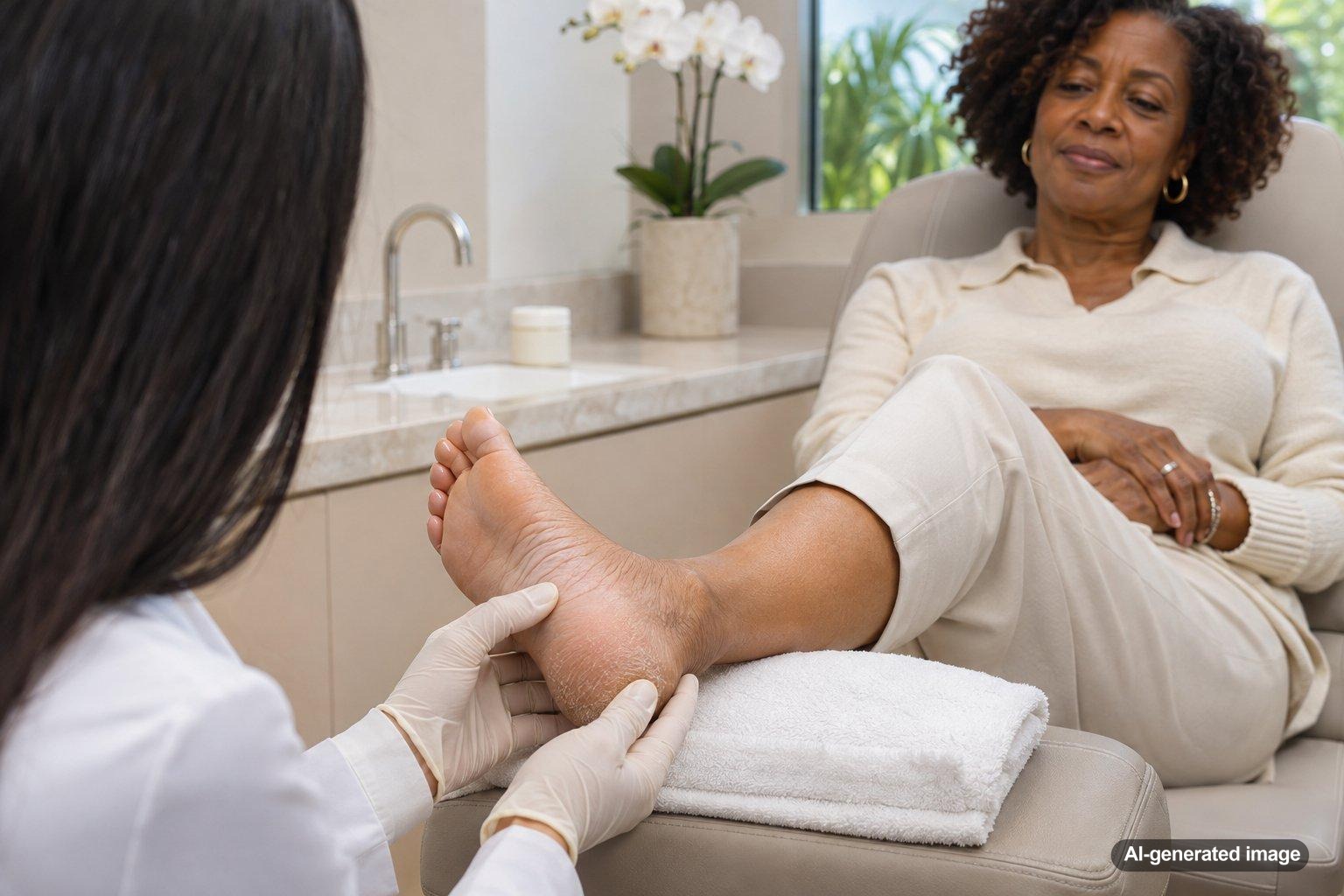
A fresh pedicure can leave your toenails polished and your feet looking beautifully maintained. But what if your heels still feel rough when you run your hand across them? Even after soaking, exfoliation, and moisturizer, some people notice that the skin around their heels remains thick, dry, or uneven.
The reason is often that a pedicure addresses surface texture without fully addressing the factors that make heel skin rough in the first place. Pressure from walking, accumulated dead skin, inadequate moisture, and certain skin conditions can all contribute. Understanding why your heels feel rough after a pedicure can help you choose gentler, more effective maintenance habits and recognize when professional evaluation may be worthwhile.
Quick Answer: Why Are My Heels Still Rough After a Pedicure?
Roughness can persist because the skin on your heels is naturally thicker and experiences considerable pressure throughout the day. A pedicure may smooth the surface temporarily without changing the underlying conditions.
- Thickened skin: Repeated friction and pressure can cause calluses that are difficult to smooth completely during a routine pedicure.
- Insufficient moisture: Heel skin may remain dry even after surface exfoliation.
- Overexfoliation: Aggressive filing or scraping can irritate the skin and compromise its protective barrier.
- Footwear and walking habits: Open-back shoes, prolonged standing, and repeated friction can contribute to ongoing roughness.
- Underlying skin concerns: Certain inflammatory conditions or other dermatologic issues may create persistent changes in skin texture.
Why Heel Skin Is Different From the Skin on Your Face or Hands
The soles of your feet contain a particularly thick outer skin layer called the stratum corneum. This protective structure helps your feet tolerate the repeated pressure and friction involved in standing and walking.
Unlike many other areas of the body, the soles do not contain sebaceous glands that produce skin oil. This means they rely heavily on the skin barrier, natural moisturizing factors, and external moisture care to maintain flexibility.
When the outer layer becomes excessively thick or loses moisture, it may feel coarse, hard, or flaky. A pedicure can remove some accumulated surface skin, but the underlying protective structure remains. That is why perfectly smooth heels immediately after exfoliation are not always realistic or necessary.
Common Reasons Your Heels Stay Rough After a Pedicure
1. Your Heels Have Developed Thick Calluses
Calluses develop when the skin responds to repeated mechanical pressure or friction by becoming thicker. They commonly appear along the heel edges and other weight-bearing areas of the foot.
A salon pedicure may reduce some superficial buildup, but thicker calluses can remain noticeable. Trying to eliminate all thickened skin in one session may increase the risk of irritation or injury. Some degree of thick skin serves a protective purpose.
2. Your Skin Needs More Consistent Moisture
Exfoliation and hydration accomplish different things. Removing loose surface cells may improve how your heels feel, but it does not necessarily correct ongoing moisture loss.
If your skin is already dry, occasional lotion during a pedicure may not provide enough sustained support. Regular application of a rich, fragrance-free foot moisturizer may help maintain softness between appointments.
Ingredients such as glycerin and petrolatum can support hydration by attracting moisture or reducing water loss. Certain foot creams also contain urea, which can help moisturize and soften thickened skin. The appropriate formula depends on your skin’s condition and tolerance.
3. The Exfoliation Was Too Aggressive
It may seem reasonable to file rough heels repeatedly until the skin feels completely smooth. However, excessive scraping, harsh abrasion, and frequent exfoliation can damage the outer skin barrier.
After aggressive treatment, heels may feel tender, unusually sensitive, or dry. Irritated skin can also develop a rough texture as it recovers.
Gentle care is generally preferable to attempting to remove every trace of thickened skin. Sharp blades and aggressive callus-removal techniques are especially concerning because they can create cuts and other injuries.
4. Your Shoes Continue to Create Friction
Sandals, open-back shoes, and footwear that allows the heel to shift repeatedly may contribute to friction and pressure. Prolonged standing can also place considerable mechanical stress on the heels.
In a warm climate such as Fort Lauderdale, sandals and other open footwear are practical everyday choices. However, exposed heels may experience additional environmental dryness and repeated contact with shoe edges.
If roughness returns soon after a pedicure, consider whether your usual footwear is contributing to the problem. Comfortable shoes that fit properly and provide appropriate heel support may help reduce unnecessary friction.
5. There May Be More Than Simple Dry Skin
Not every rough heel is caused solely by ordinary dryness or callus formation. Certain skin conditions can produce thickening, scaling, inflammation, or persistent changes in the skin surface.
For example, psoriasis or eczema can sometimes affect the feet. Other conditions may also cause peeling or unusually thick skin. The appearance of these problems can overlap, making self-diagnosis unreliable.
If roughness persists despite gentle care, or if you notice redness, itching, painful cracks, or changes in skin color, a dermatologist can evaluate what may be contributing to the symptoms.
What You Can Do at Home to Help Keep Heels Softer
Routine foot care does not need to involve complicated products or intensive exfoliation. A few consistent, conservative habits may help maintain comfortable skin.
- Moisturize regularly: Apply a fragrance-free cream or ointment after bathing, while the skin is still slightly damp.
- Choose products suited to thicker skin: Foot moisturizers containing ingredients such as urea may be useful for some people. Avoid potentially irritating formulas on broken or inflamed skin unless recommended by a clinician.
- Use gentle exfoliation: If your skin is intact and you do not have medical conditions that increase foot injury risk, occasional gentle use of a foot file may help with superficial roughness. Stop if irritation develops.
- Avoid cutting calluses yourself: Sharp tools can injure healthy tissue and create openings in the skin.
- Reduce unnecessary friction: Choose properly fitting footwear and consider supportive, cushioned options when standing or walking for extended periods.
- Protect the skin barrier: Avoid prolonged hot-water soaking, harsh scrubs, and fragranced products that seem to aggravate dryness.
People with diabetes, reduced sensation, poor circulation, or a history of foot wounds should seek individualized guidance before using foot files, exfoliating acids, or callus-removal products. Even a minor foot injury can deserve additional attention in these circumstances.
Can Professional Treatments Help With Persistent Rough Heels?
When routine care does not seem to help, a professional skin assessment may provide useful direction. The goal is not simply to remove more skin, but to understand why the roughness keeps returning.
A dermatologist can examine the distribution and appearance of thickened skin, consider possible inflammatory or other medical causes, and recommend an appropriate care approach. Depending on the findings, options may include adjustments to moisturizing products, carefully selected topical treatments, or referral for specialized foot care.
Cosmetic foot maintenance may improve the appearance and feel of uncomplicated dry skin. However, salon services are not a substitute for medical evaluation when symptoms suggest an underlying condition.
For thick, painful calluses associated with mechanical pressure, a podiatrist may also be able to assess footwear, pressure distribution, and appropriate callus management.
When Should You See a Dermatologist for Rough Heels?
Occasional dry or mildly rough heels are common. Certain changes, however, deserve more attention than another round of exfoliation.
- Deep cracks that are painful, bleeding, or repeatedly reopening.
- Persistent redness, swelling, tenderness, or worsening discomfort.
- Itching, scaling, or thickening that does not improve with gentle maintenance.
- Skin changes extending beyond the heels to other areas of the feet or body.
- Unusual discoloration, persistent sores, or areas that do not heal normally.
- Roughness accompanied by known circulation problems, reduced foot sensation, or diabetes.
Spreading redness, increasing warmth, drainage, fever, or rapidly worsening pain may require prompt medical attention. Do not attempt further exfoliation over damaged skin while waiting for an evaluation.
Frequently Asked Questions About Rough Heels After a Pedicure
Why do my heels feel rough the day after a pedicure?
The treatment may have removed loose surface skin without fully reducing thicker callused areas. Moisture loss, friction from footwear, or irritation from exfoliation may also become more noticeable after the appointment.
Should a pedicure remove all the hard skin on my heels?
Not necessarily. Some thickening helps protect the feet from pressure and friction. Removing excessive amounts of skin can create tenderness or injury. Comfortable, healthy skin is a more useful goal than removing every bit of natural thickness.
Is it better to use a foot file or a moisturizing cream?
They serve different purposes. A moisturizer helps support hydration and the skin barrier, while careful filing may reduce superficial buildup. Moisturizing is often the gentler starting point. Whether exfoliation is appropriate depends on your skin and medical history.
Can I use a foot peel on very rough heels?
Chemical foot peels can irritate skin, especially when cracks, inflammation, or sensitivity are present. Some products may also be inappropriate for people with certain medical conditions. A dermatologist can help determine whether an exfoliating product is suitable.
Why do my heels become rough again so quickly?
The same factors that originally contributed to roughness may still be present. Daily pressure, dry skin, friction, and inconsistent moisturizing can continue after a pedicure. Persistent or rapidly recurring thickening may be worth discussing with a dermatologist.
Can rough heels be a sign of a skin condition?
Sometimes. Roughness can occur with ordinary dryness and calluses, but inflammatory conditions and other dermatologic concerns can also affect the feet. Persistent itching, scaling, cracking, or redness deserves professional assessment rather than an assumption that more exfoliation is needed.
Ready to get help?
Schedule an appointment or send a message and our team will get back to you.
Prefer to call? 954-666-3736
Disclaimer
This article is for educational purposes and is not medical advice. For diagnosis and personalized treatment, please book an appointment with a board-certified dermatologist.
