

When a favorite moisturizer suddenly causes itching or a new serum leaves your face red and uncomfortable, identifying the responsible ingredient can be surprisingly difficult. Many skincare products contain numerous ingredients, and similar symptoms can develop for very different reasons. Even products labeled for sensitive skin may contain substances that some individuals cannot tolerate.
Yes, professional patch testing can help identify specific ingredients responsible for allergic reactions to skincare products. It is particularly useful when a dermatologist suspects allergic contact dermatitis, a delayed skin reaction to a substance that touches the skin. However, patch testing cannot explain every reaction. Irritation, skin barrier disruption, and certain other skin conditions may require a different approach. Understanding what the test measures, and what its results mean, can make it easier to develop a more comfortable skincare routine.
Quick Answer: Can Patch Testing Find the Ingredient Causing a Skincare Reaction?
- Yes, for certain allergies. Professional patch testing can identify delayed allergic reactions to specific substances used in skincare and cosmetic products.
- It tests ingredients, not simply product names. Common allergens include certain fragrance components, preservatives, and botanical substances.
- It requires multiple appointments. Allergens are generally applied to the back, and the dermatologist examines the skin over several days.
- A negative result does not rule out every cause. Irritant reactions and allergies to ingredients that were not tested may remain possible.
- Results require professional interpretation. A dermatologist considers the findings alongside symptoms, exposure history, and the patient’s actual products.
What Is Professional Patch Testing?
Patch testing is a diagnostic procedure used to investigate allergic contact dermatitis. This condition occurs when the immune system develops a delayed reaction to a substance that contacts the skin. Unlike an immediate allergic response, symptoms may not become noticeable until hours or days after exposure.
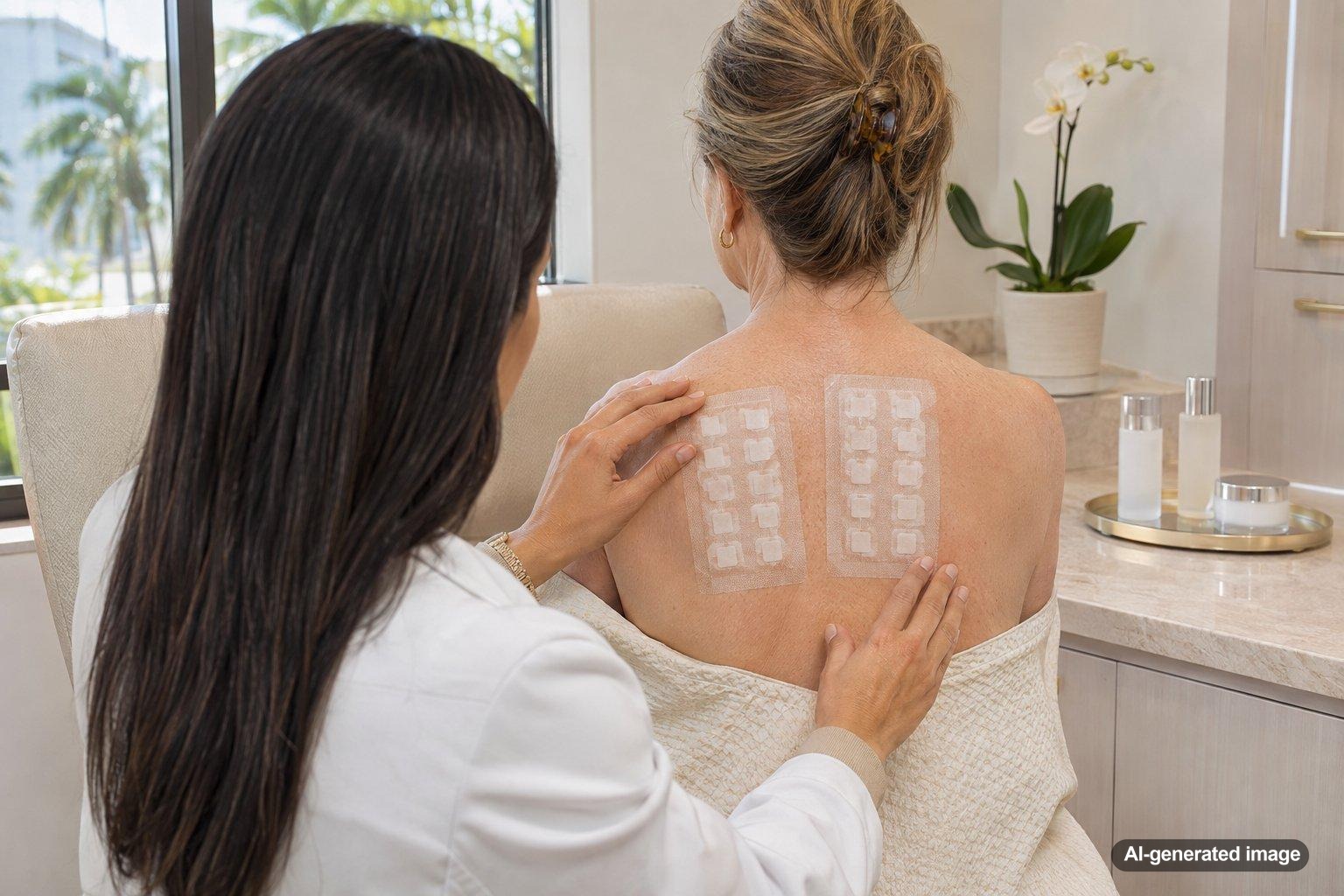
During testing, a clinician places carefully prepared concentrations of selected allergens into small chambers or patches that are secured to the skin, usually on the upper back. The substances remain in contact with the skin for a prescribed period while the patient follows instructions designed to protect the testing area.
The patches are commonly removed after approximately 48 hours. Additional readings are performed afterward, often several days after the initial application, because delayed reactions can take time to appear. Depending on the protocol, the entire assessment may involve appointments spanning approximately four to seven days.
A positive response can appear as localized inflammation at a testing site. The dermatologist evaluates the appearance, strength, and timing of the reaction rather than treating every red spot as evidence of an allergy.
Professional patch testing is different from allergy skin prick testing. Skin prick tests primarily investigate immediate allergic responses, while conventional patch testing evaluates delayed contact allergies.
Which Skincare Ingredients Can Patch Testing Identify?
Skincare allergies are often difficult to investigate because ingredient lists contain overlapping substances. A person may react to products from several unrelated brands because those products share a particular ingredient.
Common categories of potential contact allergens include:
- Fragrance ingredients: Fragrance mixtures and individual fragrance components may be responsible for reactions to moisturizers, cleansers, perfumes, and other personal care products.
- Preservatives: Certain preservatives used to protect formulas from microbial contamination can trigger allergic contact dermatitis in susceptible individuals.
- Botanical extracts and essential oils: Plant-derived ingredients can contain allergenic substances even when a product is marketed as natural or gentle.
- Hair dye ingredients: Certain coloring agents may cause reactions around the scalp, hairline, eyelids, or face.
- Topical medication ingredients: Some active ingredients or components of medicated creams can cause contact allergies.
- Adhesives and nail product ingredients: Certain acrylates used in nail products and adhesives can sometimes be associated with dermatitis affecting the hands, face, or eyelids.
Not every possible cosmetic ingredient is included in a standard patch testing panel. A dermatologist may recommend additional allergens based on the patient’s skincare routine, occupation, exposures, and pattern of symptoms.
How Can You Tell the Difference Between a Skincare Allergy and Irritation?
This distinction is important because allergic contact dermatitis and irritant contact dermatitis can look remarkably similar, yet they develop through different mechanisms.
Allergic Contact Dermatitis
Allergic contact dermatitis involves a delayed immune response to a substance that the body has become sensitized to. Itching, swelling, redness, scaling, or small bumps may appear after exposure. On darker skin tones, inflammation may also appear as darker or differently colored patches rather than obvious bright redness.
An allergic reaction can develop even after someone has used the same product without difficulty for an extended period. Previous tolerance does not necessarily exclude the possibility of a newly developed contact allergy.
Irritant Contact Dermatitis
Irritant contact dermatitis occurs when a substance disrupts or damages the skin’s protective barrier without requiring a specific allergic immune response.
Common triggers include frequent cleansing, harsh detergents, repeated exposure to water, strong exfoliating products, and combinations of potentially irritating active ingredients.
Burning, stinging, dryness, tightness, and visible irritation may develop shortly after application or accumulate with repeated use. Products containing retinoids or exfoliating acids, for example, can sometimes cause irritation that is not an allergy.
Patch testing is primarily designed to identify allergic contact dermatitis, not routine irritant reactions. A dermatologist may consider the timing of symptoms, areas affected, product ingredients, and clinical examination to help distinguish between these possibilities. Allergy and irritation may also coexist.
What Happens During a Skincare Patch Testing Appointment?
The process begins with a review of the patient’s symptoms and personal care products. A dermatologist may ask when the reaction started, which areas are affected, whether symptoms develop immediately or later, and what products were introduced before the problem began.
Step 1: Reviewing Products and Possible Exposures
Patients may be asked to bring skincare products, photographs of ingredient lists, or a written inventory of products they use regularly. Cleansers, sunscreen, moisturizers, makeup, hair products, and topical medications may all be relevant.
The dermatologist uses this information to select an appropriate testing panel and determine whether additional substances should be evaluated.
Step 2: Applying the Test Patches
Small amounts of standardized allergens are placed on the skin using specialized testing materials. Patients are generally instructed to keep the testing area dry and avoid activities that loosen the patches or cause excessive sweating.
The testing process does not ordinarily involve needles. Some test sites may become itchy or uncomfortable if a reaction develops.
Step 3: Returning for Skin Readings
At follow-up appointments, the clinician examines the testing sites for delayed inflammatory responses. Additional readings help distinguish meaningful allergic responses from temporary irritation or reactions related to the testing materials.
Step 4: Interpreting the Findings
A positive patch test indicates that the skin reacted to a tested substance under the testing conditions. It does not automatically mean that the substance caused the original skincare problem.
The dermatologist evaluates whether the allergen is present in products the patient uses and whether exposure could reasonably explain the location and timing of the symptoms. This connection is called clinical relevance.
What Are the Limitations of Patch Testing?
Although patch testing is an important diagnostic tool, it is not a universal explanation for all skincare reactions.
Several limitations are worth understanding:
- Not all ingredients are tested. A standard panel may not contain the specific substance responsible for a reaction.
- Some reactions are not allergic. Irritation caused by acids, retinoids, excessive cleansing, or a compromised skin barrier may not produce a positive patch test.
- Results depend on interpretation. A positive result may reflect a past allergy that is unrelated to the current symptoms.
- Testing conditions matter. Certain medications, active skin inflammation, patch placement, or problems keeping the patches secure may affect reliability.
- Other conditions can resemble contact dermatitis. A dermatologist may need to consider other inflammatory skin disorders when symptoms persist.
A negative result can still be informative. It may lead the dermatologist to investigate irritant exposures, modify the suspected ingredient list, consider expanded testing, or assess another possible explanation.
What Can You Do at Home While Investigating Skincare Reactions?
When skincare products repeatedly cause discomfort, a simplified routine can make it easier to identify patterns while reducing unnecessary exposure.
- Pause suspicious products. Avoid continuing to apply a product that repeatedly causes burning, itching, or visible inflammation.
- Keep a product diary. Record product names, application dates, symptoms, and when reactions appear.
- Save ingredient lists. Photographs of labels can be useful if a product is discontinued or reformulated.
- Keep cleansing gentle. Avoid adding multiple new exfoliants, scrubs, or strong active ingredients while skin is irritated.
- Choose simple moisturizers. A bland, fragrance-free moisturizer may help support comfort when tolerated.
- Avoid repeatedly challenging inflamed skin. Applying a suspected allergen again to confirm a reaction may worsen existing dermatitis.
People sometimes use the term ‘patch test’ to describe applying a new product to a small area at home before using it more widely. This type of product-use check differs from formal medical patch testing, which uses selected allergens under controlled conditions and professional interpretation.
Home product testing can sometimes help assess tolerance before routine use, but it cannot reliably identify a specific allergen or replace professional evaluation. If a product has already caused a concerning reaction, ask a dermatologist before attempting another exposure.
How Can a Dermatologist Help After Patch Testing?
Professional evaluation can be useful both before and after testing. The first step is determining whether the symptoms and exposure history suggest allergic contact dermatitis strongly enough to warrant a formal investigation.
If a relevant allergen is identified, a dermatologist can explain where the ingredient may appear, review product labels, and discuss practical ways to reduce future exposure. Depending on the severity and appearance of the skin, management may also involve supportive skincare or medical treatment for existing inflammation.
If the test does not identify a relevant allergen, the evaluation can shift toward possible irritants, skin barrier concerns, other inflammatory conditions, or additional testing when appropriate.
At Waverly DermSpa in Fort Lauderdale, Dr. Maryann Mikhail, MD, can evaluate persistent skincare-related symptoms and help determine an appropriate diagnostic approach, including whether patch testing or referral for specialized testing should be considered.
When Should You See a Dermatologist for Skincare Reactions?
Consider a dermatology appointment when reactions recur, involve multiple products, interfere with daily activities, or fail to improve after the suspected product is discontinued.
Additional reasons to seek evaluation include:
- Persistent itching, scaling, swelling, or discomfort.
- Rashes involving the eyelids, face, neck, or hands.
- Reactions that appear after using several different products with overlapping ingredients.
- Skin inflammation that repeatedly returns despite a simplified routine.
- Cracking, significant tenderness, blistering, or changes in skin color associated with recurring dermatitis.
Extensive blistering, severe pain, or rapidly worsening skin symptoms deserve prompt medical evaluation. Sudden swelling of the lips or tongue, trouble breathing, or symptoms suggesting a severe immediate allergic reaction require emergency medical attention rather than routine patch testing.
Frequently Asked Questions About Skincare Patch Testing
Can patch testing identify an allergy to a specific moisturizer or serum?
It may identify an allergenic ingredient contained in that product. A dermatologist can compare the results with the ingredient list and may consider additional testing when the standard panel does not adequately address the suspected exposure. Not every finished skincare formula is appropriate for direct testing under a patch.
Can patch testing detect fragrance allergies?
Yes. Professional panels commonly include selected fragrance allergens. Additional testing may sometimes be appropriate because fragrance formulations can contain numerous individual substances.
What if patch testing is negative but my skincare still burns?
Burning does not necessarily indicate an allergy. Irritation, an impaired skin barrier, or another skin condition may explain the symptoms. A negative result can also occur when the responsible allergen was not included in testing. A dermatologist can evaluate the remaining possibilities.
Can you develop a skincare allergy after years of using the same product?
Yes. Allergic contact dermatitis can develop after repeated exposure to a substance that was previously tolerated. Product reformulations and the addition of other products containing the same ingredient can also complicate the history.
How long does professional patch testing take?
The patches are commonly worn for approximately 48 hours, with additional skin readings during subsequent days. The full schedule varies by clinic and testing protocol, and patients may need several visits.
Does a positive patch test mean I must avoid every skincare product?
No. A positive result generally helps identify particular substances that may need to be avoided when they are clinically relevant. Many people can continue using appropriately selected skincare products. A dermatologist can help translate the results into a practical ingredient-avoidance strategy.
Ready to get help?
Schedule an appointment or send a message and our team will get back to you.
Prefer to call? 954-666-3736
Disclaimer
This article is for educational purposes and is not medical advice. For diagnosis and personalized treatment, please book an appointment with a board-certified dermatologist.
Sources & further reading
- American Academy of Dermatology (AAD) – Patch testing can find what’s causing your rash
- DermNet – Patch tests
- American Academy of Dermatology (AAD) – How to test skin care products
