

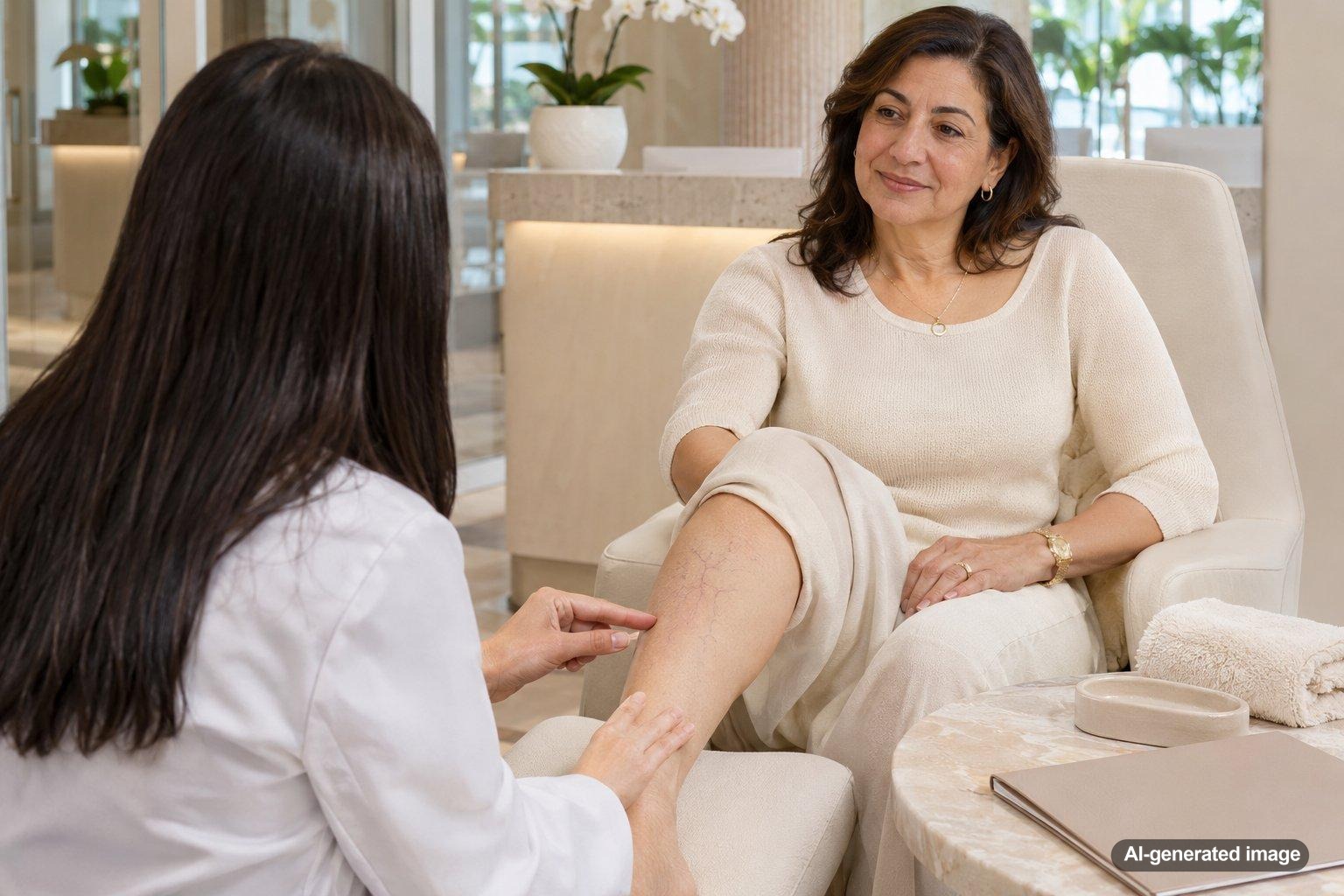
When thin red, blue, or purple veins become visible beneath the skin, choosing a treatment can feel surprisingly complicated. Laser therapy and sclerotherapy are two established options for reducing spider veins, but they work differently and are not equally suited to every location or vessel type.
So which works better? Sclerotherapy is often preferred for suitable spider veins on the legs, while vascular laser treatment is frequently favored for small facial vessels and veins too fine to inject. Neither approach is universally superior. The most appropriate choice depends on where the vessels appear, their size and depth, your skin characteristics, and whether an underlying circulation problem needs attention. Understanding these differences can help you approach a dermatology consultation with realistic expectations.
Quick Answer: Laser vs. Sclerotherapy
- For leg spider veins: Sclerotherapy is commonly a first-line option, particularly for vessels that can be safely injected.
- For facial spider veins: Vascular laser therapy is often preferred because it targets small visible blood vessels without injections.
- For extremely fine vessels: Laser treatment may be more practical when veins are too small for a needle.
- For larger or deeper leg veins: A vascular assessment may be necessary before either cosmetic treatment.
- For lasting improvement: Both treatments can reduce existing visible vessels, but new spider veins may develop over time.
What Are Spider Veins?
Spider veins are small, visible blood vessels near the surface of the skin. Also called telangiectasias, they may form delicate branching patterns, thin lines, or web-like clusters. Their color can range from bright red to blue or purple, depending partly on vessel characteristics and depth.
They commonly appear on the thighs, calves, ankles, cheeks, and around the nose. Although facial and leg spider veins may look similar, their underlying causes and treatment considerations can differ.
Factors associated with visible spider veins include:
- Genetics: Family history can increase susceptibility, particularly for leg veins.
- Age: Changes in blood vessel structure and supporting tissues may make veins more noticeable.
- Hormonal changes: Hormonal influences, including those associated with pregnancy, can contribute to visible veins.
- Prolonged sitting or standing: Sustained pressure in leg veins can contribute to venous circulation problems.
- Sun exposure: Cumulative ultraviolet exposure can contribute to visible facial blood vessels.
- Rosacea: Persistent facial redness and small visible vessels can occur together.
Most spider veins are primarily a cosmetic concern. However, visible leg veins accompanied by swelling, aching, heaviness, or skin changes warrant medical evaluation because they may coexist with venous insufficiency.
How Does Sclerotherapy Work?
Sclerotherapy is an office-based procedure in which a trained medical professional injects a specialized solution into an affected vein. The solution irritates the vessel lining, causing the vein to close. Blood is redirected through other functioning vessels, and the treated vein gradually becomes less visible as the body processes it.
Because the solution must be delivered directly into the vessel, sclerotherapy is generally most practical for veins that are large enough to access with a small needle.
Where sclerotherapy tends to work well
Sclerotherapy is widely used for spider veins and certain small varicose veins on the legs. It can be especially useful when multiple injectable vessels are present across the thighs or lower legs.
What treatment feels like
Patients may experience brief pinching, stinging, or mild discomfort during injections. The clinician may treat several vessels during one appointment, depending on the treatment plan.
Compression stockings, walking, and temporary activity modifications may be recommended afterward. The specific instructions depend on the veins treated and the solution used.
Limitations and potential side effects
Sclerotherapy does not always eliminate every visible vein. Multiple sessions may be needed, and some vessels may respond incompletely.
Possible side effects include temporary bruising, tenderness, localized inflammation, skin discoloration, and small areas of trapped blood. Fine new vessels may occasionally appear near a treated area. Less commonly, complications can include skin injury, allergic reactions, or blood clots. A clinician should review these possibilities before treatment.
How Does Laser Treatment Work for Spider Veins?
Vascular laser treatment uses focused light energy to target blood within visible vessels. When the light is absorbed, it produces heat that can damage the targeted vessel, allowing the body to gradually clear it.
Unlike sclerotherapy, external laser treatment does not require a needle to enter each spider vein. This makes it particularly useful for tiny vessels that may be difficult to inject.
Where laser treatment tends to work well
Vascular lasers are frequently used for small red facial veins, including vessels around the nose and cheeks. They may also be appropriate for selected superficial leg veins, especially those that are too fine for conventional injections.
The most suitable laser technology depends on the vessel’s color, diameter, depth, surrounding skin tone, and treatment area. Different vascular lasers use different wavelengths and settings, so device selection requires individualized assessment.
What treatment feels like
Laser pulses may produce a brief snapping or warming sensation. Cooling measures may be used to improve comfort and help protect the surrounding skin.
Afterward, temporary redness, swelling, or a darker appearance of the treated vessels may occur. The degree and duration of these effects vary.
Limitations and potential side effects
Laser treatment is not equally effective for all vessel sizes or depths. Some leg veins may respond less predictably than small facial vessels, and several treatments may be necessary.
Potential complications include burns, blistering, prolonged redness, changes in pigmentation, and, rarely, scarring. Appropriate device selection, skin assessment, and treatment technique are important, particularly for patients with more deeply pigmented skin or recent sun exposure.
Laser vs. Sclerotherapy: Side-by-Side Comparison
| Feature | Laser Treatment | Sclerotherapy |
|---|---|---|
| How it works | Uses focused light to heat targeted vessels | Injects a solution that causes vessels to close |
| Common treatment area | Face and selected small leg veins | Leg spider veins and selected small varicose veins |
| Needles required | No injections into the vessels for external laser treatment | Yes |
| Very fine vessels | Often useful | May be difficult to inject |
| Recovery considerations | Redness, swelling, and sun protection | Bruising, walking, and possible compression stockings |
| Number of sessions | Varies with vessel characteristics and response | Varies with vein extent and response |
| Important limitations | Pigment changes, skin injury, and variable effectiveness for deeper veins | Injection-related reactions and suitability restrictions |
The central difference: Sclerotherapy delivers a treatment directly into an accessible vein, while external vascular lasers deliver energy through the skin. This distinction helps explain why the two treatments are often selected for different types of vessels.
Which Works Better for Spider Veins on the Legs?
For many people with uncomplicated, injectable spider veins on the legs, sclerotherapy is a practical and commonly preferred treatment. It allows a clinician to address multiple visible veins directly and is particularly useful when vessels form branching networks.
Laser treatment may be considered when the veins are exceptionally small, injections are unsuitable, or residual fine vessels remain after another procedure.
However, the appearance of the leg veins is only part of the decision. Larger underlying veins, swelling, heaviness, or recurrent clusters may suggest a circulation problem that should be evaluated first.
In some cases, a clinician may recommend duplex ultrasound to assess blood flow and identify reflux in deeper or superficial veins. Treating only the visible spider veins without addressing significant underlying venous disease may lead to unsatisfactory results.
Which Works Better for Spider Veins on the Face?
For small visible facial blood vessels, vascular laser treatment is often the more appropriate choice. These fine vessels are typically difficult to inject, and lasers can target them without introducing a chemical solution into each vein.
Facial spider veins commonly appear around the nose, cheeks, and central face. Some are associated with rosacea, while others may develop with cumulative sun exposure or other skin changes.
When rosacea contributes to facial redness, treating visible vessels may improve their appearance, but it does not necessarily address every aspect of the underlying condition. A dermatologist may recommend a broader management plan.
Skin tone is another important consideration. Certain laser settings carry a greater risk of pigmentation changes in some skin types. An experienced clinician can assess these factors and determine whether laser treatment is appropriate.
Which Treatment Produces Faster Results?
Neither approach provides a single predictable timeline for everyone.
After sclerotherapy, treated spider veins may gradually fade over several weeks. Some vessels may take longer to improve, and additional sessions may be needed.
With laser treatment, very small superficial vessels may change appearance quickly, while others can temporarily darken before gradually becoming less visible. The response depends on vessel size, depth, laser settings, and individual healing characteristics.
It’s also important to distinguish initial improvement from the final appearance. Temporary redness, bruising, or pigmentation changes can make the treated area look more noticeable during early healing.
A clinician can explain what a reasonable response might look like for the particular veins being treated, rather than relying on a universal timeline.
Which Has Less Downtime?
Both treatments are generally performed in outpatient settings, and many patients can resume ordinary activities relatively quickly. However, the aftercare requirements are different.
After laser treatment
Patients may be advised to avoid excessive heat, intense sun exposure, and irritating skincare products while the treated skin recovers. Temporary redness or swelling can affect the appearance of the treatment area.
After sclerotherapy
Walking is commonly encouraged, and compression stockings may be recommended for a prescribed period. Some strenuous activities or prolonged heat exposure may need to be limited according to the clinician’s instructions.
For patients planning a beach vacation or spending significant time outdoors in Fort Lauderdale, treatment timing deserves particular consideration. Sun exposure can complicate recovery after vascular laser procedures, while compression garments and bruising may affect comfort after leg sclerotherapy.
Neither treatment should be scheduled solely around convenience without considering the required recovery precautions.
Can Laser and Sclerotherapy Be Combined?
Yes. In selected cases, clinicians may use both approaches as part of a staged treatment plan.
For example, sclerotherapy may be used for accessible leg spider veins, while laser treatment may later address remaining fine superficial vessels. This does not mean that everyone benefits from combined procedures.
The order of treatment, spacing between sessions, and choice of technique depend on the distribution of the veins, the response to earlier treatment, and any underlying vascular concerns.
Will Spider Veins Come Back After Treatment?
Successfully treated vessels may remain closed, but the tendency to develop spider veins can persist. New vessels may appear in the same general area or elsewhere, especially when contributing factors remain present.
Genetics, hormonal influences, venous pressure, sun exposure, and certain skin conditions can continue to influence the appearance of new veins.
Neither laser treatment nor sclerotherapy eliminates these underlying tendencies. Some people may eventually choose additional sessions to address newly visible vessels.
What Can You Do at Home?
Home care cannot reliably erase established spider veins, but certain habits may support circulation, skin health, and long-term maintenance.
- Move regularly: Walking and taking breaks from extended sitting or standing may support healthy leg circulation.
- Elevate your legs when appropriate: Periodic elevation may help relieve swelling or heaviness associated with prolonged standing.
- Use sun protection: Broad-spectrum sunscreen and protective clothing help limit cumulative sun damage that can contribute to visible facial vessels.
- Follow a gentle skincare routine: If facial redness is associated with sensitive skin or rosacea, minimizing irritating products may help reduce visible irritation.
- Ask about compression: Properly selected compression stockings may benefit some people with leg symptoms, although they do not remove existing spider veins.
Avoid attempting to inject, puncture, or aggressively heat visible veins at home. These methods can injure the skin and do not replace professional vascular assessment or treatment.
When Should You See a Dermatologist?
A dermatology consultation is useful when visible veins are bothersome, continue to increase, or are accompanied by persistent facial redness.
Medical evaluation becomes especially important when leg veins occur alongside symptoms that could indicate venous disease.
- Persistent leg swelling, aching, or heaviness
- Burning, cramping, or discomfort associated with visible veins
- Skin discoloration, thickening, or sores near the ankles
- Large, bulging, or increasingly prominent veins
- Spider veins that repeatedly return after treatment
- Uncertainty about whether a visible vessel is a spider vein or another skin condition
Seek prompt medical attention for new one-sided leg swelling or pain, particularly with warmth or redness. Sudden chest pain or shortness of breath requires emergency evaluation because these symptoms can indicate a serious condition unrelated to routine cosmetic spider vein treatment.
A dermatologist can examine the skin and determine whether cosmetic vessel treatment is appropriate or whether further vascular assessment is needed.
At Waverly DermSpa, we offer Excel V+ and can help you understand whether it may be appropriate.
Frequently Asked Questions
Is laser treatment more effective than sclerotherapy?
Not for every type of spider vein. Sclerotherapy is often favored for injectable leg veins, while vascular laser treatment is commonly preferred for small facial vessels and very fine veins. Vessel characteristics and medical history determine which option is more suitable.
Does sclerotherapy hurt more than laser treatment?
Discomfort varies by individual. Sclerotherapy involves small injections that may briefly sting, while laser pulses can feel like quick snaps or warmth against the skin. Neither procedure is completely sensation-free, and comfort measures may be available.
Can laser treatment remove spider veins without injections?
External vascular laser treatment can target selected superficial spider veins without injecting a solution into them. However, some vessels are better suited to sclerotherapy, and larger underlying venous problems may require different procedures.
How many sessions are needed for spider vein treatment?
The number varies according to vessel size, location, distribution, and treatment response. Some small areas improve with limited treatment, while more extensive or persistent veins may require multiple appointments. A clinician can provide an individualized estimate after examination.
Can spider veins be treated if I have darker skin?
Potentially. Both treatment choice and technique require careful consideration. With vascular lasers, skin pigmentation can influence device selection and the risk of discoloration. A dermatologist experienced in treating different skin tones can discuss appropriate options and precautions.
Is sclerotherapy or laser better before a vacation?
Neither is automatically preferable. Laser treatment may require careful avoidance of sun exposure during recovery, while sclerotherapy can involve temporary bruising and compression garments. If your trip includes swimming, beach activities, or prolonged outdoor exposure, discuss the timing with your clinician before scheduling treatment.
The Bottom Line
Laser therapy and sclerotherapy both have established roles in spider vein treatment, but they solve somewhat different problems. Sclerotherapy is commonly suited to accessible spider veins on the legs, while vascular lasers are especially useful for fine facial vessels and selected superficial veins.
The best decision begins with identifying the type of vessel, its location, and any underlying medical concerns. A thoughtful evaluation can help establish an appropriate treatment plan, realistic expectations, and recovery precautions.
Ready to get help?
Schedule an appointment or send a message and our team will get back to you.
Prefer to call? 954-666-3736
Medical Disclaimer
This article is for educational purposes and is not medical advice. For diagnosis and personalized treatment, please book an appointment with a board-certified dermatologist.
Sources & Further Reading
- American Academy of Dermatology (AAD) – Leg veins: Why they appear and how dermatologists treat them
- Cleveland Clinic – Spider Veins: Causes, Symptoms & Treatment
- Cleveland Clinic – Sclerotherapy: Treatment & Recovery
- DermNet – Facial red vein and vascular birthmark treatments
