

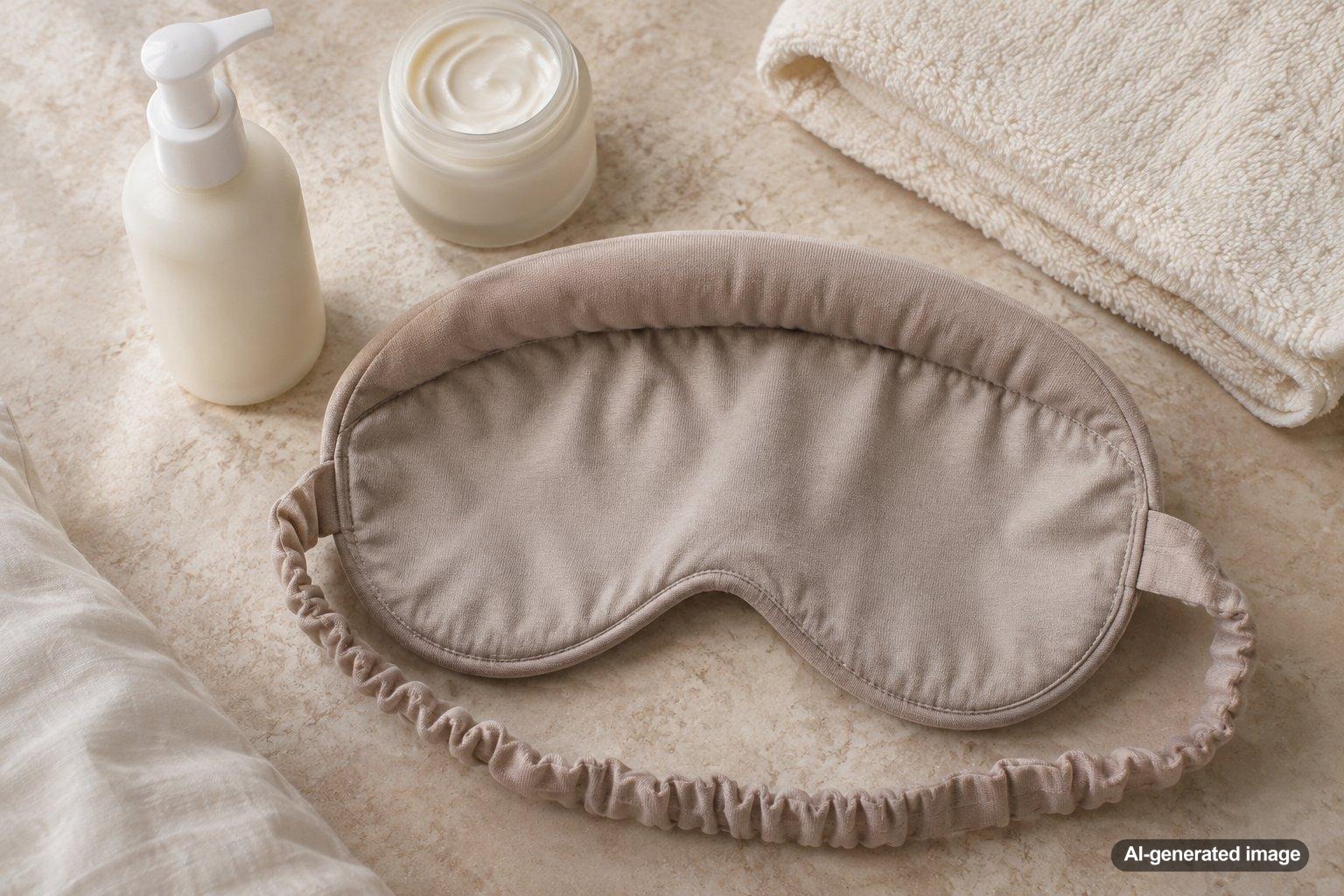
If you’ve noticed small pimples, rough bumps, or redness across your forehead after sleeping in an eye mask, the mask itself may be contributing. A sleep mask can create a warm, enclosed environment against the skin, particularly when its upper edge or elastic band rests across the forehead. Friction, trapped perspiration, skincare residue, and irritation from fabric or cleaning products may all play a role.
However, not every forehead bump is acne, and the timing alone doesn’t establish the cause. The appearance of the bumps, how the skin feels, and whether the problem improves when you stop wearing the mask can offer useful clues. Understanding these details may help you make a few gentle adjustments without abandoning a sleep accessory that otherwise works well for you.
Quick Answer: Why Can a Sleep Mask Cause Forehead Breakouts?
- Friction and pressure: A tight mask or strap can repeatedly rub the forehead, potentially contributing to acne-like bumps.
- Heat and perspiration: The covered area may become warmer and more humid, especially during sleep in a warm room.
- Product buildup: Facial oils, moisturizers, hair products, and residue on the mask can remain in contact with the skin overnight.
- Fabric or detergent irritation: Certain materials, dyes, fragrances, or laundry products may irritate sensitive skin.
- Another underlying cause: Bumps that appear beneath a mask may be unrelated to the mask or may represent a condition other than ordinary acne.
A useful first step is to examine the mask’s fit, cleanliness, and material while keeping the rest of your skincare routine consistent.
What Happens to Your Skin Under a Sleep Mask?
Your skin naturally produces oil, releases perspiration, and sheds surface cells. When a sleep mask rests against the same area for several hours, it changes the immediate environment of that skin.
The fabric can reduce airflow and hold moisture against the forehead. Pressure from an elastic band may also create repetitive rubbing as you change sleeping positions. If the skin is already prone to clogged pores or irritation, these conditions may contribute to visible bumps.
One possible explanation is acne mechanica, a form of acne associated with repeated friction, pressure, heat, and occlusion. Similar patterns can occur beneath helmets, protective gear, or tight athletic accessories.
Yet the forehead is also an area where breakouts may develop independently because of skin oil, hair products, or an existing tendency toward acne. A sleep mask may aggravate a preexisting pattern rather than being its only cause.
Common Reasons Your Forehead May React to a Sleep Mask
1. Repeated rubbing along the mask edge
If your bumps follow a fairly distinct line where the mask touches your forehead, friction deserves consideration. A mask that shifts during sleep may repeatedly rub the same area, particularly along its upper seam or underneath an adjustable strap.
Tightening the mask to prevent light from entering can increase pressure. A wider, softer contact surface may feel more comfortable than a narrow elastic band, although individual preferences and skin responses vary.
2. Sweat and overnight heat
Warm sleeping conditions can make perspiration more noticeable beneath a mask. Moisture and friction together may make sensitive skin uncomfortable, especially during humid weather or after an evening workout.
In Fort Lauderdale, warm nights and seasonal humidity can make this issue especially relevant. Indoor temperature, bedding, and personal sweating patterns may matter more than outdoor weather when determining how your skin responds overnight.
3. Residue from skincare and hair products
A rich nighttime moisturizer, facial oil, sunscreen residue, or leave-in hair product may transfer onto the mask. Over repeated nights, that residue can accumulate on material that remains in close contact with the forehead.
Products described as noncomedogenic are generally formulated to be less likely to clog pores, but individual reactions still vary. Applying a thick layer of skincare immediately before putting on a snug mask may also increase the feeling of occlusion.
4. Sensitivity to materials or detergents
Sometimes the problem is irritation rather than clogged pores. Fabric finishes, dyes, fragrance left behind by laundry detergent, and certain cleaning products may trigger discomfort in susceptible individuals.
Itching, burning, persistent redness, or patches of rough skin may suggest that irritation deserves attention. These findings are not enough to identify a specific condition without an examination.
5. An existing forehead breakout pattern
Small forehead bumps can arise for several reasons unrelated to a sleep mask. Hair styling products, occlusive headwear, routine changes, and individual acne tendencies may overlap with the area covered by a mask.
If the bumps extend beyond the mask’s contact points or continue despite changing masks, another explanation may be contributing.
How Can You Tell Whether the Bumps Are Acne or Irritation?
Appearance and sensation can provide clues, although they cannot replace a skin examination.
- Clogged pores: Small flesh-colored or whitish bumps may reflect comedonal acne.
- Inflamed pimples: Red or tender bumps may represent an inflammatory acne pattern.
- Surface irritation: Diffuse redness, stinging, burning, or roughness may be more consistent with an irritated skin barrier.
- Itchy, uniform-looking bumps: Multiple similar bumps can have several possible explanations and may warrant professional assessment if they persist.
Pay attention to whether the bumps appear directly beneath the mask, along a strap, or across the entire forehead. This distribution can help a dermatologist narrow down potential contributors.
Also consider timing. A bump noticed the morning after wearing a mask did not necessarily develop entirely overnight. Acne lesions often evolve over time, so an existing clogged pore may simply become more noticeable.
What Can You Do at Home to Reduce Sleep Mask Breakouts?
Start with the mask’s fit
Choose a mask that blocks light without requiring excessive pressure. Look for smooth seams, adjustable straps, and a design that does not press firmly against the forehead. A contoured eye mask may reduce contact in certain areas, although the best fit depends on the design and your facial anatomy.
Wash the mask regularly
Follow the manufacturer’s care instructions and wash a reusable mask often enough to prevent noticeable oil, sweat, and product buildup. More frequent cleaning may be useful if you perspire heavily or apply products that transfer onto the fabric.
Consider a fragrance-free detergent, rinse thoroughly, and allow the mask to dry completely before wearing it again. Avoid harsh cleaning agents that leave irritating residues.
Keep nighttime skincare gentle
Cleanse your face with a gentle cleanser suited to your skin type. Avoid aggressive scrubbing or trying several new acne products at once, particularly when your forehead already feels irritated.
If you use a heavier moisturizer or facial oil, consider whether it is being applied directly beneath the mask’s contact points. A lighter, noncomedogenic formulation may be more comfortable for acne-prone skin.
Maintaining adequate hydration of the skin barrier is still important. The goal is not to eliminate moisturizer, but to find a routine that your skin tolerates well.
Try changing one variable at a time
If it is practical and comfortable, consider taking a short break from the mask or switching to a different fit or fabric. Keep other products consistent while observing whether your skin changes.
This approach cannot establish a diagnosis, but it can make potential patterns easier to recognize. If you rely on a sleep mask because of light sensitivity or difficulty sleeping, blackout curtains may offer another way to reduce light without placing material directly against your forehead.
Avoid squeezing or picking the bumps
Picking at irritated or acne-prone skin can increase inflammation and may contribute to lingering discoloration or marks. Gentle care is generally preferable while determining the cause.
Are Silk Sleep Masks Better for Acne-Prone Skin?
Silk is often marketed as a skin-friendly option because its surface can feel smooth against the face. Some people find that a smooth silk mask creates less noticeable rubbing than a coarse or tightly constructed alternative.
However, there is not enough evidence to conclude that silk sleep masks consistently prevent acne or outperform every other material. Fit, cleaning frequency, fabric finish, moisture retention, and your personal skin sensitivity also matter.
A well-fitting, regularly cleaned mask made from a comfortable material may be a more practical choice than selecting a fabric based on marketing claims alone.
If you are considering silk, cotton, satin, or another textile, remember that satin describes a weave rather than a single fiber. The overall construction and finish of the mask can influence how it feels against your skin.
What Professional Options Are Available for Persistent Forehead Breakouts?
When gentle changes do not improve the problem, a dermatology evaluation can help distinguish acne from irritation and other causes of forehead bumps.
A dermatologist may review the pattern of the lesions, your skincare products, how the mask contacts your skin, and whether other areas of your face are affected. Treatment recommendations depend on what the examination reveals.
Common options for confirmed acne may include adjustments to cleansing and moisturizing products, topical acne treatments, or prescription therapies when appropriate. If irritation is suspected, the focus may instead be on identifying triggers and supporting the skin barrier.
Some patients may also benefit from professional skincare guidance to simplify an overly complicated routine. Cosmetic treatments are not automatically appropriate for active or unexplained forehead bumps, and a clinician should determine whether additional treatment is advisable.
At Waverly DermSpa, an individualized skin assessment can help clarify whether a recurring forehead breakout pattern is associated with your sleep habits, skincare routine, or another skin concern.
When Should You See a Dermatologist?
Consider scheduling an evaluation if the bumps persist, recur frequently, become painful, or do not improve after reasonable changes to mask care and fit.
Professional assessment is also worthwhile when redness or irritation spreads beyond the original contact area, itching is significant, or the skin develops persistent scaling or discoloration.
Seek prompt medical attention for rapidly worsening swelling, marked tenderness, spreading redness, fever, or other concerning symptoms. These are not typical features of an uncomplicated cosmetic breakout and should not be managed by simply changing sleep accessories.
If you are unsure whether you are dealing with acne or another skin condition, a dermatologist can evaluate the area rather than relying on appearance alone.
Frequently Asked Questions
Can a sleep mask clog forehead pores?
A sleep mask may contribute to clogged pores in susceptible skin by creating friction and holding oil, sweat, or product residue against the forehead. However, the mask is not necessarily the only factor involved.
Why are my forehead bumps worse after a hot night?
Warm sleeping conditions may increase perspiration beneath the mask. Combined with pressure and rubbing, this can aggravate sensitive or acne-prone skin. Other factors may contribute, so the pattern alone does not identify the cause.
Should I stop wearing my sleep mask if I notice pimples?
Not necessarily. You may be able to reduce irritation by adjusting the fit, cleaning the mask more frequently, or choosing a smoother material. If symptoms continue, temporarily avoiding direct contact may help you observe whether the mask is contributing.
Can a dirty sleep mask cause forehead breakouts?
Accumulated sweat, oils, and skincare residue can increase skin contact with substances that may contribute to irritation or breakouts. Regular cleaning is a sensible preventive habit, although it does not eliminate every possible cause of acne.
Should I use an acne treatment on the bumps?
That depends on whether the bumps are actually acne. Products intended for acne can irritate skin that is reacting to friction or a fabric-related trigger. A dermatologist can help determine which approach is appropriate, especially when the bumps are persistent or uncomfortable.
Will switching to a silk sleep mask clear my forehead?
A smoother material may reduce friction for some people, but switching fabrics does not ensure that breakouts will improve. Mask fit, cleanliness, skincare residue, and the underlying cause of the bumps remain important considerations.
The Bottom Line
Forehead breakouts associated with sleep masks often involve a combination of friction, pressure, moisture, and products that remain against the skin overnight. A gentle skincare routine, regular mask cleaning, and a comfortable fit are reasonable places to begin.
Because different skin concerns can produce similar-looking bumps, persistent symptoms deserve individualized attention. Understanding the cause is more useful than repeatedly changing products without knowing what your skin needs.
Ready to get help?
Schedule an appointment or send a message and our team will get back to you.
Prefer to call? 954-666-3736
Disclaimer
This article is for educational purposes and is not medical advice. For diagnosis and personalized treatment, please book an appointment with a board-certified dermatologist.
