

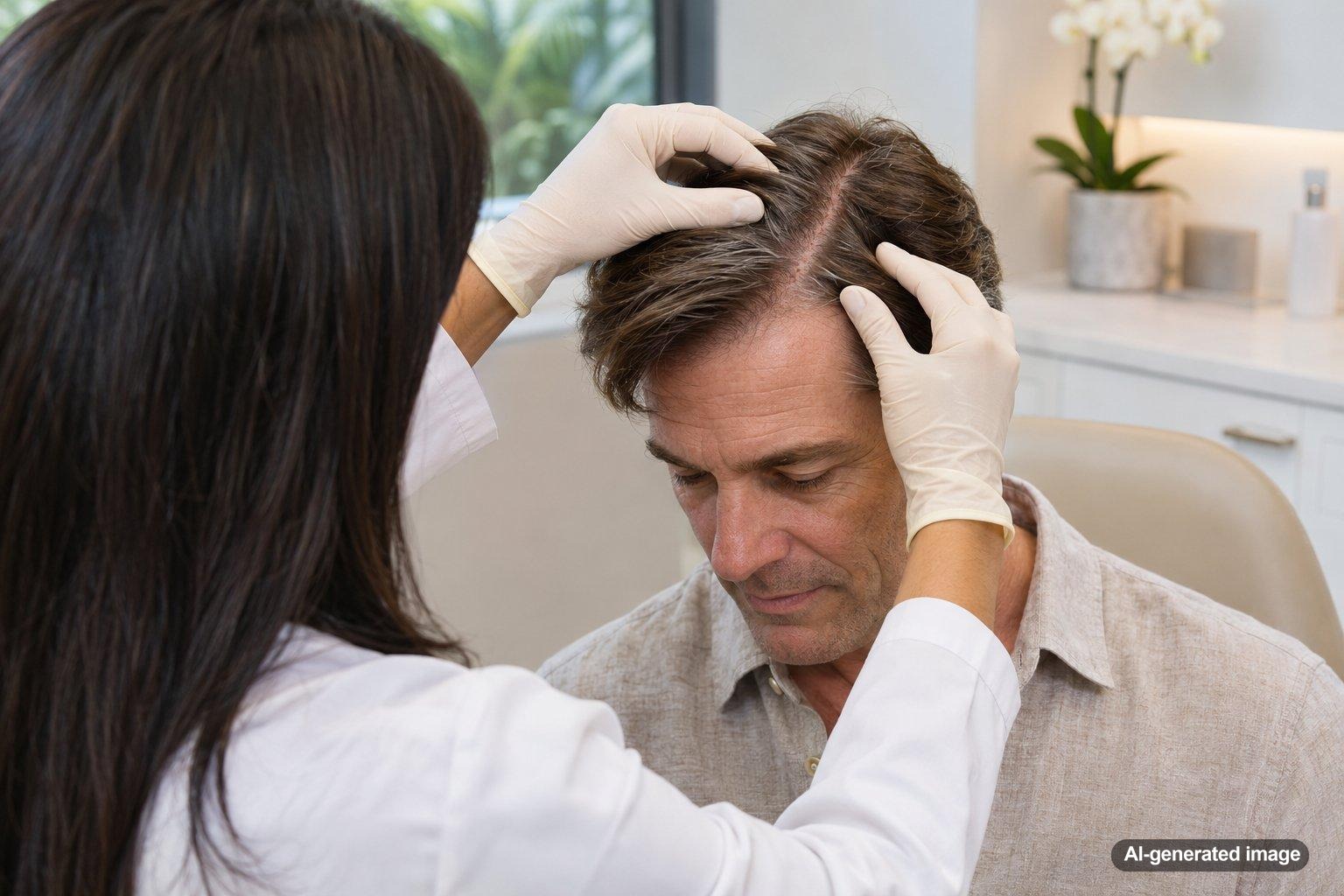
Noticing tiny pimples along your hair part can be surprising, especially when the rest of your scalp seems perfectly comfortable. The bumps may feel like small grains beneath your fingertips, appear as scattered red spots, or occasionally develop white centers. Some are itchy or tender, while others are noticeable only when you separate your hair in the mirror.
Tiny pimples along your hair part often develop because hair follicles become clogged, irritated, or inflamed. Hair products, sweat, friction, and a condition called scalp folliculitis are possible explanations. However, similar-looking bumps can have different causes, and their appearance alone may not reveal what is happening. Understanding the patterns and possible triggers can help you make sensible changes without unnecessarily irritating your scalp.
Quick Answer: Why Do Tiny Pimples Appear Along Your Hair Part?
- Scalp folliculitis: Inflammation around hair follicles can produce small, sometimes itchy or tender bumps.
- Hair product residue: Oils, styling creams, sprays, and conditioners may contribute to clogged follicles or acne-like breakouts.
- Sweat and friction: Heat, perspiration, tight headwear, and repeated rubbing may aggravate sensitive follicles.
- Contact irritation: Hair dye, fragrance, or another ingredient may trigger irritation or an allergic reaction.
- Underlying scalp conditions: Persistent flaking, inflammation, or recurring pustules may require a dermatologist to distinguish among possible causes.
What Are These Tiny Scalp Bumps?
Your scalp contains numerous hair follicles, each surrounded by skin structures that can become inflamed or obstructed. Because the follicles are closely spaced, even a small area of irritation can create several visible bumps.
Some bumps resemble ordinary acne, including small clogged pores or inflamed pimples. Others develop directly around individual hairs. When the follicles become inflamed, clinicians may consider folliculitis, which can involve irritation, microorganisms, or other contributing factors.
The appearance can provide clues, but it is not a reliable diagnosis. A small white-topped bump may look similar whether it arises from acne or folliculitis. Itching, tenderness, flaking, crusting, and changes in hair density can provide additional information during an examination.
Common Causes of Pimples Along the Hair Part
1. Scalp Folliculitis
Scalp folliculitis involves inflammation of hair follicles and may cause clusters of small bumps or pustules. The affected skin can itch, become sore, or develop crusts. Bacteria and yeast may contribute in some cases, although not every inflamed follicle represents the same type of infection.
Folliculitis can occur anywhere on the scalp. It may be particularly noticeable along a hair part because the surrounding hair is separated and the skin is easier to see. Recurrent or persistent folliculitis deserves evaluation, especially when the bumps become painful or are accompanied by hair loss.
2. Hair Oils, Serums, and Styling Products
Hair products can sometimes contribute to acne-like breakouts when oily ingredients repeatedly contact the skin. Pomades, leave-in conditioners, styling creams, and other products may leave residue around the follicles.
This is especially relevant if you apply products directly to the scalp, regularly smooth products along your part, or have recently introduced a new styling routine. Product-related acne often produces small, relatively uniform bumps, but a dermatologist can help distinguish it from other conditions.
Even products intended to nourish dry hair may not be ideal for every scalp. Choosing lighter formulations and avoiding unnecessary application directly to the skin may help reduce buildup.
3. Sweat, Heat, and Friction
Warm, humid conditions can create an environment where sweat and scalp oils accumulate. In Fort Lauderdale, outdoor activities, workouts, and extended periods in the heat may make scalp discomfort more noticeable.
Hats, helmets, headbands, and tightly positioned hair accessories may also increase friction. When the same area is repeatedly rubbed or covered, hair follicles can become more vulnerable to irritation.
Sweat itself does not automatically cause folliculitis, but the combination of moisture, friction, and an irritated skin surface may contribute to certain breakouts.
4. Irritation From Hair Dye or Scalp Products
Not every bump is a pimple. Some scalp reactions begin as small raised areas associated with irritation or contact dermatitis. Hair coloring products, fragrances, preservatives, and certain treatments may trigger symptoms in susceptible individuals.
Clues can include burning, itching, redness, or scaling after a product application. The reaction may extend beyond the hair part to the hairline, ears, or neck.
If a particular product repeatedly causes discomfort, stopping its use and seeking professional guidance may be more appropriate than covering the reaction with additional treatments.
5. Flaking and Inflammatory Scalp Conditions
Dandruff and seborrheic dermatitis can cause itching, scaling, and inflammation. These conditions do not necessarily produce true pimples, but scratching or overlapping follicular irritation can create a bumpy appearance.
Flakes around the bumps, greasy scales, or recurring patches of irritation may suggest that the problem involves more than clogged pores. A dermatologist can evaluate whether an inflammatory scalp condition, folliculitis, or more than one process is present.
Why Do the Bumps Seem Concentrated Along the Part?
A visible hair part exposes a narrow strip of scalp that may receive more direct contact from styling products, fingers, combs, and brushes. It is also where you are most likely to notice small changes when looking closely in a mirror.
People who consistently part their hair in the same location may repeatedly expose that area to similar styling habits. This does not mean the part itself causes acne or folliculitis, but the pattern can help identify potential sources of irritation.
Sun exposure is another consideration for an uncovered part. Sunburn typically produces redness, tenderness, and sometimes peeling rather than classic pimples, so bumps should not automatically be attributed to sunlight. Protecting exposed scalp skin remains important, particularly in South Florida.
What Can You Do at Home?
When the bumps are mild and there are no concerning symptoms, a gentle scalp-care routine may help reduce avoidable irritation.
- Cleanse regularly: Use a mild shampoo appropriate for your hair and scalp, particularly after significant sweating.
- Review styling products: Consider whether a new oil, pomade, dry shampoo, or leave-in product appeared around the time the bumps developed.
- Limit direct scalp application: Apply conditioners and styling products primarily where needed on the hair rather than layering them along the part.
- Avoid picking or squeezing: Manipulating bumps may increase irritation and the risk of secondary infection or scarring.
- Reduce friction: Avoid unnecessarily tight headwear and repeated scratching or aggressive brushing.
- Keep accessories clean: Regularly wash pillowcases, hats, and reusable hair accessories that contact the affected area.
- Be cautious with active ingredients: Avoid combining strong exfoliating products, harsh scrubs, or multiple acne treatments on an already irritated scalp.
Products labeled oil-free or noncomedogenic may be worth considering when product-related acne is suspected. However, these labels do not establish that a product will be comfortable for every person or address every possible cause of scalp bumps.
If an area is especially tender, a clean, comfortably warm compress may provide temporary relief. Avoid applying excessive heat or attempting to drain individual bumps.
When Professional Evaluation May Help
A dermatologist can examine the pattern of bumps, the surrounding skin, and the hair follicles to determine whether the findings are more consistent with acne, folliculitis, contact dermatitis, or another scalp condition.
Evaluation may include reviewing your hair-care routine, recent coloring or salon treatments, medications, and the timing of symptoms. In selected cases, additional testing may help identify an infectious or inflammatory cause.
Management depends on the diagnosis. Common categories include adjustments to hair-care products, targeted cleansing routines, topical medications, or other prescription therapies when appropriate. Treatments that help ordinary acne are not necessarily suitable for every type of scalp folliculitis.
Professional assessment is particularly useful when the same bumps return despite reasonable changes to your routine. Repeatedly experimenting with stronger products without knowing the cause may make an already sensitive scalp more uncomfortable.
When Should You See a Dermatologist?
Occasional mild bumps may settle after an irritating trigger is removed. However, certain symptoms deserve more attention.
- Bumps that persist, repeatedly return, or continue spreading.
- Increasing pain, swelling, warmth, or pus-filled lesions.
- Crusting, bleeding, or sores that do not heal normally.
- Patchy hair loss, broken hairs, or changes in scalp texture near the bumps.
- Significant itching or discomfort that interferes with sleep or daily activities.
- Symptoms that worsen after hair coloring or another chemical treatment.
Rapidly spreading redness, severe pain, fever, or substantial swelling warrants prompt medical attention rather than waiting for a routine dermatology appointment. People with weakened immune systems should also seek timely guidance about suspected scalp infections.
Changes in hair density are especially important to mention because certain inflammatory scalp disorders can affect hair follicles more deeply. Early evaluation may help clarify whether the condition carries a risk of lasting changes.
Frequently Asked Questions
Are tiny pimples along my hair part always folliculitis?
No. Acne, product-related irritation, contact dermatitis, and several inflammatory scalp conditions can create similar-looking bumps. A dermatologist can distinguish among these possibilities through an examination and, when needed, additional testing.
Can dry shampoo cause bumps on my scalp?
Dry shampoo can leave residue on the scalp, and certain formulations may irritate sensitive skin. If bumps appear after frequent use, reducing the amount or frequency and washing away accumulated residue may be reasonable steps. However, the timing alone does not establish that dry shampoo is the cause.
Does an itchy scalp mean the bumps are infected?
Not necessarily. Itching can occur with folliculitis, dandruff, contact dermatitis, and other conditions. Infection is one possibility, but itch by itself cannot identify the underlying problem.
Should I change where I part my hair?
Changing your part may reduce repeated contact or friction in one location, but it is not a specific treatment for acne or folliculitis. Identifying the actual trigger is more useful than relying on a different hairstyle alone.
Can I use my facial acne products on scalp pimples?
Not automatically. Facial acne products may contain ingredients that irritate the scalp, affect hair texture, or create problems when used near the hairline. Some acne medications are not appropriate for certain scalp conditions. Ask a dermatologist before applying strong or prescription acne treatments to an undiagnosed scalp eruption.
Will scalp pimples cause hair loss?
Many superficial scalp bumps do not lead to lasting hair loss. However, certain deeper or persistent inflammatory conditions can damage follicles and may cause scarring. Bumps accompanied by thinning, bald patches, or changes in hair growth should be examined by a dermatologist.
A More Comfortable Approach to Scalp Health
Tiny pimples along your hair part may reflect a relatively simple product-related issue, but they can also signal inflammation that benefits from a closer look. A gentle routine, awareness of recent product changes, and attention to persistent symptoms offer a sensible starting point.
If the bumps continue returning, become uncomfortable, or appear alongside hair loss, a dermatology visit can help clarify the cause and guide an appropriate care plan. At Waverly DermSpa in Fort Lauderdale, Dr. Maryann Mikhail, MD, provides dermatologic evaluation for scalp and skin concerns.
Ready to get help?
Schedule an appointment or send a message and our team will get back to you.
Prefer to call? 954-666-3736
Disclaimer
This article is for educational purposes and is not medical advice. For diagnosis and personalized treatment, please book an appointment with a board-certified dermatologist.
Sources & further reading
- DermNet – Scalp folliculitis
- American Academy of Dermatology (AAD) – Are your hair care products causing breakouts?
- American Academy of Dermatology (AAD) – Acne-like breakouts could be folliculitis
- DermNet – Folliculitis
