

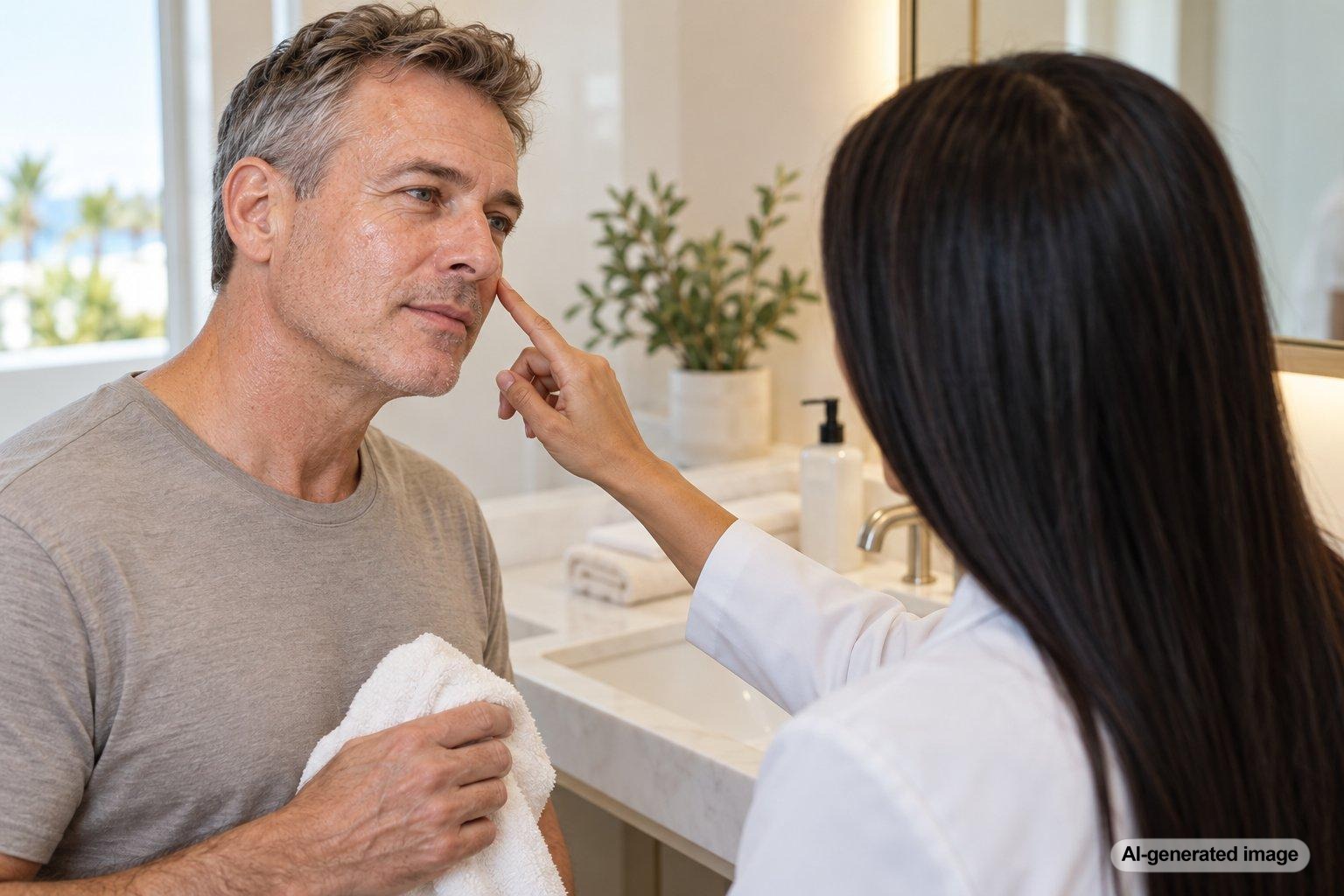
Have you ever washed your face, looked in the mirror, and noticed that the pores around your nose or cheeks suddenly seem more obvious? It can feel surprising, especially when your skin looked smoother before cleansing. In many cases, the explanation is relatively simple: washing changes the appearance of the skin’s surface, temporarily removing oils, altering hydration, and making natural texture easier to see.
Pores do not usually become structurally larger during an ordinary face wash. Instead, the contrast between pore openings and the surrounding skin may become more noticeable. Water temperature, cleansing products, dryness, and even bathroom lighting can influence what you see. Understanding these differences can help you develop a gentler skincare routine without feeling that every visible pore needs correction.
Quick Answer: Why Pores Look Bigger After Cleansing
- Surface oil has been removed. Cleansing changes how light reflects across the skin, potentially making pore openings more noticeable.
- Your skin may feel temporarily dry or tight. Dehydration and irritation can emphasize uneven texture.
- Warm water changes skin appearance. Temporary flushing and surface hydration changes can affect how pores look without physically opening them.
- Lighting makes a difference. Bright overhead bathroom lights can accentuate tiny shadows around pores.
- Existing pore size still matters. Genetics, oil production, and skin structure influence how prominent pores appear before and after washing.
What Are Pores, and Why Are Some More Visible?
When people discuss enlarged facial pores, they are generally referring to the visible openings of hair follicles, which are connected to sebaceous glands that produce sebum. Sebum helps lubricate and protect the skin’s surface. These openings are a normal part of healthy skin anatomy.
Pores are particularly noticeable around the nose, central cheeks, and forehead because these areas commonly have more active oil production. Their visibility varies from person to person and can be influenced by inherited characteristics, skin type, age-related changes in supporting skin structures, and congestion within follicles.
Importantly, pores are not tiny doors that open when exposed to warm water and close when exposed to cold water. The appearance of a pore can change, but the opening does not operate through a temperature-controlled opening-and-closing mechanism.
Why Cleansing Can Make Pores Look More Noticeable
Removing Oil Changes Surface Reflection
Before cleansing, your skin usually has a thin layer of sebum, skincare products, and environmental residue on its surface. This layer influences how light reflects across your face.
Once that layer is removed, natural variations in skin texture may become easier to see. In some people, clean skin looks smoother and pores appear less noticeable. In others, the temporary change in surface reflection makes individual openings more apparent.
This difference does not necessarily indicate damage or inadequate cleansing. It may simply reflect how your particular skin looks without its usual surface oils.
Overcleansing Can Emphasize Dryness
A cleanser that removes too much surface oil, particularly when combined with frequent washing, may leave skin feeling tight or uncomfortable. When the outer skin layer lacks adequate moisture, fine surface irregularities can become more visible.
Dryness can also make the skin around pore openings appear less smooth. The resulting contrast may create the impression that pores have become larger, even when their underlying dimensions have not meaningfully changed.
This is one reason that aggressive scrubbing is rarely a useful response to visible pores. More cleansing does not necessarily produce a smoother appearance.
Warm Water Can Temporarily Change Skin Appearance
Warm water may increase temporary facial redness and affect the hydration of the outermost skin layer. Very hot water can also contribute to irritation and dryness, especially in people with sensitive skin.
These changes can make skin texture look different immediately after washing. However, they do not establish that pores have physically expanded.
Lukewarm water is generally a more comfortable option for routine facial cleansing.
Bright Bathroom Lighting Highlights Texture
Lighting is an often-overlooked part of this experience. Strong overhead light, especially when combined with a close-up mirror, can produce tiny shadows around follicular openings.
After washing, people also tend to examine their faces more closely than they normally would. That combination can make normal pores seem unusually prominent.
For a more consistent comparison, observe your skin from a normal conversational distance under similar lighting conditions.
Other Factors That Influence Pore Appearance
Not every change in visible pores comes from cleansing itself. Several background factors can make the effect more noticeable:
- Naturally oily skin: Higher sebum production may be associated with more prominent follicular openings.
- Congestion: Accumulated sebum and dead skin cells can make some follicles appear more noticeable.
- Skin aging: Changes in collagen and surrounding support structures can influence how pores appear over time.
- Sun exposure: Cumulative ultraviolet exposure can contribute to changes in skin texture and elasticity.
- Product irritation: Harsh cleansers, abrasive exfoliants, or multiple active ingredients may create redness and uneven surface texture.
- Individual anatomy: Some pores are naturally more visible regardless of skincare habits.
These influences frequently overlap. A person can have naturally visible pores and also experience temporary dryness after washing.
How to Wash Your Face Without Emphasizing Pores
The goal of cleansing is to remove unwanted buildup while preserving the skin’s comfort and barrier function. Trying to eliminate every trace of oil can make that balance more difficult.
Choose a Gentle Cleanser
Look for a cleanser appropriate for your skin type that removes everyday residue without leaving persistent tightness, burning, or stinging. A product labeled gentle or fragrance-free may be worth considering if your skin is easily irritated.
A cleanser does not need to create abundant foam or a squeaky-clean feeling to be effective.
Keep Water Lukewarm
Use comfortable, lukewarm water rather than very hot water. Avoid prolonged washing or repeated rinsing in an attempt to make pores less visible.
Use Your Fingertips Instead of Scrubbing
Gentle application with clean fingertips is usually sufficient for daily cleansing. Rough washcloths, stiff brushes, and abrasive scrubs can increase irritation without changing the natural structure of pores.
Moisturize After Cleansing
Applying a suitable moisturizer after washing can help maintain hydration and support the skin barrier. Ingredients such as glycerin, hyaluronic acid, and ceramides are commonly used in moisturizing formulations.
When dryness contributes to a rough-looking surface, improved hydration may make the complexion appear smoother. Moisturizer does not permanently shrink pores, but it may reduce the visual emphasis created by dehydration.
Protect Your Skin From the Sun
Daily broad-spectrum sunscreen with SPF 30 or higher is an important part of maintaining skin health. Protecting against ultraviolet exposure may also help limit some long-term changes in skin texture and supporting structures that influence pore visibility.
Can Professional Treatments Improve the Appearance of Pores?
When pores remain a cosmetic concern despite a comfortable skincare routine, a dermatologist can assess whether the main contributors are excess oil, congestion, skin texture, or changes in surrounding skin support.
Professional options may include carefully selected chemical peels, treatments addressing acne-related congestion, or procedures intended to improve overall skin texture. Certain resurfacing and microneedling approaches may be considered for appropriate patients, although response varies and no procedure can eliminate normal follicular openings.
Some individuals may benefit more from adjusting their home skincare routine than from undergoing a procedure. A professional assessment helps establish realistic expectations and identify options appropriate for skin type, sensitivity, and treatment goals.
At Waverly DermSpa, we offer HydraFacial and can help you understand whether it may be appropriate.
When Should You See a Dermatologist?
Visible pores alone are generally not a medical warning sign. However, professional evaluation may be helpful when changes in skin appearance occur alongside persistent discomfort or other concerning symptoms.
Consider seeking guidance if you notice ongoing burning, significant redness, cracking, persistent irritation after cleansing, or new acne-like bumps that do not improve with gentle care. A dermatologist can also evaluate a new or changing spot that looks different from the surrounding pores, particularly if it bleeds, develops a crust, or fails to heal.
Not every small depression, dark spot, or bump is an enlarged pore. An examination can clarify what is actually present without relying on close-up mirror inspection or self-diagnosis.
Frequently Asked Questions
Does washing your face actually make your pores bigger?
Ordinary cleansing does not typically enlarge the underlying structure of pores. Temporary dryness, changes in surface oil, lighting, and irritation can make existing openings appear more prominent.
Do pores open with hot water and close with cold water?
No. Pores do not have a muscular opening-and-closing mechanism controlled by water temperature. Warm and cool water may temporarily change how skin looks or feels, but neither reliably changes natural pore size.
Why do my pores look bigger after using a foaming cleanser?
Some foaming cleansers may remove more surface oil than your skin comfortably tolerates. If your skin feels tight after washing, dryness could be emphasizing its texture. The effect depends on the specific formula and your individual skin response.
Should I exfoliate whenever my pores look enlarged?
Not necessarily. Excessive exfoliation can irritate the skin and make texture more noticeable. Some exfoliating ingredients may help with congestion when used appropriately, but the choice and frequency should account for your skin’s tolerance.
Can dehydrated skin make pores appear larger?
Yes. When the outer skin layer lacks moisture, uneven texture can become more apparent. Appropriate moisturizing may improve surface smoothness, although it will not alter genetically determined pore structure.
Will pores become less visible after applying moisturizer?
Some people notice that their skin looks smoother after moisturizing because hydration changes the appearance of surface texture. The degree of improvement varies, particularly when natural pore size, oil production, or congestion are the primary influences.
The Bottom Line
If your pores look larger immediately after washing your face, the change is often related to how clean, temporarily dry, or freshly hydrated skin reflects light rather than a sudden change in pore anatomy. Gentle cleansing, consistent moisturizing, and realistic expectations are usually more helpful than repeatedly trying to scrub pores away.
Healthy skin has visible texture. The objective is not to erase it, but to support a comfortable skin barrier and address persistent concerns with an approach tailored to your skin.
Ready to get help?
Schedule an appointment or send a message and our team will get back to you.
Prefer to call? 954-666-3736
Disclaimer
This article is for educational purposes and is not medical advice. For diagnosis and personalized treatment, please book an appointment with a board-certified dermatologist.
