

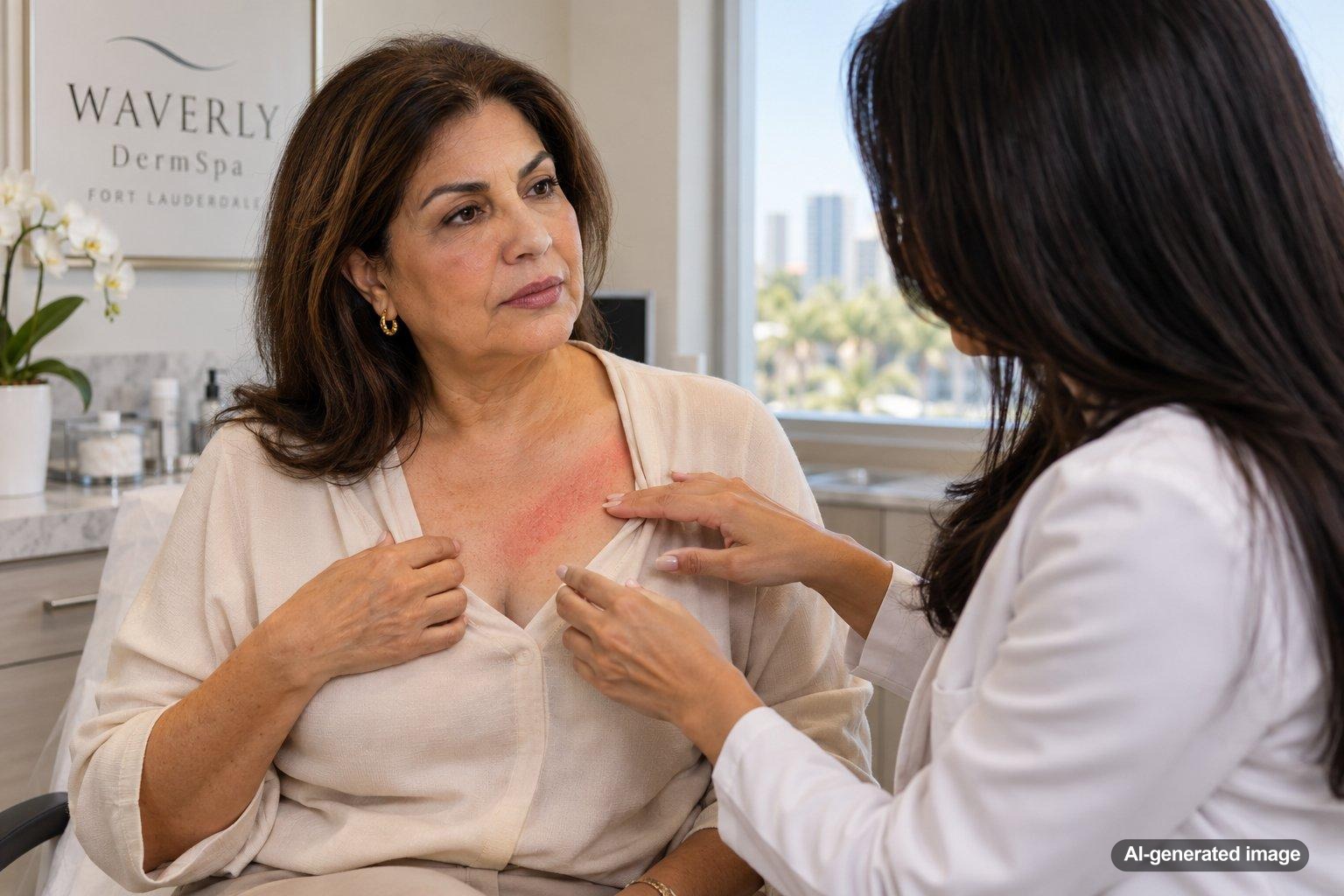
A rash that appears exactly where your seat belt crosses your chest can be frustrating, especially when it keeps returning after driving. The most likely explanation is irritation from repeated rubbing, pressure, heat, or trapped sweat. In some cases, contact dermatitis, a skin reaction triggered by an irritant or allergen, may also be involved.
The diagonal shoulder belt moves slightly against your clothing and skin as you drive, turn, reach, or adjust your position. That movement can aggravate an already sensitive area. In warm, humid conditions, moisture may make the irritation more noticeable. Understanding whether your rash develops from friction, a product touching your skin, or another cause can help you choose a more appropriate next step.
Quick Answer: Why Does a Seat Belt Cause a Chest Rash?
- Friction: Repeated rubbing from the shoulder belt can irritate the skin, particularly during longer drives.
- Heat and sweat: Moisture trapped beneath the belt or clothing may increase irritation.
- Contact dermatitis: Your skin may react to substances associated with clothing, laundry products, or materials touching the area.
- Skin sensitivity: Dry skin or an existing inflammatory skin condition may make the area more reactive.
- Pressure: A narrow line of temporary redness may result from compression, although persistent itching or scaling suggests something beyond a simple pressure mark.
What Is Happening to the Skin Under Your Seat Belt?
Your skin has a protective outer layer called the skin barrier. This barrier helps retain moisture and limits exposure to environmental irritants. Repeated rubbing can disturb that protective surface, particularly when the skin is already dry, irritated, or damp with sweat.
The shoulder portion of a three-point seat belt typically travels diagonally from the shoulder across the chest toward the opposite hip. Its position concentrates contact along a recognizable strip of skin. This explains why irritation may follow the belt’s path rather than appearing evenly across your chest.
Some people notice a pink or red line that fades after the belt is removed. Others experience itching, roughness, small bumps, or a patch that remains irritated between drives. These differences matter because temporary pressure marks, friction-related irritation, and allergic contact dermatitis do not necessarily have the same underlying cause.
Common Reasons a Seat Belt May Trigger a Rash
1. Repeated Friction Against the Chest
Friction is a practical starting point when the rash follows the exact diagonal path of the shoulder belt. Even a properly positioned restraint can move slightly against your clothing or exposed skin during normal driving.
Repeated contact may cause redness, tenderness, stinging, or a rough texture. A low neckline, thin clothing, or a garment that shifts during driving may allow more direct contact between the belt and skin. Friction can also aggravate an area that was already irritated.
2. Sweat and Heat Trapped Beneath the Belt
Warm weather, humidity, and perspiration can contribute to irritation. When sweat remains between the skin, clothing, and seat belt, moisture may increase rubbing and make the area feel uncomfortable.
This can be especially noticeable after driving in South Florida, where heat and humidity may encourage perspiration. Longer drives, outdoor activities before entering the car, and tightly fitting clothing can all contribute to a damp environment.
Some people develop small, itchy or prickly bumps in areas where sweat becomes trapped. However, not every rash associated with sweating is heat rash. The appearance, timing, and distribution help determine what may be happening.
3. Irritant Contact Dermatitis
Irritant contact dermatitis occurs when repeated exposure to a physical or chemical irritant disrupts the skin. Friction itself can be an irritant. Detergent residue, cleaning products, or other substances that come into contact with the area may also contribute.
Symptoms can include burning, stinging, dryness, redness, and scaling. The reaction may be more noticeable after repeated exposure, and it does not require a true allergy.
4. Allergic Contact Dermatitis
Allergic contact dermatitis is a delayed immune reaction to a substance that touches the skin. Potential triggers include certain textile dyes, chemical finishes, fragrances, preservatives, or ingredients in personal care products.
For example, a fragrance-containing lotion applied to the upper chest may not bother you under ordinary conditions, but rubbing and moisture could make an existing sensitivity more noticeable. Clothing worn beneath the belt may also be relevant.
An allergy to the seat belt material itself is possible but should not be assumed. Vehicle restraint webbing varies, and a rash in the belt area does not establish which material, if any, is responsible.
Allergic reactions may develop hours or days after exposure. A dermatologist can consider patch testing when the pattern suggests a delayed contact allergy.
5. An Existing Skin Condition
People with eczema or generally sensitive skin may notice that repeated rubbing makes an existing problem worse. Skin that is already dry or inflamed may react more readily to pressure, sweat, and fabric contact.
If you develop similar patches elsewhere, have recurring episodes unrelated to driving, or notice persistent dryness and itching, the seat belt may be aggravating another skin condition rather than serving as the original cause.
How Can You Tell Friction From an Allergic Reaction?
The timing and appearance of a rash can provide useful clues, although they cannot establish a diagnosis by themselves.
- More consistent with simple pressure or friction: Redness develops during or immediately after driving, follows the contact area closely, and improves when rubbing stops.
- More suggestive of contact dermatitis: The area becomes persistently itchy, dry, scaly, or inflamed, or symptoms recur after contact with a particular product or material.
- More suggestive of sweat-related irritation: Symptoms are worse after hot, humid drives and may include small prickly bumps.
- Worth investigating further: The rash spreads beyond the contact area, develops blisters, becomes painful, or persists despite gentle care.
These patterns can overlap. Friction and contact dermatitis may also occur together. A clinical examination is more useful than relying on the shape of the rash alone.
What Can You Do at Home to Reduce Seat Belt Irritation?
When irritation is mild, conservative skin care and attention to potential triggers may help make driving more comfortable.
Keep the Area Clean and Dry
After sweating, gently cleanse the affected area with a mild, fragrance-free cleanser and lukewarm water. Pat the skin dry rather than scrubbing it. Avoid harsh exfoliants, strongly fragranced body washes, and aggressive cleansing while the area is irritated.
Choose Comfortable Clothing
A soft, breathable shirt that covers the belt’s contact area may help reduce direct rubbing. Consider whether a particular neckline, fabric, or garment consistently makes symptoms worse.
Wash new clothing before wearing it, and consider fragrance-free laundry products if you suspect detergent or fabric additives may be contributing.
Support Your Skin Barrier
A simple, fragrance-free moisturizer may help dry or irritated skin feel more comfortable. Avoid applying multiple unfamiliar products at once, since doing so can make it harder to identify an aggravating ingredient.
If the skin is broken, blistered, or unusually painful, seek professional guidance rather than experimenting with additional products.
Consider a Cool Compress
A clean, cool, damp cloth applied briefly to the affected area may soothe mild discomfort. Avoid placing ice directly against your skin.
Keep Your Seat Belt Properly Positioned
Skin comfort should never come at the expense of vehicle safety. The shoulder belt should remain across the center of the chest and shoulder, not beneath the arm, behind the back, or positioned away from its intended path.
Check your vehicle’s manual for approved belt-height and seating adjustments. Avoid adding aftermarket padding, clips, or other accessories that alter restraint positioning unless they are specifically approved for your vehicle and restraint system.
Track Recurring Episodes
If the rash keeps returning, consider noting when it develops, how long it remains visible, which clothing you wore, and whether heat, sweating, or newly introduced skin products were involved. A photograph taken when symptoms are visible may also be useful during a dermatology appointment.
What Can a Dermatologist Do for a Recurring Seat Belt Rash?
When a rash persists or repeatedly returns, a dermatologist can evaluate the affected skin and consider whether friction, contact dermatitis, eczema, or another condition is involved.
An evaluation may include reviewing the appearance and distribution of the rash, discussing the timing of symptoms, and examining possible exposures such as clothing, laundry products, and topical products.
If allergic contact dermatitis is suspected, patch testing may be considered to identify relevant delayed-contact allergens. This differs from testing for immediate allergies and is not necessary for every irritation-related rash.
Depending on the findings, professional recommendations may include adjusting skin care, avoiding identified triggers, using barrier-supporting products, or considering an appropriate anti-inflammatory treatment. Prescription therapies should be selected with a clinician rather than started based only on the rash’s location.
When Should You See a Dermatologist?
Consider scheduling a dermatology evaluation if the rash repeatedly returns, lasts after the suspected irritation has stopped, or interferes with daily activities.
Other reasons to seek evaluation include:
- Persistent itching, scaling, cracking, or discomfort.
- Blistering, significant swelling, or increasing tenderness.
- A rash that spreads beyond the seat belt contact area.
- Recurring symptoms despite switching to gentler skin care and reducing potential irritants.
- Uncertainty about whether an allergy or existing inflammatory skin condition is involved.
Prompt medical assessment is appropriate if the area becomes increasingly painful, hot, swollen, or develops pus, particularly if accompanied by fever. Rapidly developing widespread hives with breathing difficulty, throat tightness, or facial swelling requires emergency care.
Also, do not assume that every mark beneath a seat belt is a routine skin rash. If chest discomfort or bruising appears after a collision or forceful restraint event, seek appropriate medical assessment for possible injury.
Frequently Asked Questions
Can a seat belt cause contact dermatitis?
Yes. Repeated friction can contribute to irritant contact dermatitis, while exposure to a particular allergen may occasionally produce allergic contact dermatitis. The location alone cannot distinguish these possibilities.
Why does my seat belt rash itch more after a long drive?
Longer drives can mean more time exposed to rubbing, pressure, and trapped warmth. Sweat may also increase irritation. If itching continues well after driving, contact dermatitis or another inflammatory condition may be worth considering.
Could I be allergic to the fabric of my seat belt?
It is possible to react to substances associated with textiles, but an allergy to the seat belt itself should not be assumed. Clothing, detergents, fragrances, and other products touching your chest may be involved. A dermatologist can help determine whether patch testing is appropriate.
Why is my seat belt rash only on one side of my chest?
The diagonal shoulder belt concentrates contact on one side of the upper body. A localized rash may reflect where the greatest rubbing or pressure occurs. However, a one-sided distribution does not rule out other causes.
Will putting a soft shirt under my seat belt help?
Soft, breathable clothing may reduce direct friction against exposed skin. The seat belt must still fit correctly across the shoulder and chest. Avoid modifications that interfere with the restraint’s intended function.
Why does the rash return even after I change my skin care products?
The original trigger may not be a skin care product. Ongoing rubbing, perspiration, clothing additives, or an underlying skin condition could continue to aggravate the area. Recurrent symptoms are a reasonable reason to seek a professional evaluation.
The Bottom Line
A rash where your seat belt crosses your chest often reflects repeated friction, pressure, sweat, or irritation from something contacting the skin. Gentle cleansing, breathable clothing, and simple barrier-supporting skin care may help with mild symptoms while preserving proper seat belt use.
If the rash is persistent, particularly itchy, spreading, or repeatedly returning, a dermatologist can help identify the likely cause and discuss suitable options. You do not need to determine on your own whether the problem is friction, an allergy, or another skin condition.
Ready to get help?
Schedule an appointment or send a message and our team will get back to you.
Prefer to call? 954-666-3736
Disclaimer
This article is for educational purposes and is not medical advice. For diagnosis and personalized treatment, please book an appointment with a board-certified dermatologist.
Sources & Further Reading
- American Academy of Dermatology (AAD) – Eczema types: Contact dermatitis signs and symptoms
- DermNet – Textile contact dermatitis
- American Academy of Dermatology (AAD) – Eczema types: Contact dermatitis causes
