

Waking up with dry, flaky, or irritated skin along the sides of your mouth can be confusing, especially when the rest of your face feels comfortable. If you occasionally drool while sleeping, the moisture collecting around your lips may be contributing to the problem. Although saliva feels wet, repeated contact with it can irritate the skin and interfere with its protective barrier.
This irritation may be particularly noticeable near the corners of the mouth, where saliva can collect during the night. Sometimes the explanation is straightforward moisture-related irritation. Other times, persistent cracking or inflammation may involve a condition that deserves a closer look. Understanding the difference can help you choose a gentler skincare approach and recognize when professional evaluation is worthwhile.
Quick Answer: Why Does Nighttime Drooling Cause Dry Skin?
- Repeated saliva exposure: Moisture sitting against the skin can contribute to irritation, even though saliva itself is wet.
- Skin barrier disruption: Repeated wetting and drying can leave the skin more vulnerable to dryness, stinging, and flaking.
- Moisture collecting in folds: The corners of the mouth can trap saliva, making irritation more persistent.
- Existing sensitivity: Eczema, contact reactions, or irritating skincare products may make the area more reactive.
- Possible angular cheilitis: Cracking directly at the mouth corners may involve inflammation that sometimes becomes complicated by yeast or bacteria.
How Can Something Wet Make Skin Feel Dry?
Healthy skin depends on a protective outer barrier that helps retain moisture while limiting contact with environmental irritants. Saliva contains water, enzymes, and other substances that serve important functions inside the mouth. However, skin around the lips is not designed for prolonged exposure to saliva.
When drool repeatedly moistens the same area, the skin experiences cycles of wetting and drying. Over time, these cycles can interfere with normal barrier function and contribute to inflammation.
The result may be skin that feels tight, rough, tender, or unusually dry after waking. Some people also notice visible scaling or redness. On deeper skin tones, irritation may appear darker, lighter, or otherwise discolored rather than distinctly red.
This process is related to irritant contact dermatitis, a type of inflammation caused by direct contact with an irritating substance. Saliva-related irritation is also recognized in people who frequently lick their lips, although nighttime drooling is a different source of exposure.
Why Are the Sides and Corners of the Mouth Especially Vulnerable?
The anatomy of the mouth helps explain why irritation often develops in particular locations. The corners create small folds where moisture can collect. When you sleep on your side, gravity may also allow saliva to travel toward one side of the face.
Unlike areas that dry quickly after washing, these folds may remain damp against a pillow or surrounding skin. Friction from bedding can add to the irritation.
There is also an important distinction between dry skin beside the mouth and actual cracks at the corners. Broad areas of flaking may be consistent with surface irritation, while painful splits directly in the mouth angles can suggest angular cheilitis. Appearance alone is not enough to establish a diagnosis.
Common Factors That Can Make the Irritation Worse
Several everyday circumstances can increase the likelihood of uncomfortable skin around the mouth:
- Sleeping position: Side or stomach sleeping may allow saliva to collect against one side of the face.
- Mouth breathing: Breathing through the mouth can contribute to lip dryness, potentially adding to irritation from saliva.
- Fragranced skincare: Some cleansers, balms, and facial products contain ingredients that may irritate sensitive skin.
- Toothpaste or mouthwash: Flavorings and other ingredients can sometimes contribute to contact reactions near the lips.
- Exfoliating treatments: Acids, scrubs, and other potentially irritating products can be uncomfortable on an already disrupted barrier.
- Underlying skin conditions: Eczema or allergic contact dermatitis may make the area more susceptible to inflammation.
- Persistent moisture: Repeated saliva exposure can make it harder for irritated skin to settle.
More than one factor may be involved. For example, nighttime drooling and a fragranced lip product may both contribute to discomfort.
Could It Be Angular Cheilitis Instead of Ordinary Dry Skin?
Angular cheilitis is inflammation affecting one or both corners of the mouth. It can develop when saliva accumulates in these folds, leading to irritation and breakdown of the skin. In some cases, yeast or bacteria may contribute to the inflammation.
Signs that may raise suspicion include painful cracks, redness, crusting, tenderness, or skin that appears unusually soft and pale from prolonged moisture. Some people experience discomfort when opening their mouths to eat or speak.
Not every cracked mouth corner is angular cheilitis, and not every case involves an infection. Contact allergies, eczema, and other conditions can produce overlapping symptoms.
Because the appropriate treatment depends on the underlying cause, persistent or painful mouth-corner symptoms are worth discussing with a dermatologist rather than treating repeatedly with unfamiliar products.
What Can You Do at Home to Protect the Skin?
When irritation is mild, a simple, conservative approach may help reduce unnecessary exposure and support the skin barrier.
Clean the Area Gently After Waking
Rinse away dried saliva with lukewarm water or a gentle, fragrance-free cleanser if needed. Avoid scrubbing or rubbing away flakes. Pat the area dry with a soft, clean towel.
Use a Simple Barrier Ointment
A thin layer of plain petroleum jelly on the external skin may help protect vulnerable areas from moisture and friction. Avoid applying products inside the mouth. If a product stings or appears to worsen the irritation, discontinue it and seek guidance.
Simplify Your Skincare Routine
Consider keeping exfoliating acids, retinoids, fragranced cosmetics, and harsh cleansing products away from visibly irritated areas until the skin has been evaluated or feels comfortable again. Avoid picking at peeling skin or repeatedly licking the corners of your mouth.
Pay Attention to Your Sleep Environment
Clean pillowcases and breathable bedding may help reduce additional friction and contact with residue. If drooling is frequent, consider whether nasal congestion, sleeping position, or other factors may be contributing. Persistent or newly excessive drooling should be discussed with a healthcare professional.
These measures are general skin-protection strategies, not substitutes for identifying the cause of persistent inflammation.
How Can a Dermatologist Help?
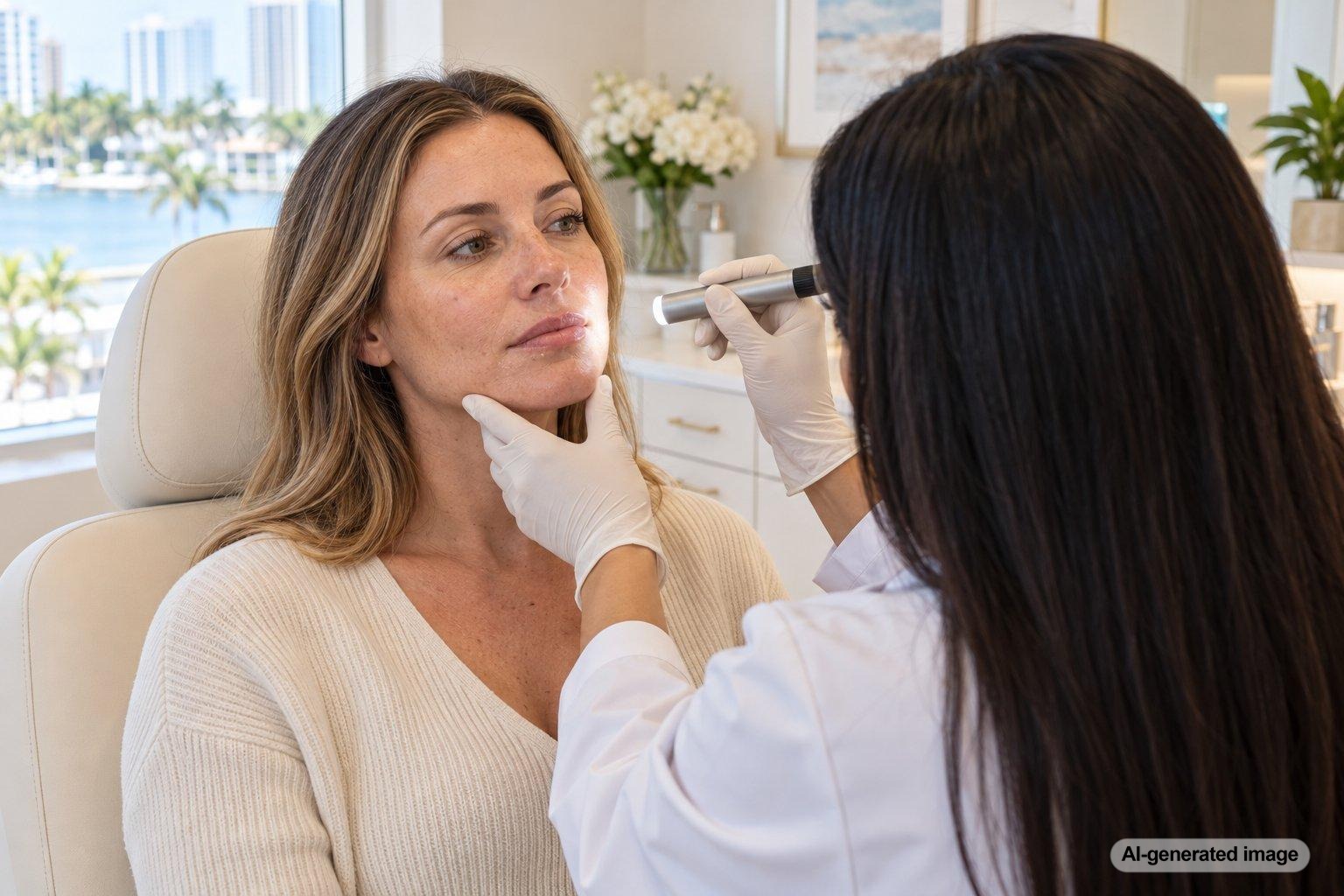
A dermatologist can examine the distribution and appearance of the irritation, review your skincare products, and ask about symptoms such as cracking, itching, pain, or recurring flare-ups.
The evaluation may help distinguish simple irritant dermatitis from eczema, allergic contact dermatitis, angular cheilitis, or other conditions around the mouth.
Depending on the findings, professional options may include a tailored barrier-care routine, short-term anti-inflammatory treatment, or targeted treatment when an infection is identified. If an allergy is suspected, additional evaluation, such as patch testing, may be appropriate.
It is generally best not to begin steroid creams, antifungal products, or antibiotic ointments around the mouth without understanding what is causing the problem. Some treatments that help one condition may be inappropriate for another.
When Should You See a Dermatologist?
Consider scheduling an evaluation when the irritation continues despite gentle care, frequently returns, or begins interfering with eating, speaking, or normal skincare.
Other reasons to seek assessment include:
- Deep or painful cracks at the corners of the mouth.
- Persistent crusting, bleeding, swelling, or worsening tenderness.
- Blisters or sores that do not resemble ordinary dry skin.
- Repeated irritation limited to one area without an obvious explanation.
- Symptoms that spread beyond the original location.
- New irritation after introducing a skincare or oral-care product.
Seek prompt medical attention for rapidly spreading redness, significant swelling, fever, or other signs of an acute infection. Sudden drooling accompanied by difficulty swallowing, facial weakness, or other neurological symptoms requires urgent medical evaluation.
Even when symptoms are mild, recurring irritation deserves attention if it is affecting your comfort or confidence.
Frequently Asked Questions
Why is only one side of my mouth dry after sleeping?
Sleeping predominantly on one side may allow saliva to collect along that side of the mouth. However, one-sided irritation can have other causes, so persistent symptoms should not automatically be attributed to drooling.
Can saliva cause peeling skin around my lips?
Yes. Repeated saliva exposure can disrupt the skin barrier and contribute to dryness, inflammation, and peeling. Similar irritation can occur with frequent lip licking.
Is dry skin from drooling the same as a fungal infection?
No. Saliva can irritate the skin without an infection. However, damaged skin at the corners of the mouth may sometimes develop yeast or bacterial involvement. A clinician can help determine whether infection is present.
Should I apply moisturizer before going to bed?
A simple, fragrance-free barrier ointment may help protect external skin exposed to moisture. It is important to avoid potentially irritating ingredients and seek an evaluation if symptoms persist or worsen.
Could my toothpaste be making the dryness worse?
Possibly. Certain toothpaste ingredients, including flavorings, may irritate sensitive skin or contribute to contact allergies. A dermatologist can help assess whether your oral-care products are relevant.
Will changing my sleeping position prevent the problem?
Changing position might reduce where saliva accumulates, but it may not eliminate nighttime drooling or address another underlying cause of irritation. Skin protection and appropriate evaluation may still be helpful.
A Gentle Approach to Recurring Mouth-Area Irritation
Dry skin along the sides of the mouth after nighttime drooling is often related to repeated saliva exposure and a disrupted skin barrier. The location and appearance of the irritation can provide useful clues, but they cannot confirm the cause on their own.
If gentle cleansing and barrier protection are not enough, a dermatologist can help identify whether irritation, eczema, angular cheilitis, or another condition is responsible. At Waverly DermSpa in Fort Lauderdale, Dr. Maryann Mikhail, MD, can evaluate persistent concerns and discuss care suited to your skin.
Ready to get help?
Schedule an appointment or send a message and our team will get back to you.
Prefer to call? 954-666-3736
Medical Disclaimer
This article is for educational purposes and is not medical advice. For diagnosis and personalized treatment, please book an appointment with a board-certified dermatologist.
Sources & Further Reading
- Cleveland Clinic – Angular Cheilitis: What it is, Symptoms, Causes & Treatments
- DermNet – Lip licker’s dermatitis
- DermNet – Eczematous cheilitis
- Cleveland Clinic – Drooling: Definition & Causes
