

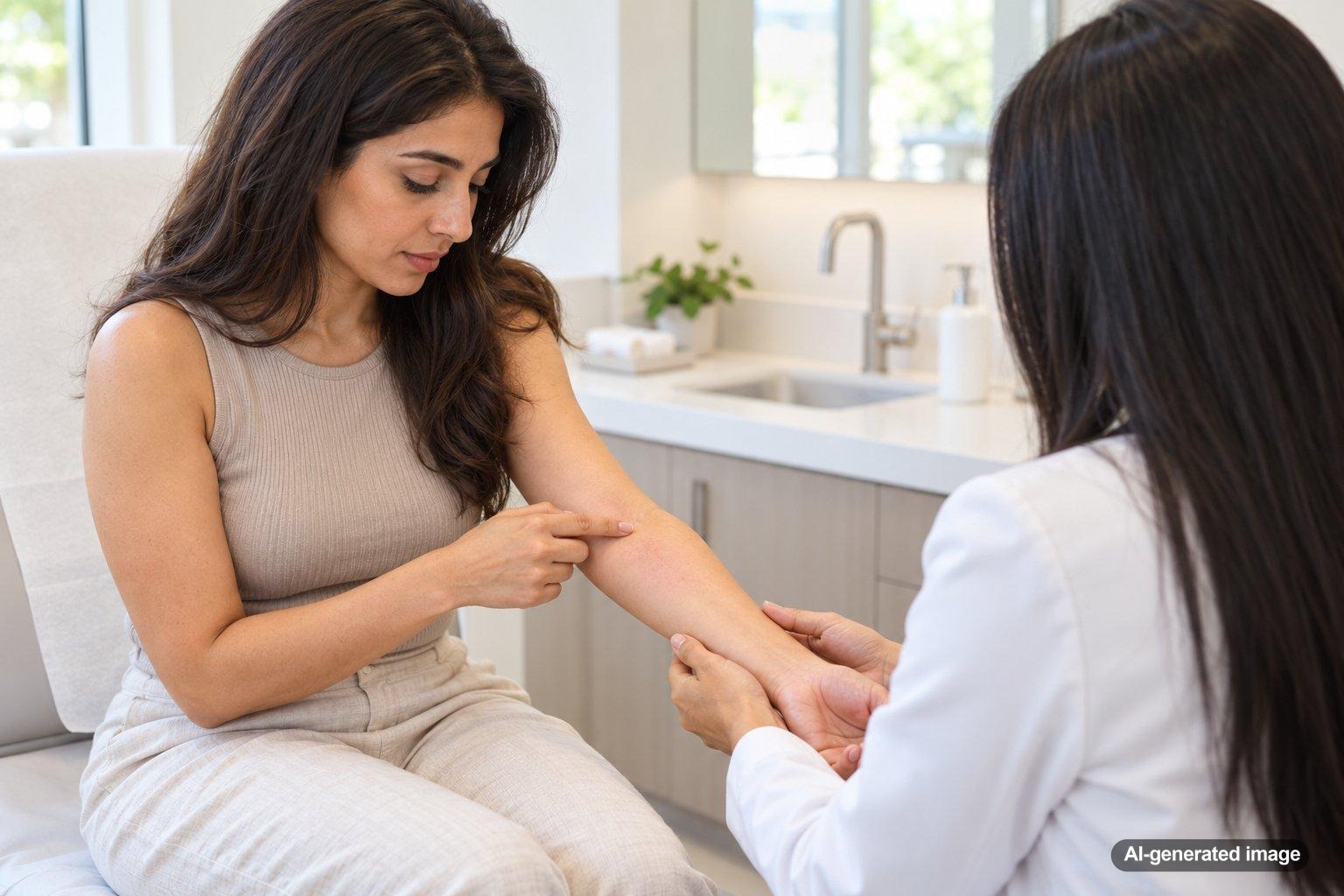
That brief, prickly sting when sweat dries on your skin can be surprisingly uncomfortable. You might notice it after exercising, walking outside in humid weather, or simply cooling down after a hot day. The sensation may be especially noticeable around your neck, chest, face, or areas where clothing touches your skin. Sometimes the skin looks perfectly normal, even when the stinging feels quite distinct.
Skin often stings as sweat dries because the moisture evaporates while salts and other sweat components remain on the surface. If your skin is dry, irritated, or has a weakened protective barrier, that residue may make sensitive areas feel uncomfortable. Friction, heat, and certain skincare products can increase the sensation. Although occasional mild stinging may reflect temporary irritation, repeated burning or persistent symptoms deserve a closer look.
Quick Answer: Why Does Dried Sweat Make Skin Sting?
- Salt residue: As the water in sweat evaporates, dissolved salts can remain on the skin and aggravate sensitive areas.
- A weakened skin barrier: Dryness, frequent washing, or existing irritation can make the skin more reactive to sweat.
- Heat and friction: Tight clothing, exercise, and repeated rubbing can increase irritation while sweat dries.
- Inflammatory skin conditions: Eczema and contact dermatitis may make sweating uncomfortable, particularly during a flare.
- Product sensitivity: Sunscreen, fragrance, exfoliating products, or other topical ingredients may contribute to stinging during or after sweating.
What Happens to Sweat as It Dries on Your Skin?
Sweating is a normal cooling mechanism. Eccrine sweat glands release fluid onto the skin, where evaporation helps remove heat from the body. Sweat consists mostly of water but also contains electrolytes, including sodium and chloride.
When the water evaporates, some of those dissolved substances remain behind. This can leave a slightly salty film, particularly after prolonged exercise or heavy perspiration. The residue itself does not necessarily harm healthy skin. However, on already irritated or compromised skin, it may contribute to stinging, itching, or a tight sensation.
The skin’s outermost layer, called the stratum corneum, acts as a protective barrier. It helps retain moisture and limits the penetration of irritants. When this barrier is disrupted, everyday exposures that would ordinarily feel harmless can become uncomfortable.
This explains why sweat may sting one area while leaving nearby skin unaffected. A patch of dryness, a recently shaved area, or skin exposed to irritating products may be more sensitive than the surrounding surface.
Common Reasons Your Skin Stings When Sweat Dries
1. Salt Residue on Sensitive Skin
When sweat evaporates, its remaining salts may aggravate skin that is already dry or inflamed. You may notice a stronger sensation after activities that produce substantial sweating, particularly if the sweat remains on your skin for an extended period.
The feeling is not necessarily an allergy to sweat. More often, it reflects how the skin responds to the combination of sweat residue, moisture changes, and existing irritation.
2. A Dry or Disrupted Skin Barrier
Skin that lacks sufficient moisture or protective surface lipids may feel unusually sensitive. Frequent hot showers, harsh cleansers, exfoliating acids, and certain acne products can contribute to dryness or irritation.
When sweat contacts these vulnerable areas, stinging may become more noticeable. As the moisture evaporates, the skin can feel tight, prickly, or uncomfortable.
This is particularly relevant when the sensation develops after changing your skincare routine or using several active ingredients together.
3. Eczema and Other Inflammatory Skin Conditions
Eczema, also called atopic dermatitis, is associated with changes in the skin barrier and inflammation. Heat and sweat can aggravate symptoms in some people, especially when the skin is already itchy, dry, or irritated.
The sensation may occur before obvious redness develops, or it may be concentrated in areas where eczema is already active. Common locations include the neck, inner elbows, and behind the knees.
Not every episode of stinging is caused by eczema. A dermatologist can distinguish between temporary irritation and an underlying inflammatory condition when symptoms keep returning.
4. Friction From Clothing or Exercise
Sweat frequently collects where clothing fits closely against the body. Sports bras, waistbands, collars, and athletic clothing can create repeated friction as you move.
Heat, trapped moisture, and rubbing may irritate the surface of the skin. When the area begins to dry, the resulting stinging can become more noticeable.
This pattern is especially common in warm, humid environments where perspiration persists for longer periods.
5. Contact Dermatitis or Skincare Product Irritation
Contact dermatitis occurs when something touching the skin triggers irritation or an allergic reaction. Potential contributors include fragranced body products, detergents, certain sunscreen ingredients, and topical skincare treatments.
Sweating can make an already irritated area feel more uncomfortable, but it may not be the original cause. If symptoms repeatedly appear after using a particular product, the timing and location can provide useful clues.
Products containing retinoids, exfoliating acids, or benzoyl peroxide may also make skin more sensitive, especially when used too frequently or combined with other irritating ingredients.
6. Recent Shaving or Hair Removal
Shaving and some hair removal methods can temporarily irritate the skin surface. Small areas of friction or superficial disruption may be difficult to see but can still feel sensitive when exposed to sweat.
For example, stinging around the underarms or legs after exercise may be more noticeable when those areas were recently shaved. Avoiding additional irritation while the skin settles may help improve comfort.
7. Heat-Related Skin Reactions
Some people develop prickling, itching, or burning when their body temperature rises. Heat rash can occur when sweat becomes trapped in the skin, often producing small bumps or an uncomfortable prickly sensation.
Other heat-related reactions may produce hives or itching during exercise, hot showers, or emotional stress. These conditions differ from simple irritation caused by dried sweat.
If the sensation begins while you are heating up rather than when sweat evaporates, or if it comes with raised welts, the timing may help a dermatologist narrow down the possibilities.
Why Does Sweat Sting Some Parts of the Body More Than Others?
The location of the stinging can offer useful information because skin thickness, friction, moisture exposure, and product use vary across the body.
- Face: Facial skin may react to exfoliants, acne treatments, sunscreen, or a compromised moisture barrier.
- Neck and upper chest: These areas are frequently exposed to sweat, fragrance, sunlight, and clothing friction.
- Underarms: Shaving, deodorants, antiperspirants, and skin-on-skin friction may contribute to irritation.
- Skin folds: Trapped moisture and repeated rubbing can make the skin more vulnerable to irritation.
- Legs and arms: Dryness, recent hair removal, and clothing contact may explain localized stinging.
A symptom that consistently appears in one small area may have a different explanation from widespread stinging across the body. The presence or absence of visible skin changes also matters.
What Can You Do at Home to Reduce Stinging After Sweating?
Gentle skincare and a few practical adjustments may help reduce discomfort when sweat is contributing to irritation.
Rinse Away Sweat Without Scrubbing
After exercising or spending time in hot weather, consider rinsing the skin with lukewarm or comfortably cool water. This can remove sweat residue without the additional irritation associated with aggressive cleansing.
A mild, fragrance-free cleanser may be useful when needed, but repeated washing with strong soaps can worsen dryness.
Pat the Skin Dry
Use a soft towel and gently pat rather than rub. Vigorous towel drying may aggravate skin that is already sensitive, especially around the neck, underarms, and areas affected by friction.
Support the Skin Barrier With Moisturizer
A simple, fragrance-free moisturizer may help reduce dryness and support the skin’s protective barrier. Products containing ingredients such as glycerin, ceramides, or petrolatum may be useful depending on your skin type and the area involved.
Applying moisturizer after bathing, while the skin is slightly damp, can help retain moisture. If a product consistently burns or stings, discontinue it and ask a dermatologist about suitable alternatives.
Review Your Skincare Products
If stinging began after introducing a new serum, exfoliant, cleanser, or acne treatment, consider whether the product may be contributing to sensitivity.
A simpler routine with gentle cleansing, moisturizing, and appropriate sun protection can make it easier to identify possible triggers. Avoid layering multiple potentially irritating products onto already uncomfortable skin.
Choose Comfortable Clothing
Loose, smooth clothing can reduce friction and make it easier for moisture to evaporate. Changing out of damp workout clothes after exercise may also help limit prolonged contact between perspiration and sensitive skin.
For some people, soft cotton or carefully selected moisture-managing fabrics are more comfortable than tight or rough materials. Individual tolerance varies.
Reduce Overheating When Possible
Taking breaks in a cooler environment, exercising during less humid hours, and using fans or air conditioning may help manage sweating and heat-related irritation.
In Fort Lauderdale’s warm climate, paying attention to heat exposure can be especially helpful for people who notice symptoms after outdoor activities.
Could Stinging From Sweat Mean Your Skin Barrier Is Damaged?
It can be a clue, but stinging alone does not establish that your skin barrier is damaged. A disrupted barrier may allow irritants to affect the skin more easily and can be associated with dryness, rough texture, flaking, or sensitivity to products that previously felt comfortable.
Some people experience burning or stinging even when their skin appears normal. Sensitive skin can involve changes in both barrier function and how sensory nerves respond to environmental triggers.
If plain water, gentle moisturizers, and perspiration all cause discomfort, a dermatologist can evaluate whether an inflammatory condition, product reaction, or another process may be involved.
Professional Evaluation and Treatment Options
When stinging is frequent, persistent, or accompanied by visible skin changes, a dermatologist can assess the pattern and potential causes.
An evaluation may include reviewing your skincare routine, recent product changes, sweating patterns, exercise habits, and any associated itching, rash, or swelling. The clinician may also examine the skin for signs of dryness, inflammation, or contact dermatitis.
Depending on the findings, professional care may involve adjustments to the skincare routine, barrier-supportive products, or treatment for an identified inflammatory condition. If allergic contact dermatitis is suspected, patch testing may be considered.
More specialized evaluation may be appropriate when symptoms occur without visible skin changes or are consistently triggered by water, sweating, or increased body temperature.
The goal is to identify what is driving the discomfort rather than assuming that sweat itself is the only problem.
When Should You See a Dermatologist?
Occasional mild stinging that settles after rinsing and cooling down may not require medical attention. However, consider scheduling a dermatology evaluation if:
- Stinging happens repeatedly, even with gentle skincare.
- Symptoms continue after sweat has been rinsed away.
- You notice persistent redness, scaling, cracking, or an unexplained rash.
- Previously comfortable products now consistently cause burning.
- The sensation interferes with exercise, outdoor activities, or daily comfort.
- You develop repeated hives, unusual swelling, or painful bumps associated with heat or sweating.
- The discomfort occurs without sweating or becomes progressively more intense.
Seek prompt medical assessment for rapidly spreading redness, significant pain, fever, pus, or skin that is increasingly warm and swollen. Difficulty breathing, faintness, or swelling of the tongue or throat requires emergency medical care.
A dermatologist can help determine whether the symptoms reflect simple irritation, an inflammatory skin condition, or another issue that needs attention.
Frequently Asked Questions
Is it normal for sweat to sting when it dries?
Mild, occasional stinging can happen, particularly when skin is dry, irritated, or exposed to friction. However, persistent or substantial discomfort is not something you need to dismiss as normal. Repeated symptoms are worth discussing with a dermatologist.
Does sweat sting because it contains salt?
Salt residue may contribute to irritation when sweat evaporates, especially on sensitive or inflamed skin. It is rarely the only possible explanation. Skin barrier condition, friction, heat, and topical products can also influence how the skin feels.
Why does my face burn when I sweat?
Facial burning during sweating can be associated with sensitive skin, irritating skincare products, dryness, or inflammatory skin conditions. If it is accompanied by persistent flushing, redness, or recurring discomfort, a dermatologist can evaluate possible causes.
Can sweat sting even if there is no visible rash?
Yes. Skin sensitivity does not always produce visible redness or bumps. Some conditions involving sensory responses to moisture or heat can also cause itching, stinging, or burning without obvious skin changes. Persistent symptoms warrant evaluation.
Can dehydration make sweat sting more?
Hydration can influence sweat production and its composition, but a stinging sensation does not reliably indicate dehydration. Skin irritation and barrier sensitivity are often more relevant considerations. Staying adequately hydrated remains important during exercise and hot weather.
Should I stop exercising if sweat makes my skin sting?
Not necessarily. If symptoms are mild, adjustments such as cooling down, choosing less irritating clothing, rinsing after exercise, and supporting the skin barrier may improve comfort. If symptoms are severe, recurrent, or accompanied by hives, dizziness, or breathing difficulties, stop the activity and seek appropriate medical evaluation.
The Bottom Line
Skin that stings as sweat dries may be reacting to salt residue, dryness, friction, or an already sensitive skin barrier. For some people, eczema, contact dermatitis, or heat-related reactions contribute to the discomfort.
Gentle cleansing, consistent moisturizing, and reducing unnecessary irritation may help. If the sensation keeps returning or occurs alongside a rash or other concerning changes, a dermatologist can evaluate the cause and recommend an individualized approach.
Ready to get help?
Schedule an appointment or send a message and our team will get back to you.
Prefer to call? 954-666-3736
Disclaimer
This article is for educational purposes and is not medical advice. For diagnosis and personalized treatment, please book an appointment with a board-certified dermatologist.
Sources & further reading
- American Academy of Dermatology (AAD) – Managing eczema in summertime
- DermNet – Sensitive skin
- American Academy of Dermatology (AAD) – Eczema types: Contact dermatitis signs and symptoms
- Cleveland Clinic – Aquagenic Pruritus: Causes, Diagnosis & Treatment
