

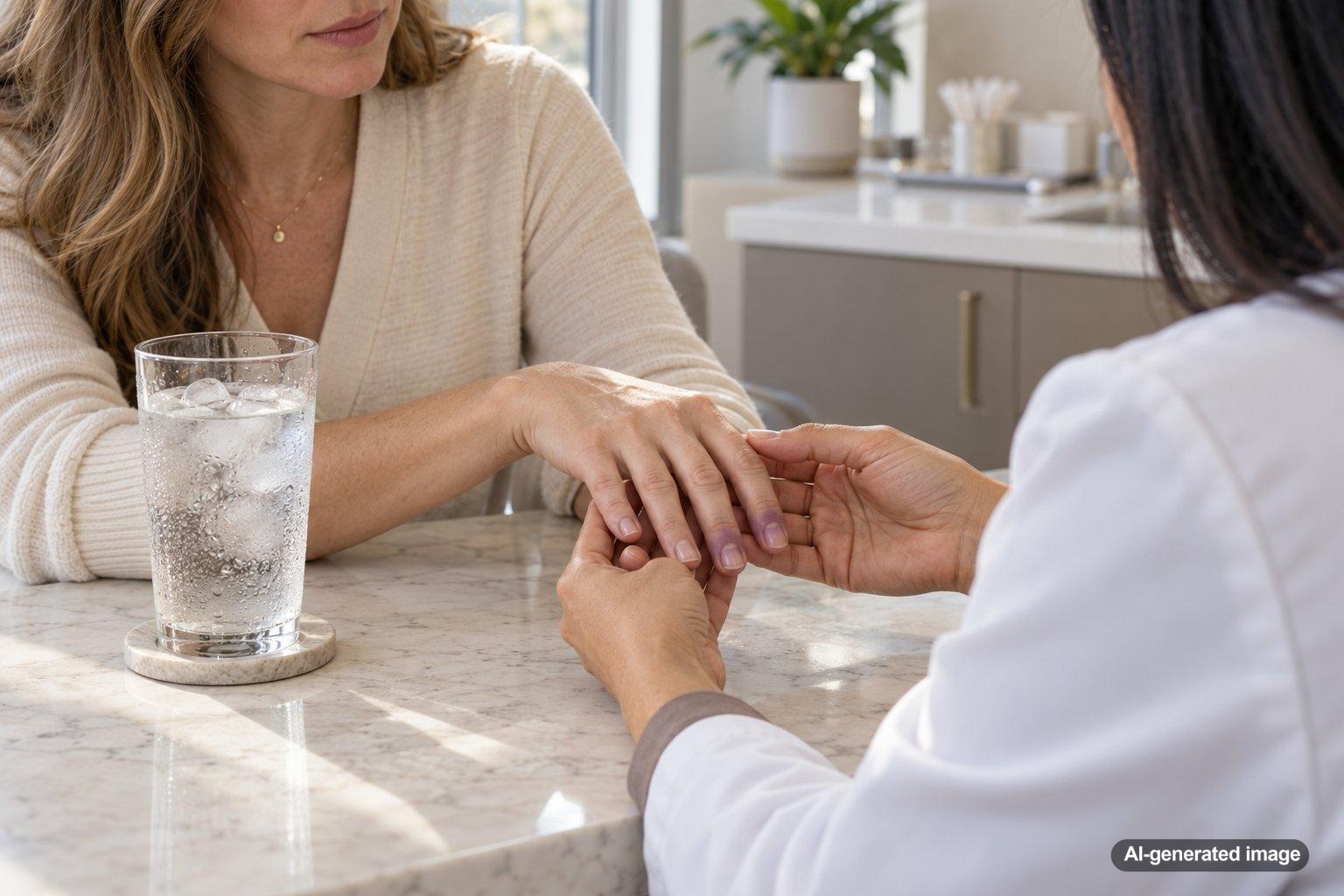
Holding an iced coffee, a cold water bottle, or a chilled glass can sometimes produce an unexpected change in your fingers. Instead of simply feeling cold, one or more fingertips may develop a noticeable purple or bluish color. The change might disappear after you put the drink down, or your fingers may briefly feel numb, tingly, or uncomfortable as they warm up.
Fingers can turn purple after holding a cold drink because cold temperatures cause small blood vessels to narrow, temporarily reducing blood flow near the skin. In some people, this response is particularly pronounced and may be associated with Raynaud’s phenomenon, a condition involving exaggerated narrowing of blood vessels in response to cold or stress. Although brief color changes are not always dangerous, understanding the pattern can help you recognize when a medical evaluation is appropriate.
Quick Answer: Why Do Fingers Turn Purple When Holding Something Cold?
- Cold causes blood vessels to narrow. This is a normal response that helps the body conserve heat.
- Reduced circulation can change skin color. Fingers may appear pale, blue, or purple when less oxygen-rich blood reaches the surface.
- Raynaud’s phenomenon is one possible explanation. It can cause stronger-than-usual blood vessel spasms when fingers encounter cold temperatures.
- Color often returns as the fingers warm. Tingling, redness, or mild throbbing may accompany the return of blood flow.
- Persistent discoloration deserves attention. Severe pain, unusual numbness, sores, or fingers that remain discolored after warming require medical assessment.
What Happens to Your Fingers When You Hold a Cold Drink?
Your hands contain networks of small arteries and capillaries that help deliver oxygen and nutrients to the skin and surrounding tissues. These blood vessels also participate in temperature regulation.
When your fingers touch a cold glass, the nervous system signals certain small blood vessels to constrict. This process, called vasoconstriction, limits heat loss and helps preserve the body’s internal temperature.
For many people, the reaction produces little more than cold skin. However, if circulation decreases enough, the fingers may look lighter than usual or develop a blue-purple appearance. The visible shade depends on blood flow, oxygenation, natural skin color, lighting, and how close the affected vessels are to the surface.
Once the cold object is removed and the hands gradually warm, the vessels generally relax and circulation increases. The skin may return directly to its usual appearance or briefly become pink or red.
A short-lived response is different from discoloration that persists, develops without cold exposure, or accompanies significant pain. Those differences are important when evaluating the cause.
Could Purple Fingers Be a Sign of Raynaud’s Phenomenon?
Raynaud’s phenomenon is one of the better-known explanations for fingers that change color after exposure to cold. It occurs when small blood vessels undergo temporary spasms, restricting circulation more dramatically than an ordinary temperature response.
Even relatively mild exposures can provoke symptoms in susceptible individuals. Holding a refrigerated beverage, touching frozen food, walking through an air-conditioned supermarket, or reaching into a freezer may be enough to trigger an episode.
What Does a Raynaud’s Episode Look Like?
A typical episode may involve several changes:
- White or pale: One or more fingers may become noticeably lighter as blood flow decreases.
- Blue or purple: The affected areas may develop a bluish appearance while circulation remains restricted.
- Pink or red: As the fingers warm and circulation returns, the skin may flush.
Not everyone experiences all three stages, and the sequence can vary. On darker skin tones, color differences may be more subtle, making changes in temperature, sensation, or fingertip appearance particularly useful observations.
Some people notice a clear boundary between the affected portion of a finger and the surrounding skin. Others experience numbness, pins-and-needles sensations, or temporary discomfort.
A purple fingertip alone does not establish a diagnosis of Raynaud’s. A clinician considers the full symptom pattern, physical examination, and possible underlying causes.
Primary Versus Secondary Raynaud’s
Raynaud’s is generally classified into two categories.
Primary Raynaud’s occurs without an identifiable underlying disease. Episodes may be relatively mild and triggered by cold exposure or emotional stress.
Secondary Raynaud’s occurs in association with another condition or contributing factor. Potential associations include connective tissue disorders such as systemic sclerosis, lupus, and certain other inflammatory or vascular diseases. Some medications, occupational exposures, and injuries can also contribute.
Secondary Raynaud’s can be more serious because an underlying condition may affect circulation beyond temporary cold sensitivity. New symptoms, particularly those beginning later in adulthood or accompanied by skin changes, joint symptoms, or fingertip sores, warrant medical assessment.
Other Reasons Fingers May Look Purple After Cold Exposure
Raynaud’s is not the only possible explanation. Several circumstances can influence finger color and circulation.
- Normal cold-induced vasoconstriction: Brief exposure to cold can reduce blood flow enough to create a temporary color change without an underlying disorder.
- Pressure from gripping a glass: Holding an object tightly may temporarily compress superficial tissues and alter their appearance, particularly when combined with cold exposure.
- Acrocyanosis: This vascular condition may cause a more persistent, often symmetrical blue discoloration of the hands or feet. Unlike typical Raynaud’s episodes, the color change may be relatively continuous rather than occurring in distinct attacks.
- Cold-related inflammation: Chilblains, also called pernio, can produce red-purple patches, swelling, itching, or tenderness after cold exposure. These changes typically develop later and last longer than a brief Raynaud’s episode.
- Other circulation problems: Less commonly, vascular disorders or impaired blood supply may cause discoloration that requires prompt medical attention.
The duration, location, and associated sensations often provide more useful information than color alone. For example, fingertips that rapidly regain their usual appearance after warming present a different clinical picture from one finger that remains dark, painful, and cold.
Why Can This Happen in Warm Places Like Fort Lauderdale?
Living in South Florida does not eliminate cold-triggered circulation changes. Even during warm weather, fingers can encounter sudden temperature differences throughout an ordinary day.
Refrigerated drinks are one obvious example. Others include heavily air-conditioned offices, grocery store freezer sections, chilled countertops, and cold water during household activities.
People visiting Fort Lauderdale from colder climates may already recognize similar symptoms during winter. Others first notice their fingertips changing color while holding a drink outdoors on a warm afternoon.
Raynaud’s responses depend on individual blood vessel sensitivity, not simply the outdoor temperature. For some people, a localized cold exposure can be sufficient to produce noticeable symptoms.
What Can You Do When Your Fingers Turn Purple?
If a color change appears after holding a cold drink and there are no concerning symptoms, gentle warming and reducing further cold exposure are reasonable first steps.
Warm Your Hands Gradually
Put down the cold object and move your hands into a comfortable environment. You can place your hands against a warm part of your body or use comfortably warm water.
Avoid very hot water, heating pads at high temperatures, or direct heat sources. Numb fingers may not detect excessive heat reliably, increasing the risk of burns.
Reduce Direct Contact With Cold Surfaces
Consider using a beverage sleeve, insulated cup, or glass with a handle. These simple changes can reduce the amount of cold transferred directly to your fingers.
If episodes also happen when handling frozen food, protective gloves may be helpful.
Pay Attention to the Temperature of Your Whole Body
Keeping your body comfortably warm may help reduce cold-triggered blood vessel responses. If indoor air conditioning regularly provokes symptoms, consider adding a light layer or avoiding prolonged exposure to cold airflow.
Avoid Additional Blood Vessel Triggers
Nicotine can narrow blood vessels and may worsen circulation-related symptoms. Managing stress may also be helpful for people who notice episodes during emotional tension.
Certain medications can influence vascular responses, but do not stop or change a prescribed medication without discussing it with the prescribing clinician.
Document Repeated Episodes
If finger discoloration happens regularly, keeping a brief record can help during a medical visit. Note which fingers change color, the trigger, the approximate duration, and whether numbness or pain occurs.
A clear photograph taken during an episode can also be useful because the discoloration may disappear before an appointment.
How Does a Dermatologist Evaluate Purple Fingers?
A dermatologist can assess the visible skin changes, examine the fingers and nail folds, and consider whether the pattern suggests Raynaud’s, another cold-related skin condition, or a different vascular problem.
During an evaluation, the clinician may ask about:
- Whether symptoms affect one finger, several fingers, or both hands.
- Whether the fingers become white before turning blue or purple.
- How long the discoloration lasts and whether gentle warming helps.
- Associated numbness, tingling, pain, swelling, or skin sores.
- Other symptoms, including joint discomfort, skin tightening, or unusual fatigue.
- Medications, nicotine exposure, repetitive vibration, and relevant medical history.
Depending on the findings, further evaluation may involve examination of tiny blood vessels around the fingernails, laboratory testing for associated conditions, or referral to a rheumatologist or vascular specialist.
For people with recurrent Raynaud’s symptoms, professional management may include cold avoidance strategies and, in selected situations, prescription medications that help relax blood vessels. Treatment decisions depend on symptom severity and whether an underlying condition is present.
Cosmetic skincare treatments do not address an underlying circulation disorder, so establishing the cause is more important than attempting to change the appearance of the skin alone.
When Should You Seek Medical Attention?
Occasional, brief discoloration that resolves with warming may not indicate a serious condition. Nevertheless, an appointment is appropriate when episodes are frequent, new, increasingly uncomfortable, or difficult to explain.
Arrange a medical evaluation if:
- Your fingertips repeatedly turn purple or white after relatively mild cold exposure.
- You experience numbness, tingling, or pain during episodes.
- One hand or one finger is consistently more affected than the other.
- The discoloration takes an unusually long time to resolve.
- You develop persistent swelling, unusual skin changes, or fingertip sores.
- You have symptoms that could suggest an associated inflammatory or connective tissue condition.
Seek urgent medical care if a finger remains blue or purple despite gentle warming, becomes severely painful, feels unusually cold, or develops signs of impaired circulation. Sudden marked discoloration with loss of sensation or movement requires emergency evaluation. If blue discoloration also affects the lips or is accompanied by breathing difficulty, chest pain, or fainting, seek emergency assistance immediately.
Do not assume that every episode of persistent discoloration is simply Raynaud’s. Other vascular problems may require time-sensitive treatment.
Frequently Asked Questions
Is it normal for fingers to turn purple when holding an iced drink?
Cold normally causes blood vessels to constrict, and mild, temporary color changes can occur. However, distinctly purple fingers, especially with numbness or repeated episodes, may indicate an exaggerated vascular response such as Raynaud’s phenomenon. Recurrent symptoms are worth discussing with a clinician.
Can Raynaud’s happen even when the weather is hot?
Yes. A cold drink, air-conditioned room, refrigerated item, or sudden temperature change can trigger symptoms even when outdoor temperatures are warm. Raynaud’s is related to how the blood vessels respond to cold, rather than the season alone.
Why do only two or three of my fingers turn purple?
Raynaud’s episodes do not always affect every finger equally. Differences in local blood vessel responses, cold exposure, and contact with the chilled object may influence which fingers change color. Persistent discoloration limited to one finger deserves particular attention because other vascular problems may need to be excluded.
How long should purple fingers take to return to normal?
The duration varies with the individual, the intensity of cold exposure, and the underlying cause. Some episodes resolve within several minutes after gentle warming, while others take longer. Color that fails to improve, especially with pain or loss of sensation, requires prompt medical evaluation rather than continued observation.
Does having purple fingers mean I have poor circulation?
A purple or blue color can reflect temporarily reduced blood flow, but that does not necessarily indicate a persistent circulation disorder. The clinical significance depends on whether the change is temporary, recurrent, painful, or associated with other symptoms. A medical examination can help distinguish different causes.
Can a dermatologist help with cold-related fingertip discoloration?
Yes. Dermatologists can evaluate skin and nail fold changes and identify features associated with conditions such as Raynaud’s or chilblains. When findings suggest a broader circulation or autoimmune concern, a dermatologist can recommend appropriate medical evaluation or referral.
Ready to get help?
Schedule an appointment or send a message and our team will get back to you.
Prefer to call? 954-666-3736
Disclaimer
This article is for educational purposes and is not medical advice. For diagnosis and personalized treatment, please book an appointment with a board-certified dermatologist.
Sources & Further Reading
- Mayo Clinic – Raynaud’s Disease: Symptoms and Causes
- Cleveland Clinic – Raynaud’s Syndrome: Symptoms, Causes and Treatment
- DermNet – Raynaud Phenomenon
- DermNet – Chilblains (Pernio)
