

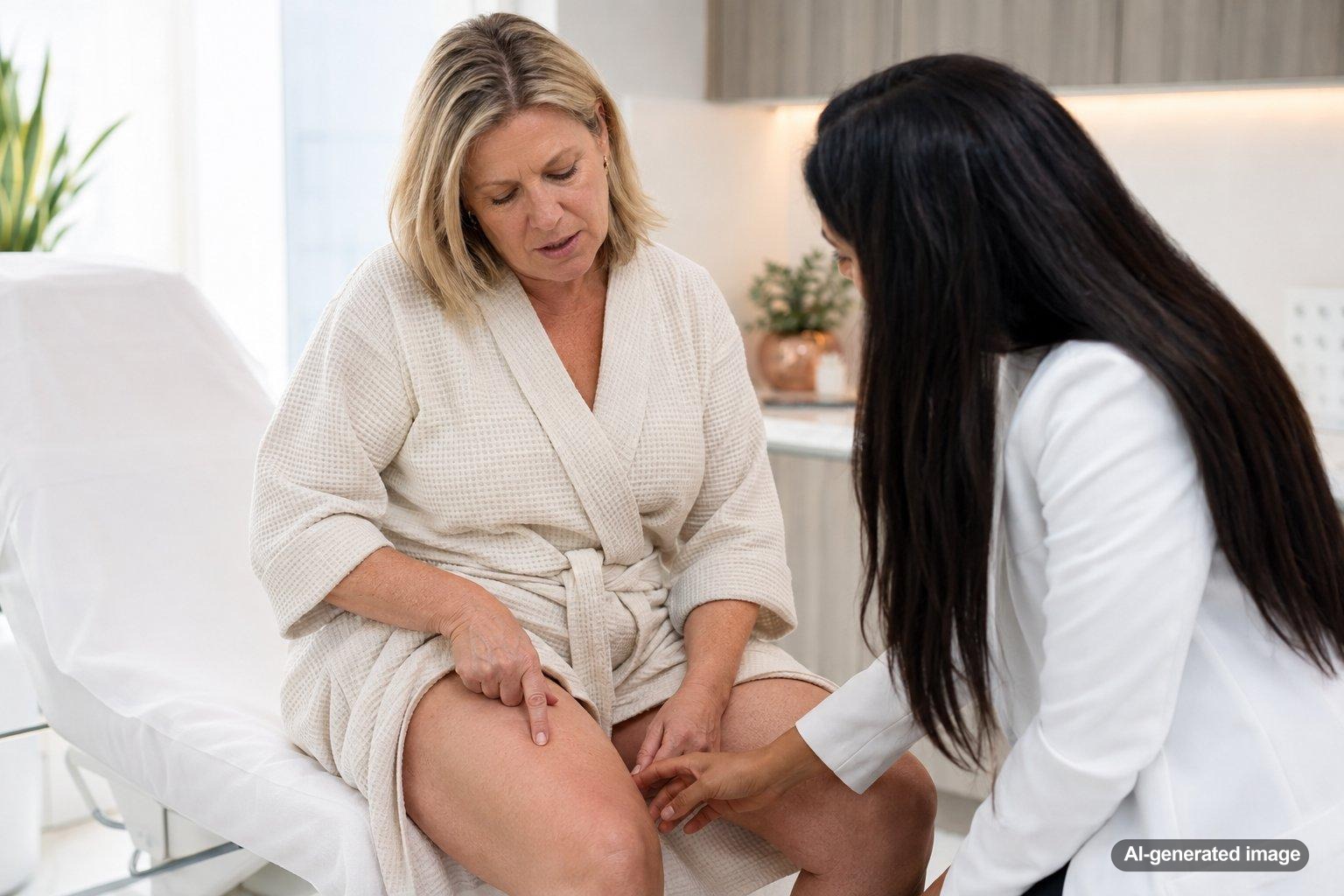
If the skin where your thighs rub becomes painfully raw, cracked, or split, friction is often part of the picture. Repeated skin-to-skin rubbing can weaken the surface of the skin, and heat, sweat, exercise, tight clothing, or long days in humid weather can make that irritation more intense. Once the skin barrier is damaged, even ordinary movement may sting or burn.
These painful splits are sometimes called fissures, but several different skin problems can produce a similar appearance. Simple chafing is common, while intertrigo, contact irritation, psoriasis, or a secondary yeast or bacterial infection may sometimes contribute. A dermatologist can examine the area when symptoms are severe, recurrent, spreading, or simply not behaving like ordinary friction irritation.
Quick answer
- Friction is a common trigger. Skin rubbing against skin can cause inflammation, tenderness, and eventually superficial cracking or raw areas.
- Moisture can make friction worse. Sweat and humid conditions keep skin surfaces damp and more vulnerable to irritation.
- Inflamed skin folds can develop intertrigo. This describes inflammation where skin surfaces touch, and secondary yeast or bacterial overgrowth can sometimes occur.
- Recurring splits deserve attention. Persistent symptoms may have another contributor, such as dermatitis or an inflammatory skin condition.
- Increasing pain, swelling, pus, spreading redness, or other signs of infection should be evaluated.
What causes the skin between the thighs to split?
Healthy skin acts as a protective barrier, but that barrier can become irritated when the same area experiences repeated rubbing. On the inner thighs, walking, running, exercising, working outdoors, or simply spending a warm day in clothing that traps moisture can create repeated friction. The skin may first feel warm or tender, then become red or irritated. With continued rubbing, the outer surface can erode and small painful cracks can develop.
Heat and moisture often amplify the problem. Sweat can remain trapped where the thighs touch, especially in South Florida’s warm, humid climate. Damp skin is more prone to friction and maceration, meaning the surface becomes softened by prolonged moisture. That combination can make a seemingly minor irritated area feel surprisingly painful.
Could it be intertrigo instead of simple chafing?
Possibly. Intertrigo is inflammation that develops in places where skin surfaces touch, including the groin and inner thighs. Friction, warmth, and trapped moisture can all contribute. The affected skin may appear irritated, tender, moist, or raw, and cracking can occur in some cases.
Intertrigo itself is inflammatory rather than automatically infectious. However, damaged, warm, moist skin can sometimes allow yeast or bacteria that normally live on the skin to multiply more easily. That is one reason a rash that keeps worsening despite reducing friction may need a professional evaluation rather than repeated trial-and-error treatment at home.
Other reasons the area may keep getting raw
- Sweating and humidity: Persistent moisture can soften the skin and increase friction.
- Tight or rough clothing: Seams, compression garments, underwear, or fabrics that remain wet with sweat may repeatedly irritate the same spot.
- Exercise or prolonged walking: Repetitive movement can create enough friction to injure already sensitive skin.
- Irritant or contact dermatitis: Fragranced products, detergents, wipes, or other substances touching the area may contribute to inflammation in some people.
- Inflammatory skin conditions: Conditions such as inverse psoriasis can affect skin folds and may look different from the classic dry, scaly patches people associate with psoriasis.
- Secondary infection: Yeast or bacteria can sometimes take advantage of damaged, moist skin. The appearance alone may not be enough to tell the difference reliably.
What you can do at home
For mild irritation that appears clearly related to rubbing, the immediate goal is to reduce friction and give the skin barrier a chance to recover. Keep the area gently clean and dry, and avoid scrubbing, exfoliating acids, fragranced products, or other potentially irritating skincare until the skin is comfortable again.
Loose, breathable clothing can help reduce rubbing and moisture accumulation. For activities that repeatedly cause chafing, moisture-wicking garments or soft fabric that creates a barrier between the thighs may be useful. A thin layer of plain petroleum jelly on intact friction-prone skin may also help reduce rubbing. If the skin is extensively open, draining, unusually painful, or showing possible signs of infection, it is better to have the area evaluated instead of applying multiple over-the-counter products.
Try not to repeatedly pick, peel, or scrub away softened skin. Raw areas need protection from additional mechanical irritation. If a particular workout, garment, or long period of walking predictably makes the problem worse, temporarily reducing that trigger may give the area time to settle.
Why guessing with antifungal or steroid creams can be tricky
Several conditions that occur between the thighs can look similar while requiring different approaches. A yeast-related rash, irritant dermatitis, inverse psoriasis, and uncomplicated friction irritation may overlap in color, tenderness, and location. Using a medication based only on appearance can sometimes mask symptoms or irritate already damaged skin.
If the problem is recurrent, widespread, unusually painful, or not improving with basic friction and moisture control, a dermatologist can evaluate the pattern and decide whether testing or prescription treatment is appropriate. Prescription therapies and treatment for suspected infections should be selected according to the underlying cause rather than assumed from symptoms alone.
Professional options
A dermatology visit starts with identifying what is driving the inflammation. Your clinician may consider the location, appearance, recurrence pattern, moisture exposure, medications, skincare products, and other symptoms. When infection is a concern, testing may sometimes be appropriate. When an inflammatory condition is suspected, treatment can be tailored to that diagnosis.
Professional care may include strategies to calm inflammation, manage an identified fungal or bacterial component, support the damaged skin barrier, or address excessive moisture and sweating when those factors are contributing. Your clinician can help you decide which approach makes sense for your skin rather than layering several products onto a painful area.
When should you see a dermatologist?
Consider scheduling an evaluation if the splits repeatedly return, become deeper, fail to improve after reducing friction, or interfere with comfortable walking and everyday activity. It is also worth getting checked if you cannot tell whether you are dealing with ordinary chafing or another type of rash.
Seek medical attention for concerning changes such as rapidly spreading redness, increasing warmth or swelling, pus or significant drainage, worsening pain, fever, or feeling unwell. These features can be associated with infection and should not be managed as routine chafing without appropriate evaluation.
FAQ
Why does my inner-thigh skin feel like it is tearing?
Repeated friction can damage the outer skin barrier until small cracks or erosions form. Moisture from sweating can make the skin more vulnerable to this process. Other conditions can also cause fissuring, so recurrent or unexplained tearing is worth showing to a dermatologist.
Can sweat cause painful cracks between my thighs?
Sweat alone may not explain every case, but persistent moisture can soften the skin and increase the effects of friction. Heat, humidity, and physical activity can therefore create a combination that makes chafing and skin-fold irritation more likely.
How can I tell chafing from a yeast infection?
It can be difficult to distinguish them confidently at home because both can involve red, irritated skin in warm, moist areas. Yeast can also develop secondarily in skin that was initially irritated by friction. If the area keeps spreading, recurring, or failing to improve, a dermatologist can evaluate whether infection or another condition is involved.
Why does the problem keep coming back in the same place?
The same area may repeatedly experience the same combination of rubbing, heat, sweat, clothing pressure, or skin-fold moisture. Recurrence can also suggest an underlying inflammatory condition or another factor that deserves evaluation rather than continued symptom treatment alone.
Should I exfoliate the rough skin after chafing?
Not while the area is raw, cracked, or inflamed. Scrubs, acids, and vigorous rubbing can add more irritation to a weakened skin barrier. Gentle cleansing and reducing friction are more conservative choices until the skin has recovered.
Ready to get help?
Schedule an appointment or send a message and our team will get back to you.
Prefer to call? 954-666-3736
This article is for educational purposes and is not medical advice. For diagnosis and personalized treatment, please book an appointment with a board-certified dermatologist.
Sources & further reading
- Cleveland Clinic – Intertrigo: What Is It, Causes, Symptoms & Treatment
- American Academy of Dermatology (AAD) – How to prevent and treat blisters
- DermNet – Intertrigo (Rash in body folds): Causes, Images, and More
