

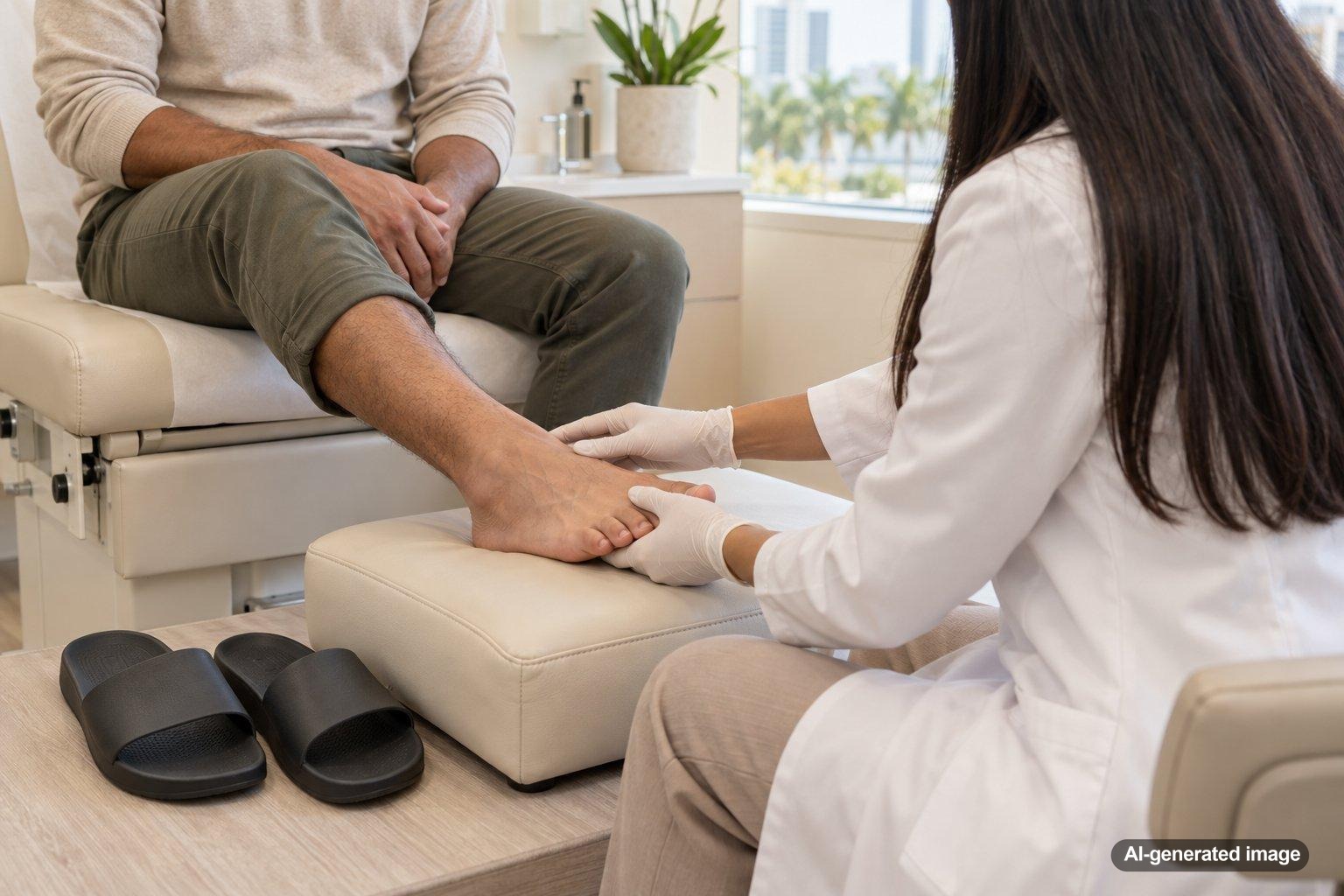
Rubber sandals may seem like an ideal choice for keeping your feet cool, especially in warm, humid climates. Yet some people notice that their feet develop a surprisingly strong odor after wearing rubber flip-flops, slides, or waterproof sandals. The smell can be more noticeable than it is after wearing sneakers or other shoes. This often happens because rubber and similar synthetic materials can allow sweat and skin oils to collect against the foot, creating conditions in which odor-producing bacteria become more active.
The odor does not necessarily mean your feet are dirty or that you have an infection. Footwear materials, humidity, perspiration, and the condition of the sandals themselves can all contribute. Understanding why the smell develops can help you make practical changes while recognizing when a persistent odor may deserve a dermatologist’s attention.
Quick Answer: Why Do Rubber Sandals Make Feet Smell?
- Sweat can become trapped: Nonabsorbent rubber footbeds may hold moisture against the soles of your feet.
- Bacteria break down sweat-related substances: This activity can produce compounds responsible for unpleasant foot odor.
- Sandals can retain residue: Sweat, skin cells, and oils may accumulate on the footbed, particularly when sandals are not cleaned or dried regularly.
- Heat and humidity increase moisture: Warm weather and physical activity may make the problem more noticeable.
- Occasionally, a skin condition contributes: Persistent odor accompanied by itching, peeling, or small pits in the skin may warrant evaluation.
What Causes the Smell on Your Feet?
Foot odor, sometimes called bromodosis, usually develops through an interaction between perspiration, microorganisms on the skin, and the environment surrounding your feet. Sweat itself is not necessarily strongly scented. However, bacteria naturally present on the skin can break down components of sweat and skin debris, releasing odor-producing substances.
Your feet contain numerous sweat glands, and perspiration helps regulate body temperature. When moisture remains against the skin, the environment becomes more favorable for bacterial activity. Although open sandals expose much of the foot to air, the portion of the sole pressed against a rubber footbed may remain damp.
Rubber is generally not absorbent. Rather than drawing perspiration away from the skin, a smooth rubber surface can allow moisture to accumulate where the foot contacts the sandal. The resulting combination of dampness, warmth, and friction can help explain why odor develops even when the rest of the foot feels relatively cool.
Why Rubber Sandals Can Smell Worse Than Other Footwear
Nonabsorbent Footbeds Hold Moisture Against the Skin
Some footwear materials absorb or disperse small amounts of moisture. Rubber and many waterproof synthetic materials do not. Sweat can remain between the sole and the sandal until it evaporates or is wiped away. On particularly humid days, evaporation may be slower, allowing moisture to persist.
The Same Contact Areas Become Damp Repeatedly
The ball of the foot, heel, and areas beneath the toes frequently remain in contact with the sandal. Repeated sweating in these locations can create small areas of concentrated moisture. Walking also produces friction, which may aggravate sensitive skin when the surface stays damp.
Sweat and Skin Residue Build Up on the Sandals
Over time, sandals may accumulate perspiration, dead skin cells, sunscreen, body oils, and environmental debris. Bacteria can remain on these residues, especially when the sandals are repeatedly worn without cleaning or adequate drying. Sometimes the strongest smell comes from the footbed rather than the skin itself.
Hot Weather Increases Perspiration
In Fort Lauderdale and other warm coastal environments, high temperatures and humidity can make the feet perspire more readily. Walking outdoors, visiting the beach, or wearing sandals for extended periods may increase the amount of moisture collecting on the footbed.
Different Sandal Materials Behave Differently
Not every rubber sandal has the same moisture characteristics. Surface texture, footbed shape, ventilation channels, material composition, and how closely the sandal fits can influence how much moisture remains against the foot. A sandal that provides airflow around the toes may still trap perspiration underneath the sole.
Could Strong Foot Odor Indicate a Skin Condition?
Most temporary foot odor is related to sweating and bacterial activity rather than a significant medical problem. However, certain skin conditions can produce unpleasant odors or become more noticeable in persistently damp footwear.
Pitted Keratolysis
Pitted keratolysis is a superficial bacterial infection that can affect the weight-bearing surfaces of the feet. It is associated with sweaty feet and footwear that limits airflow. In addition to a pronounced odor, affected skin may develop numerous tiny, shallow pits, sometimes with a whitish or softened appearance.
The condition can resemble ordinary moisture-related skin changes, so odor alone is not enough to identify it. A dermatologist can examine the affected areas and discuss appropriate treatment if an infection is present.
Athlete’s Foot
Athlete’s foot, also known as tinea pedis, is a fungal infection that favors warm, moist environments. It may cause itching, peeling, scaling, burning, or cracking, particularly between the toes. An unpleasant odor can sometimes accompany these changes.
Rubber sandals do not automatically cause athlete’s foot. In fact, wearing protective sandals in communal showers and pool areas can help reduce exposure to fungi on shared surfaces. The important distinction is that protective footwear should also be kept clean and allowed to dry.
Excessive Sweating
Some people experience more foot perspiration than others, even in relatively comfortable temperatures. When sweating is unusually pronounced or persistent, it may contribute to recurring foot odor regardless of footwear. A dermatologist can help determine whether excessive sweating requires additional management.
What Can You Do at Home to Reduce Sandal-Related Foot Odor?
Simple changes in foot hygiene and footwear care may help reduce the conditions that contribute to odor. The goal is not to eliminate normal skin bacteria or prevent all perspiration, but to limit prolonged moisture and residue buildup.
- Wash your feet regularly: Use a gentle cleanser and water, paying attention to the soles and spaces between the toes. Rinse thoroughly.
- Dry carefully: After bathing or swimming, gently dry the feet, especially between the toes, before putting on footwear.
- Clean sandals according to their care instructions: Remove accumulated dirt, sweat, and oils with a suitable mild cleaning method. Avoid harsh chemicals that could irritate your skin or damage the footwear.
- Let sandals dry completely: Avoid putting on footwear that remains damp from the previous day, washing, or exposure to water.
- Rotate footwear: Alternating between pairs may allow each pair more time to dry.
- Consider footbed design: Sandals with textured surfaces, drainage channels, or other ventilation features may be more comfortable for people whose feet perspire heavily.
- Take moisture breaks: When practical, remove your sandals in a clean, private setting and let your feet dry.
- Check your skin: Look for peeling, cracks, irritation, unusual whitening, or small pits that may indicate something beyond ordinary sweating.
If your skin is sensitive, be cautious with strongly fragranced sprays, concentrated essential oils, abrasive scrubs, or home remedies that may cause irritation. Covering an odor with fragrance does not address its underlying cause.
Should You Stop Wearing Rubber Sandals?
Not necessarily. Rubber sandals can be practical for beaches, pools, showers, and other wet environments. For many people, consistent cleaning and drying are enough to make them more comfortable.
Consider whether the odor appears only with one pair or occurs with several types of footwear. If one pair consistently produces a stronger smell, its material, age, fit, or accumulated residue may be contributing. If your feet develop the same odor regardless of what you wear, perspiration or a skin condition may play a larger role.
If your sandals cause redness, rubbing, blisters, or persistent discomfort, choosing a different material or design may also be worthwhile. A persistent rash where the sandal touches the foot could reflect friction or a reaction to a footwear component and may deserve evaluation.
Professional Options for Persistent Foot Odor
When routine foot care and footwear changes do not improve the problem, a dermatologist can help identify whether excessive perspiration, a bacterial condition, a fungal infection, or skin irritation is contributing.
An evaluation may include reviewing your symptoms, examining the soles and spaces between the toes, and considering testing when a fungal infection is suspected. Treatment depends on the findings rather than the odor alone.
Common professional approaches may include prescription treatments for certain bacterial or fungal conditions, personalized strategies for managing excessive sweating, and skin care recommendations when irritation or barrier disruption is present. Not every case requires medication, and the most appropriate approach varies with the underlying cause.
When Should You See a Dermatologist?
Consider scheduling a dermatology evaluation if foot odor persists despite regular cleaning, complete drying, and changes in footwear, particularly when you notice other symptoms.
- Small, crater-like pits appearing on the soles or heels.
- Persistent itching, peeling, scaling, or cracking between the toes.
- Unusually heavy perspiration that interferes with daily comfort.
- Recurring redness, burning, tenderness, or irritation where sandals contact the skin.
- New or worsening odor accompanied by visible changes in the skin.
- Symptoms that repeatedly return after routine hygiene measures.
Seek prompt medical attention for rapidly spreading redness, significant swelling, increasing pain, fever, or drainage from a wound. People with diabetes, reduced sensation in their feet, impaired circulation, or a weakened immune system should be especially cautious about new foot wounds or signs of infection.
Frequently Asked Questions
Why do my feet smell in rubber sandals even after I shower?
Freshly washed feet can develop an odor when perspiration comes into contact with bacteria or residue remaining on the sandal footbed. Cleaning and thoroughly drying the sandals may be just as important as washing your feet.
Does rubber itself cause foot odor?
Rubber does not necessarily create the odor directly. Its nonabsorbent surface can allow sweat to remain against the skin, encouraging conditions in which odor-producing bacteria become more active. Some new footwear also has a distinct material odor, which is separate from bacterial foot odor.
Can rubber flip-flops cause a fungal infection?
Wearing rubber flip-flops does not automatically cause a fungal infection. However, prolonged moisture against the skin can create conditions favorable to fungal growth. Protective sandals are still useful in shared wet environments, including locker rooms and public showers.
Why do my feet smell worse in sandals than in sneakers?
Some sneakers are worn with moisture-wicking socks that help move perspiration away from the skin. Bare feet pressed against a nonabsorbent sandal footbed may remain damp despite the open design. Footwear hygiene and material differences can also influence odor.
Could very strong foot odor be a bacterial infection?
Sometimes. Pitted keratolysis is one bacterial condition associated with pronounced foot odor and tiny pits in the skin. However, strong odor alone does not establish a diagnosis. A dermatologist can evaluate persistent symptoms and determine whether treatment is appropriate.
How often should I clean rubber sandals?
Cleaning frequency depends on how often you wear them, how much your feet perspire, and whether the sandals are exposed to sand, water, or other debris. Regularly removing visible residue and allowing the sandals to dry completely between uses is a sensible starting point. Always follow the manufacturer’s care recommendations.
Ready to get help?
Schedule an appointment or send a message and our team will get back to you.
Prefer to call? 954-666-3736
Disclaimer
This article is for educational purposes and is not medical advice. For diagnosis and personalized treatment, please book an appointment with a board-certified dermatologist.
Sources & Further Reading
- American Academy of Dermatology (AAD) – How to prevent athlete’s foot
- Cleveland Clinic – Pitted Keratolysis: What It Is, Causes & Treatment
- Centers for Disease Control and Prevention (CDC) – Healthy Habits: Foot Hygiene
