

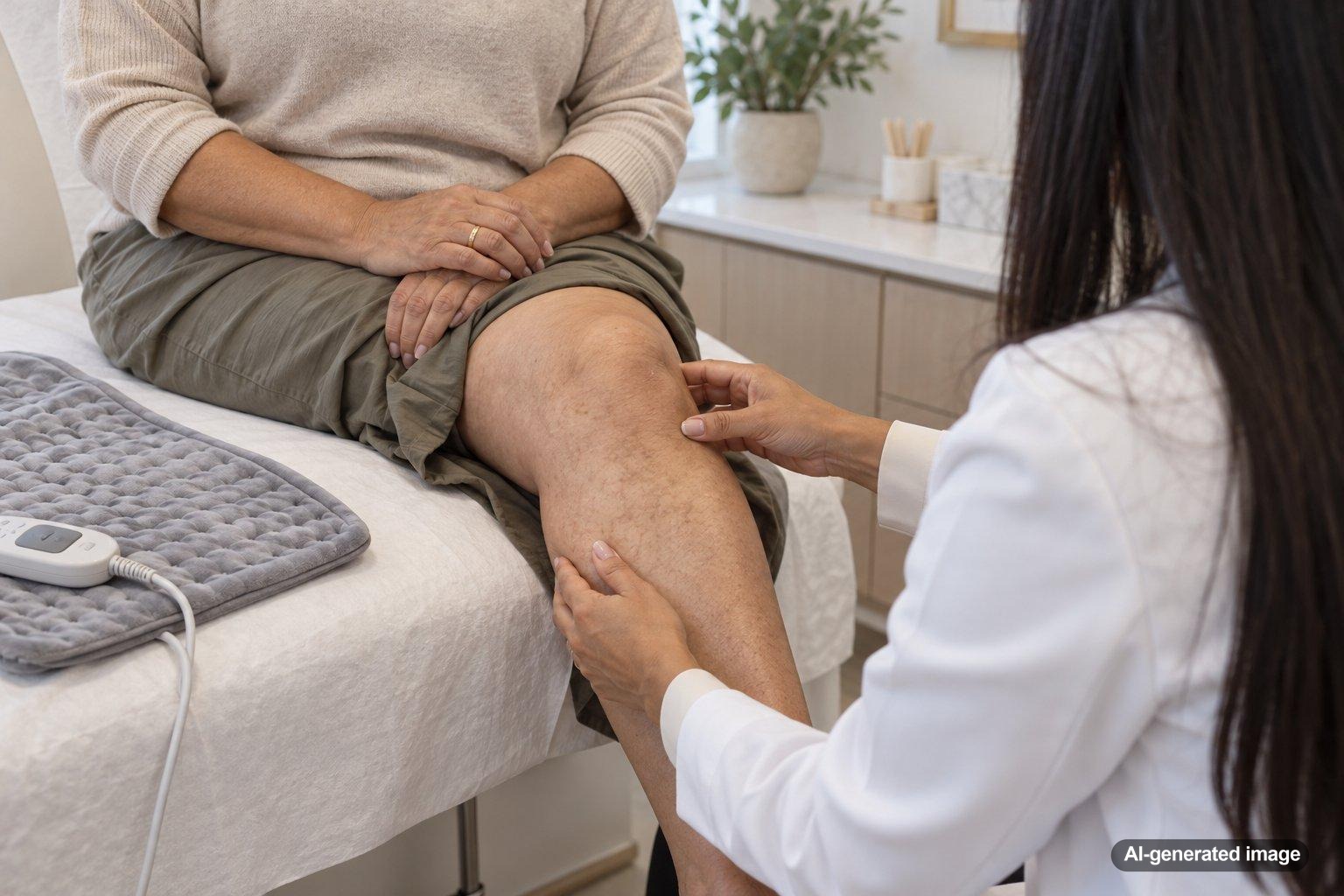
If you regularly use a heating pad for back pain, muscle tension, or abdominal discomfort, you may eventually notice something unexpected: a brown, reddish-brown, or purple-toned pattern that looks like a net beneath your skin. It may appear gradually, and the area might not feel particularly uncomfortable. Because the marks can resemble bruising or an unusual rash, the change can be understandably concerning.
One possible explanation is erythema ab igne, sometimes called toasted skin syndrome. This condition develops when skin is repeatedly exposed to heat that is not necessarily hot enough to cause an immediate burn. Although many cases improve after the heat exposure stops, persistent discoloration deserves attention. Understanding how the pattern develops can help you recognize when to change your routine and when a dermatologist should examine your skin.
Quick answer: Why does a heating pad cause a brown net-like pattern?
- Repeated heat exposure: Regularly applying warmth to the same area can gradually affect the skin, even without a noticeable burn.
- A recognizable pattern: Erythema ab igne often creates a reddish-brown, lace-like, or net-shaped area of discoloration.
- Gradual pigment changes: The pattern may initially look red and later become darker with continued exposure.
- Variable recovery: Discoloration may fade after heat exposure stops, but longstanding changes can persist.
- Professional evaluation: A dermatologist can assess persistent marks, unusual symptoms, or changes that do not fit a typical heat-related pattern.
What is erythema ab igne?
Erythema ab igne is a skin reaction associated with repeated exposure to localized heat. Its name refers to a distinctive pattern of discoloration that can develop after the same area of skin experiences warmth over an extended period.
The condition differs from an ordinary thermal burn. A burn may produce immediate pain, pronounced redness, or blistering. Erythema ab igne, by contrast, often develops gradually from repeated exposure to temperatures that feel tolerable at the time.
The pattern is described medically as reticulated, meaning it resembles a network, lattice, or loosely woven mesh. This appearance reflects changes in the skin associated with repeated thermal exposure rather than the physical pattern of the heating pad itself.
Early changes may appear pink or red and temporarily fade. With repeated exposure, the skin may develop more persistent brown, reddish-brown, or darker pigmentation. Some people experience mild itching or warmth, while others notice only a visible color change.
Why does the discoloration look like a net instead of a solid brown patch?
The net-like appearance is one of the most recognizable characteristics of erythema ab igne. Repeated heat exposure can affect superficial blood vessels and contribute to changes in skin pigmentation. Rather than producing one uniformly colored area, these effects may create a branching or interconnected pattern.
The pattern can be particularly noticeable on the lower back, abdomen, or thighs, where heating pads are commonly used. Its color and contrast vary depending on skin tone, the duration of exposure, and the extent of the skin changes.
Importantly, not every net-like skin pattern is caused by heat. Other conditions, including livedo reticularis, can create a similar mottled appearance. A dermatologist considers the location, appearance, symptoms, and history of heat exposure before determining the likely explanation.
Common causes and triggers
A heating pad is a familiar source of localized heat, but several everyday devices and habits may produce similar skin changes.
- Electric heating pads: Repeated use over the same area, particularly during long periods of rest, can contribute to cumulative heat exposure.
- Hot water bottles: Frequent application against the abdomen, back, or legs may produce a similar reaction.
- Heated blankets: Prolonged or repetitive exposure concentrated on one body area can be a contributing factor.
- Laptop computers: Heat generated by a laptop resting directly on the thighs may lead to localized discoloration.
- Space heaters and fireplaces: Sitting close to a heat source for extended periods can affect exposed skin.
- Heated seats: Frequent exposure to vehicle seat warmers may contribute to skin changes in areas receiving concentrated warmth.
People who rely on heat to manage ongoing discomfort may be especially likely to encounter repeated exposure. The heating pad may feel soothing, so gradual skin changes can be overlooked until the pattern becomes more pronounced.
What can you do at home?
If you notice a new brown net-like pattern where you routinely apply heat, several conservative steps may help limit further irritation while you arrange an evaluation if needed.
Stop applying heat to the affected area
The most important initial step is to discontinue repeated heat exposure to the discolored skin. Continuing the same heating routine may contribute to more persistent pigmentation.
If you depend on a heating pad for recurring pain, ask your healthcare provider about alternative comfort measures and whether the underlying discomfort needs additional evaluation.
Keep your skincare routine gentle
Use a mild cleanser and a simple, fragrance-free moisturizer if the skin feels dry or sensitive. Avoid aggressive exfoliation, harsh scrubs, and attempts to remove the discoloration through rubbing.
Because the color change develops within the skin, scrubbing the surface is unlikely to address its underlying cause and may create additional irritation.
Protect exposed areas from sunlight
If the affected skin is exposed outdoors, regular sun protection is a reasonable part of caring for discoloration-prone skin. Choose broad-spectrum sunscreen with SPF 30 or higher, along with protective clothing when practical.
Sun protection does not reverse heat-related changes by itself, but it can support a gentle skincare routine while the area is recovering.
Watch for changes without repeatedly irritating the area
Pay attention to whether the discoloration remains stable, becomes darker, spreads, or develops a new texture. Taking occasional photographs in consistent lighting may help you communicate changes to your dermatologist.
Avoid experimenting with strong bleaching products, prescription-strength exfoliants, or at-home devices without professional guidance.
Will the brown pattern go away?
In some cases, particularly when the changes are recognized early, erythema ab igne gradually improves after the source of heat is removed. However, recovery is not immediate, and the degree of fading varies considerably.
More established discoloration can remain visible for months or longer. Skin that has experienced repeated heat exposure over an extended period may retain some pigmentation even after the heating pad is no longer used.
The likelihood of improvement depends on several factors, including how long the exposure continued, the severity of the skin changes, and individual skin characteristics.
There is no reliable way to predict the outcome from appearance alone. If the pattern is persistent, a dermatologist can assess whether it is consistent with erythema ab igne or whether another explanation should be considered.
Can a dermatologist treat heating pad discoloration?
A dermatology appointment begins with evaluating the affected area and discussing relevant heat exposure. A clinician may ask when the pattern first appeared, whether it has changed, and how frequently a heating pad or another heat source was used.
For uncomplicated erythema ab igne, avoiding further heat exposure is often the central management approach. If discoloration persists, professional options may include:
- Observation and follow-up: Monitoring the area after heat exposure stops may be appropriate when the examination is reassuring.
- Prescription topical treatments: Certain pigment-focused medications, including selected retinoids or lightening agents, may be considered for some patients after evaluation.
- Laser-based treatments: Certain laser approaches may be discussed for persistent discoloration, although suitability, response, and the risk of additional pigmentation vary.
- Further examination or biopsy: If an area develops unusual thickening, sores, growths, or other concerning features, a dermatologist may recommend additional evaluation.
Not every discolored area requires a procedure, and treatment choices should reflect the specific diagnosis, skin type, and examination findings.
When should you see a dermatologist?
It is worth arranging a dermatology evaluation if the pattern persists after stopping heat exposure, its cause is unclear, or the affected area continues to change.
Seek prompt professional assessment if you notice:
- A sore or ulcer that does not heal.
- A new lump, thickened patch, or rough growth within the discolored area.
- Bleeding, crusting, or an evolving spot.
- Blistering, significant pain, or other signs of an acute burn.
- A rapidly changing or widespread mottled pattern, particularly without a clear history of heat exposure.
Longstanding erythema ab igne has rarely been associated with abnormal skin growths, including certain skin cancers. This does not mean that a brown net-like pattern is cancerous. It does mean that persistent sores, new growths, and changing areas should not automatically be attributed to harmless heating pad use.
A dermatologist can distinguish common heat-related pigmentation from conditions that may require a different approach.
Frequently asked questions
Is a brown net-like pattern from a heating pad a burn?
It may represent a chronic heat-related skin reaction rather than a typical acute burn. Erythema ab igne can develop through repeated exposure to warmth that does not cause immediate blistering or severe pain. A clinician can evaluate the appearance and determine whether another condition or a more significant thermal injury is present.
Can a heating pad discolor my skin even on a low setting?
Yes. Repeated exposure to relatively low levels of heat can contribute to erythema ab igne. The duration and frequency of exposure matter, not just the temperature setting. A heating pad that feels comfortable can still affect the skin when used repeatedly in the same location.
Is toasted skin syndrome contagious?
No. Erythema ab igne is a reaction associated with heat exposure, not an infection. It cannot spread from one person to another through touch.
Can I use a dark spot cream to fade the pattern?
Some topical treatments used for hyperpigmentation may be considered in selected circumstances, but they are not appropriate for every skin condition. Before starting a strong lightening product or prescription medication, it is best to have the pattern evaluated and confirm the likely cause.
Why is the pattern only on one side of my back or thigh?
Heat-related discoloration often follows the area receiving the most repeated exposure. If a heating pad rests against one side of the body more frequently, the pattern may be limited to that location. However, an uneven distribution alone cannot confirm the diagnosis.
Should I be worried if the pattern does not hurt?
The absence of pain does not necessarily indicate that the skin is unaffected. Erythema ab igne may produce visible discoloration with little discomfort. If the pattern is persistent, changing, or unexplained, a dermatology examination is appropriate even when the area is painless.
Ready to get help?
Schedule an appointment or send a message and our team will get back to you.
Prefer to call? 954-666-3736
Disclaimer
This article is for educational purposes and is not medical advice. For diagnosis and personalized treatment, please book an appointment with a board-certified dermatologist.
