

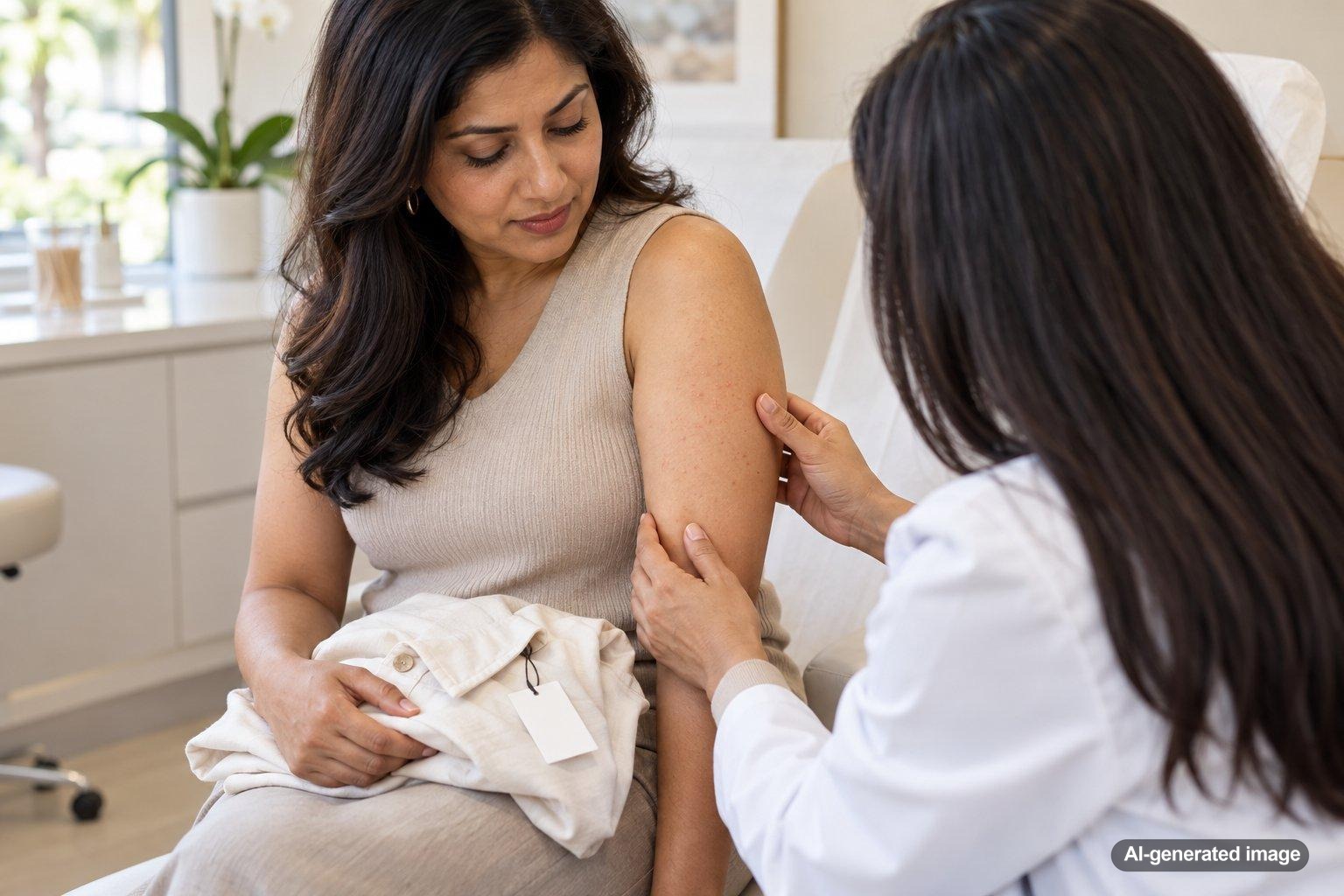
That brand-new shirt or pair of pants may look perfectly clean, but your skin can react differently. If you notice tiny bumps, itching, or patches of redness after wearing new clothes straight from the store, the explanation may involve substances left on the fabric during manufacturing, friction against your skin, or heat and perspiration trapped beneath the material. In some cases, the reaction is a form of contact dermatitis, which occurs when something touching the skin causes irritation or an allergic response.
Not every clothing-related bump is an allergy, and a new garment isn’t necessarily unsafe simply because it hasn’t been washed. The location of the bumps, how quickly they appear, and whether they improve after you stop wearing the item can offer useful clues. Understanding these differences can help you make more comfortable clothing choices and recognize when a dermatologist should take a closer look.
Quick answer: Why can new clothes cause tiny bumps?
- Residual fabric chemicals: Certain dyes and finishing agents may irritate sensitive skin or trigger allergic contact dermatitis.
- Friction and pressure: Stiff fabric, tight seams, and rough textures can contribute to small irritated bumps.
- Heat and sweat: New clothing that fits closely or traps moisture may contribute to heat rash or other sweat-related irritation.
- Individual skin sensitivity: People with a history of sensitive skin or eczema may react more readily to certain fabrics and finishing agents.
- Skipping the first wash: Washing new garments can remove some excess dyes and finishing residues before they touch your skin.
What happens when new fabric irritates your skin?
Clothing comes into contact with a large portion of your skin for hours at a time. When fabric contains an irritating substance or repeatedly rubs against the same area, the skin’s protective barrier may become disrupted. This can produce itching, redness, dryness, or small raised bumps.
One possible explanation is contact dermatitis, an inflammatory skin reaction associated with substances that touch the skin. There are two important forms.
Irritant contact dermatitis
Irritant contact dermatitis occurs when a substance or repeated physical exposure damages or aggravates the skin barrier. It does not require an allergy. Fabric friction, perspiration, and irritating chemical residues may contribute to this type of reaction.
Allergic contact dermatitis
Allergic contact dermatitis involves an immune response to a particular substance after the person has become sensitized to it. Certain textile dyes, finishing resins, and other clothing components can act as allergens. Unlike an immediate irritation, an allergic reaction may become noticeable hours or days after contact.
The distinction matters because a person with an established textile allergy may continue reacting to the responsible substance even after ordinary washing. A dermatologist can evaluate whether allergy testing would be useful.
Common reasons brand-new unwashed clothes may cause bumps
1. Fabric dyes that transfer or contact the skin
Colorful clothing undergoes dyeing processes that can leave varying amounts of dye associated with the finished fabric. Some textile dyes, particularly certain dyes used in synthetic materials, can trigger allergic contact dermatitis in susceptible individuals.
Reactions may be more noticeable where clothing fits tightly, rubs repeatedly, or becomes damp with sweat. The waistband, inner thighs, underarms, and areas beneath close-fitting shirts are examples of locations where prolonged contact can contribute to symptoms.
Dark clothing does not automatically cause a reaction, and light-colored clothing is not universally safer. However, if symptoms repeatedly occur with a particular color or garment, that pattern is worth discussing with a dermatologist.
2. Finishing chemicals used during manufacturing
Manufacturers may treat fabrics to improve wrinkle resistance, maintain their appearance, or create specific performance characteristics. Some textile finishing agents, including certain formaldehyde-based resins, are recognized causes of allergic contact dermatitis.
This does not mean every wrinkle-resistant garment contains a problematic substance or that all finishing chemicals cause skin reactions. Individual sensitivity, the substance involved, and the amount of exposure influence whether symptoms develop.
A first wash may help remove some removable finishing residues. However, washing does not necessarily eliminate every chemical treatment or established contact allergen.
3. Rough fibers, stiff seams, and repeated friction
Sometimes the problem is mechanical rather than chemical. A new shirt collar may be unusually stiff, denim may rub the upper thighs, or a tight waistband may repeatedly press against the same area.
Friction can aggravate the skin and produce localized redness, tenderness, or small bumps. People may notice this particularly along seams, beneath elastic bands, or where fabric moves against the skin throughout the day.
Softening after laundering may improve comfort, but persistent irritation can indicate that the garment’s fit or construction is contributing to the problem.
4. Sweat trapped beneath close-fitting clothing
Heat and perspiration can make clothing-related irritation more noticeable. Tight or poorly ventilated fabric may trap moisture against the skin, especially during exercise or in hot, humid conditions.
Heat rash can produce tiny bumps when sweat becomes trapped within the skin. These bumps may cause prickling or itching and can occur in areas covered by clothing.
For people living in Fort Lauderdale or visiting during warmer weather, humidity and sweating may make an otherwise tolerable garment feel more irritating. This does not establish that the fabric itself is causing an allergy.
5. Sensitivity to elastic, fasteners, or decorative details
Not every clothing reaction comes from the main fabric. Elastic components, rubber additives, adhesives, metal snaps, and decorative materials may contain substances that trigger contact dermatitis in susceptible individuals.
If bumps consistently appear beneath a specific waistband, clasp, strap, or button, the location may help identify a possible trigger.
6. An existing tendency toward sensitive or eczema-prone skin
People with eczema or a more easily irritated skin barrier may find certain fabrics uncomfortable even when those materials cause no difficulty for other people.
Coarse textures, sweating, friction, and irritating residues can aggravate skin that is already sensitive. The appearance of bumps after wearing a new garment does not, by itself, establish an eczema diagnosis.
What do clothing-related bumps typically look and feel like?
There is no single appearance shared by all clothing-related reactions. The specific pattern depends on the underlying cause, skin tone, location, and degree of inflammation.
- Small itchy red, pink, or skin-colored bumps: These may occur with contact dermatitis or other forms of irritation.
- Dry or rough patches: These can accompany an impaired skin barrier or an eczema-like reaction.
- Clusters of tiny prickly bumps: These may be associated with heat and trapped perspiration.
- Bumps concentrated beneath seams or waistbands: This pattern can suggest repeated friction, pressure, or contact with a particular clothing component.
- Swelling, pronounced itching, or blistering: These findings warrant more attention and can occur with stronger inflammatory reactions.
Redness may be less obvious on deeper skin tones. Some reactions appear darker, purplish, or closer to the surrounding skin color, making texture changes and itching particularly useful details to report.
How can you tell whether the new clothes are responsible?
The timing of symptoms and the distribution of bumps can help narrow down possibilities, although neither confirms the cause on its own.
Consider whether the bumps appeared after wearing a specific item, whether they are limited to areas covered by that item, and whether your skin feels better after removing it. A repeated reaction to the same garment may be more informative than a single episode.
Also consider other recent exposures. New laundry detergent, fabric softener, lotion, sunscreen, exercise habits, or changes in temperature can complicate the picture.
Contact allergies can produce delayed symptoms, so a rash appearing the following day may still be related to an earlier exposure. Conversely, bumps that happen to appear after wearing new clothes may have an unrelated cause.
A brief record of the garment, fabric type, affected areas, and symptom timing may be helpful if the reaction keeps returning.
What can you do at home?
For mild irritation without concerning symptoms, conservative skin care and reducing exposure to a suspected trigger may help.
Wash new clothes before wearing them
Laundering new garments according to their care labels can remove some excess dyes and finishing residues. The American Academy of Dermatology recommends washing new clothes before wearing them, particularly for people prone to contact dermatitis.
A fragrance-free, dye-free laundry detergent may be a reasonable choice for sensitive skin. Use the recommended detergent amount and rinse garments thoroughly. More detergent does not necessarily mean cleaner or less irritating clothing.
Choose comfortable, breathable fabrics
Soft, loose-fitting clothing may reduce friction and help limit moisture buildup. Cotton or linen can be comfortable choices, although no fabric is suitable for everyone.
If a particular material consistently causes discomfort, consider avoiding it until the cause becomes clearer. Pay attention to seams, elastic, tags, and the amount of pressure the garment creates.
Give irritated skin a break
Temporarily stop wearing the suspected garment and avoid scratching or rubbing the affected area. Gentle cleansing with lukewarm water and a mild, fragrance-free product can help avoid additional irritation.
A cool compress may provide temporary comfort. Applying a fragrance-free moisturizer to clean skin can also support the skin barrier, particularly when dryness accompanies the bumps.
Avoid introducing several new products at once
When the skin is irritated, adding fragranced lotions, exfoliating acids, scrubs, or multiple new treatments can make the situation harder to evaluate and potentially more uncomfortable.
A simple routine may be preferable while observing whether symptoms improve. If a moisturizer or cleanser causes stinging or additional irritation, discontinue it and seek professional guidance as appropriate.
Do not deliberately repeat a suspected reaction
If a particular garment has caused a significant rash, repeatedly wearing it to test your theory is not a reliable or advisable way to identify an allergy. Formal patch testing, when appropriate, is performed under professional guidance using standardized methods.
When washing new clothes may not solve the problem
A first wash is useful, but it is not a complete solution for every clothing-related skin reaction.
Some chemical treatments are designed to remain associated with fabric after laundering. A person with allergic contact dermatitis may react to a relatively small amount of a specific allergen. In other situations, the main issue is the garment’s texture, fit, or tendency to trap heat rather than removable residues.
If the same item continues to cause symptoms after washing, consider whether it is worth wearing again. Persistent reactions deserve further evaluation rather than repeated attempts to tolerate the discomfort.
Professional options for persistent clothing-related bumps
When bumps recur, spread, or remain unexplained, a dermatologist can evaluate the affected skin and review possible exposures. The goal is to determine whether contact dermatitis, friction-related irritation, heat rash, or another condition is contributing to the symptoms.
Clinical skin examination: A dermatologist can assess the appearance and distribution of the bumps and consider whether the history supports a clothing-related reaction.
Patch testing: When allergic contact dermatitis is suspected, patch testing may help identify sensitivity to specific substances, including certain textile dyes or finishing chemicals. This testing evaluates delayed contact allergies and is different from routine testing for immediate allergies.
Prescription anti-inflammatory treatment: For more pronounced dermatitis, a dermatologist may recommend an appropriate topical treatment based on the diagnosis, severity, and location of the rash.
Individualized prevention guidance: If a relevant allergen is identified, your clinician can help you understand which materials or substances may need to be avoided and how to make practical clothing choices.
Not every patient needs testing or prescription treatment. The appropriate approach depends on the clinical findings and symptom history.
When should you see a dermatologist?
Consider scheduling an evaluation if bumps persist despite avoiding the suspected garment, repeatedly return with different clothing items, or interfere with sleep or daily activities.
Professional assessment is also appropriate when the rash is extensive, unusually painful, blistering, or affecting sensitive areas such as the face or genitals. Increasing warmth, tenderness, pus, fever, or rapidly worsening redness should prompt timely medical evaluation because these findings can suggest a complication or another condition requiring care.
Seek emergency medical attention for trouble breathing, throat tightness, or significant swelling involving the lips or tongue.
If you are uncertain whether the bumps are caused by clothing, an examination can provide a clearer direction without assuming that every new rash is an allergy.
Frequently asked questions
Can brand-new clothes cause a rash even if they look clean?
Yes. A garment can appear clean while still containing removable dye residues or finishing substances. Some people may experience irritation or allergic contact dermatitis after exposure. Appearance alone cannot determine whether a garment will be comfortable for sensitive skin.
Does getting tiny bumps from new clothes mean I am allergic to the fabric?
Not necessarily. Friction, pressure, sweat, and irritant contact dermatitis can also contribute to bumps. A true textile allergy involves an immune response to a specific substance and may require professional evaluation to identify.
How soon can bumps appear after wearing new clothes?
Timing varies. Friction or heat-related irritation may become noticeable during or shortly after wearing a garment. Allergic contact dermatitis can develop later, sometimes appearing hours or days after exposure. Timing alone is not enough to establish a diagnosis.
Should I wash every new clothing item before wearing it?
Washing washable garments before their first use is a practical precaution, particularly for people with sensitive or eczema-prone skin. Follow the manufacturer’s care instructions. Washing may reduce some excess dyes and finishing residues, although it cannot prevent every possible skin reaction.
Can tight workout clothes make the bumps worse?
They can. Close-fitting athletic clothing may increase friction and trap perspiration, particularly during exercise or in humid weather. Breathable materials, comfortable fit, and changing out of damp clothing may help reduce these contributing factors.
Why do I react to one new shirt but not another?
Different garments may contain different dyes, finishing treatments, fibers, elastic components, or construction details. Their fit and how they interact with sweat also vary. A recurring reaction to a specific garment may help guide a dermatologist’s evaluation, but it does not identify the responsible substance by itself.
Ready to get help?
Schedule an appointment or send a message and our team will get back to you.
Prefer to call? 954-666-3736
Disclaimer
This article is for educational purposes and is not medical advice. For diagnosis and personalized treatment, please book an appointment with a board-certified dermatologist.
Sources & further reading
- DermNet – Textile contact dermatitis
- American Academy of Dermatology (AAD) – Eczema types: Contact dermatitis tips for managing
- American Academy of Dermatology (AAD) – Eczema types: Contact dermatitis diagnosis and treatment
