

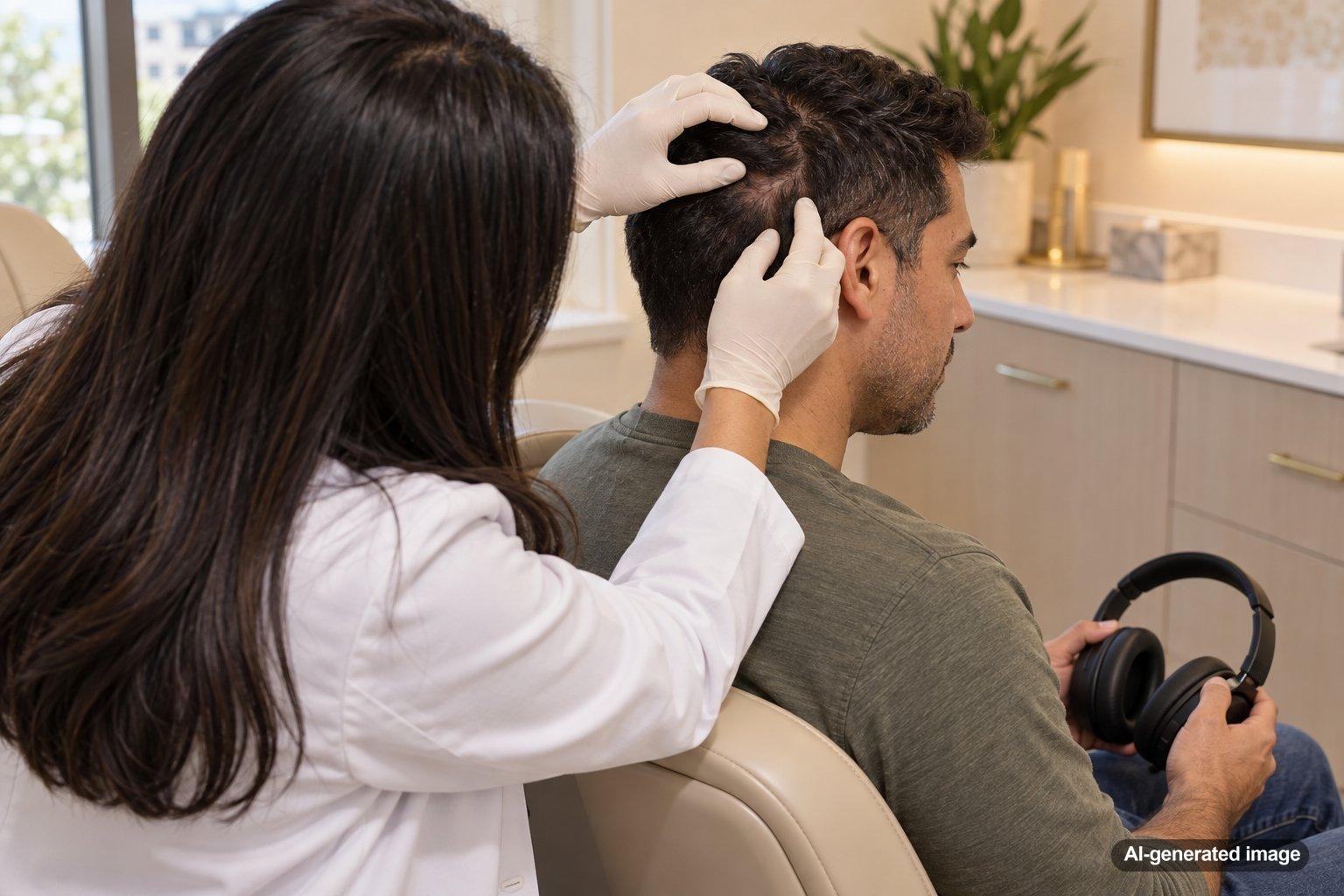
Little bumps that appear exactly where your headphones rest against your scalp may be related to repeated friction, pressure, trapped sweat, or irritation around the hair follicles. Over-ear headphones and padded headbands can create a warm, enclosed area that becomes uncomfortable during long listening sessions. Sometimes the bumps are simply a reaction to rubbing. In other cases, they may resemble acne, folliculitis, or a contact reaction to the materials touching your skin.
The location of the bumps offers an important clue, but it doesn’t establish a diagnosis. Whether you wear headphones for work, gaming, travel, or exercise, understanding how pressure, moisture, and scalp sensitivity interact can help you make practical adjustments. Here’s what may be happening and when a dermatologist should take a closer look.
Quick Answer: Why Do Headphones Cause Little Scalp Bumps?
- Friction and pressure: A tight headband may repeatedly rub or compress the same section of scalp, leading to irritation.
- Sweat and trapped moisture: Warmth beneath headphone padding may increase irritation and contribute to conditions affecting hair follicles.
- Folliculitis: Inflamed hair follicles can produce small red, tender, itchy, or sometimes pus-filled bumps.
- Clogged pores: Hair products, scalp oil, and prolonged contact with equipment may contribute to acne-like breakouts.
- Contact reactions: Sensitivity to headphone materials, cleaning products, or residue may cause an itchy, irritated rash with small bumps.
The most useful initial step is to notice whether the bumps consistently develop beneath the headband or ear cushions and whether reducing contact changes the pattern.
What Are the Small Bumps Where Headphones Touch Your Scalp?
The scalp contains numerous hair follicles, oil-producing glands, and nerve endings. Its skin is exposed to the same types of irritation and inflammation that affect other parts of the body, but hair can make subtle changes harder to see.
When headphones press against one area for extended periods, the skin experiences repeated mechanical contact. If the padding holds warmth and moisture against the scalp, the local environment may become more irritating. Hair products and natural oils can also accumulate where the device rests.
Different skin reactions can produce similar-looking bumps. A small raised spot might reflect irritation around a follicle, an acne lesion, a contact rash, or another scalp condition. The appearance, symptoms, location, and duration help a dermatologist distinguish among these possibilities.
Not every bump caused by headphone contact is infected. This distinction matters because irritation, acne, and bacterial folliculitis may require different approaches.
Common Causes of Scalp Bumps From Headphones
1. Repeated friction from the headband
A snug headband can shift slightly every time you move your head. This repeated movement creates friction against the scalp, especially near the crown where many headphone bands rest.
Friction may irritate the skin directly or contribute to inflammation around hair follicles. The bumps may appear along a narrow strip corresponding to the headphone band. Some people notice tenderness when pressing on the area, while others experience mild itching.
A headband that feels comfortable initially can become irritating after several hours, particularly when its pressure is concentrated in one location.
2. Sweat, heat, and moisture accumulation
Headphone padding can reduce airflow around the skin. During exercise, outdoor activities, or extended wear in warm environments, sweat may remain in contact with the scalp longer than it otherwise would.
Moisture and friction together can make hair follicles more susceptible to irritation. The American Academy of Dermatology identifies rubbing, tight equipment, and warm, damp conditions as contributing factors in folliculitis.
In humid climates such as Fort Lauderdale, the combination of sweating and enclosed headphone padding may be particularly noticeable during outdoor use.
3. Scalp folliculitis
Folliculitis refers to inflammation involving hair follicles. It may develop from infection, irritation, blockage, or certain underlying skin conditions.
When bacteria are involved, folliculitis may produce small red bumps or pustules centered around individual hairs. Some spots itch, while others feel tender or painful. However, similar bumps can arise without a bacterial infection.
Headphones do not automatically cause folliculitis. Repeated rubbing, heat, and moisture can contribute to circumstances that favor follicular irritation, but an examination may be needed to determine whether the bumps are actually folliculitis and what is causing them.
4. Acne-like breakouts from pressure and occlusion
Some scalp bumps may resemble acne. Repeated friction and pressure from equipment can contribute to acne-like eruptions, particularly when the area is also exposed to oil and sweat.
Hair products are another consideration. Styling creams, pomades, oils, and some conditioners can leave residue on the scalp or headphone padding. Certain products can contribute to clogged pores and small bumps near the hairline and other areas they contact.
These breakouts may be flesh-colored, slightly inflamed, or associated with whiteheads. Their appearance can overlap with folliculitis, so self-diagnosis based on appearance alone is unreliable.
5. Contact irritation or sensitivity to headphone materials
Headphones contain several materials that contact the skin, including synthetic leather, foam, fabric, rubber, adhesives, and plastic components.
Some people develop irritant contact dermatitis from repeated rubbing, moisture, or exposure to cleaning residue. Others may experience allergic contact dermatitis associated with a particular material or chemical.
Contact dermatitis may appear as itchy bumps, redness, dryness, scaling, or a more widespread irritated patch. Symptoms sometimes extend beyond the exact pressure point.
If the reaction began after switching headphone models, replacing ear cushions, or introducing a new cleaning product, that timing may be worth discussing with a dermatologist.
6. Existing scalp sensitivity or inflammation
Headphone contact can make an existing scalp problem more noticeable. Conditions associated with irritation, scaling, or inflammation may become uncomfortable when the affected skin is repeatedly covered or rubbed.
For example, someone who already experiences scalp flaking or sensitivity may notice increased itching beneath a headband. In these situations, the headphones may aggravate symptoms rather than represent the original cause.
How to Tell Whether the Headphones Are Contributing
Consider the pattern rather than focusing on a single bump. Several observations may help clarify whether headphone contact is involved:
- Exact location: Do the bumps follow the shape of the headband or appear where the ear cushions touch the scalp?
- Timing: Are symptoms more noticeable after long listening sessions or workouts?
- Pressure: Does the affected skin feel tender after removing your headphones?
- Itching or scaling: Is the skin itchy, flaky, or irritated beyond the individual bumps?
- Changes in equipment: Did the problem begin after replacing headphones or changing the padding?
- Breaks from use: Does the area feel less irritated when you avoid contact for a while?
These details can help identify possible triggers, but they cannot confirm or exclude infection or another skin condition. Bumps that persist despite reducing contact deserve evaluation.
What You Can Do at Home to Reduce Headphone-Related Scalp Irritation
Adjust the fit and pressure
Choose headphones that sit securely without excessive clamping force. If your model allows adjustment, distribute the pressure more evenly instead of concentrating it on one narrow spot.
A different headband shape or cushioning material may be more comfortable. Avoid modifying headphones in ways that damage the device or create new pressure points.
Take regular listening breaks
Remove your headphones periodically to give the skin a break from direct pressure. This can be particularly helpful during long workdays, gaming sessions, or extended travel.
There is no single medically established break schedule that prevents scalp bumps in everyone. Comfort, fit, sweating, and individual skin sensitivity all matter.
Keep headphone surfaces clean and dry
Follow the manufacturer’s instructions for cleaning headbands and ear cushions. Allow washable or wipeable surfaces to dry completely before placing them against your scalp.
Pay attention to padding that collects sweat, hair products, or visible residue. If removable cushions are worn, cracked, or difficult to clean, consider compatible replacements.
Avoid spraying harsh disinfectants, fragrances, or cleaning solutions directly onto surfaces that immediately contact your skin. Residual chemicals can create additional irritation.
Wash away sweat and product buildup gently
After activities that leave your scalp sweaty, gentle cleansing may help remove moisture, oil, and accumulated residue. Choose a shampoo appropriate for your scalp and avoid aggressive scrubbing over irritated spots.
If you regularly use heavy styling products, consider whether they are collecting beneath the headphone band. Using less product in that area or choosing lighter formulations may reduce buildup.
Avoid picking or squeezing the bumps
Scratching, squeezing, or repeatedly touching scalp bumps can worsen irritation and potentially damage the skin.
If the area feels uncomfortable, a clean, comfortably warm compress may provide relief for some superficial follicular bumps. Avoid excessive heat and stop if it increases discomfort.
Do not attempt to drain a painful bump yourself. Deep, enlarging, or pus-filled lesions may require professional assessment.
Consider a different headphone style
If your symptoms repeatedly correspond to the headband, a headset that distributes weight differently may be worth considering. Some people prefer alternatives that avoid direct pressure on the crown.
The most comfortable option depends on the individual’s skin sensitivity, the location of the irritation, and how the headphones are used. Switching styles may reduce a particular source of friction, but it does not address every possible cause of scalp bumps.
Professional Options for Persistent Scalp Bumps
When the bumps persist, recur, or become uncomfortable, a dermatologist can examine the scalp and determine whether the pattern suggests irritation, acne, folliculitis, contact dermatitis, or another condition.
Evaluation may involve discussing your headphone habits, hair products, scalp symptoms, and any recent changes in equipment. Your dermatologist may examine individual follicles and look for signs of scaling, pustules, or deeper inflammation.
Depending on the findings, common options may include:
- Trigger reduction: Adjusting pressure, cleaning practices, or products that may be irritating the scalp.
- Targeted scalp care: Selecting appropriate cleansing products or topical approaches based on the suspected condition.
- Prescription treatment: Considering medication when a specific inflammatory or infectious condition warrants it.
- Additional testing: In selected cases, obtaining a sample from a pustule or considering allergy testing when clinically appropriate.
Not every scalp bump needs medication, and antibiotics are not appropriate for every acne-like eruption. A dermatologist can help distinguish conditions that look similar but require different management.
When Should You See a Dermatologist?
Occasional mild irritation that improves after reducing friction may not require an immediate appointment. However, professional evaluation is appropriate when symptoms do not improve, repeatedly return, or interfere with daily activities.
Consider scheduling an examination if you notice:
- Bumps that persist despite adjusting or temporarily avoiding your headphones.
- Recurring pustules, drainage, crusting, or increasing tenderness.
- Persistent itching, scaling, or irritation extending beyond the headband area.
- New patches of hair loss, scarring, or changes in scalp texture.
- Deep or painful lumps that continue to enlarge.
- A reaction that consistently follows exposure to a particular headphone material.
Seek prompt medical care if redness spreads rapidly, the scalp becomes increasingly swollen or painful, or you develop fever or feel unwell alongside the skin changes. These symptoms may indicate a problem requiring more timely attention.
Early assessment can be especially important when scalp inflammation is associated with hair loss or suspected scarring.
Frequently Asked Questions
Can headphones actually cause scalp folliculitis?
Headphone friction, pressure, heat, and trapped moisture may contribute to irritation around hair follicles. These factors can also create conditions associated with certain forms of folliculitis. However, headphones are not necessarily the sole cause, and a dermatologist can evaluate whether the bumps are folliculitis or another condition.
Why do I get bumps on the top of my head after wearing headphones?
The top of the head is often where a headphone band applies the most concentrated pressure. Repeated rubbing, sweat accumulation, and product residue may contribute to irritation in that location. Bumps appearing elsewhere on the scalp may suggest additional contributing factors.
Are small scalp bumps from headphones the same as acne?
Not always. Some bumps may be acne-related, while others reflect folliculitis, contact dermatitis, or mechanical irritation. Because these conditions can look similar, the location and appearance alone may not be sufficient to identify the cause.
Should I stop wearing headphones until the bumps go away?
Temporarily reducing or avoiding contact with the irritated area may help you determine whether pressure and friction are contributing. If headphones are necessary, consider a more comfortable fit, shorter sessions, or an alternative style. Persistent or worsening symptoms should be evaluated rather than repeatedly covered or rubbed.
Can dirty headphone cushions cause scalp bumps?
Headphone cushions can accumulate sweat, oils, and hair product residue. This buildup may contribute to irritation or aggravate an existing scalp problem. Regular cleaning according to the manufacturer’s instructions is a reasonable preventive habit, although cleanliness alone cannot prevent every type of scalp eruption.
Will the bumps disappear if I change my headphones?
Changing headphones may reduce symptoms when pressure, friction, or contact with a particular material is the main trigger. Improvement is not certain, especially if an underlying inflammatory or infectious condition is present. If the bumps remain after reducing contact, a dermatologist can help determine what else may be involved.
The Bottom Line
Little bumps where headphones touch your scalp often point toward a local trigger, such as friction, pressure, sweat, or contact irritation. Yet acne-like bumps and folliculitis can resemble one another, and the scalp’s dense hair makes visual assessment more difficult.
Simple adjustments to headphone fit, hygiene, and wearing habits may help reduce irritation. If the bumps repeatedly return, become painful, develop drainage, or are associated with hair loss, a dermatologist can evaluate the underlying cause and discuss appropriate next steps.
Ready to get help?
Schedule an appointment or send a message and our team will get back to you.
Prefer to call? 954-666-3736
Disclaimer
This article is for educational purposes and is not medical advice. For diagnosis and personalized treatment, please book an appointment with a board-certified dermatologist.
Sources & Further Reading
- American Academy of Dermatology (AAD) – Acne-like breakouts could be folliculitis
- DermNet – Folliculitis
- American Academy of Dermatology (AAD) – Are your hair care products causing breakouts?
