

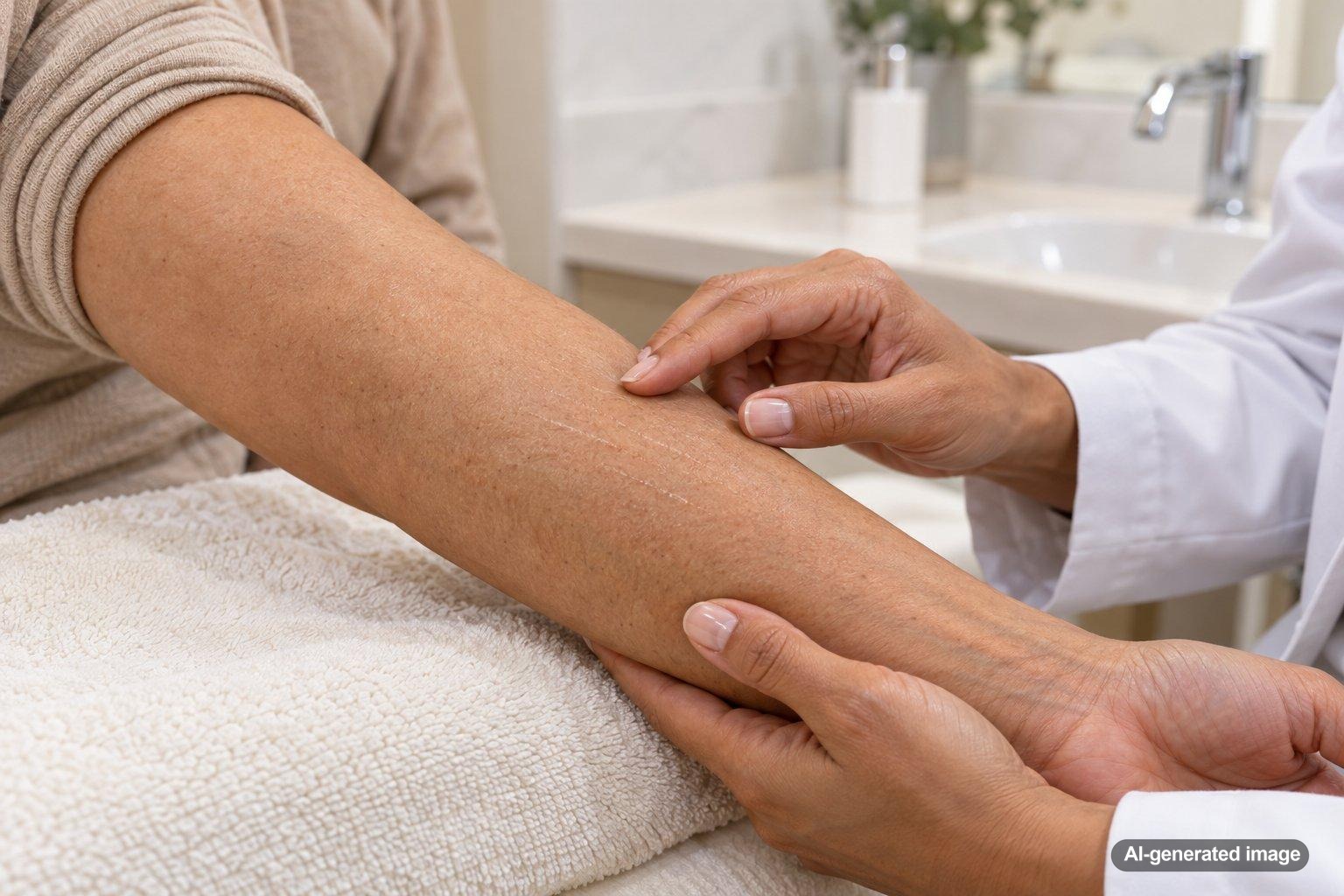
You lightly scratch your arm, shoulder, or leg and notice something unexpected: a collection of thin white lines exactly where your fingernails passed. They may look like delicate scratches, but the skin isn’t necessarily broken. Sometimes the marks disappear almost as quickly as they appeared. Other times, they seem more noticeable when your skin feels dry or irritated.
Tiny white lines after scratching often reflect a temporary change in how the skin’s small blood vessels respond to pressure or friction. One possible explanation is a reaction called white dermographism. Dryness and changes in the skin barrier can also make scratch marks more visible. The appearance, texture, duration, and accompanying symptoms help a dermatologist distinguish these possibilities.
Quick Answer: Why Does My Skin Turn White When I Scratch It?
- Temporary blood vessel changes: Scratching can briefly alter blood flow near the surface, creating pale lines.
- White dermographism: Some people develop flat white streaks after their skin is stroked or scratched.
- Dry skin: Friction can disturb surface flakes and make light-colored marks more noticeable.
- Skin sensitivity or eczema: White dermographism can occur alongside atopic dermatitis and other forms of dermatitis, although the lines alone do not establish a diagnosis.
- The pattern matters: Flat white lines, raised welts, and scratches that actually break the skin can have different explanations.
What Are Those Tiny White Lines?
Skin responds to touch through a combination of nerve signals, blood vessel changes, and activity within its outer protective layers. Even gentle pressure can produce a temporary mark, particularly when the surrounding skin is sensitive or already irritated.
One possible response is white dermographism, sometimes called white dermatographism. With this reaction, a stroke across the skin produces a pale line without the raised swelling associated with classic dermatographism. The whiteness is related to a temporary vascular response rather than a loss of pigment.
These marks are different from scars, stretch marks, and persistent white patches. White dermographism generally appears in response to friction and fades afterward. A white mark that remains visible without additional scratching deserves a different assessment.
White Dermographism vs. Regular Dermatographism
The names sound similar, but the visible reactions are not identical.
White dermographism
White dermographism produces a flat, pale line after the skin is stroked. It has been observed in people with atopic dermatitis and other types of dermatitis. However, having this response does not automatically mean someone has eczema.
Classic dermatographism
Classic dermatographism, also called dermatographia or skin writing, typically produces raised lines or welts after scratching or pressure. These marks may be red, pink, or another shade depending on skin tone, and they sometimes itch. The response involves inflammatory mediators, including histamine.
The most useful distinction is whether the mark is flat and pale or raised and swollen. Color alone isn’t always enough to identify the reaction, particularly across different skin tones.
Common Reasons White Lines Become More Noticeable
Several factors may influence the appearance of temporary scratch marks. Not everyone experiences the same response, and more than one factor may be involved.
- Dryness: Dehydrated surface layers can look chalky or ashy when disturbed by friction. This is particularly noticeable on the arms, legs, and other areas prone to dryness.
- Skin barrier irritation: Frequent cleansing, harsh soaps, fragranced products, and repeated rubbing may contribute to sensitivity.
- Atopic dermatitis: White dermographism is a recognized finding that can accompany eczema, particularly when other signs such as itching, dryness, or recurring inflammation are present.
- Physical friction: Fingernails, clothing seams, towels, and tight accessories can leave temporary impressions or trigger visible skin responses.
- Existing irritation: Recently irritated skin may make even subtle changes in color and texture easier to notice.
South Florida’s warm weather also makes it easy to overlook how frequently skin encounters sweat, sunscreen, swimming pool water, air conditioning, and repeated showering. These exposures do not establish the cause of white lines, but some may contribute to dryness or irritation in susceptible individuals.
What You Can Do at Home
If the marks are brief, painless, and occur only after scratching, a gentle skin care routine is a reasonable starting point while you observe the pattern.
Moisturize consistently
Consider a fragrance-free moisturizer containing ingredients such as glycerin or ceramides. Applying it after bathing, while the skin is still slightly damp, may help support the protective skin barrier.
Reduce unnecessary friction
Avoid repeatedly scratching the area to see whether the lines return. Instead, use a soft towel, pat the skin dry, and choose comfortable clothing that doesn’t create excessive rubbing.
Keep cleansing gentle
Choose a mild cleanser and use lukewarm rather than very hot water. If your skin feels tight after washing, your cleansing routine may be contributing to discomfort.
Pay attention to associated symptoms
Notice whether the lines are raised or flat, whether they itch, and approximately how long they remain visible. Also look for persistent dryness, scaling, redness, or changes in pigmentation. A photograph taken when the reaction naturally occurs can be useful during a dermatology appointment.
These steps are intended to reduce avoidable irritation. They cannot determine the underlying cause, and a moisturizer may not prevent a vascular response such as white dermographism.
Can Professional Dermatology Care Help?
When white lines are frequent, uncomfortable, or accompanied by other skin changes, a dermatologist can examine the skin and review possible contributing factors. The evaluation may include a discussion of skin care products, environmental exposures, itching, and the way the marks develop.
If dryness or dermatitis is involved, professional guidance may focus on barrier-supportive skin care and management of the underlying condition. If the marks are raised and itchy, a clinician may consider whether classic dermatographism or another form of urticaria is present. Treatment decisions depend on the findings rather than the color of a scratch mark alone.
White lines that are temporary and symptom-free do not necessarily require a procedure or cosmetic treatment. The priority is understanding the skin response and identifying whether any underlying inflammation needs attention.
When Should You See a Dermatologist?
A brief pale line after rubbing is often not an urgent concern. However, scheduling an evaluation is sensible when:
- The marks persist rather than fading after the skin has settled.
- You experience frequent or worsening itching, burning, pain, or swelling.
- Dry, scaly, cracked, or inflamed patches appear alongside the lines.
- The skin develops persistent white patches that occur without scratching.
- Scratching causes open areas, bleeding, crusting, or signs of possible infection.
- The reaction is new, increasingly noticeable, or interfering with everyday comfort.
If skin symptoms occur together with difficulty breathing, throat tightness, or swelling of the tongue or lips, seek emergency medical care rather than waiting for a routine appointment.
Frequently Asked Questions
Are white lines after scratching a sign of poor circulation?
Not necessarily. A temporary pale line can result from a localized response of superficial blood vessels to friction. This appearance alone does not establish a broader circulation problem. Persistent color changes, unusual coldness, pain, or other vascular symptoms should be assessed separately.
Does white dermographism mean I have eczema?
No. White dermographism can be associated with atopic dermatitis, but it is not sufficient to diagnose eczema. A dermatologist considers additional findings, including itch, inflammation, distribution, and medical history.
Why do the lines sometimes look brighter against my skin?
Contrast with surrounding skin, lighting, dryness, and the intensity of friction can influence how noticeable a mark appears. On some skin tones, disturbed dry surface cells can also produce a whitish or ashy appearance that is separate from white dermographism.
Is white dermographism the same as hives?
Not exactly. White dermographism typically causes a flat pale line without a welt. Classic symptomatic dermatographism is associated with raised, often itchy welts and is considered a form of inducible urticaria, or hives.
Can scratching cause permanent white marks?
A temporary vascular line generally fades without leaving a lasting color change. However, repeated scratching that injures or inflames the skin may contribute to longer-lasting pigment changes or scarring. A persistent mark should not automatically be attributed to white dermographism.
Should I use an antihistamine for white lines?
Not simply because a scratch produces a white line. Antihistamines may be considered for certain itchy, raised dermatographism reactions, but flat white dermographism and dry surface marks are different. A clinician can help determine whether medication is appropriate, particularly if symptoms recur or affect comfort.
The Bottom Line
Tiny white lines after scratching are often related to a temporary skin response or visible surface dryness. White dermographism is one possible explanation, especially when the marks are flat, pale, and short-lived. Raised welts, persistent discoloration, and accompanying inflammation suggest that a closer evaluation may be useful.
At Waverly DermSpa in Fort Lauderdale, Dr. Maryann Mikhail, MD, can evaluate unexplained skin reactions and help you understand whether changes to your skin care routine or further medical management may be appropriate.
Ready to get help?
Schedule an appointment or send a message and our team will get back to you.
Prefer to call? 954-666-3736
Disclaimer
This article is for educational purposes and is not medical advice. For diagnosis and personalized treatment, please book an appointment with a board-certified dermatologist.
Sources & further reading
- DermNet – Dermographism
- DermNet – Atopic dermatitis
- Cleveland Clinic – Dermatographia (Dermatographism): What It Is, Causes & Treatment
- Mayo Clinic – Dermatographia (Dermatographism) – Symptoms and causes
