

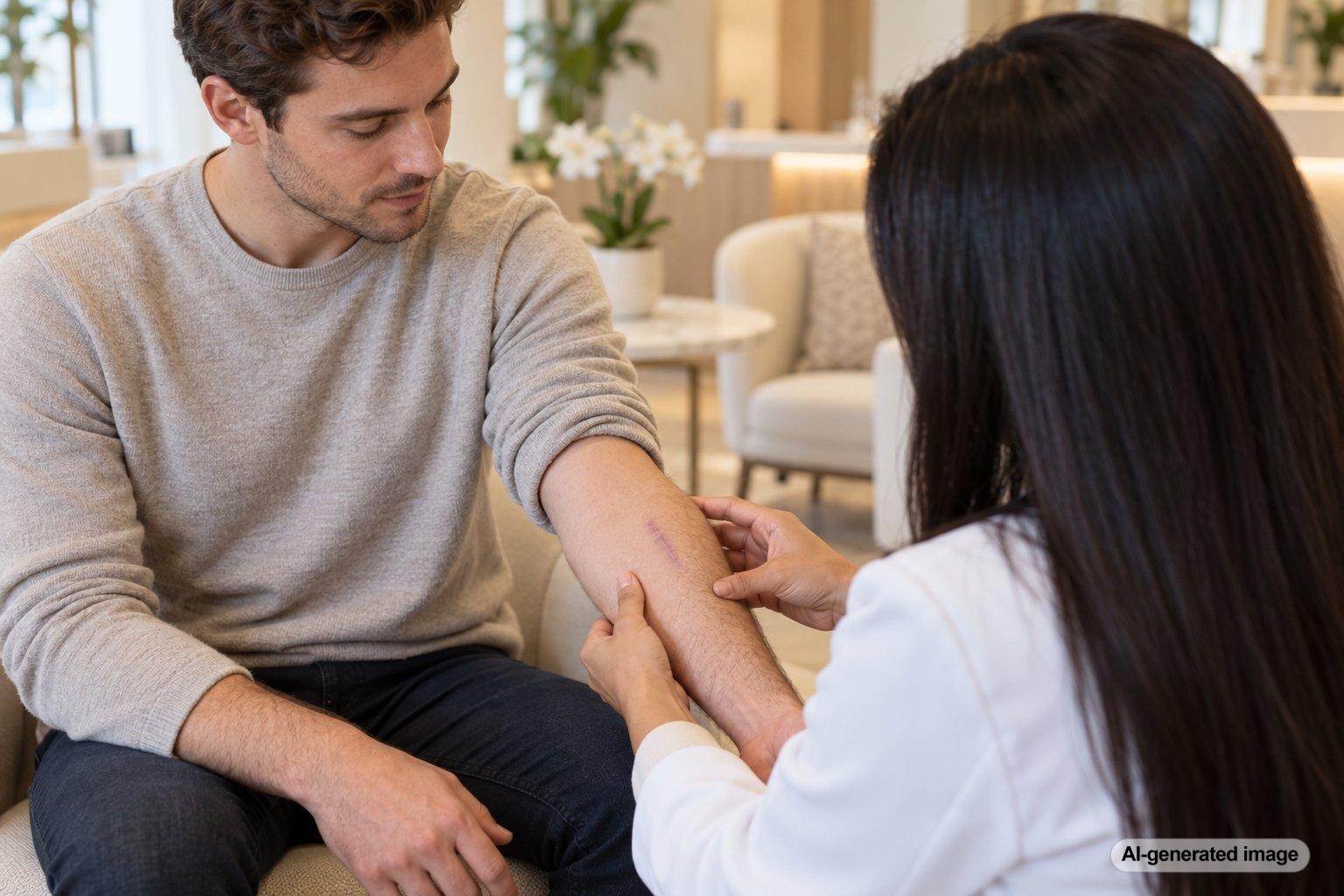
An old scar can seem almost invisible for months, then suddenly become noticeably purple when you step into a cold room or spend time outdoors in chilly weather. What makes this especially puzzling is that other scars may stay their usual color. If the scar healed years ago, why would temperature still affect its appearance?
An old scar may turn purple in the cold because scar tissue has a different arrangement of blood vessels and connective tissue than the surrounding skin. Temperature changes affect blood flow near the skin’s surface, and those changes can become more visible in certain scars. A temporary color shift that resolves with warming may reflect this difference, although color alone cannot establish the cause. Understanding what happens beneath the surface can help you recognize ordinary variations and identify changes worth discussing with a dermatologist.
Quick Answer: Why Does an Old Scar Turn Purple?
- Scar tissue is structurally different: Healing changes the arrangement of collagen and small blood vessels within the affected area.
- Cold temperatures influence circulation: Blood vessels respond to cooling, potentially changing how much blood is visible through the skin.
- Some scars reveal vascular changes more easily: Differences in skin thickness, pigmentation, and vessel distribution can make one scar appear more purple than another.
- Temporary changes are different from persistent ones: A scar that returns to its usual appearance after warming is different from a new discoloration that remains.
- Other symptoms matter: Pain, swelling, skin breakdown, or changes in surrounding skin deserve professional attention.
What Makes Scar Tissue Different From Normal Skin?
When skin experiences a significant injury, the body repairs the damaged area by producing new connective tissue. Collagen helps close and strengthen the wound, but the repaired tissue does not recreate the original skin architecture perfectly.
Normal skin contains an organized network of collagen, blood vessels, nerves, and other structures. Scar tissue often has a different collagen arrangement and may contain blood vessels distributed differently from those in nearby undamaged skin.
These differences help explain why a scar can feel firmer, appear shinier, respond differently to pressure, or display a distinct color. Even after a scar looks fully healed, some structural differences can remain for years.
A scar’s appearance also depends on the original injury, its depth, location, healing process, and individual skin characteristics. Two scars on the same person can behave differently because they did not necessarily heal in exactly the same way.
How Cold Temperatures Can Make a Scar Look Purple
When the body encounters cold temperatures, small blood vessels near the skin’s surface generally narrow to help conserve heat. This response, called vasoconstriction, changes circulation in superficial tissues.
Blood color also depends partly on its oxygenation and how it is viewed through layers of tissue. Changes in blood volume, vessel diameter, and the optical properties of skin can alter its visible color.
In a scar, these effects may be more noticeable because the tissue has a different vascular pattern or thickness. The result can sometimes be a bluish, reddish-purple, or dusky appearance.
However, not every purple scar is caused by the same circulation mechanism. A purple appearance cannot reliably tell you whether blood vessels are narrowing, dilating, or experiencing another change. A dermatologist can consider the complete pattern rather than relying on color alone.
Why Does Only One Scar Change Color?
It is reasonable to wonder why one scar changes dramatically while another remains pale. Several factors may contribute to this difference:
- Depth of the original injury: Deeper injuries may produce more extensive changes in connective tissue and local blood vessels.
- Scar thickness: Raised, thickened, or unusually thin scars may display underlying color differently.
- Body location: Scars on hands, feet, legs, or other exposed areas may experience different temperature and circulation conditions.
- Vascular remodeling: Blood vessels develop and reorganize during healing, and their eventual arrangement can differ between scars.
- Skin pigmentation: Natural pigment and post-inflammatory color changes influence how redness or purple tones appear.
- Pressure and movement: Clothing, posture, stretching, and pressure can temporarily change the appearance of superficial circulation.
For example, an old scar near the ankle may respond differently to cold exposure than a small scar on the upper arm. That difference does not automatically indicate a problem, but it also does not establish that the color change is harmless.
Does Purple Discoloration Mean the Scar Is Still Healing?
Not necessarily. Scar maturation can continue for an extended period after the original wound closes, but an old scar does not have to be actively healing to show temperature-related color changes.
Some mature scars retain visible blood vessels or other structural features that distinguish them from surrounding skin. These differences can remain noticeable long after the injury itself has resolved.
The more useful question is whether the scar has developed a new or progressive change. A familiar pattern that has remained consistent for years is different from a scar that recently became purple, started enlarging, or developed additional symptoms.
What Can You Do When a Scar Changes Color in the Cold?
If the scar becomes purple during cold exposure and otherwise feels normal, a few conservative habits may help you observe the pattern without unnecessarily irritating the skin.
- Warm the area gradually: Move to a comfortable indoor temperature and allow the skin to return to its usual warmth naturally. Avoid direct exposure to very hot water or heating devices.
- Protect exposed skin: Appropriate clothing, gloves, or other protective layers can reduce repeated cold exposure.
- Maintain comfortable skin hydration: A gentle, fragrance-free moisturizer may support the skin barrier and reduce dryness around the scar, although it will not necessarily change the underlying vascular response.
- Avoid aggressive manipulation: Repeated rubbing, vigorous massage, or harsh exfoliation can irritate sensitive scar tissue.
- Document the pattern: Consider photographs in consistent lighting when the scar is cold and after it has warmed. This may help a dermatologist understand the change.
Pay attention to how long the discoloration lasts, whether it occurs only in cold environments, and whether the surrounding skin changes as well. These observations can provide useful context during an appointment.
Can a Dermatologist Improve the Appearance of a Purple Scar?
Professional options depend on why the scar appears purple, whether the discoloration is persistent, and whether the scar has other characteristics such as thickening or discomfort.
A dermatologist may evaluate the scar’s texture, pigmentation, vascular appearance, and response to temperature. In some circumstances, vascular laser treatments may be considered for persistent redness or visible blood vessels. Other approaches may be more appropriate when texture or pigmentation is the primary concern.
However, a treatment intended to improve persistent vascular redness may not prevent a scar from changing color during cold exposure. The underlying mechanism matters, and not every scar requires treatment.
At Waverly DermSpa, we offer Excel V+ and can help you understand whether it may be appropriate.
An individualized evaluation with Dr. Maryann Mikhail, MD, can help clarify whether the change is primarily cosmetic or warrants additional medical assessment.
When Should You See a Dermatologist?
Although some scar color changes may reflect differences in tissue structure and circulation, unusual or evolving discoloration should not automatically be attributed to an old injury.
Consider scheduling a dermatology evaluation if:
- The purple color is new, increasingly pronounced, or remains after the skin returns to a comfortable temperature.
- The scar develops new tenderness, itching, swelling, thickening, or changes in shape.
- The surface begins cracking, bleeding, crusting, or developing an open area.
- The discoloration spreads noticeably beyond the original scar.
- You notice repeated color changes involving nearby fingers, toes, or larger areas of skin.
- The change is difficult to explain or simply does not match the scar’s previous behavior.
Seek prompt medical attention for sudden severe pain, marked coldness, numbness, or blue or purple discoloration affecting a larger area, especially if it does not improve with gentle warming. These symptoms may require evaluation beyond routine scar care.
In Fort Lauderdale, seasonal residents and visitors may notice scar color changes when moving between warm outdoor conditions, heavily air-conditioned spaces, and colder climates during travel. The temperature pattern can be useful information, but it should not replace an appropriate examination when concerning symptoms are present.
Frequently Asked Questions
Is it normal for a scar to look purple years after an injury?
Some mature scars remain visibly different from surrounding skin, and temperature changes may emphasize those differences. However, a new or persistent purple appearance should be evaluated rather than assumed to be a normal feature of healing.
Why does my scar turn purple and then return to normal when I warm up?
A reversible color change may be related to how the scar’s blood vessels and surrounding tissue respond to temperature. The return to its usual color is helpful information, but it cannot confirm the underlying cause by itself.
Can a purple scar mean poor circulation?
Color changes can sometimes be associated with circulation differences, but purple discoloration alone cannot establish whether circulation is adequate. Persistent discoloration, significant discomfort, numbness, or changes affecting a larger area should be assessed by a medical professional.
Will moisturizing stop an old scar from turning purple?
Moisturizing can help manage dryness and support the surrounding skin barrier. It generally does not alter the scar’s underlying blood vessel structure, so it may not prevent temperature-related discoloration.
Can scar color change differently in warm and cold climates?
Yes. Temperature influences superficial blood flow, and some scars may display those changes more noticeably than nearby skin. Moving between South Florida’s warm outdoor weather, air-conditioned interiors, and colder travel destinations can make the differences easier to observe.
Should I have an old purple scar examined even if it does not hurt?
A painless, longstanding change may not be urgent, but an examination can be worthwhile if the discoloration is new, persistent, progressing, or otherwise unusual. Pain is not the only factor a dermatologist considers when evaluating a skin change.
Understanding Your Scar’s Changing Appearance
An old scar that becomes purple in the cold may be revealing differences in the way healed tissue and its blood vessels respond to temperature. The fact that only one scar changes color is not necessarily unusual, since every injury heals with its own combination of structural and vascular characteristics.
What matters most is the complete pattern: whether the discoloration is temporary, how the scar looks when warm, and whether other symptoms accompany the change. If you are uncertain about an old scar’s appearance, a dermatology visit can provide a more informed assessment.
Ready to get help?
Schedule an appointment or send a message and our team will get back to you.
Prefer to call? 954-666-3736
Disclaimer
This article is for educational purposes and is not medical advice. For diagnosis and personalized treatment, please book an appointment with a board-certified dermatologist.
