

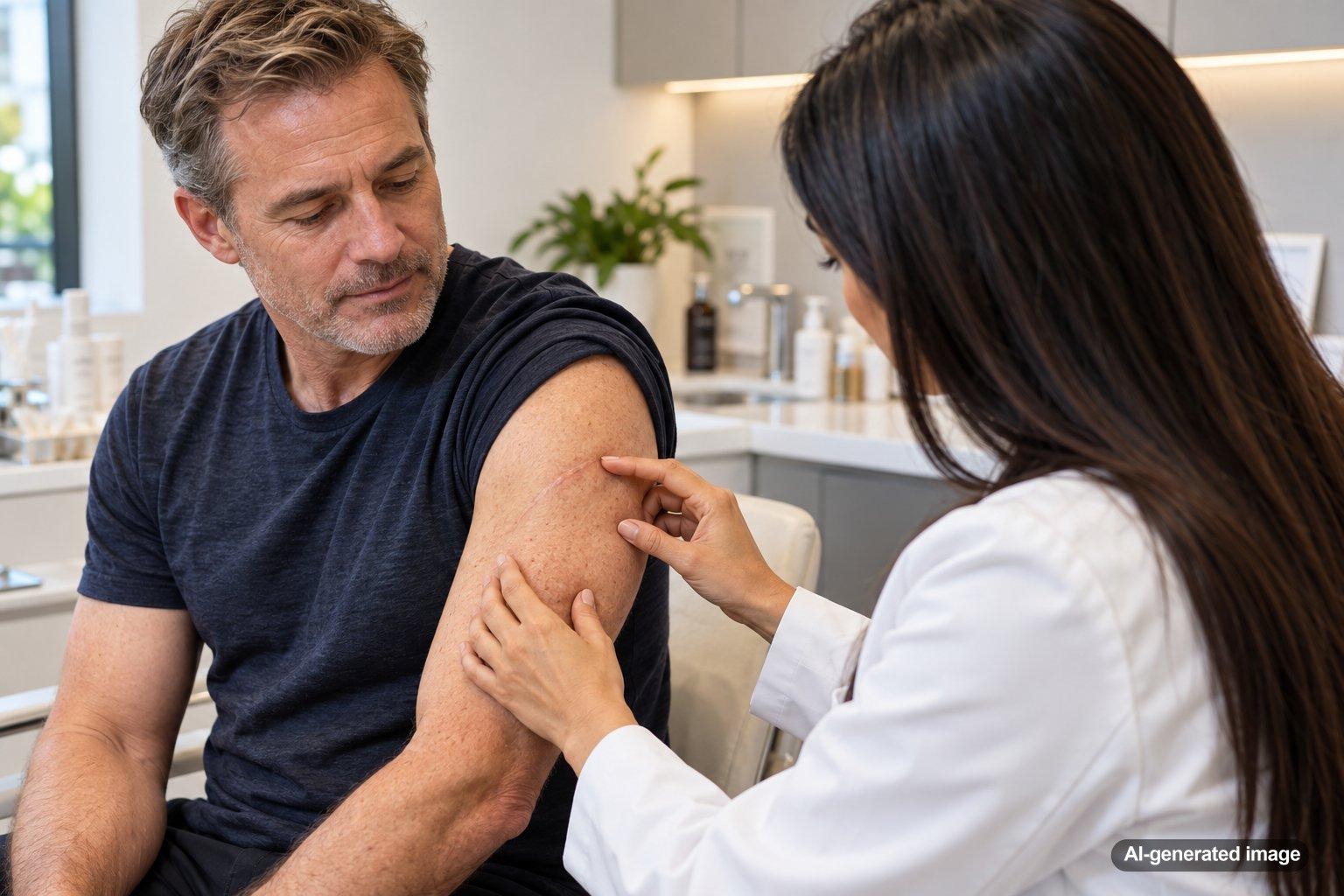
An old scar can become tender again years after the original injury because scar tissue, nearby nerves, or surrounding skin may respond to pressure, stretching, irritation, or other changes. Even when a scar appears completely healed, the tissue beneath it may behave differently from unaffected skin. New tenderness is not automatically a sign of something serious, but its cause is not always obvious from appearance alone.
Perhaps a surgical incision that has been comfortable for a decade suddenly feels sensitive against clothing. Or a childhood injury begins to ache when the surrounding skin stretches. Understanding why this happens can help you recognize ordinary sources of irritation while knowing when a change deserves professional attention.
Quick Answer: Why Can an Old Scar Hurt Again?
- Nerve sensitivity: Nerves within or near a healed injury may contribute to burning, tingling, or tenderness.
- Tissue tension: Scar tissue is often less flexible than surrounding skin, making stretching or movement uncomfortable.
- Repeated friction: Clothing, pressure, or daily activity may irritate the scar or nearby skin.
- Changes within the scar: Raised scar tissue, local inflammation, or an underlying problem may produce new symptoms.
- Unrelated skin changes: A new condition developing at the same location can sometimes be mistaken for scar discomfort.
The location, appearance, duration, and character of the tenderness all matter. A scar that has recently become painful without a clear explanation is worth discussing with a dermatologist, particularly if the change persists or progresses.
Why Scar Tissue Behaves Differently From Normal Skin
When an injury extends into the deeper layers of the skin, the body produces collagen to repair the damaged area. The resulting scar has a different organization from the surrounding tissue. It may be firmer, thicker, less elastic, or attached to deeper structures.
Although scar remodeling occurs over time, a mature scar does not become identical to the skin that existed before the injury. Some scars remain slightly raised, while others appear flat or depressed. The amount of movement, friction, and tension experienced by the area can influence how noticeable the scar feels during everyday activities.
These structural differences help explain why a healed scar may remain sensitive even when there is no visible wound. However, they do not establish the cause of new pain in a particular person.
Common Reasons an Old Scar Becomes Tender
Nerves Around the Scar Become Sensitive
Skin contains sensory nerves that help detect pressure, temperature, and discomfort. An injury or surgical procedure can affect these nerves, and changes during healing may alter sensation in the surrounding area.
Some people experience intermittent sensitivity, tingling, or sharp sensations near an established scar. A small injured nerve or a neuroma, which is a localized growth of nerve tissue, may be relevant in selected cases. These possibilities require clinical evaluation rather than self-diagnosis.
Scar Tissue Pulls During Movement
Scar tissue is generally less elastic than normal skin. A scar near the shoulder, abdomen, knee, or another frequently moving area may feel tight when surrounding tissues stretch.
Changes in posture, exercise habits, or repetitive movement may make previously unnoticed tension more apparent. Deeper surgical scars can also involve structures beneath the skin, so not every sensation around an incision originates in the visible scar.
Clothing or Repeated Pressure Causes Irritation
A waistband, bra strap, watchband, or other frequently contacting surface can create irritation over a scar. Even relatively gentle friction may feel uncomfortable if the area has altered sensation.
This is especially relevant when tenderness appears only during a particular activity or after prolonged pressure. The surrounding skin may also become dry or irritated, adding to the discomfort.
A Raised Scar Develops New Symptoms
Hypertrophic scars and keloids contain excess scar tissue and can sometimes feel itchy, firm, or painful. A hypertrophic scar generally remains within the boundaries of the original injury, while a keloid can extend beyond them.
Most long-established scars do not suddenly begin growing, so new enlargement or changes in a raised scar warrant examination. A dermatologist can distinguish scar-related symptoms from a separate skin concern.
A New Skin Problem Appears Near the Scar
Not every symptom centered on an old scar is caused by the original injury. Dermatitis, a cyst, localized inflammation, or another skin condition may develop in the same area. Infections can also cause tenderness, typically accompanied by other findings such as increasing redness, warmth, swelling, or drainage.
Rarely, skin cancer can develop in scarred skin, particularly in certain longstanding burn scars or chronic wounds. This does not mean that an aching scar is cancerous. It does mean that new growth, bleeding, ulceration, or persistent unexplained changes should not automatically be attributed to ordinary scar tissue.
Does the Type of Pain Offer Any Clues?
The way tenderness feels may help guide a clinical conversation, although symptoms alone cannot identify the cause.
- Burning or electric sensations: May suggest a nerve-related component.
- Pulling or tightness: May be associated with tissue tension during movement.
- Soreness after pressure: May indicate friction or mechanical irritation.
- Itching with firmness: Can occur with raised scars and certain inflammatory skin conditions.
- Throbbing with warmth or swelling: Requires attention to possible inflammation or infection.
Symptoms that change rapidly, become severe, or occur alongside visible skin changes deserve more attention than an occasional mild sensation with an obvious mechanical trigger.
What Can You Do at Home?
For mild discomfort without concerning skin changes, a few conservative measures may help limit additional irritation while you arrange an evaluation if symptoms continue.
- Reduce friction: Consider softer clothing or adjustments that keep seams and straps from repeatedly rubbing the area.
- Protect the skin: Use a simple, fragrance-free moisturizer if the surrounding skin feels dry and remains intact.
- Avoid aggressive manipulation: Do not repeatedly press, scrape, or deeply massage a newly tender scar, especially when the cause is unclear.
- Observe the pattern: Notice whether discomfort occurs with movement, direct touch, heat, or specific clothing.
- Document visible changes: A photograph and brief symptom history may be useful during an appointment.
- Practice sun protection: Protect exposed scar tissue with clothing or broad-spectrum SPF 30 or higher sunscreen.
Avoid attempting to drain a lump, remove scar tissue, or apply strong exfoliating products to an unexplained painful area. New or persistent tenderness should not be managed indefinitely with home remedies alone.
How a Dermatologist Evaluates a Tender Scar
An evaluation generally begins with the history of the original injury or procedure. Your dermatologist may ask when the scar formed, how long it was comfortable, when the new tenderness started, and whether its appearance has changed.
The examination may assess the scar’s color, thickness, texture, mobility, and response to gentle touch. The surrounding skin is also important because the discomfort may originate outside the visible scar.
Depending on the findings, further assessment or referral may be appropriate. For example, persistent pain associated with a deep surgical incision or a suspected nerve problem may require evaluation beyond the skin itself. A concerning new growth may require a biopsy to clarify its nature.
Professional Options for Persistent Scar Discomfort
Treatment depends on the reason for tenderness. Different scar types and symptoms call for different approaches, and not every old scar requires a procedure.
For selected raised scars, dermatologists may consider silicone-based treatments or medication injections to address thickness, itching, or discomfort. Certain laser treatments may help improve redness, texture, or symptoms in appropriately selected scars. Their effectiveness and risks vary by scar type, skin characteristics, and treatment technique.
When discomfort appears related to nerve involvement, deeper tissue restriction, or another underlying condition, a dermatologist may recommend additional evaluation or a different specialist. Treating the scar’s appearance alone may not resolve those symptoms.
At Waverly DermSpa, we offer laser treatments and can help you understand whether they may be appropriate.
When Should You See a Dermatologist?
Consider scheduling an examination when a previously comfortable scar develops tenderness that persists, recurs without an identifiable trigger, or interferes with normal activities. Seek timely assessment if you notice:
- New or increasing pain without a clear explanation.
- A lump, growing area, or change in the scar’s shape.
- Bleeding, crusting, an open sore, or a wound that does not heal.
- New pigmentation or an unusual change in the skin around the scar.
- Persistent numbness, tingling, or worsening sensitivity.
- Tightness that restricts comfortable movement.
Rapidly spreading redness, significant warmth or swelling, pus, fever, or severe worsening pain may indicate a problem requiring prompt medical attention rather than a routine cosmetic appointment.
For Fort Lauderdale residents, seasonal visitors, and international travelers, bringing previous surgical information or photographs can be helpful if the original procedure took place elsewhere.
Frequently Asked Questions
Can a scar start hurting again after 10 or 20 years?
Yes. Scar-related discomfort can appear or become noticeable long after an injury. Possible explanations include nerve sensitivity, mechanical tension, or changes in the surrounding tissue. Because an unrelated problem can also occur near an old scar, persistent new pain deserves evaluation.
Is it normal for an old surgical scar to hurt when touched?
Some healed surgical scars remain sensitive to pressure because of changes in tissue structure or sensation. However, new tenderness after a long symptom-free period should not automatically be considered normal, particularly when it worsens or accompanies visible changes.
Does tenderness mean that scar tissue is growing?
Not necessarily. Pain can occur without an increase in scar thickness or size. A noticeable new lump or expanding raised area should be examined to determine whether it represents scar tissue or another condition.
Can weather changes make an old scar ache?
Some people report changes in scar discomfort during cold weather or shifts in environmental conditions. The explanation is not always clear, and weather sensitivity alone cannot establish the cause. Recurrent or worsening pain should be assessed rather than attributed solely to the weather.
Can laser treatment help a painful scar?
Laser treatment may help selected scars, particularly when redness, thickness, or certain scar-related symptoms are present. It is not appropriate for every source of pain. A dermatologist should first determine whether the tenderness is coming from the scar itself or another structure.
Should I worry if a scar changes color and becomes painful?
A new color change combined with pain merits professional examination, especially if there is bleeding, a growing lesion, or an open area. Many causes are not serious, but appearance alone is not enough to determine which changes are harmless.
The Bottom Line
An old scar can become tender because scar tissue and nearby nerves remain different from uninjured skin, even years after healing. Pressure, movement, friction, and local inflammation may make those differences more noticeable. Still, a scar’s history does not explain every new symptom that appears in the same location.
The most useful approach is to pay attention to what has changed, avoid unnecessary irritation, and seek a dermatology evaluation when the tenderness is new, persistent, worsening, or associated with visible changes. The goal is to understand the cause before deciding whether treatment is needed.
Ready to get help?
Schedule an appointment or send a message and our team will get back to you.
Prefer to call? 954-666-3736
This article is for educational purposes and is not medical advice. For diagnosis and personalized treatment, please book an appointment with a board-certified dermatologist.
Sources & Further Reading
- Cleveland Clinic – Scars: Treatment and Cause
- American Academy of Dermatology (AAD) – Scars: Signs and symptoms
- American Academy of Dermatology (AAD) – Scars: Diagnosis and treatment
