

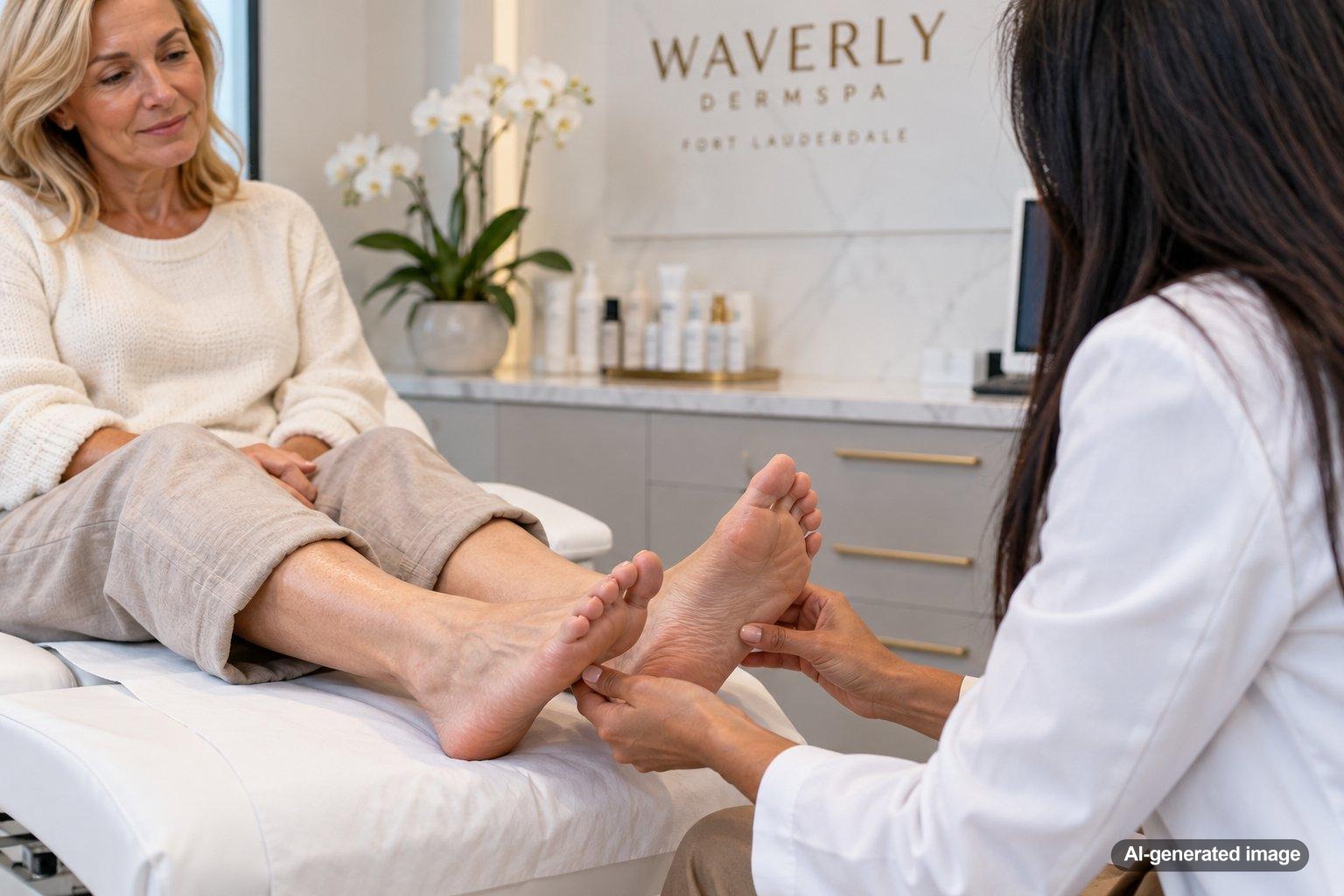
Noticing that one foot sweats more than the other can feel surprisingly strange, especially when both feet are in the same shoes and exposed to the same temperature. Perhaps one sock becomes damp while the other stays relatively dry, or one foot consistently leaves a moisture mark on the floor. Although sweating is a normal way for the body to regulate temperature, noticeable differences between the feet can raise reasonable questions.
One foot may sweat more because of differences in footwear pressure, skin conditions, activity, or the way nerves regulate sweat glands. Sometimes the wetter foot is functioning normally while the drier foot produces less sweat than expected. A persistent or sudden difference deserves a closer look, particularly when accompanied by other symptoms.
Quick Answer: Why Is One Foot Sweatier?
- Natural variation: Sweat production is not always perfectly symmetrical, and mild differences may be noticeable without indicating a medical problem.
- Footwear and friction: Differences in how each foot fits inside a shoe can affect warmth, moisture retention, and the sensation of sweating.
- Overactive sweating: Plantar hyperhidrosis describes excessive sweating of the feet, although classic primary focal hyperhidrosis typically affects both sides.
- Nerve signaling: Sweat glands respond to the autonomic nervous system, so changes in nerve function can sometimes create unequal sweating.
- Associated symptoms matter: Sudden changes, numbness, weakness, unusual temperature differences, or skin discoloration warrant medical attention.
How Foot Sweating Normally Works
The soles of the feet contain numerous eccrine sweat glands. These glands produce a mostly water-based secretion that helps regulate temperature and contributes to moisture on the skin. Unlike certain other sweat glands, eccrine glands are distributed across much of the body and are particularly concentrated in areas such as the palms and soles.
Foot sweating is regulated largely by sympathetic nerves, which are part of the autonomic nervous system. These nerves control many involuntary functions, including sweating. Temperature, emotional stress, and individual nervous system responses can influence sweat production.
Both feet generally receive similar signals, but sweat output does not have to be identical at every moment. The important distinction is between a small, longstanding difference and a pronounced change that develops unexpectedly.
Common Reasons One Foot May Sweat More
1. Natural Differences in Sweat Production
Perfect symmetry is uncommon throughout the body. One foot may naturally produce slightly more noticeable moisture than the other. When the difference has existed for years, remains relatively mild, and is not associated with discomfort or other symptoms, it may simply represent individual variation.
However, a substantial difference should not automatically be dismissed as normal, particularly if it develops later in life.
2. Differences in Shoe Fit and Moisture Retention
Feet are not necessarily identical in size or shape. One shoe may fit more tightly, creating additional friction or reducing airflow. Insoles can also wear unevenly, changing how moisture accumulates around each foot.
Activity patterns matter as well. A person may place more pressure on one foot while standing, driving, or performing repetitive movements. These differences can affect warmth and the perception of dampness, although they do not necessarily mean that one foot’s sweat glands are substantially more active.
3. Plantar Hyperhidrosis
Hyperhidrosis refers to sweating that exceeds what the body needs for temperature regulation. When it affects the soles, it is called plantar hyperhidrosis.
Primary focal hyperhidrosis commonly begins earlier in life and typically affects corresponding areas on both sides of the body. Because of that characteristic pattern, sweating that is consistently limited to one foot is less typical of primary focal hyperhidrosis and may prompt a dermatologist to consider other explanations.
Secondary hyperhidrosis occurs when sweating is associated with another medical condition or an external factor. Its pattern depends on the underlying cause.
4. Differences in Autonomic Nerve Function
Sweat glands rely on signals from the autonomic nervous system. If those signals differ between the two feet, the amount of sweat produced may differ as well.
Certain nerve disorders, injuries, or changes affecting the pathways that regulate sweating can be associated with asymmetric perspiration. In some circumstances, the apparently sweatier foot is actually the normally functioning foot, while the opposite foot has reduced sweat production.
This possibility becomes more relevant when unequal sweating occurs alongside altered sensation, unusual skin temperature, weakness, or changes in skin color.
5. Changes Following an Injury or Procedure
A previous injury, surgery, or other event affecting nerves may sometimes influence sweating in a particular area. The relationship is not always obvious, especially when the sweating difference appears some time after the original event.
A clinician may ask about ankle injuries, foot procedures, back symptoms, and previous changes in sensation when evaluating pronounced differences in perspiration.
Could the Drier Foot Be the Unusual One?
This is an important question that is easy to overlook. People naturally focus on the foot that feels wet, but reduced sweating on the other side may be the more significant finding.
Reduced or absent sweating is sometimes described as hypohidrosis or anhidrosis, respectively. These terms refer to decreased or absent perspiration and do not, by themselves, identify the cause.
If one foot remains unusually dry during heat or exercise while the other sweats normally, a clinician may consider whether the drier foot has reduced sweat gland activity or altered nerve signaling.
A difference in sweating alone cannot establish whether either foot is producing an abnormal amount.
What You Can Do at Home
If the difference is mild, familiar, and not accompanied by concerning symptoms, simple observations and conservative foot care may help clarify the pattern.
- Compare both shoes: Check whether one feels tighter, has a worn insole, or creates more pressure around the toes or arch.
- Choose breathable materials: Moisture-wicking socks and footwear that allows ventilation may improve comfort.
- Change damp socks: Keeping moisture from accumulating against the skin can help reduce irritation and discomfort.
- Dry your feet gently: Pay attention to the spaces between the toes after bathing, without aggressive scrubbing.
- Notice the circumstances: Observe whether the difference occurs only in shoes, during exercise, under stress, or even while resting barefoot.
- Watch for other changes: Note any new numbness, unusual coldness, discoloration, pain, or skin irritation.
For residents and visitors in Fort Lauderdale, warm temperatures and humid conditions can make foot moisture especially noticeable. That environment may amplify an existing difference, but humidity alone does not explain every case of distinctly one-sided sweating.
How a Dermatologist Evaluates Uneven Foot Sweating
A dermatology evaluation generally begins with a careful history and examination. The clinician may ask when the difference began, whether it is continuous or intermittent, and whether it occurs during sleep or only while awake.
Additional questions may address medications, prior injuries, medical conditions, and symptoms involving the nerves or circulation.
The physical examination may include assessing skin moisture, temperature, color, sensation, and signs of irritation or skin breakdown. In selected cases, a clinician may consider tests that help characterize sweating or recommend evaluation by another specialist if a neurological or systemic explanation is suspected.
Not everyone with uneven foot sweating needs extensive testing. The appropriate next step depends on the pattern, severity, duration, and accompanying findings.
Professional Options for Excessive Foot Sweating
When excessive sweating is confirmed and causes discomfort or interferes with daily life, a dermatologist can discuss management options appropriate to the individual.
Common approaches may include professional-strength topical antiperspirant therapy, iontophoresis, and other prescription or office-based treatments in selected circumstances. Each approach has considerations involving suitability, tolerability, and potential adverse effects.
Treatment should follow an assessment of the sweating pattern. Persistent sweating isolated to one foot is not necessarily managed the same way as typical bilateral plantar hyperhidrosis.
A dermatologist can help determine whether the primary concern is excessive sweating, reduced sweating on the opposite side, local skin irritation, or a condition that requires additional evaluation.
When Should You Seek Medical Attention?
Consider scheduling a dermatology appointment if one foot has become consistently much sweatier than the other, especially when the difference is new, unexplained, worsening, or affecting daily comfort.
Additional reasons for evaluation include:
- A noticeable change in skin temperature or color between the feet.
- Persistent tingling, numbness, burning, or unusual sensitivity.
- Recurring irritation, skin breakdown, or discomfort related to moisture.
- A history of injury or a procedure followed by altered sweating.
- Sweating differences accompanied by other unexplained physical symptoms.
Seek prompt medical care if a new sweating difference occurs with significant pain, weakness, or concerning circulation changes. A suddenly cold, pale, painful, or numb foot requires urgent assessment. Sudden one-sided weakness, facial drooping, or difficulty speaking warrants emergency medical attention rather than a routine dermatology appointment.
Frequently Asked Questions
Is it normal for one foot to sweat more than the other?
A slight difference can occur and may simply reflect natural variation or how moisture is retained inside footwear. A marked, persistent, or newly developing difference is less typical and is worth discussing with a clinician.
Can stress make only one foot sweat?
Emotional stress can increase sweating through autonomic nervous system activity. However, stress-related foot sweating generally affects both feet. A repeatedly one-sided pattern should not automatically be attributed to anxiety or stress.
Does sweating in one foot mean I have nerve damage?
No. Asymmetric sweating alone does not establish nerve damage. Differences in moisture retention, local conditions, and other factors may contribute. Nerve-related causes become more important to consider when sweating changes are accompanied by numbness, weakness, altered temperature, or other neurological symptoms.
Why is one sock wet while the other stays dry?
One shoe may fit differently, retain more heat, or have less ventilation. The feet may also produce different amounts of sweat. Comparing the pattern while barefoot and during different activities may help identify whether the difference is related to footwear or persists independently.
Can plantar hyperhidrosis affect only one foot?
Markedly one-sided excessive foot sweating can occur, but it is not the typical presentation of primary focal plantar hyperhidrosis, which usually affects both feet. A dermatologist may consider other causes before determining the most appropriate management approach.
Should I see a dermatologist or a neurologist?
A dermatologist is a reasonable starting point when excessive sweating or related skin irritation is the main concern. If the history or examination suggests altered nerve function, a neurological evaluation may also be appropriate. Sudden neurological symptoms require urgent medical assessment.
Understanding the Difference Matters
One foot sweating more than the other does not automatically indicate a serious condition. Small differences may be related to individual variation, footwear, or everyday circumstances. Still, a distinct change in sweating can occasionally provide useful information about how the skin, sweat glands, and nervous system are functioning.
The most helpful approach is to consider the entire pattern rather than focusing only on moisture. Duration, severity, associated symptoms, and whether one foot is unusually dry all contribute to a meaningful evaluation. At Waverly DermSpa in Fort Lauderdale, Dr. Maryann Mikhail, MD, can evaluate dermatologic concerns involving excessive sweating and help determine whether additional assessment is appropriate.
Ready to get help?
Schedule an appointment or send a message and our team will get back to you.
Prefer to call? 954-666-3736
Disclaimer
This article is for educational purposes and is not medical advice. For diagnosis and personalized treatment, please book an appointment with a board-certified dermatologist.
