

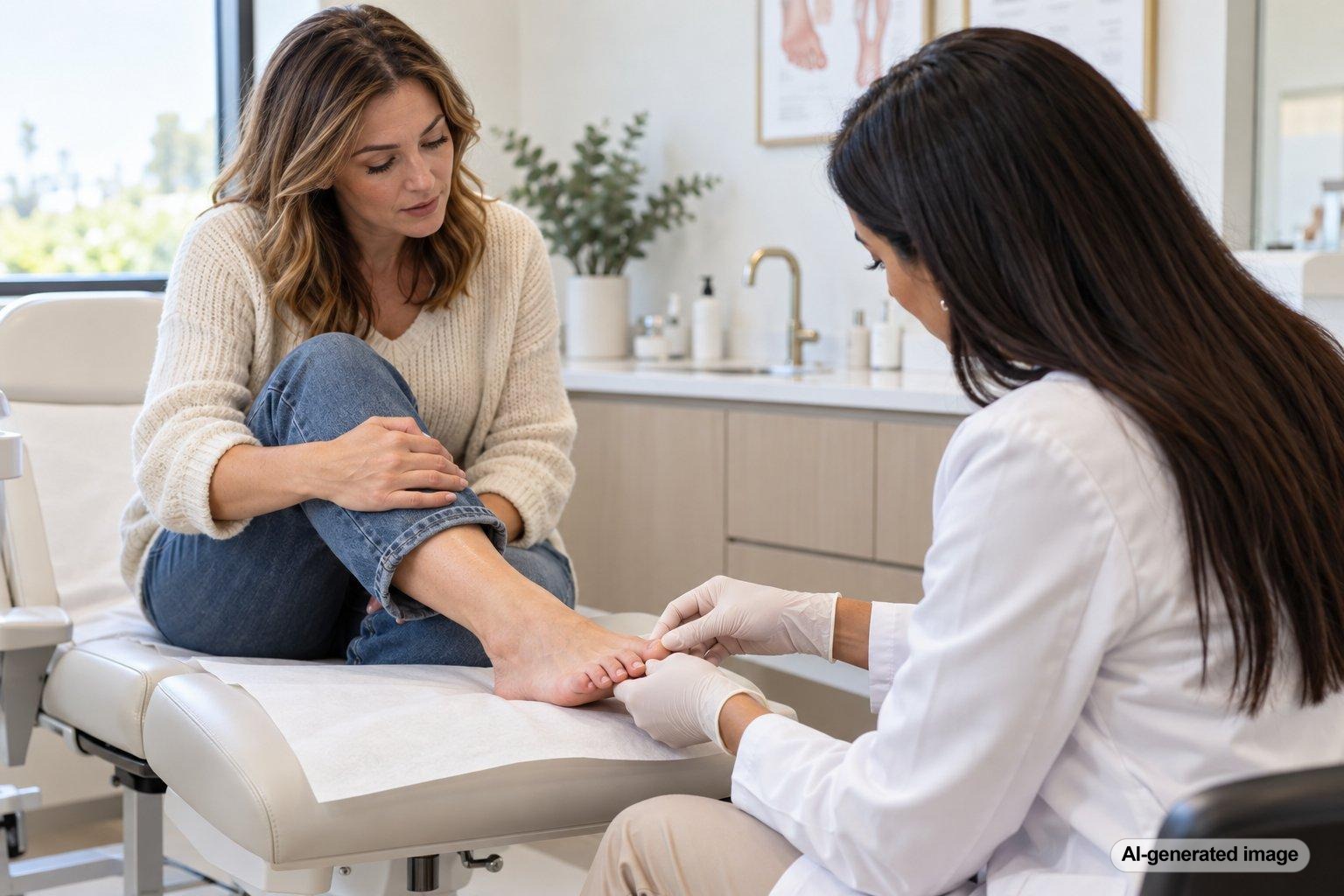
Peeling skin between your toes can be puzzling, especially when there is no itching, burning, or other obvious discomfort. You might notice thin flakes after a shower, soft white skin between two toes, or a small area that repeatedly peels despite otherwise healthy-looking feet. Although itching is often associated with fungal infections and irritated skin, its absence does not necessarily rule out a skin condition.
Skin peeling between the toes without itching can result from trapped moisture, friction, dry skin, contact irritation, or a fungal infection such as athlete’s foot. These conditions can look similar, but they do not always require the same approach. Paying attention to whether the skin is dry, damp, cracked, discolored, or repeatedly affected can help you understand why the peeling occurs and whether a dermatologist should evaluate it.
Quick Answer: Why Is the Skin Between My Toes Peeling Without Itching?
- Athlete’s foot: A fungal infection can cause scaling, peeling, or whitening between the toes even when itching is minimal or absent.
- Excess moisture: Sweat, damp socks, and poorly ventilated shoes can soften the skin until its outer layers begin to break down.
- Friction: Toes rubbing together or against footwear may produce mild peeling without significant inflammation.
- Dryness or irritation: Repeated washing, harsh cleansers, or contact with shoe materials may disrupt the skin barrier.
- Other skin conditions: Certain forms of eczema, dermatitis, and bacterial involvement can affect the spaces between the toes.
The appearance and location of the peeling often provide more useful clues than itching alone. Persistent or recurring symptoms deserve attention even when the skin does not hurt.
What Happens When Skin Peels Between the Toes?
The skin between your toes forms part of the body’s protective barrier. Its outermost layer contains cells that naturally shed as new cells replace them. Under ordinary circumstances, this process happens gradually and is barely noticeable.
When the skin barrier becomes irritated, excessively moist, or affected by an infection, the outer layer may separate in more visible pieces. This can create fine flakes, loose edges of skin, shallow cracks, or areas that appear white and softened.
The spaces between the toes are particularly vulnerable because they receive less airflow than exposed skin. Sweat can collect there, especially inside closed shoes. Repeated contact between neighboring toes adds friction, while bathing and prolonged dampness can further change the skin’s surface.
Peeling is a visible change in the skin, not a diagnosis by itself. The underlying reason may be relatively simple, but its appearance can overlap with several dermatologic conditions.
Common Causes of Peeling Skin Between the Toes Without Itching
1. Athlete’s Foot Can Occur Without Noticeable Itching
Athlete’s foot, medically called tinea pedis, is a fungal infection that frequently affects the spaces between the toes. Although itching and burning are familiar symptoms, some people mainly notice peeling, scaling, or cracked skin.
Interdigital athlete’s foot often develops between the fourth and fifth toes, although other spaces can be involved. The skin may appear dry and flaky or become white, softened, and fragile when moisture is present.
Clues that may raise suspicion include peeling that keeps returning, involvement of more than one toe space, scaling along the soles, or changes in the toenails. None of these findings confirms a fungal infection on its own.
Fungal organisms thrive in warm, moist environments. Closed footwear, sweaty feet, communal showers, and pool areas can contribute to exposure or create conditions that favor growth. This is particularly relevant in warm, humid climates such as South Florida.
2. Moisture Can Soften and Break Down the Skin
When skin remains wet for extended periods, its protective outer layer can become overly hydrated. This process is called maceration.
Macerated skin may look pale, white, wrinkled, or unusually soft. As the weakened surface separates, peeling can occur without itching. The spaces between closely positioned toes are especially susceptible because moisture may remain trapped after bathing or sweating.
Maceration is not necessarily an infection, but persistently damp and damaged skin can make it easier for microorganisms to contribute to additional irritation or infection.
People who spend long hours wearing enclosed shoes, exercise frequently, or experience excessive foot sweating may notice this pattern more often.
3. Friction From Shoes or Adjacent Toes
Repeated rubbing can gradually disturb the outer skin layer. This may happen when shoes fit tightly, toes are crowded together, or moisture increases friction during walking.
Unlike an inflamed rash, mild friction-related peeling may occur without prominent redness, itching, or pain. It can be more noticeable after long periods of standing, walking, or exercising.
If the peeling repeatedly appears in the same contact area and improves when rubbing is reduced, friction may be contributing. However, repeated friction and fungal infection can also occur together.
4. Dry Skin and Disruption of the Skin Barrier
Dryness can produce thin flakes or superficial peeling between the toes. Frequent washing, aggressive scrubbing, irritating soaps, and repeated exposure to cleansing products may affect the skin’s protective barrier.
Dry skin often feels slightly rough or tight, although it does not always itch. The peeling may be more powdery or flaky than the soft, white appearance associated with prolonged moisture.
It is important to distinguish genuinely dry skin from skin that looks flaky because of a fungal infection. Applying heavy moisturizers between persistently damp toes may worsen moisture retention rather than address the cause.
5. Contact Dermatitis or Eczema
Contact dermatitis can develop when the skin reacts to an irritating substance or an allergen. Possible exposures include shoe materials, adhesives, dyes, detergents, fragrances, and topical foot products.
Although dermatitis frequently causes itching, some presentations are dominated by dryness, scaling, peeling, or mild tenderness. Eczema can also affect the feet and produce changes that resemble other skin conditions.
A pattern affecting areas that touch particular footwear or a new product may provide a useful clue. However, the appearance of dermatitis can overlap with athlete’s foot, making professional evaluation helpful when the cause remains uncertain.
6. Bacterial Involvement in Persistently Damp Toe Spaces
Skin that remains moist and damaged between the toes can sometimes develop bacterial involvement, either alone or alongside a fungal infection.
Changes such as a stronger unpleasant odor, increasing redness, drainage, tenderness, or pronounced sogginess warrant attention. Some bacterial toe-web infections can initially resemble ordinary moisture-related peeling.
Because different infections require different treatments, persistent or worsening changes should not automatically be treated as simple dryness or assumed to be fungal.
What Does White, Peeling Skin Between the Toes Mean?
White skin between the toes often suggests that the outer skin layer has absorbed excess moisture. This can happen after prolonged sweating, wearing wet socks, or failing to dry the spaces between the toes thoroughly.
However, the same appearance can accompany interdigital athlete’s foot or other toe-web infections. A white color alone cannot establish whether the cause is moisture, fungal growth, or another condition.
It may help to notice whether the area becomes less white after it is gently dried, whether peeling occurs repeatedly, and whether cracking or odor develops. These observations can provide useful context for a dermatologist without requiring you to diagnose the condition yourself.
How Can You Tell Whether the Peeling Is Dryness or Athlete’s Foot?
Both conditions can produce flaky skin, and neither must cause itching. Certain patterns may offer clues, but there is enough overlap that appearance alone is not always reliable.
- Dryness: Often produces fine, dry flakes and may accompany general roughness elsewhere on the feet.
- Athlete’s foot: May cause persistent scaling, peeling, cracking, or softened white skin, particularly between the outer toes.
- Moisture-related maceration: Often creates pale, wrinkled, soft skin after prolonged dampness.
- Contact irritation: May follow exposure to a new shoe, detergent, cleanser, or foot product.
These are tendencies rather than diagnostic rules. A dermatologist may examine the affected area and, when fungal infection is suspected, collect a small skin scraping for microscopic examination or other testing.
Confirming the cause becomes especially useful when an area repeatedly peels, does not respond to reasonable care, or has been treated unsuccessfully with several different products.
What Can You Do at Home for Peeling Skin Between Your Toes?
Gentle skin care and moisture control are reasonable starting points for mild peeling without signs of a more concerning problem. The goal is to protect the skin barrier while avoiding conditions that encourage excessive dampness.
- Dry carefully after bathing: Use a clean towel to gently dry between each toe rather than rubbing or scraping the skin.
- Change damp socks: Replace socks after exercise or whenever they become noticeably sweaty.
- Choose breathable footwear: Shoes that allow better ventilation may help reduce prolonged moisture exposure.
- Rotate shoes: Allow footwear to dry between uses whenever possible.
- Avoid pulling loose skin: Peeling or cutting away attached skin may create small injuries and increase irritation.
- Keep cleansing gentle: Avoid aggressive exfoliation, harsh foot scrubs, and unnecessary fragranced products.
- Protect your feet in shared wet areas: Wear shower sandals around communal showers, locker rooms, and pool decks.
If the surrounding foot skin is dry, a gentle moisturizer may help those dry areas. Avoid packing thick creams between toes that are already moist or macerated.
If athlete’s foot is suspected, an over-the-counter antifungal product may be an option for some uncomplicated cases. A pharmacist or clinician can help you choose an appropriate product and follow its directions. Antifungal treatment is not the right approach for every cause of peeling, so repeated or unclear symptoms deserve evaluation.
Avoid using topical steroid creams on an unidentified peeling toe-web rash without professional guidance. Steroids can sometimes alter or worsen an underlying fungal infection.
What Are the Professional Options for Persistent Toe Peeling?
When peeling persists or repeatedly returns, a dermatologist can assess the distribution, texture, moisture level, and surrounding skin. The examination may include looking at the soles, toenails, and other spaces between the toes.
Depending on the findings, professional evaluation may involve:
- Fungal testing: A small skin scraping or laboratory examination may help identify a fungal cause.
- Evaluation for bacterial infection: Additional testing may be considered when there is drainage, odor, marked maceration, or another concerning feature.
- Assessment for dermatitis: The clinician may review footwear, skin care products, and potential irritants or allergens.
- Targeted treatment: Options may include antifungal medication, treatment for bacterial infection when present, or a dermatitis-focused approach.
- Prevention planning: Recommendations may address sweating, footwear, repeated moisture exposure, and skin barrier care.
Prescription treatment is not necessary for every person with peeling between the toes. The appropriate approach depends on the underlying condition, its severity, and any relevant medical factors.
When Should You See a Dermatologist?
Peeling that is mild, brief, and clearly associated with temporary moisture or friction may settle with careful skin care. However, an absence of itching should not be the only reason to ignore persistent changes.
Consider scheduling a dermatology evaluation if:
- The peeling keeps returning or does not improve with basic moisture control.
- Cracks, fissures, or open areas develop between the toes.
- The skin becomes increasingly red, tender, swollen, or unusually discolored.
- There is persistent odor, drainage, or significant moisture-related skin breakdown.
- The peeling spreads to other parts of the feet or is accompanied by toenail changes.
- Several over-the-counter products have been tried without a clear improvement.
- You have diabetes, poor circulation, reduced sensation in your feet, or a weakened immune system.
Seek prompt medical attention for rapidly spreading redness, significant swelling, pus, increasing pain, or fever. These symptoms may indicate an infection requiring timely assessment. People with diabetes or impaired circulation should be particularly cautious about new cracks or skin breakdown on their feet, even if discomfort is limited.
Frequently Asked Questions
Can you have athlete’s foot without itching?
Yes. Athlete’s foot can cause peeling, scaling, whitening, or cracking without noticeable itching. The absence of itching does not exclude a fungal infection, and a dermatologist may recommend testing if the appearance is unclear.
Why is the skin between my fourth and fifth toes peeling?
The space between the fourth and fifth toes is a common location for interdigital athlete’s foot. It is also an area where moisture and friction can accumulate. Peeling in this location can have several causes, so location alone is not enough for a diagnosis.
Is peeling between the toes always a fungal infection?
No. Moisture-related maceration, friction, dry skin, contact dermatitis, and other skin conditions may also cause peeling. Persistent symptoms or uncertainty about the cause can be addressed through a dermatology examination.
Can sweaty feet cause peeling without an infection?
Yes. Prolonged moisture can soften and weaken the outer skin layer, resulting in peeling or a white, wrinkled appearance. However, damp conditions can also encourage fungal growth, so recurring peeling should not automatically be attributed to sweat alone.
Should I moisturize peeling skin between my toes?
It depends on the skin’s condition. Dry, rough skin elsewhere on the feet may benefit from gentle moisturizing, but thick creams can trap additional moisture in already damp toe spaces. If the affected skin looks white, soggy, or persistently wet, it is better to have the cause assessed before applying heavy moisturizers there.
Can peeling skin between the toes spread to other people?
Peeling itself is not contagious. However, if the cause is a fungal infection such as athlete’s foot, the responsible organisms can spread through contaminated surfaces or shared personal items. Avoid sharing towels or footwear when a fungal infection is suspected, and wear protective footwear in communal wet areas.
Understanding Persistent Peeling Between the Toes
Peeling skin between the toes without itching is not unusual, and the cause is not always obvious. Moisture and friction can contribute, but athlete’s foot and other dermatologic conditions remain possibilities even when discomfort is absent.
The most helpful approach is to notice the skin’s appearance, reduce unnecessary moisture and irritation, and avoid repeatedly treating an uncertain condition with unrelated products. If the peeling continues, spreads, or develops additional symptoms, a dermatologist can help identify what is happening and recommend an appropriate course of care.
Ready to get help?
Schedule an appointment or send a message and our team will get back to you.
Prefer to call? 954-666-3736
Disclaimer
This article is for educational purposes and is not medical advice. For diagnosis and personalized treatment, please book an appointment with a board-certified dermatologist.
Sources & Further Reading
- DermNet – Tinea pedis
- American Academy of Dermatology (AAD) – Ringworm: Signs and symptoms
- Cleveland Clinic – Athlete’s Foot: Symptoms & Treatment
- American Academy of Dermatology (AAD) – How to prevent athlete’s foot
