

Years of sun exposure can leave the forehead with more than visible discoloration. Some people develop persistent rough patches, uneven texture, or small scaly areas that seem to return despite a consistent skincare routine. When these changes involve actinic keratoses, a dermatologist may recommend treating a broader area of sun-damaged skin rather than addressing each individual spot separately.
Photodynamic therapy, commonly called PDT, is one option for this approach. It combines a light-sensitive medication with a controlled light treatment to target certain abnormal cells in the skin. For people with multiple actinic keratoses across the forehead, PDT may offer a way to address visible lesions and additional affected skin within the same treatment field. Understanding its purpose, limitations, and recovery requirements can help patients approach treatment with realistic expectations.
Quick Answer: How Does PDT Treat Forehead Sun Damage?
- PDT is a medical treatment: It uses a photosensitizing medication followed by a specific light source to treat selected skin abnormalities.
- Field treatment covers a broader area: Rather than focusing exclusively on isolated spots, treatment may encompass an entire sun-damaged region of the forehead.
- Actinic keratoses are a common reason for treatment: These UV-related precancerous growths may appear as rough or scaly patches.
- Recovery requires planning: Redness, tenderness, peeling, and temporary sensitivity to light can occur after treatment.
- Dermatologist evaluation is essential: Not every forehead spot is appropriate for PDT, and suspicious lesions may require a different diagnostic or treatment approach.
What Is Photodynamic Therapy?
Photodynamic therapy is a procedure that uses a medication designed to make targeted skin cells sensitive to light. After the medication has been applied and allowed to remain on the skin for a prescribed period, a clinician exposes the treatment area to an appropriate light source.
The interaction between the medication, light, and oxygen produces a reaction that damages susceptible cells. In dermatology, PDT is commonly used for actinic keratoses and selected superficial skin conditions.
The treatment is not simply a cosmetic light facial. Its medication, exposure conditions, and clinical purpose distinguish it from ordinary LED skincare treatments.
What Does Field Treatment Mean?
Field treatment refers to addressing an area of skin that has experienced cumulative UV damage, rather than treating only individual visible lesions. This distinction matters because sun-damaged skin may contain early changes that are difficult to identify without a careful examination.
On the forehead, a field may include several visible actinic keratoses surrounded by skin with less obvious damage. A dermatologist can determine whether treating the broader region is appropriate and which areas should be included.
Why Is the Forehead a Common Area for Field Treatment?
The forehead receives considerable cumulative sunlight, particularly in people who spend time outdoors, drive frequently, or have a history of extensive sun exposure. In Fort Lauderdale, year-round outdoor activity makes consistent UV protection especially relevant.
Several factors may contribute to the development of sun-related forehead changes:
- Cumulative UV exposure: Repeated exposure can damage skin cells over many years.
- Inconsistent protection: Sunscreen may be missed along the hairline or forgotten during outdoor activities.
- History of sunburns: Previous episodes of intense UV exposure can contribute to long-term skin damage.
- Outdoor occupations and recreation: Time spent boating, golfing, swimming, or working outside can increase cumulative exposure.
- Individual susceptibility: Skin type, age, immune status, and previous skin conditions can influence the likelihood of developing actinic keratoses.
Not every rough patch or area of discoloration represents an actinic keratosis. Seborrheic keratoses, inflammatory conditions, pigmentation changes, and skin cancers can sometimes produce overlapping appearances. An examination is important before selecting treatment.
What Types of Forehead Sun Damage Can PDT Address?
The primary medical reason to consider PDT field treatment is the presence of multiple suitable actinic keratoses. These are precancerous growths associated with prolonged UV exposure. Some remain stable, while others can develop into squamous cell carcinoma.
Actinic keratoses may appear as:
- Small rough or sandpaper-like areas that are easier to feel than see.
- Pink, reddish, tan, or skin-colored scaly patches.
- Persistent areas of dryness that do not respond as expected to ordinary moisturizers.
- Multiple irregularly distributed patches across a sun-exposed region.
PDT may help treat appropriately selected actinic keratoses throughout the field. Some patients also notice changes in overall skin texture or visible photodamage, but these cosmetic effects are secondary considerations and vary by individual.
Important distinction: PDT is not a replacement for evaluating a suspicious growth. A thick, rapidly changing, ulcerated, or persistently bleeding lesion may require a biopsy or another treatment before field therapy is considered.
What Happens During PDT Treatment of the Forehead?
The exact protocol depends on the diagnosis, medication, light source, and clinician’s assessment. A typical treatment involves several stages.
1. Dermatologist Evaluation
Before treatment, the dermatologist examines the forehead and surrounding skin to identify lesions that may be appropriate for PDT. The evaluation may include reviewing previous skin cancers, current medications, photosensitivity conditions, and other factors that could affect treatment planning.
If a lesion has concerning characteristics, further assessment may be necessary before proceeding.
2. Preparing the Treatment Area
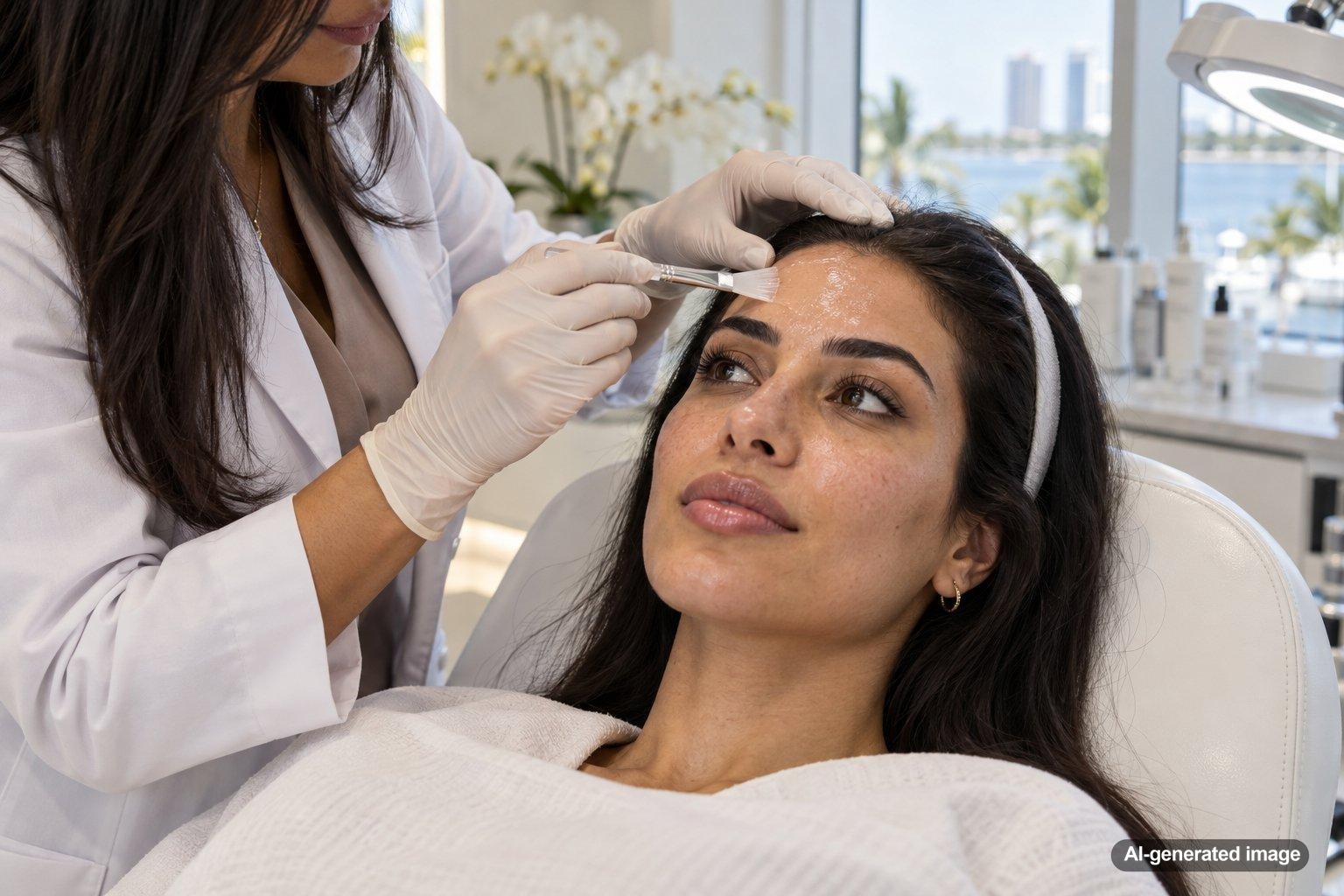
The forehead is cleansed, and the clinician may gently prepare rough or scaly areas according to the selected protocol. A photosensitizing medication is then applied to the designated treatment field.
The medication typically remains on the skin for a specified incubation period. This allows the active compound to be taken up by susceptible cells. The appropriate waiting period varies with the medication and treatment protocol.
3. Controlled Light Exposure
After incubation, the treatment field is exposed to the prescribed light source. Depending on the protocol, this may involve blue light, red light, or another approved method of activation.
Patients may experience warmth, tingling, stinging, or burning sensations during illumination. The intensity varies, and the clinical team can explain the comfort measures available for the particular procedure.
4. Immediate Aftercare
Following illumination, the skin may appear red or feel sensitive. The clinician provides instructions for protecting the treated area from light, supporting the skin during recovery, and recognizing unexpected reactions.
Because the forehead is difficult to conceal completely during normal activities, planning transportation, work commitments, and outdoor exposure is especially important.
What Does Recovery Look Like After Forehead PDT?
PDT intentionally produces a localized reaction in treated skin. The extent of this response depends on the treatment field, medication, light exposure, degree of existing damage, and individual skin characteristics.
Common temporary effects can include:
- Redness and warmth across the forehead.
- Stinging, tenderness, or a sensation resembling sunburn.
- Swelling, particularly near the upper face.
- Dryness, scaling, or peeling as the treated skin recovers.
- Crusting in areas with more pronounced actinic damage.
- Temporary changes in skin pigmentation.
Some reactions are mild, while others are more noticeable and may interfere with ordinary activities. Healing timelines vary, and the clinical team should explain what is expected for the specific protocol.
Why Light Avoidance Matters After PDT
One of the most important parts of PDT aftercare is avoiding inappropriate light exposure while the photosensitizing medication remains active.
For commonly used actinic keratosis PDT protocols, dermatologists may instruct patients to avoid direct sunlight and other intense visible light for approximately 48 hours. The exact precautions and duration depend on the medication and treatment approach.
Sunlight through windows and certain strong indoor light sources may also be relevant. Sunscreen alone may not provide adequate protection from the visible light that can activate the medication. Patients should follow their dermatologist’s specific instructions regarding indoor lighting, transportation, protective clothing, and time outdoors.
How to Care for Your Forehead Before and After PDT
Conservative skin care and careful planning can make the treatment period more manageable. The following general considerations should be discussed with the treating clinician.
Before Treatment
- Tell your dermatologist about prescription medications, supplements, allergies, and any history of unusual light sensitivity.
- Discuss current skincare products, particularly retinoids, exfoliating acids, and potentially irritating treatments.
- Arrange your schedule so that you can follow the prescribed light-avoidance period.
- Avoid deliberately tanning or irritating the forehead before your appointment.
- Ask which products, if any, should be paused before the procedure.
After Treatment
- Follow the exact light-protection instructions provided by your clinician.
- Cleanse gently using products approved for the recovery period.
- Use a simple moisturizer or protective ointment if recommended.
- Avoid picking at peeling or crusted skin.
- Wait for clinician approval before restarting exfoliants, retinoids, or other potentially irritating products.
- Contact the treating office if symptoms seem unusually severe or do not follow the expected recovery pattern.
After the immediate photosensitivity period, ongoing sun protection remains essential. Broad-spectrum SPF 30 or higher sunscreen, protective headwear, shade, and avoiding unnecessary midday sun exposure can help limit additional UV damage. Sunscreen should be resumed according to the clinician’s post-procedure instructions.
How Does PDT Compare With Treating Individual Forehead Spots?
Dermatologists have several approaches for managing actinic keratoses. The most appropriate choice depends on the number and characteristics of lesions, previous treatments, medical history, and patient preferences.
| Treatment approach | Typical purpose | Important consideration |
|---|---|---|
| Photodynamic therapy | Treating multiple suitable actinic keratoses across a defined field | Requires office-based planning, light precautions, and recovery time |
| Cryotherapy | Treating individual visible lesions with controlled freezing | Usually targets specific spots rather than the surrounding sun-damaged field |
| Prescription field medications | Treating multiple actinic keratoses over a broader area | May require repeated applications and can produce significant local irritation |
| Biopsy or surgical treatment | Evaluating or removing lesions with suspicious features | May be necessary when skin cancer must be ruled out or treated |
These approaches are not necessarily mutually exclusive. A dermatologist may recommend targeted treatment for selected lesions and field treatment for surrounding skin, depending on the examination findings.
Who Might Be a Candidate for Forehead PDT?
PDT may be considered for patients with multiple thin actinic keratoses or a broader area of clinically recognized sun damage. It can be particularly relevant when treating one isolated spot at a time would leave a larger field of affected skin unaddressed.
However, suitability cannot be determined from the appearance of the forehead alone. A dermatologist needs to consider the thickness and type of lesions, medical history, medication use, and ability to follow aftercare precautions.
Some photosensitivity disorders, medication-related concerns, and other medical factors may make a particular PDT protocol inappropriate. Certain thick or suspicious lesions may also require another treatment or additional evaluation.
At Waverly DermSpa, we offer Photodynamic Therapy (PDT) and can help you understand whether it may be appropriate.
When Should You See a Dermatologist?
A persistent rough patch on the forehead is worth evaluating, particularly when it occurs on heavily sun-exposed skin or continues to recur.
Arrange a dermatology assessment if you notice:
- A scaly spot that persists or repeatedly returns.
- A lesion that grows, changes shape, or develops a raised or thickened surface.
- Bleeding, ulceration, or crusting without an obvious explanation.
- A painful or unusually tender spot.
- Several new rough patches developing across the forehead.
- A new or changing lesion in someone with a personal history of skin cancer.
Rapidly changing, persistently bleeding, or ulcerated lesions deserve prompt professional attention rather than waiting for a routine cosmetic treatment. PDT does not replace an appropriate skin cancer examination or biopsy when clinically indicated.
Even after successful treatment of actinic keratoses, additional lesions can develop because the underlying history of UV exposure remains relevant. Your dermatologist can recommend an appropriate schedule for follow-up skin examinations.
Frequently Asked Questions
Can PDT treat an entire forehead at once?
Yes, PDT can be used as a field-directed treatment across a broader forehead area when clinically appropriate. The exact boundaries depend on the findings and treatment protocol. Not every visible spot is necessarily suitable for treatment in the same session.
Is PDT painful?
Some patients experience stinging, warmth, or burning during light activation. Discomfort varies according to the treatment method and individual sensitivity. Your clinician can explain the expected sensations and available comfort measures.
Does PDT remove brown spots and wrinkles?
Some patients notice cosmetic changes in texture or visible sun damage following treatment, but PDT for actinic keratoses is primarily a medical procedure. It should not be viewed as a comprehensive treatment for wrinkles, melasma, or every type of pigmentation.
How many PDT sessions are needed for forehead sun damage?
The number of treatments depends on the extent of actinic damage, the selected protocol, and how the skin responds. Some patients need additional sessions or a different treatment for persistent lesions. Follow-up examination helps determine whether further care is appropriate.
Can I go outside after PDT?
Light exposure must be restricted according to the specific medication and procedure. Many commonly used protocols require strict protection from sunlight and other intense light sources for approximately 48 hours. Ask your clinician for individualized instructions before traveling home or resuming outdoor activities.
Will PDT prevent future actinic keratoses?
PDT may treat existing actinic keratoses within the selected field, but it does not eliminate the effects of prior UV exposure or prevent all future lesions. Continued sun protection and dermatologist-directed skin examinations remain important.
Ready to get help?
Schedule an appointment or send a message and our team will get back to you.
Prefer to call? 954-666-3736
Disclaimer
This article is for educational purposes and is not medical advice. For diagnosis and personalized treatment, please book an appointment with a board-certified dermatologist.
Sources & Further Reading
- American Academy of Dermatology (AAD) – Actinic keratosis: Diagnosis and treatment
- DermNet – Photodynamic therapy
- American Academy of Dermatology (AAD) – Actinic keratosis: Signs and symptoms
