

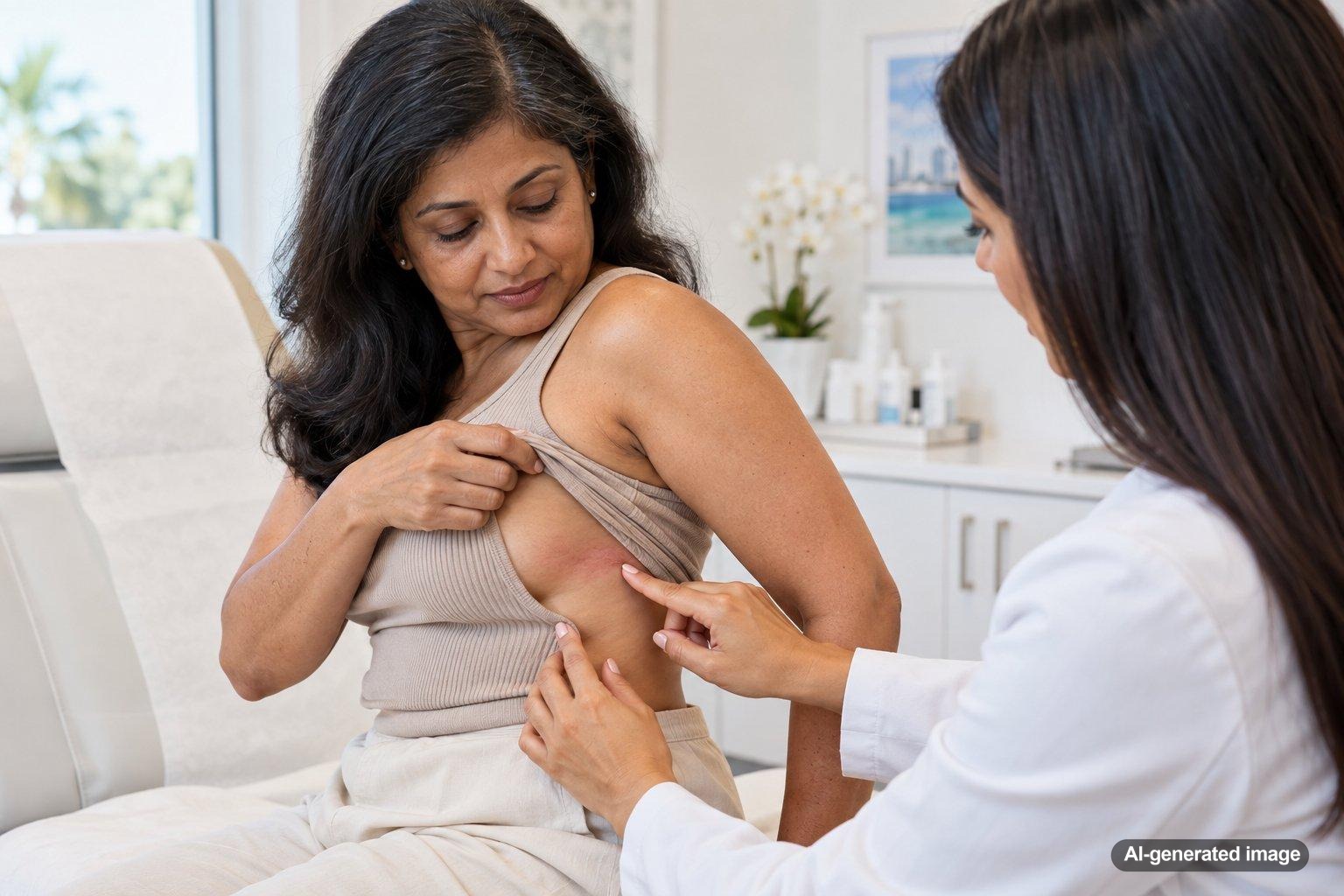
A burning rash where your bra band sits can happen when pressure, friction, sweat, or something in the fabric repeatedly irritates the skin. In some cases, the pattern can also fit contact dermatitis, which occurs when the skin reacts to an irritant or allergen. Warm, humid conditions can make these problems more noticeable because moisture stays trapped against the skin.
The location alone cannot tell you exactly what is causing the rash. A dermatologist can look at its pattern, texture, timing, and other symptoms to help distinguish simple chafing from dermatitis, intertrigo, infection, or another skin condition.
Quick answer
- Friction and pressure: A snug band can repeatedly rub the same strip of skin and weaken the skin barrier.
- Sweat and trapped moisture: Heat and perspiration under a close-fitting bra can increase irritation and contribute to intertrigo in skin folds.
- Contact dermatitis: Elastic, rubber-related materials, textile chemicals, dyes, fragrances, detergents, or metal components may irritate the skin or trigger an allergic reaction.
- Other skin conditions: Eczema and other inflammatory rashes can sometimes appear or flare in areas exposed to heat, friction, or occlusion.
- Persistent or worsening symptoms: A rash that keeps returning, spreads, becomes painful, develops drainage, or does not improve deserves professional evaluation.
Why a bra band can make skin burn
The skin beneath a bra band is exposed to several triggers at once. The band presses firmly against the torso, moves slightly as you breathe and move, and can trap heat and perspiration. That combination can create repeated mechanical irritation. Once the skin barrier becomes irritated, products that normally feel comfortable may suddenly sting or burn.
This is particularly noticeable after exercise, long periods outdoors, travel in warm weather, or any situation in which clothing remains damp against the skin. In a humid climate such as South Florida, sweat may evaporate less efficiently beneath close-fitting clothing.
Could it be contact dermatitis?
Contact dermatitis is one possibility when a rash closely follows the area touched by a garment. Irritant contact dermatitis develops when repeated exposure directly irritates the skin. Allergic contact dermatitis involves an immune reaction to a particular substance that contacts the skin.
Potential triggers associated with clothing can include elastic components, rubber-related chemicals, textile dyes, fabric finishes, detergents, fragrances, and metal hardware. DermNet specifically notes that components of underwear, including rubber in elastic and nickel in bra wire, can be potential contact allergens. A reaction does not necessarily happen the first time you wear an item. Allergic contact dermatitis can develop after prior exposures that caused no noticeable problem.
Burning or stinging can occur with contact dermatitis, but other features may include itching, tenderness, dryness, scaling, swelling, cracking, or small blisters. Because several rashes can look similar, appearance alone is not always enough to identify the cause.
What about sweat and intertrigo?
Intertrigo describes inflammation where skin surfaces or covered skin areas are exposed to warmth, moisture, and friction. It commonly affects body folds, including beneath the breasts. The skin may look inflamed and feel sore, irritated, or uncomfortable. Moist skin can also become softened or cracked.
A bra band can add another layer of occlusion and friction across an area that is already warm. Intertrigo can have several underlying causes, and microorganisms may sometimes contribute, so a persistent fold-area rash should not automatically be treated as a simple friction problem without evaluation.
What you can do at home
For mild irritation without concerning symptoms, a few conservative changes may reduce repeated aggravation while you watch how the skin responds.
- Switch temporarily to a softer, well-fitting bra that does not dig into the affected area.
- Change out of sweaty clothing promptly after exercise or outdoor activity.
- Gently cleanse the area and pat it completely dry rather than scrubbing.
- Avoid fragranced products, harsh cleansers, and newly introduced lotions directly on irritated skin.
- Consider whether the problem started after changing laundry detergent, fabric softener, bras, athletic clothing, or another product that contacts the area.
- Avoid scratching or repeatedly rubbing the rash, since additional friction can further disrupt the skin barrier.
If one particular bra consistently triggers the problem and others do not, stop wearing it for now. That pattern can provide useful information if you later see a dermatologist.
When recurring rashes need a closer look
If the rash repeatedly returns in the exact outline of a band, strap, clasp, or other garment component, contact allergy may be worth considering. Dermatologists can evaluate the distribution of the rash and your exposure history. When allergic contact dermatitis is suspected, patch testing may sometimes be used to look for specific allergens.
It can help to note which bras you wore before a flare, whether the skin was sweaty, what detergent was used, and whether any new body products contacted the area. Photos taken when the rash is most noticeable can also provide useful context if the appearance changes before your appointment.
Professional options
Treatment depends on what is actually driving the inflammation. A dermatologist may evaluate for irritant or allergic contact dermatitis, intertrigo, eczema, infection, or another condition with a similar appearance. If allergy is suspected, identifying and avoiding the responsible material can become an important part of management. If another medical skin condition is present, your clinician can discuss appropriate topical or prescription options at a high level based on the examination.
Avoid repeatedly trying multiple medicated creams without knowing the cause. Products that are helpful for one type of rash may be unnecessary or irritating for another.
When should you see a dermatologist?
Consider scheduling an evaluation when the rash does not settle after removing obvious friction and irritants, keeps returning, or interferes with wearing normal clothing. Seek medical attention sooner if you notice significant pain, rapidly increasing redness, warmth, swelling, open or weeping skin, pus-like drainage, fever, or other symptoms that make you concerned about infection.
A dermatologist should also evaluate a rash that develops blisters, significant cracking, unexplained sores, or an unusual appearance, especially when you cannot identify a clear clothing-related trigger.
FAQ
Can a bra that is too tight cause a burning rash?
It may contribute. A tight band increases pressure and friction, and it can hold sweat against the skin. Those factors can irritate the skin barrier and make an already sensitive area feel raw or burning.
Can I suddenly become allergic to a bra I have worn before?
It is possible for allergic contact dermatitis to appear after previous exposures without obvious symptoms. The reaction may involve a textile component, elastic-related chemical, dye, metal, or another substance contacting the skin. A dermatologist can evaluate whether an allergic pattern is likely.
Why is the rash worse when I sweat?
Moisture can increase friction and keep skin warm and occluded beneath clothing. Sweat itself may also sting when the skin barrier is already irritated. These conditions can contribute to chafing and intertrigo.
Should I stop wearing bras until the rash goes away?
You may not need to avoid every bra, but reducing pressure and friction can be helpful. A softer, breathable, properly fitting option may be more comfortable. If one specific garment repeatedly causes the rash, avoiding that garment can help you and your dermatologist identify a pattern.
Why does the rash keep coming back in the same place?
Recurring irritation can happen when the same combination of friction, moisture, or contact exposure keeps affecting the area. A sharply repeated garment pattern can also raise the possibility of contact dermatitis. Recurrent symptoms are worth discussing with a dermatologist rather than repeatedly guessing at the cause.
Ready to get help?
Schedule an appointment or send a message and our team will get back to you.
Prefer to call? 954-666-3736
This article is for educational purposes and is not medical advice. For diagnosis and personalized treatment, please book an appointment with a board-certified dermatologist.
Sources & further reading
- American Academy of Dermatology (AAD) – Eczema types: Contact dermatitis signs and symptoms
- DermNet – Intertrigo
