

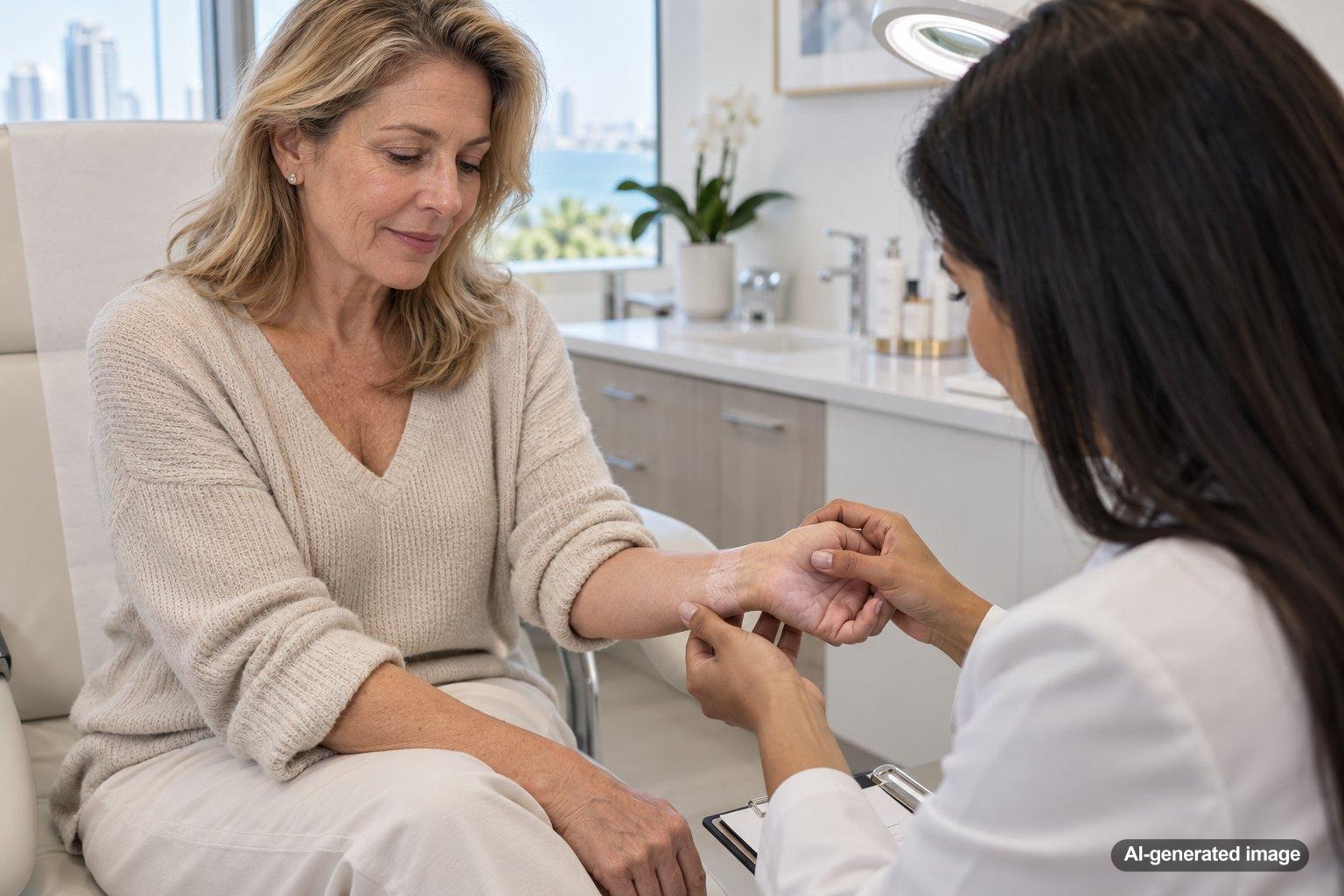
If the skin beneath your watch looks unusually pale and wrinkled when you take it off, the most common explanation is temporary overhydration of the outer skin from trapped sweat or water. A snug watch can create a warm, covered environment where moisture evaporates slowly, leaving the skin looking lighter, softer, and prunelike for a short time.
Pressure, friction, residue, and sensitivity to materials in the band can also contribute. The appearance often improves after the area is uncovered and allowed to dry, but persistent changes, itching, pain, cracking, or a spreading rash deserve closer attention.
Quick answer
- Trapped sweat or water can temporarily make covered skin look pale and wrinkled.
- A watch worn too tightly may add pressure and reduce airflow around the skin.
- Friction, soap residue, sunscreen, or products trapped beneath the band may irritate the skin barrier.
- Itching, redness, scaling, blistering, or persistent discoloration may suggest irritation or sensitivity that should be evaluated.
- Removing the watch periodically and keeping the skin and band clean and dry may help reduce recurrence.
Why moisture can make skin look pale and wrinkled
The outermost layer of skin absorbs water when it stays wet or humid for an extended period. Under a watch, sweat can become trapped between the skin and the case or band, especially during exercise, hot South Florida weather, or after washing your hands.
That temporary water absorption can make the surface look swollen, pale, soft, or finely wrinkled. It is similar to the pruned appearance fingers can develop after being in water, although the mechanism and degree can vary depending on how long the skin remains covered.
If the appearance fades after the watch comes off and the skin dries, moisture and occlusion are reasonable possibilities. Repeated episodes may be a sign that the area needs more airflow or that the watch is staying damp against the skin.
Could the watch be too tight?
A very snug watch can leave a temporary indentation and make it harder for sweat to evaporate. Pressure alone may also make the covered area appear lighter for a short period after removal.
Your watch should generally feel secure without digging deeply into the wrist. If you consistently see a pronounced groove, experience numbness or tingling, or find that the skin remains uncomfortable after taking the watch off, loosening the fit is a sensible first step. Persistent circulation-related symptoms should be medically evaluated rather than assumed to be caused only by the watch.
Skin irritation can change the texture too
Not every change under a watch is simply moisture. Repeated rubbing can disrupt the skin barrier, particularly when sweat, salt, soap, hand sanitizer, sunscreen, or skincare products collect beneath the band.
Some people may also become sensitive to substances in a watch case, clasp, adhesive, coating, or strap material. Irritated skin does not always start as a dramatic red rash. It may initially feel rough, tender, itchy, tight, or unusually textured.
If the area becomes increasingly red, scaly, cracked, swollen, blistered, or itchy, a dermatologist can evaluate whether irritation, an allergic reaction, or another skin condition could be contributing.
What you can do at home
- Give the skin regular breaks. Remove the watch periodically, particularly after exercise or anytime the wrist feels damp.
- Dry your wrist thoroughly. After handwashing, showering, swimming, or sweating, make sure moisture is not trapped beneath the watch.
- Clean the band appropriately. Follow the manufacturer’s cleaning guidance so sweat, oils, sunscreen, and soap residue do not continually sit against the skin.
- Check the fit. A slightly looser fit may improve airflow and reduce pressure and friction.
- Avoid placing the watch over irritated skin. Allowing a sore or inflamed area time to recover can prevent additional rubbing.
- Keep skincare simple. If the area is sensitive, avoid layering fragranced or irritating products underneath an occlusive watch band.
When the skin change may need professional evaluation
A temporary pale, wrinkled patch that returns to normal after drying is generally less concerning than a change that persists or worsens. Consider scheduling a dermatology evaluation if the skin remains abnormal after you stop wearing the watch, or if you develop significant itching, pain, swelling, cracking, drainage, blisters, or a rash that spreads beyond the covered area.
You should also seek prompt medical attention for symptoms such as persistent numbness, marked swelling of the hand or wrist, significant color changes that do not resolve after removing the watch, or other symptoms suggesting a circulation or nerve problem.
What a dermatologist may look for
A dermatologist can examine the pattern of the skin change and ask about the watch material, how tightly it is worn, exposure to sweat or water, cleaning habits, and any skincare products used on the wrist. The distribution itself can sometimes offer useful clues about whether pressure, moisture, friction, or contact with a particular component may be involved.
If there is an ongoing rash, professional evaluation can help distinguish simple irritation from other possible causes and guide appropriate care without relying on guesswork.
Frequently asked questions
Why does my skin look normal again after my watch has been off for a while?
If moisture or pressure is responsible, the appearance may gradually normalize as the skin dries and the pressure is removed. How quickly this happens can vary.
Can sweat under a smartwatch cause wrinkled skin?
Yes. Sweat trapped beneath a smartwatch or conventional watch can keep the skin moist enough to become temporarily soft, pale, or wrinkled.
Should I stop wearing my watch if the skin underneath looks irritated?
Giving irritated skin a break from the watch is a conservative step that may reduce continued friction and moisture exposure. If the irritation persists or repeatedly returns, a dermatologist can help evaluate the cause.
Could I be reacting to the watch band?
It is possible. Some people develop irritation or sensitivity related to band materials, metal components, coatings, trapped cleaning products, or substances that collect between the band and skin. An examination can help clarify the pattern.
Why does the skin under only one part of the watch look different?
Localized changes can reflect where moisture, pressure, friction, or a particular material contacts the skin most closely. The exact pattern can be useful information if you need a dermatology evaluation.
Ready to get help?
Schedule an appointment or send a message and our team will get back to you.
Prefer to call? 954-666-3736
This article is for educational purposes and is not medical advice. For diagnosis and personalized treatment, please book an appointment with a board-certified dermatologist.
