

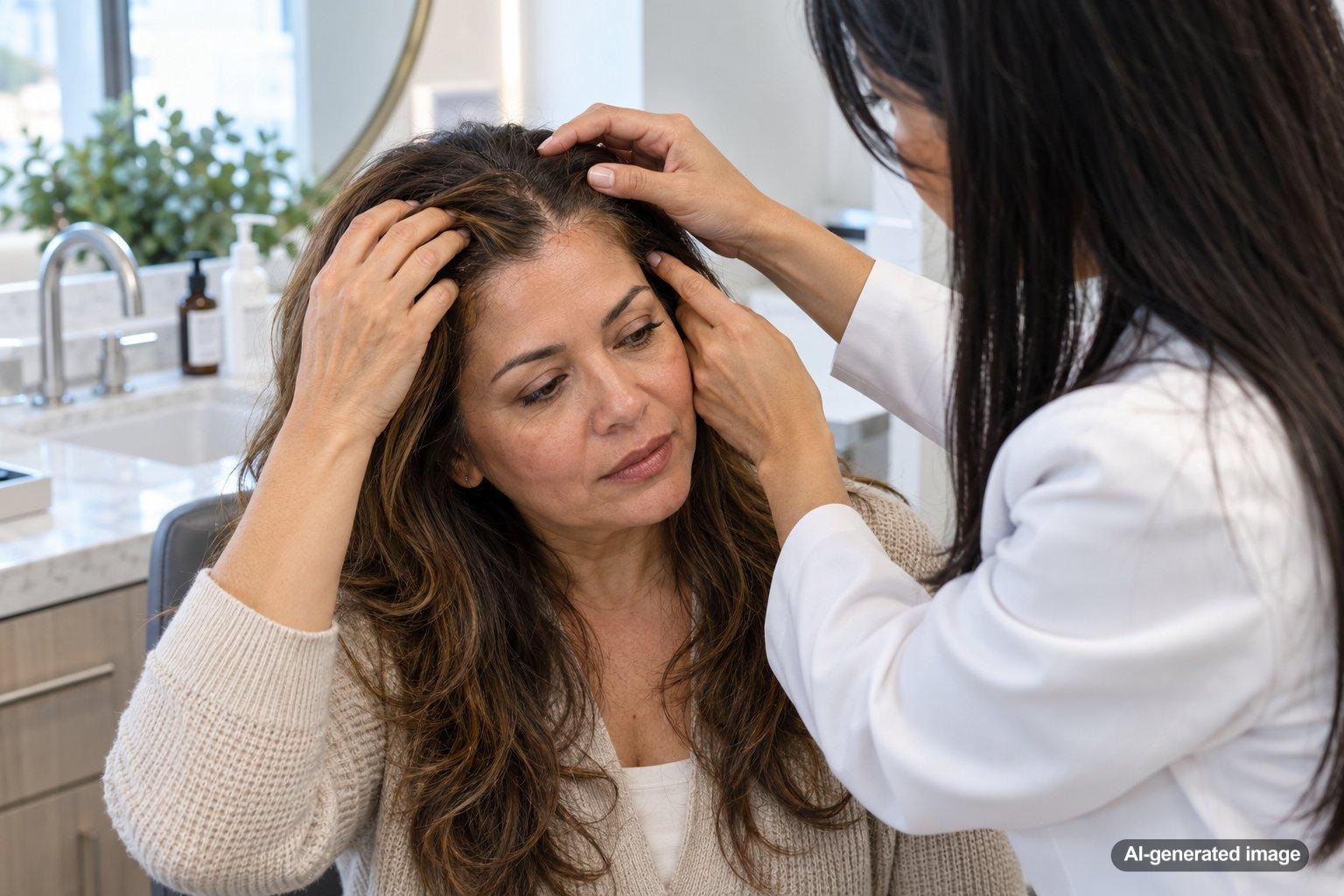
If your scalp burns after you color your hair, the sensation may be related to simple irritation from the coloring process, an ingredient touching sensitive or compromised skin, or an allergic contact reaction. Mild temporary tingling can happen with some products, but persistent or intense burning, redness, swelling, itching, or blistering deserves more attention.
The timing and accompanying symptoms can offer useful clues, but they cannot confirm the cause on their own. Hair color contains several ingredients that may irritate the scalp or trigger an allergy in certain people, and reactions can sometimes occur even after previous coloring sessions caused no obvious problem.
Quick answer
- Hair dye can irritate the scalp, especially if the skin is already dry, scratched, inflamed, or sensitive.
- Some people develop allergic contact dermatitis to hair dye ingredients, including para-phenylenediamine, commonly called PPD.
- Burning with redness, itching, swelling, rash, or blistering is more concerning than brief mild tingling.
- If significant burning begins while color is still on your scalp, rinse the product out according to the product instructions rather than leaving it on longer.
- A dermatologist can evaluate recurring or significant reactions and may recommend allergy testing when appropriate.
Why can hair color make your scalp burn?
Hair coloring is a chemical process, and the scalp can react for more than one reason. Sometimes the issue is irritation rather than a true allergy. Oxidizing agents, alkaline ingredients, fragrances, preservatives, and other components may sting or irritate sensitive skin.
The risk of discomfort may also be greater when the scalp barrier is already disrupted. Scratching, vigorous brushing, recent chemical treatments, dryness, or an existing rash can leave the skin more reactive when dye is applied.
Another possibility is allergic contact dermatitis. This is an immune reaction to a substance that touches the skin. PPD, an ingredient commonly used in permanent hair dyes, is a well-known hair dye allergen. Other ingredients in coloring products can also cause reactions, so the specific trigger is not always obvious without evaluation.
Common causes and triggers
- Irritant contact dermatitis: The chemicals in a coloring product may directly irritate the scalp, particularly when the skin barrier is already sensitive.
- Allergic contact dermatitis: A person can become sensitized to a hair dye ingredient and develop itching, burning, redness, swelling, or a rash after exposure.
- PPD sensitivity: PPD is commonly found in permanent hair dyes and can trigger allergic contact dermatitis in susceptible people.
- Bleach or lightening products: Products used to lift hair color can be especially irritating when they contact the scalp.
- Recently irritated skin: Scratches, picking, vigorous brushing, sunburn, or another scalp flare may make coloring more uncomfortable.
- Longer-than-directed exposure: Leaving a coloring product on beyond the manufacturer’s directions may increase irritation.
Is burning during hair coloring normal?
A slight temporary sensation is different from pronounced burning. Significant stinging or burning should not simply be ignored in hopes that it will pass. The American Academy of Dermatology advises washing out chemical hair treatments if excessive stinging or burning develops and recommends dermatologic evaluation when a reaction occurs.
Pay particular attention if the burning is accompanied by intense itching, marked redness, swelling, hives, blistering, weeping skin, or a rash extending onto the ears, forehead, eyelids, face, or neck. Those features may be associated with a more substantial skin reaction.
Why can a reaction happen even if you have used the same color before?
Previous trouble-free use does not necessarily mean a product will always be tolerated. Allergic contact dermatitis can develop after repeated exposures because sensitization may occur over time. A later exposure can then trigger symptoms that did not happen during earlier coloring sessions.
Formulas can also change, and salons may use different shades, developers, lighteners, toners, or finishing products. That makes it difficult to identify the responsible ingredient based on the brand or color name alone.
What can you do at home?
If significant burning starts while the dye is still on your scalp, follow the product directions for removing it and rinse thoroughly rather than extending the processing time. Afterward, treat the scalp gently while it settles.
- Avoid scratching, picking, or aggressively brushing the irritated area.
- Pause additional coloring, bleaching, straightening, or other chemical treatments until the scalp has recovered and the cause is clearer.
- Use gentle hair-care products and avoid introducing several new scalp products at once.
- Keep the product packaging or ingredient list if you may need a dermatologist to evaluate the reaction.
- If the reaction is recurring, avoid repeatedly testing the same product on an already irritated scalp without professional guidance.
These measures are general skin-care precautions rather than a substitute for diagnosis. A persistent reaction may require a closer look at your scalp and your exposure history.
How a dermatologist may evaluate the problem
A dermatologist can examine whether the pattern looks more consistent with irritation, allergic contact dermatitis, another inflammatory scalp condition, or a different problem occurring around the same time as coloring. The distribution of the reaction can be informative, including whether symptoms involve the hairline, ears, eyelids, face, or neck.
If an allergy is suspected, professional patch testing may be considered to identify specific contact allergens. This is different from simply reapplying hair color to irritated skin. Identifying a trigger can help guide future product choices and reduce repeated exposure.
When should you see a dermatologist?
Consider scheduling a dermatology evaluation when scalp burning is persistent, significant, recurrent, or associated with a visible rash. An appointment is also worthwhile when you are no longer sure which hair products are safe to use.
Seek prompt medical attention for substantial facial or eyelid swelling, widespread blistering, rapidly worsening symptoms, or other severe reactions. Trouble breathing, throat tightness, faintness, or swelling involving the mouth or tongue requires emergency medical attention.
FAQ
Can hair dye cause an allergic reaction on the scalp?
Yes. Hair dye ingredients can trigger allergic contact dermatitis in susceptible people. PPD is one recognized allergen in permanent hair dye, although other ingredients can also be responsible.
Why does my scalp itch and burn the day after coloring?
A delayed reaction can occur with allergic contact dermatitis, while irritation can also persist after the product has been rinsed away. Because several conditions can look similar, recurring or substantial symptoms are worth discussing with a dermatologist.
Does burning mean I am allergic to hair dye?
Not necessarily. Burning can result from irritation as well as allergy. The timing, appearance, distribution, and recurrence of symptoms can help a dermatologist determine which explanation is more likely.
Can I become allergic to a hair dye I have used for years?
Yes. Sensitization to an ingredient can develop after prior exposures, so a reaction may occur even if earlier coloring sessions were uneventful.
Should I color my hair again after a reaction?
If you experienced a notable reaction, it is sensible to avoid repeating the same exposure until the cause has been evaluated. A dermatologist can help determine whether allergy testing or ingredient avoidance may be appropriate.
Ready to get help?
Schedule an appointment or send a message and our team will get back to you.
Prefer to call? 954-666-3736
This article is for educational purposes and is not medical advice. For diagnosis and personalized treatment, please book an appointment with a board-certified dermatologist.
Sources & further reading
- American Academy of Dermatology (AAD) – Coloring and perming tips for healthier-looking hair
- DermNet – Allergy to paraphenylenediamine
