

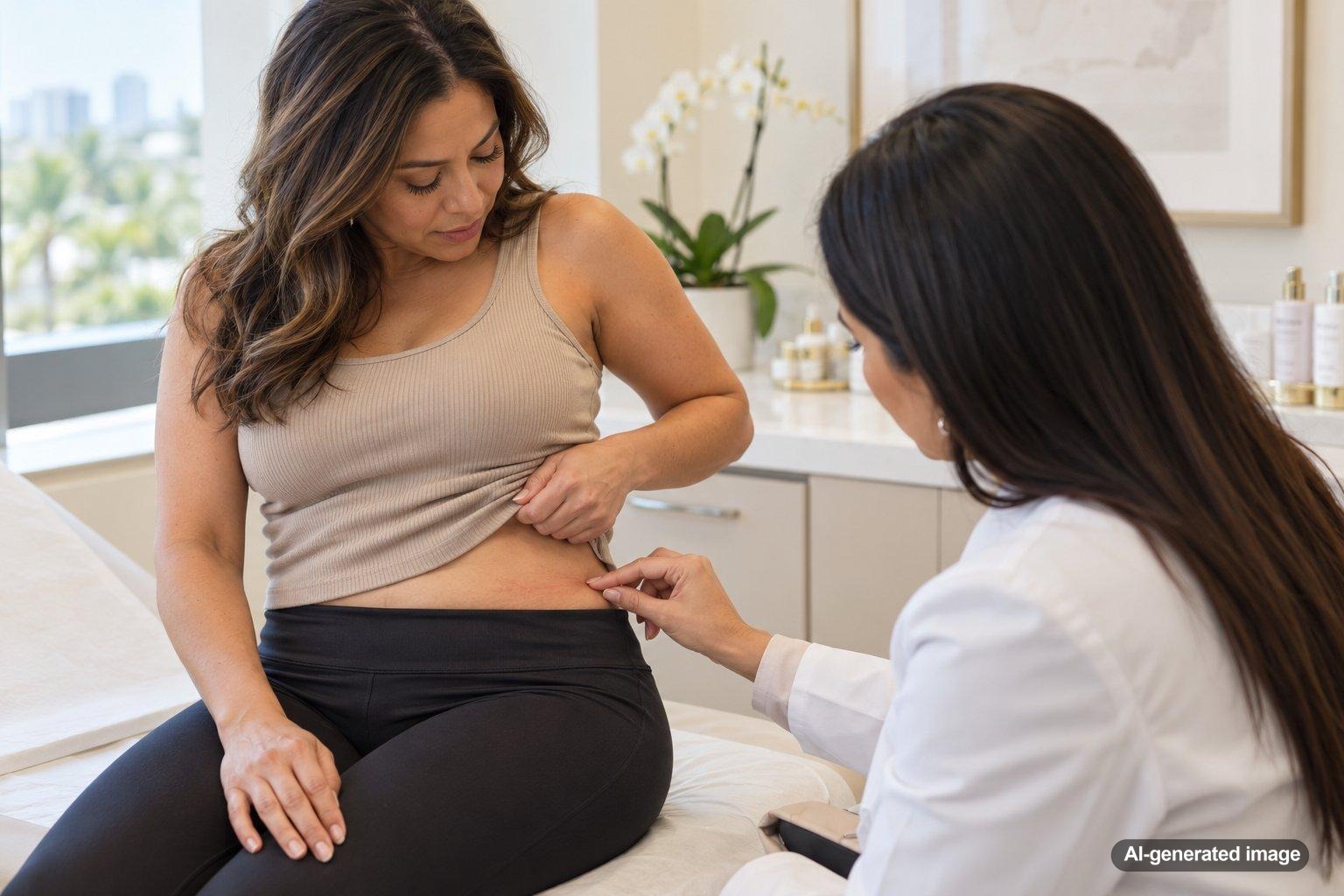
Itching beneath a tight waistband is often related to what is happening where clothing repeatedly presses, rubs, and traps heat against the skin. Friction, sweat, moisture, fabric, elastic, metal fasteners, laundry products, or textile chemicals can all contribute to irritation in this concentrated area. An itchy waistline does not automatically point to one specific skin condition, however, and recurring symptoms deserve a closer look.
Paying attention to exactly where the itching appears and what you were wearing when it started can provide useful clues. A dermatologist can evaluate persistent or worsening symptoms and determine whether simple irritation, contact dermatitis, eczema, or another skin problem may be involved.
Quick answer
- Friction and pressure: A snug waistband can repeatedly rub the same strip of skin, particularly during walking, exercise, or prolonged sitting.
- Heat and sweat: Tight clothing can hold perspiration against the skin and make an already irritated area feel itchier.
- Contact irritation or allergy: Elastic, textile dyes, finishing chemicals, metal buttons, fragrances, or laundry products may trigger a reaction in some people.
- Skin barrier sensitivity: Dry or sensitive skin may react more readily to repeated rubbing and moisture.
- Persistent symptoms: A rash that keeps returning, spreads, becomes painful, or does not improve after avoiding likely triggers should be evaluated by a dermatologist.
Why can a tight waistband make skin itch?
A waistband creates a small zone where several irritating factors can occur at once. The material stays in close contact with the skin, pressure is concentrated along one line, and movement can produce repeated rubbing. If the weather is warm or you are physically active, sweat can remain trapped beneath the fabric as well.
Sometimes the problem is mainly mechanical irritation from rubbing. In other cases, something touching the skin may contribute to contact dermatitis. Contact dermatitis can occur when a substance directly irritates the skin or when the immune system reacts to a particular material or chemical. Clothing-related reactions may be associated with textile dyes, finishing agents, elastic components, or metal fasteners such as buttons and snaps.
Common triggers around the waistline
- Snug pants, leggings, shapewear, or underwear: Persistent pressure and rubbing can irritate sensitive skin.
- Sweat: Heat and perspiration can intensify itching and increase friction beneath close-fitting clothing.
- Elastic: The waistband itself may be irritating, especially when it is very tight or worn for long periods.
- Textile dyes and finishing chemicals: Some people develop irritation or an allergic reaction to substances used in clothing production.
- Metal buttons or snaps: Hardware touching the abdomen may contain metals such as nickel, which can cause allergic contact dermatitis in susceptible people.
- Laundry products: Fragrances and other ingredients left on clothing after washing may aggravate sensitive skin.
- Rough or synthetic fabrics: Certain materials can feel more irritating when they repeatedly rub warm or damp skin.
What clues can help identify the trigger?
The pattern can sometimes be more informative than the intensity of the itch. Notice whether irritation forms a narrow line exactly where the waistband sits, appears beneath a metal button, develops only after exercise, or occurs with one particular pair of pants. It can also help to consider whether you recently changed laundry detergent, fabric softener, body products, or clothing brands.
If the problem disappears when you switch to looser clothing but returns with the same tight garment, friction or something in that garment may be contributing. If several different garments cause a similar reaction, your dermatologist may consider other possible triggers or skin conditions.
What can you do at home?
For mild irritation, reducing exposure to the suspected trigger is a reasonable first step. The goal is to give the skin less friction, heat, and unnecessary contact while you watch how it responds.
- Choose looser clothing for several days and avoid garments that leave deep waistband marks.
- Change out of sweaty clothing promptly after exercise or time outdoors.
- Keep the area gently clean and dry without aggressive scrubbing.
- Use a simple fragrance-free moisturizer if the skin feels dry or easily irritated.
- Consider fragrance-free laundry products if scented detergent or fabric softener seems to coincide with symptoms.
- Wash new clothing before wearing it, particularly if your skin is sensitive to textiles.
- Avoid repeatedly scratching the area, since scratching can further disrupt the skin barrier.
If you suspect a particular garment, detergent, or product, changing one variable at a time can make patterns easier to recognize. Avoid repeatedly testing something that has caused a significant reaction.
Could it be contact dermatitis?
It could be, but an itchy waistband area cannot be diagnosed from location alone. Contact dermatitis may cause itching, redness, scaling, or other visible changes after the skin encounters an irritant or an allergen. Clothing-related contact dermatitis can be associated with materials in the garment itself as well as dyes, finishing agents, elastic components, and metal fasteners.
The distinction between simple friction, irritant contact dermatitis, allergic contact dermatitis, eczema, and other causes is not always obvious from appearance alone. If the rash repeatedly develops in the same place or continues despite changing clothing and skin-care habits, a dermatologist can evaluate the pattern and discuss whether further testing is appropriate.
How can a dermatologist help?
A dermatologist can examine the location, shape, texture, and distribution of the rash and review possible exposures. Questions about clothing, exercise, sweating, personal-care products, detergents, occupational exposures, and previous skin reactions may help narrow the possibilities.
If allergic contact dermatitis is suspected, patch testing may sometimes be used to identify substances that trigger a delayed allergic skin reaction. Treatment depends on what is found and may include avoiding the responsible trigger, supporting the skin barrier, and using appropriate anti-inflammatory treatment when medically indicated. Your clinician can help you decide which approach fits your situation.
When should you see a dermatologist?
Consider scheduling an evaluation if the itching keeps returning, does not improve after avoiding tight clothing, or is accompanied by a persistent rash. It is also worth getting checked when the affected area becomes increasingly painful, swollen, blistered, cracked, draining, crusted, or rapidly spreading.
You should also seek professional guidance if you cannot identify a trigger, if symptoms interfere with sleep or everyday activities, or if over-the-counter approaches are not helping. A recurring waistband rash can have several possible explanations, and an examination can help distinguish among them without relying on guesswork.
Frequently asked questions
Can leggings or shapewear make my waist itch?
They can contribute. Close-fitting garments increase pressure, rubbing, warmth, and moisture against the skin. If itching consistently improves when you stop wearing a particular garment, that pattern is useful information to share with your dermatologist.
Why does my waistband itch more when I sweat?
Sweat and heat can make irritated skin feel more uncomfortable, while damp fabric may increase friction. Changing into dry, loose clothing after exercise may help reduce that combination of triggers.
Can elastic cause a skin reaction?
Materials within or around an elastic waistband can sometimes contribute to irritation or contact dermatitis. Because clothing contains multiple materials and processing chemicals, identifying the exact culprit may require evaluation when reactions repeatedly return.
Could the metal button on my jeans be responsible?
Possibly. Metal fasteners can contain nickel or other metals capable of causing allergic contact dermatitis in susceptible people. A reaction centered directly beneath a button or snap is a useful clue for a dermatologist.
Should I switch laundry detergent?
If symptoms began after changing detergents or scented laundry products, trying a fragrance-free option may be reasonable. However, persistent itching should not automatically be blamed on detergent because many other triggers can affect the waistline.
What if the itching keeps coming back even with loose clothing?
Recurring symptoms despite removing an obvious source of friction are worth discussing with a dermatologist. Other types of dermatitis or skin conditions can look similar, and an examination can help clarify the cause.
Ready to get help?
Schedule an appointment or send a message and our team will get back to you.
Prefer to call? 954-666-3736
This article is for educational purposes and is not medical advice. For diagnosis and personalized treatment, please book an appointment with a board-certified dermatologist.
Sources & further reading
- American Academy of Dermatology (AAD) – Eczema types: Contact dermatitis overview
- DermNet – Textile contact dermatitis
