

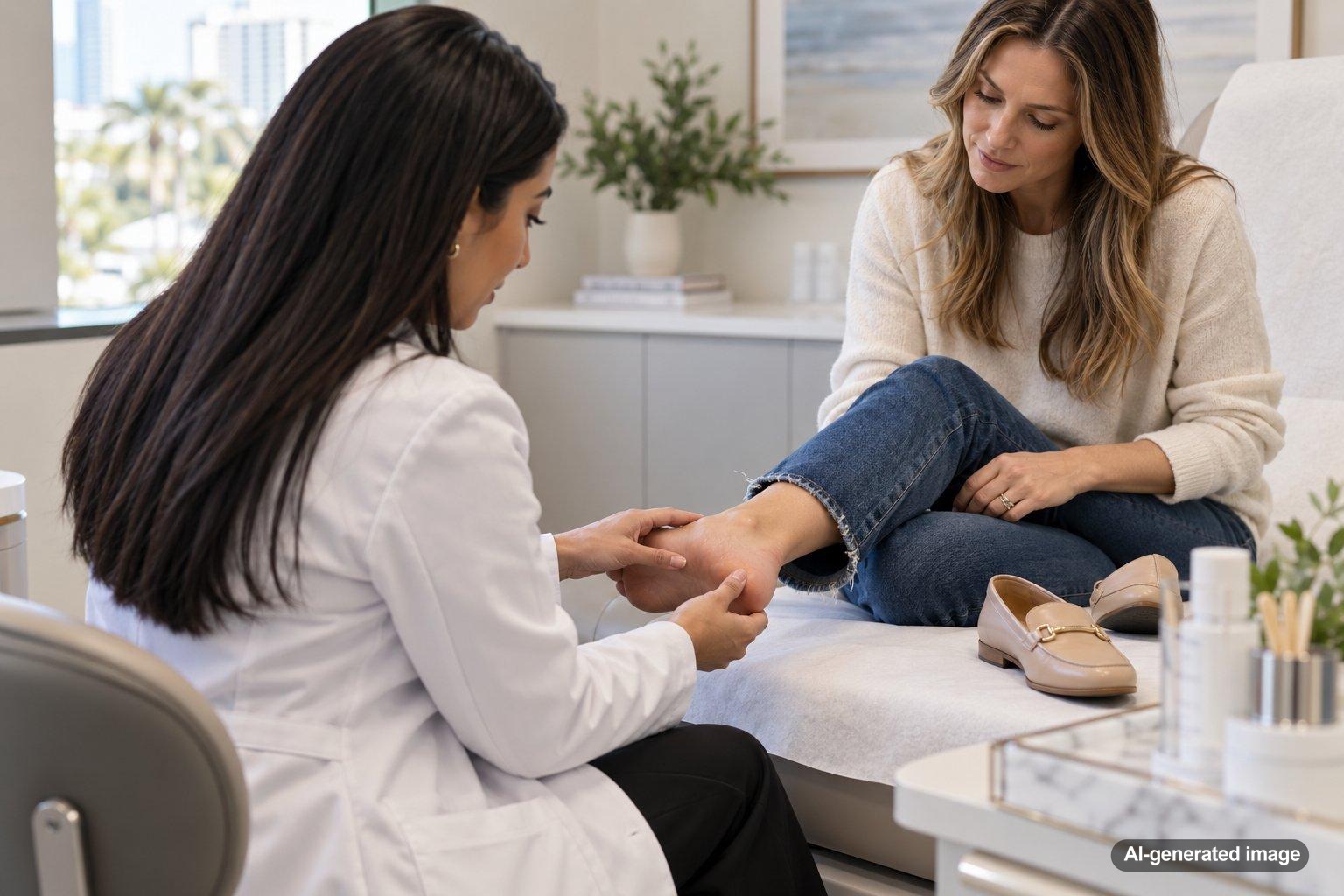
Small blisters that appear after wearing certain shoes are often related to what happens between the footwear and your skin. Friction is a common explanation, especially when a shoe rubs repeatedly against the heel, toes, or sides of the foot. Sweat and trapped moisture can make that rubbing more irritating. In other cases, the pattern may reflect sensitivity to materials in the shoe, such as rubber, adhesives, dyes, leather treatments, or synthetic components.
The location, itchiness, timing, and appearance of the blisters can provide useful clues. A blister exactly where a shoe presses is different from clusters of tiny, intensely itchy blisters that keep returning. Because several skin problems can look similar on the feet, recurring or unexplained blistering is worth evaluating rather than assuming every episode is simply caused by a tight shoe.
Quick answer
- Friction: Repeated rubbing from a tight, loose, stiff, or poorly shaped shoe can separate layers of skin and create a fluid-filled blister.
- Heat and moisture: Sweaty feet and non-breathable shoes can soften the skin and make friction more damaging.
- Footwear contact dermatitis: Some people react to rubber, glue, dyes, leather chemicals, metals, or other materials used in shoes.
- Another skin condition: Recurrent tiny blisters, significant itching, scaling, or spreading changes may have a cause beyond simple rubbing.
What is happening when a shoe causes a blister?
A classic friction blister forms when repeated movement creates shear between layers of skin. Fluid then collects in the small space created by that separation. This is why blisters commonly develop over pressure points such as the heel, the outer toes, the ball of the foot, or an area touched by a seam or rigid edge.
Shoe fit matters, but a shoe does not have to feel extremely tight to cause a problem. A slightly loose heel can slide with every step, while a narrow toe box can repeatedly press on one spot. New shoes can be especially troublesome because their materials may be stiffer before they soften with wear.
Common causes and triggers
- Repeated rubbing: Long walks, running, travel days, or prolonged standing can turn mild friction into a blister.
- Fit and shape: A shoe can technically be the correct size while still being too narrow, too shallow, or poorly matched to the shape of your foot.
- Sweat: Damp skin is more vulnerable to friction, especially inside warm or poorly ventilated footwear.
- Socks: Wrinkled, damp, coarse, or poorly fitting socks can create additional rubbing.
- Footwear materials: Shoes contain combinations of rubber, leather, adhesives, dyes, plastics, metals, and fabrics. In susceptible people, contact with certain components can trigger an itchy inflammatory rash sometimes called footwear dermatitis.
- Underlying skin conditions: Tiny recurring blisters can sometimes be associated with inflammatory conditions such as dyshidrotic eczema. Scaling, peeling, itching, or blisters can also occur with fungal infections such as athlete’s foot, so appearance alone may not establish the cause.
Clues that friction may be the main problem
Friction becomes more likely when the blister develops at a predictable pressure point, begins after an unusually long period of walking or activity, and occurs specifically with one pair or style of shoes. You may notice tenderness or redness before the fluid-filled area becomes obvious.
If the same spot repeatedly blisters in the same shoes but remains normal when you switch footwear, the mechanical relationship between the shoe and your foot deserves attention.
Clues that your skin may be reacting to the shoe material
Footwear contact dermatitis can look different from a single pressure blister. The area may be itchy, inflamed, or covered with multiple small bumps or blisters rather than one isolated pocket of fluid. The distribution can sometimes correspond to parts of the shoe that contain a particular material.
A reaction can also occur with footwear you have worn before. Allergic contact dermatitis can develop after repeated previous exposure, so an older pair of shoes is not automatically excluded simply because it was comfortable in the past.
What you can do at home
- Give the irritated area a break. Avoid the shoe that triggered the problem until the skin has settled.
- Reduce rubbing. Check whether the shoe slips at the heel, compresses the toes, or has a seam or edge directly over the blistered area.
- Keep feet reasonably dry. Moisture-wicking socks and changing damp socks can reduce the combination of moisture and friction.
- Protect vulnerable spots. A soft bandage or appropriate blister covering can help shield an area that rubs.
- Avoid deliberately removing the blister roof. Intact skin provides protection while the area heals. If a blister opens on its own, keep the area clean and protected.
- Notice patterns. Pay attention to which shoes cause the problem, exactly where the blisters appear, whether they itch, and whether there is associated scaling or peeling.
Professional evaluation and treatment options
When blistering keeps returning, a dermatologist can examine the distribution and surrounding skin to distinguish ordinary friction from conditions that can mimic it. The evaluation may include questions about footwear, activity, sweating, skin products, and whether similar areas appear elsewhere.
If allergic contact dermatitis is suspected, a dermatologist may discuss patch testing, which can help identify specific substances that trigger delayed skin reactions. If the appearance raises concern for a fungal infection or another condition, testing may be appropriate before choosing treatment. Prescription therapies, when needed, depend on the diagnosis rather than on the presence of a blister alone.
When to see a dermatologist
Consider getting the area checked if the blisters repeatedly return, appear with several different shoes, are extremely itchy, occur in clusters, or are accompanied by persistent scaling, cracking, peeling, or inflammation. Evaluation is also useful when you cannot identify a clear source of friction or when avoiding a particular pair of shoes does not solve the problem.
Seek prompt medical attention for increasing warmth, spreading redness, significant swelling, pus, fever, rapidly worsening pain, or other signs that could indicate infection. People with diabetes, poor circulation, reduced sensation in the feet, or other conditions that make foot wounds higher risk should have a lower threshold for professional evaluation.
Frequently asked questions
Why do only certain shoes give me blisters?
Different shoes distribute pressure differently. Width, heel movement, toe-box shape, internal seams, stiffness, ventilation, and materials can all change how your skin responds. A specific pair can therefore cause trouble even when another shoe in the same labeled size does not.
Can I be allergic to my shoes?
Yes. Components used in footwear can trigger allergic contact dermatitis in some people. Rubber chemicals, adhesives, dyes, leather-processing chemicals, and other materials are possible triggers. A dermatologist can help determine whether the pattern is consistent with contact allergy and whether testing may be useful.
Why are the blisters tiny and very itchy instead of large and sore?
That pattern can be less typical of a straightforward friction blister. Tiny, itchy clusters may occur with inflammatory skin conditions such as dyshidrotic eczema, and other foot conditions can sometimes blister as well. Persistent or recurrent episodes are worth having examined.
Could athlete’s foot cause blisters?
It can. Athlete’s foot may cause itching, burning, scaling, peeling, cracking, or blisters. Because fungal infection can resemble other foot rashes, especially when the appearance is atypical, a clinician can help clarify the cause before treatment is chosen.
Should I pop a shoe blister?
In general, protecting an intact blister is preferable because the overlying skin helps shield the tissue underneath. If a blister is unusually large, painful, recurrent, or difficult to protect, a clinician can advise you on appropriate care.
Ready to get help?
Schedule an appointment or send a message and our team will get back to you.
Prefer to call? 954-666-3736
This article is for educational purposes and is not medical advice. For diagnosis and personalized treatment, please book an appointment with a board-certified dermatologist.
Sources & further reading
- American Academy of Dermatology (AAD) – How to prevent and treat blisters
- Mayo Clinic – Athlete’s foot: Symptoms and causes
