

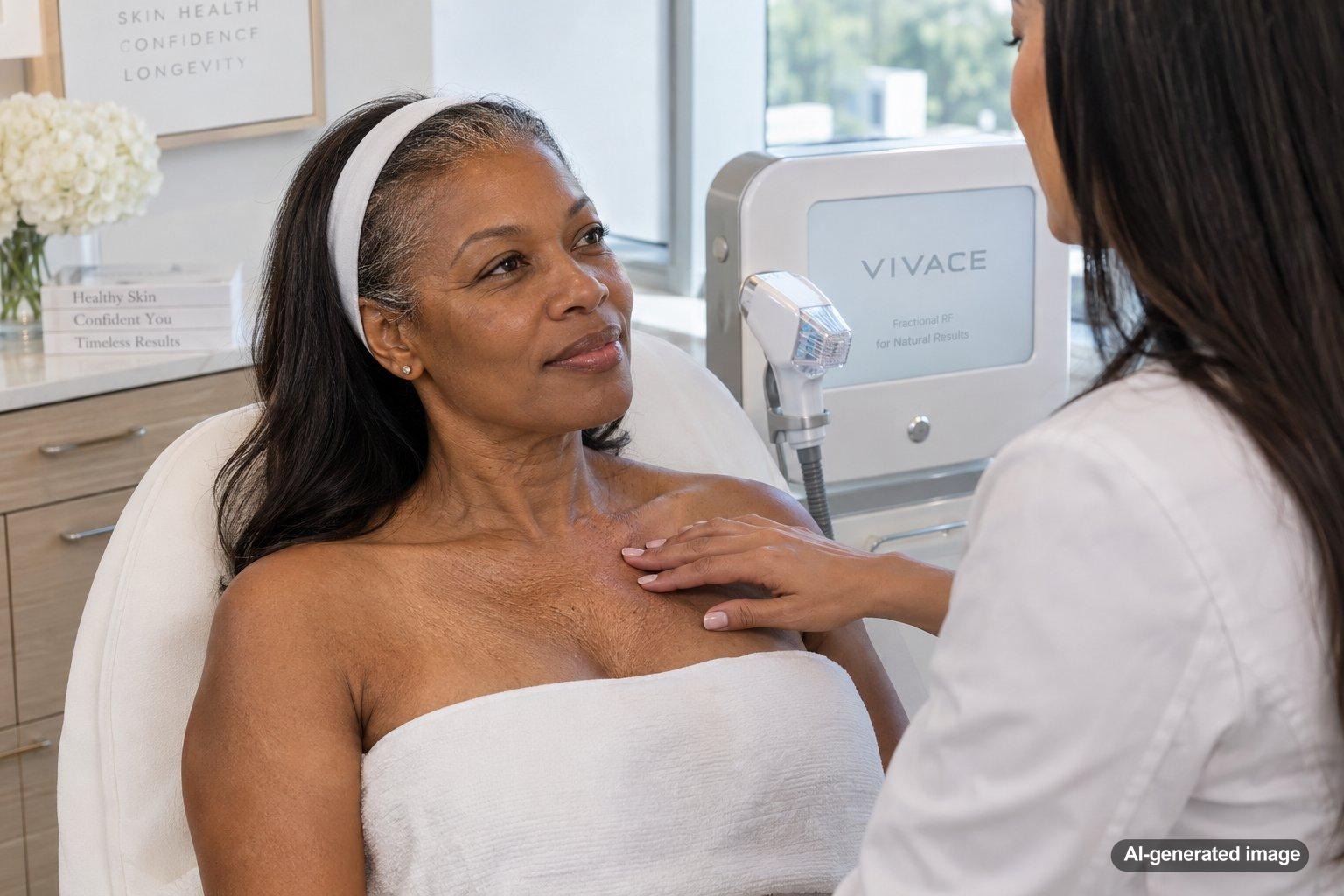
Crepey skin on the upper chest can become more noticeable as the skin loses firmness, develops fine lines, or shows years of sun exposure. Because the skin in this area is relatively delicate, improving its texture often requires a thoughtful approach rather than simply using stronger products. Vivace is an in-office treatment that combines microneedling with radiofrequency energy and may help improve the appearance of texture, fine lines, and mild skin laxity in appropriately selected patients.
The upper chest can respond differently from facial skin, so treatment settings, preparation, and aftercare should be individualized. A consultation can help determine whether Vivace fits your goals and whether another approach would be more appropriate.
Quick answer
- Vivace combines microneedling with controlled radiofrequency energy delivered below the skin’s surface.
- It may help improve the appearance of crepey texture, fine lines, and mild laxity on the upper chest.
- The chest is more delicate than many facial areas, so treatment should be customized carefully.
- Improvement is usually gradual rather than immediate, and individual results can vary.
- A dermatologist or qualified clinician can evaluate whether Vivace is appropriate for your skin and goals.
Why the upper chest can develop a crepey texture
The upper chest, sometimes called the decolletage, is frequently exposed to sunlight but may receive less consistent sun protection than the face. Over time, changes in collagen, skin hydration, elasticity, and cumulative environmental exposure can contribute to thin-looking, finely wrinkled, or crepey texture.
Other factors can influence how noticeable these changes become, including natural aging, genetics, repeated sun exposure, smoking history, weight changes, and everyday skin care habits. The appearance may range from subtle fine lines to a more pronounced crinkled texture.
What Vivace is
Vivace is a microneedling treatment that also delivers radiofrequency energy through small needles. The goal is to create controlled treatment zones within the skin while delivering energy at selected depths. This approach is commonly used when the treatment goal involves skin texture, fine lines, or firmness rather than surface exfoliation alone.
For the upper chest, the clinician can adjust treatment parameters based on skin thickness, sensitivity, sun exposure history, and the specific texture being addressed. Those adjustments matter because chest skin is not identical to facial skin.
How Vivace may help crepey upper-chest skin
Crepey skin often involves more than one visible change. There may be fine lines, loss of firmness, uneven texture, or a thin, crinkled appearance. By combining microneedling with radiofrequency energy, Vivace may support gradual remodeling within the treated skin.
The goal is not to make the chest look artificially tight or completely erase normal skin texture. A more realistic objective is a smoother, firmer-looking surface with less noticeable fine creasing. The degree of improvement varies based on baseline skin quality, treatment settings, number of sessions, healing response, and other individual factors.
What treatment on the chest may feel like
Before treatment, the skin is typically cleansed and prepared. A topical numbing approach may be used depending on the treatment plan. During the procedure, patients may notice pressure, warmth, or a prickling sensation as the device moves across the treatment area.
The upper chest can be sensitive, so comfort and skin response are monitored throughout the session. Treatment intensity should be selected for the individual rather than copied directly from settings used on another body area.
What to expect afterward
Temporary redness, warmth, sensitivity, or mild swelling can occur after an energy-based microneedling treatment. Some people may also notice temporary dryness or a slightly rough texture as the skin settles. The exact recovery experience varies with treatment intensity and individual sensitivity.
Gentle skin care is usually the priority after treatment. Patients are commonly advised to avoid aggressive exfoliation, scrubs, picking, and unnecessary irritation while the area is recovering. Because the chest is frequently exposed in South Florida clothing, careful sun protection is especially important after treatment.
How many treatments might be considered
There is no single treatment schedule that fits everyone. Some people pursue a series of sessions, while others may have more limited treatment depending on the degree of texture change and their goals. Your clinician can recommend an approach after examining the skin and discussing factors such as sensitivity, previous procedures, sun exposure, and desired level of correction.
Changes from collagen-focused treatments tend to develop gradually. It is reasonable to think of the process as progressive skin remodeling rather than an overnight cosmetic change.
What can you do at home for crepey chest skin?
Home care cannot duplicate an in-office procedure, but consistent habits may support healthier-looking skin and help protect treatment results. Conservative steps include:
- Apply broad-spectrum sunscreen to the upper chest when it will be exposed.
- Use a gentle moisturizer to support hydration and the skin barrier.
- Avoid frequent harsh scrubs or aggressive exfoliation on thin, sensitive chest skin.
- Introduce active skin care products gradually if your skin is prone to irritation.
- Cover the chest with protective clothing during prolonged outdoor exposure when practical.
Who should have the area evaluated first?
An in-person evaluation is especially useful if the chest has significant sensitivity, persistent redness, active irritation, open skin, a recent sunburn, or another condition that could affect treatment planning. A dermatologist can also evaluate any spots, growths, or changing lesions that should be assessed separately before cosmetic treatment.
Be sure to discuss previous procedures, current skin care products, medications, and any history of unusual scarring or healing. This information can help your clinician decide whether treatment should proceed, be modified, or be postponed.
Can Vivace be combined with other approaches?
Sometimes crepey chest skin is only one part of the concern. A person may also have brown spots, visible redness, uneven tone, or significant sun-related changes. Those features may respond to different treatment categories, so a combined plan can sometimes make more sense than asking one procedure to address every concern.
The sequence and timing of treatments should be individualized. Combining procedures too aggressively can increase irritation, particularly on the chest, where the skin may recover differently than facial skin.
Frequently asked questions
Is Vivace only for the face?
No. Vivace may be used on selected areas beyond the face when a clinician determines that the treatment is appropriate. The upper chest is one area that may be considered when texture and mild laxity are concerns.
Can Vivace remove every chest wrinkle?
No cosmetic procedure can promise complete removal of every line or texture change. Vivace may help soften the appearance of crepey texture and fine lines, but results vary from person to person.
Is the chest treated with the same settings as the face?
Not necessarily. Skin thickness, sensitivity, treatment goals, and prior sun exposure can differ between areas. A clinician can adjust settings specifically for the chest.
Can I use retinoids or acids immediately after treatment?
Potentially irritating skin care products are often paused around procedures, but the appropriate timing varies. Follow the specific pre-treatment and aftercare instructions provided by your clinician.
When should I consider an in-person consultation?
A consultation is useful when crepey texture is persistent, when you are considering an office procedure, or when you are unsure whether the appearance is primarily related to texture, pigmentation, redness, sun damage, or another skin concern.
At Waverly DermSpa, we offer Vivace and can help you understand whether it may be appropriate.
Ready to get help?
Schedule an appointment or send a message and our team will get back to you.
Prefer to call? 954-666-3736
Disclaimer
This article is for educational purposes and is not medical advice. For diagnosis and personalized treatment, please book an appointment with a board-certified dermatologist.
