

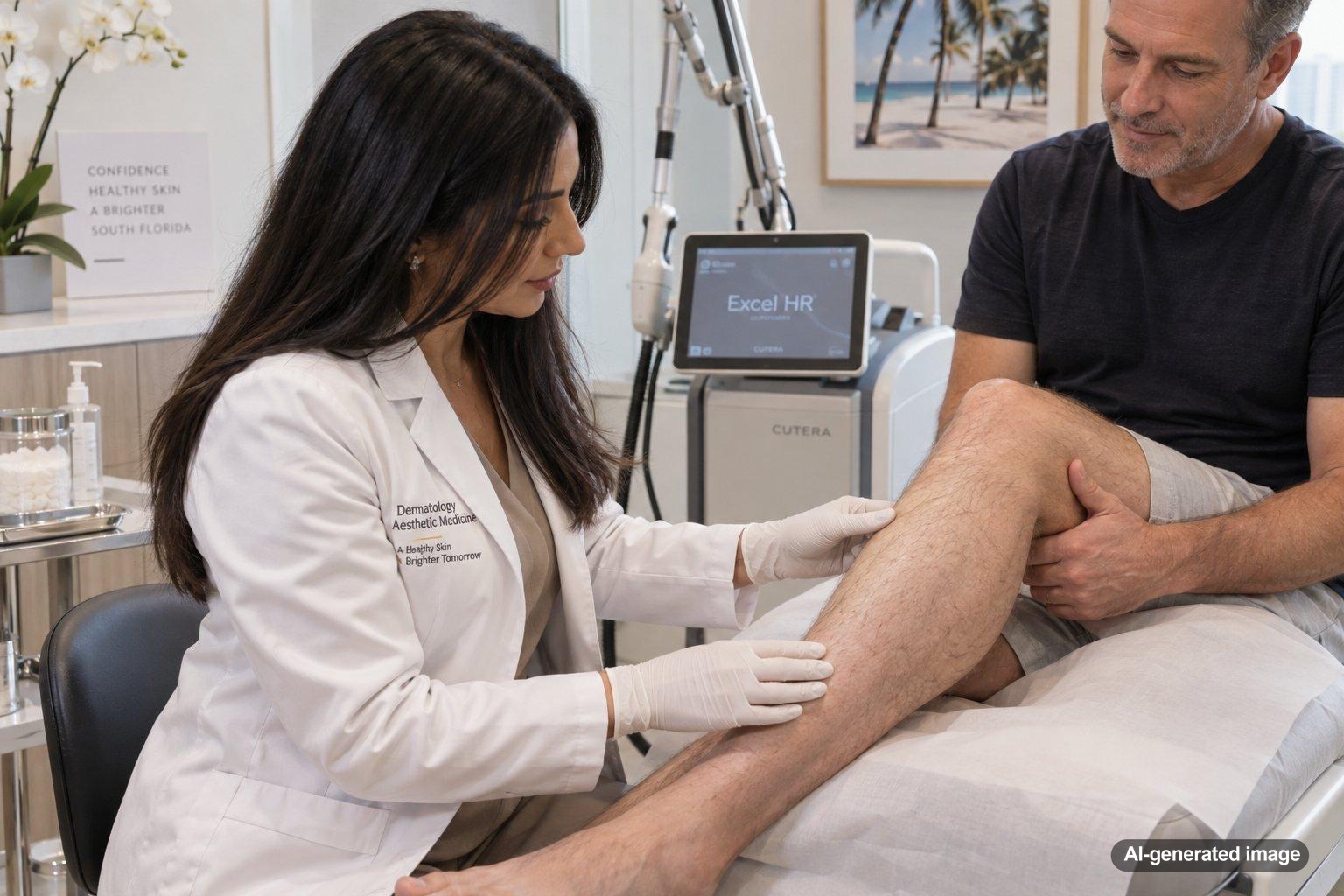
Recurring ingrown hairs on the lower legs can be frustrating, especially when shaving, waxing, or other hair-removal routines repeatedly leave behind small bumps, tenderness, or dark marks. Excel HR laser hair removal may help by reducing unwanted hair growth over a series of treatments, which can also reduce the need for frequent shaving or waxing that may contribute to ingrown hairs.
For people in South Florida who regularly expose their lower legs in shorts, dresses, swimwear, or athletic clothing, the goal is often not just smoother-looking skin. It is also finding a practical routine that causes less repeated irritation. A personalized consultation can help determine whether laser hair removal fits that goal.
Quick answer
- Excel HR is a laser hair removal treatment designed to target unwanted hair at the follicle.
- Reducing hair growth may help decrease one common trigger for recurring ingrown hairs: repeated close shaving or waxing.
- Existing inflamed bumps, irritation, or dark marks may need separate evaluation because laser hair removal does not address every possible cause of lower-leg bumps.
- Treatment planning should consider skin tone, hair characteristics, recent sun exposure, and the condition of the skin being treated.
- A consultation can help determine whether laser hair removal is appropriate for your lower legs and your specific concerns.
What are ingrown hairs on the lower legs?
An ingrown hair develops when a hair grows back into or becomes trapped beneath the surface of the skin instead of emerging normally. On the lower legs, this can happen after shaving, waxing, tweezing, or other methods that cut or remove hair close to the skin.
The result may look like a small red, pink, brown, or skin-colored bump. Some areas can feel tender or itchy. People who experience repeated ingrown hairs may also notice lingering discoloration after the bump settles down. Not every bump on the legs is an ingrown hair, however, so persistent, painful, draining, or unusual spots are worth having evaluated.
Common triggers for lower-leg ingrown hairs
Several everyday hair-removal and skincare habits can make ingrown hairs more likely to recur. Common triggers may include:
- Shaving very closely or repeatedly going over the same area.
- Waxing or plucking hairs that later grow back beneath the skin surface.
- Using a dull razor or shaving against the direction of hair growth.
- Friction from tight clothing, socks, athletic wear, or boots.
- Dry or rough surface skin that makes it harder for new hairs to emerge normally.
- Picking, squeezing, or digging at bumps, which can create additional irritation.
How Excel HR may help with recurring ingrown hairs
Excel HR is used for laser hair removal. Rather than repeatedly cutting hair at the skin surface, laser hair removal targets pigment within the hair follicle to reduce future hair growth. Treatments are typically planned as a series because individual hairs are not all growing at the same stage at the same time.
For someone whose ingrown hairs repeatedly appear after shaving or waxing, reducing the amount and density of hair may help reduce how often those triggering hair-removal methods are needed. This can be particularly useful on larger areas such as the lower legs, where shaving can involve frequent passes over a broad surface.
Laser hair removal should not be viewed as a treatment for every type of bump or discoloration on the legs. If the concern is caused by another skin condition, active irritation, or something that only resembles an ingrown hair, a dermatologist can evaluate the area and discuss the appropriate next step.
What you can do at home
Gentle habits can help limit unnecessary irritation while you are deciding whether professional hair reduction makes sense for you.
- Avoid picking or trying to dig trapped hairs out of the skin.
- If you shave, use a clean, sharp razor and avoid repeatedly passing over the same spot.
- Use a gentle shaving product that provides adequate slip instead of shaving dry skin.
- Moisturize the lower legs regularly if the skin tends to become dry or rough.
- Avoid aggressive scrubs on irritated bumps, since extra friction can make the area feel more sensitive.
- Give visibly irritated skin time to settle before repeatedly shaving over it.
If bumps become increasingly painful, swollen, crusted, draining, or persistent, home care may not be enough and it is worth having the area examined.
Professional options for recurring lower-leg ingrown hairs
The right professional approach depends on what is causing the bumps and what you want to improve. For recurring ingrown hairs associated with unwanted leg hair, laser hair removal may be considered as a longer-term hair-reduction strategy. Other concerns, such as persistent inflammation or discoloration left behind by previous bumps, may require a different skincare or dermatologic plan.
A consultation also gives the clinician an opportunity to look at the lower legs before treatment. This matters because irritated follicles, active rashes, open skin, recent tanning, and other factors can affect treatment planning.
South Florida considerations before lower-leg laser hair removal
Lower legs are frequently exposed to strong sunlight in South Florida, especially for people who spend time outdoors, at the beach, by the pool, or in open footwear and warm-weather clothing. Recent sun exposure or tanning can influence how a laser treatment is planned, so it is important to tell your clinician about recent outdoor exposure and follow the pre-treatment instructions you are given.
It is also helpful to plan around vacations, outdoor activities, and other situations in which your legs may receive substantial sun. Your clinician can explain how to prepare the area before each appointment and how to care for the skin afterward.
When to see a dermatologist
Not every lower-leg bump is an ingrown hair. A dermatologist can evaluate spots that are persistent, repeatedly inflamed, unusually painful, spreading, draining, or not behaving the way your typical shaving bumps do. It is also worth getting checked if you are developing significant discoloration or scarring, or if you are unsure what is causing the bumps.
Professional evaluation is particularly useful before treating an area that is actively irritated. The goal is to identify what is happening first rather than assuming every bump has the same cause.
FAQ
Can laser hair removal help prevent ingrown hairs on the legs?
It may help when recurring ingrown hairs are related to unwanted hair and repeated shaving or waxing. By reducing hair growth, laser hair removal may reduce how often those hair-removal methods are needed. Individual results and treatment needs vary.
Can Excel HR treat an active ingrown hair?
Laser hair removal is primarily intended to reduce unwanted hair growth rather than serve as a spot treatment for an individual inflamed bump. An actively irritated area may need to be evaluated before treatment.
Should I stop shaving before laser hair removal?
Your treatment provider will give specific preparation instructions. In many laser hair removal plans, shaving may still be used while methods that remove the hair from the root are avoided for a period before treatment. Follow the instructions provided for your specific appointment.
What if my ingrown hairs leave dark marks?
Discoloration can remain after irritation settles. Reducing repeated irritation may help prevent additional marks from forming, while existing discoloration may require separate skincare or dermatologic recommendations based on your skin.
How many Excel HR treatments will I need?
The number of sessions varies because hair growth patterns, treatment area, hair characteristics, skin characteristics, and individual response differ. Your clinician can outline a personalized treatment schedule after evaluating the area.
Can I have lower-leg laser hair removal if I spend a lot of time outdoors?
Outdoor exposure should be discussed during your consultation because recent tanning and sun exposure can affect treatment planning. Your clinician can provide preparation and aftercare guidance based on your activities and skin.
At Waverly DermSpa, we offer Excel HR Laser Hair Removal and can help you understand whether it may be appropriate.
Ready to get help?
Schedule an appointment or send a message and our team will get back to you.
Prefer to call? 954-666-3736
This article is for educational purposes and is not medical advice. For diagnosis and personalized treatment, please book an appointment with a board-certified dermatologist.
