

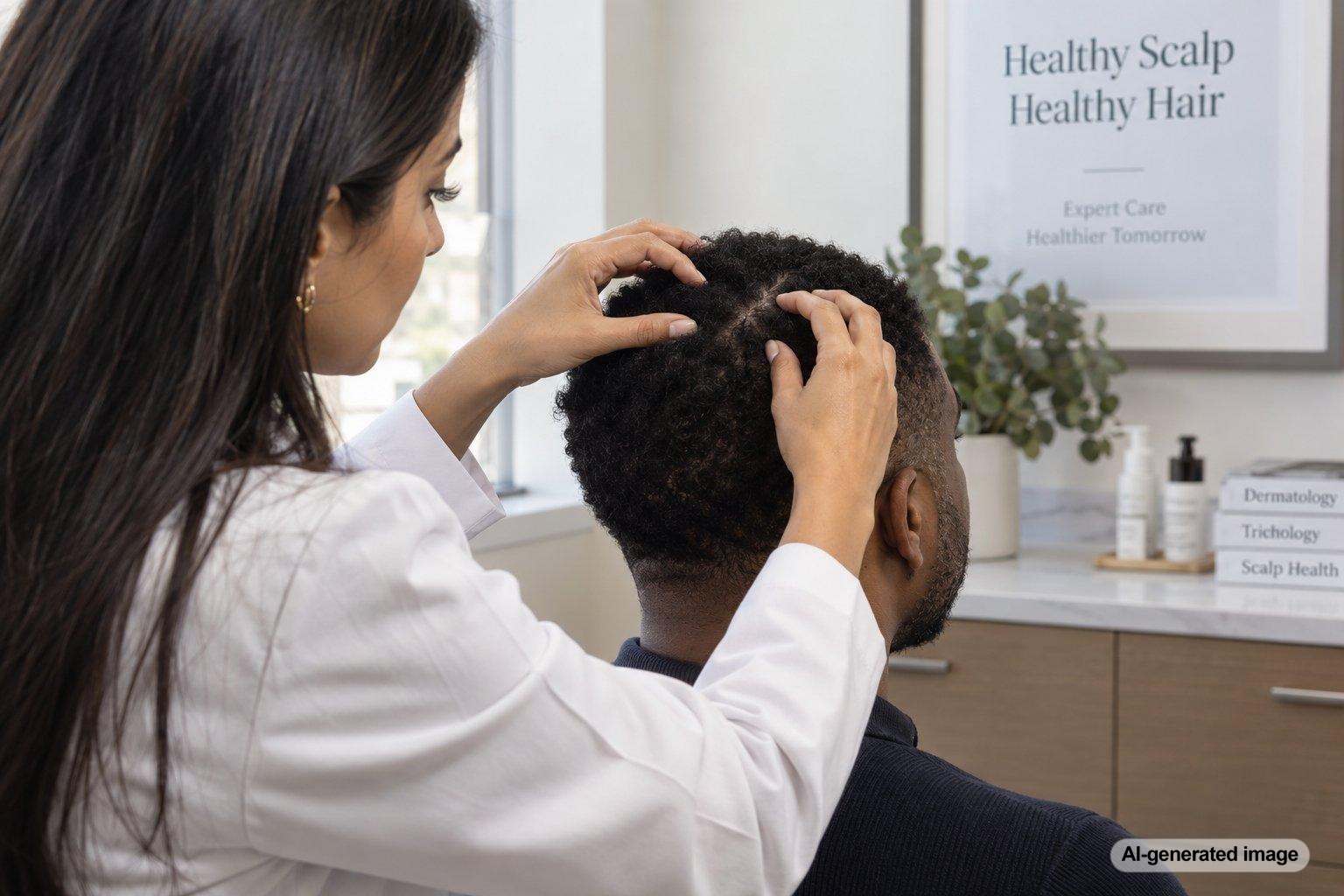
A flaky scalp does not have to itch. Flaking can happen when the scalp is simply dry, when dead skin and hair products accumulate, or when dandruff or another scalp condition causes extra scaling. The absence of itching may be reassuring in some situations, but it does not identify the cause by itself.
If flakes keep returning, become thicker, spread beyond the scalp, or come with redness, soreness, hair loss, or other changes, a dermatologist can examine the scalp and help determine what is contributing to the problem.
Quick answer
- A dry scalp can shed small, dry flakes even without itching.
- Dandruff may cause visible white or yellowish flakes with little or no discomfort.
- Hair products, dry shampoo, oils, and styling products can leave residue that resembles skin flakes.
- Inflammatory conditions such as seborrheic dermatitis or psoriasis can cause scaling, and itching is not always the dominant symptom.
- Persistent or changing scalp symptoms are worth having evaluated rather than trying to identify the cause from flakes alone.
What does a flaky scalp without itching mean?
Flakes are usually pieces of shed skin, but their appearance can vary depending on what is happening at the scalp. Very fine, powdery flakes may be associated with dryness. Larger or slightly oily flakes can occur with dandruff or seborrheic dermatitis. Thicker, more defined scale can occur with conditions such as psoriasis.
Itching is only one possible symptom. Some people notice mainly visible flakes, while others develop redness, irritation, oiliness, or discomfort. Because several scalp problems can look similar, the pattern of scaling and the appearance of the skin underneath are often more useful than the presence or absence of itching.
Common reasons your scalp may be flaky
- Dry scalp: Low humidity, frequent washing, hot water, or harsh cleansing products may leave the scalp feeling dry and cause fine flaking.
- Dandruff: Dandruff causes shedding of scalp skin and may produce white or yellowish flakes. It can occur even when itching is mild or absent.
- Seborrheic dermatitis: This inflammatory condition commonly affects oil-rich areas such as the scalp. Scale may appear dry or greasy and can occur with changes in skin color or mild inflammation.
- Product buildup: Dry shampoo, hairspray, styling creams, oils, conditioners, and other products can accumulate near the roots and resemble scalp flakes.
- Psoriasis: Scalp psoriasis can create thicker, more clearly defined areas of scale. It may extend beyond the hairline or affect other areas of the body, although appearances vary.
- Reaction to hair products: Shampoos, dyes, fragrances, preservatives, or styling products can sometimes irritate the scalp. Irritation may include scaling even when itching is not prominent.
What you can do at home
For mild flaking without concerning symptoms, a simple scalp routine may help you see whether dryness or buildup is contributing.
- Wash the scalp regularly with a gentle shampoo and rinse thoroughly.
- Avoid very hot water, which may make dryness more noticeable.
- If you use dry shampoo, oils, gels, or leave-in products frequently, consider reducing them temporarily to see whether residue decreases.
- Avoid scratching, picking, or aggressively scraping away scale.
- If dandruff seems possible, an over-the-counter dandruff shampoo may help some people. Follow the product directions and stop if irritation develops.
- Introduce new scalp products one at a time so it is easier to notice whether a product seems to worsen flaking.
If the scalp is sensitive or the cause is unclear, adding multiple active products at once can make it harder to tell what is helping or irritating the skin.
How a dermatologist can help
A dermatologist can look directly at the scalp, hairline, and surrounding skin to distinguish between common causes of scaling. The evaluation may include questions about how long the flakes have been present, hair-care products, washing habits, previous skin conditions, and whether similar patches occur elsewhere on the body.
Professional options depend on the cause. They may include adjustments to scalp care, medicated shampoos, topical medications, or other prescription therapies when appropriate. If psoriasis, seborrheic dermatitis, or another inflammatory condition is suspected, your clinician can help you decide which approach makes sense for your scalp and hair type.
When should you see a dermatologist?
Consider scheduling an evaluation if the flaking persists despite a simple scalp-care routine or if you are unsure what is causing it. It is especially worth getting checked if you notice:
- Thick or firmly attached scale
- Redness, swelling, tenderness, or pain
- Crusting, drainage, or sores
- Noticeable hair thinning or patches of hair loss
- Scaling that extends onto the forehead, ears, face, or neck
- Similar scaly patches elsewhere on the body
- Symptoms that repeatedly return or become more noticeable over time
A scalp examination can be more informative than trying to judge the cause based on flakes collected on your hair or clothing.
Frequently asked questions
Can you have dandruff without an itchy scalp?
Yes. Dandruff can cause visible scalp flakes even when itching is minimal or absent. Itching can occur, but it is not required for someone to notice flaking.
How can I tell dry scalp from dandruff?
Dry scalp often produces finer, drier flakes, while dandruff may produce larger or more oily-looking flakes. These visual clues are not always reliable, however, because several scalp conditions can overlap in appearance.
Can product buildup look like dandruff?
Yes. Dry shampoo, styling products, oils, conditioners, and other residue can collect around the roots and mix with shed skin. Thorough cleansing and simplifying your routine for a short period may help clarify whether buildup is contributing.
Does a non-itchy flaky scalp mean psoriasis?
Not necessarily. Psoriasis is only one possible cause of scalp scaling. Dryness, dandruff, seborrheic dermatitis, and product buildup can also cause flakes. A dermatologist can evaluate the pattern and appearance if psoriasis is a concern.
Should I scrape flakes off my scalp?
Avoid forcefully scratching or scraping the scalp. This can irritate the skin and may make inflammation more noticeable. Gentle washing and treatment directed at the underlying cause are generally more appropriate.
Ready to get help?
Schedule an appointment or send a message and our team will get back to you.
Prefer to call? 954-666-3736
This article is for educational purposes and is not medical advice. For diagnosis and personalized treatment, please book an appointment with a board-certified dermatologist.
Sources & further reading
- American Academy of Dermatology (AAD) – Seborrheic dermatitis: Overview
- Mayo Clinic – Dandruff – Symptoms and causes
- DermNet – Scalp psoriasis
