

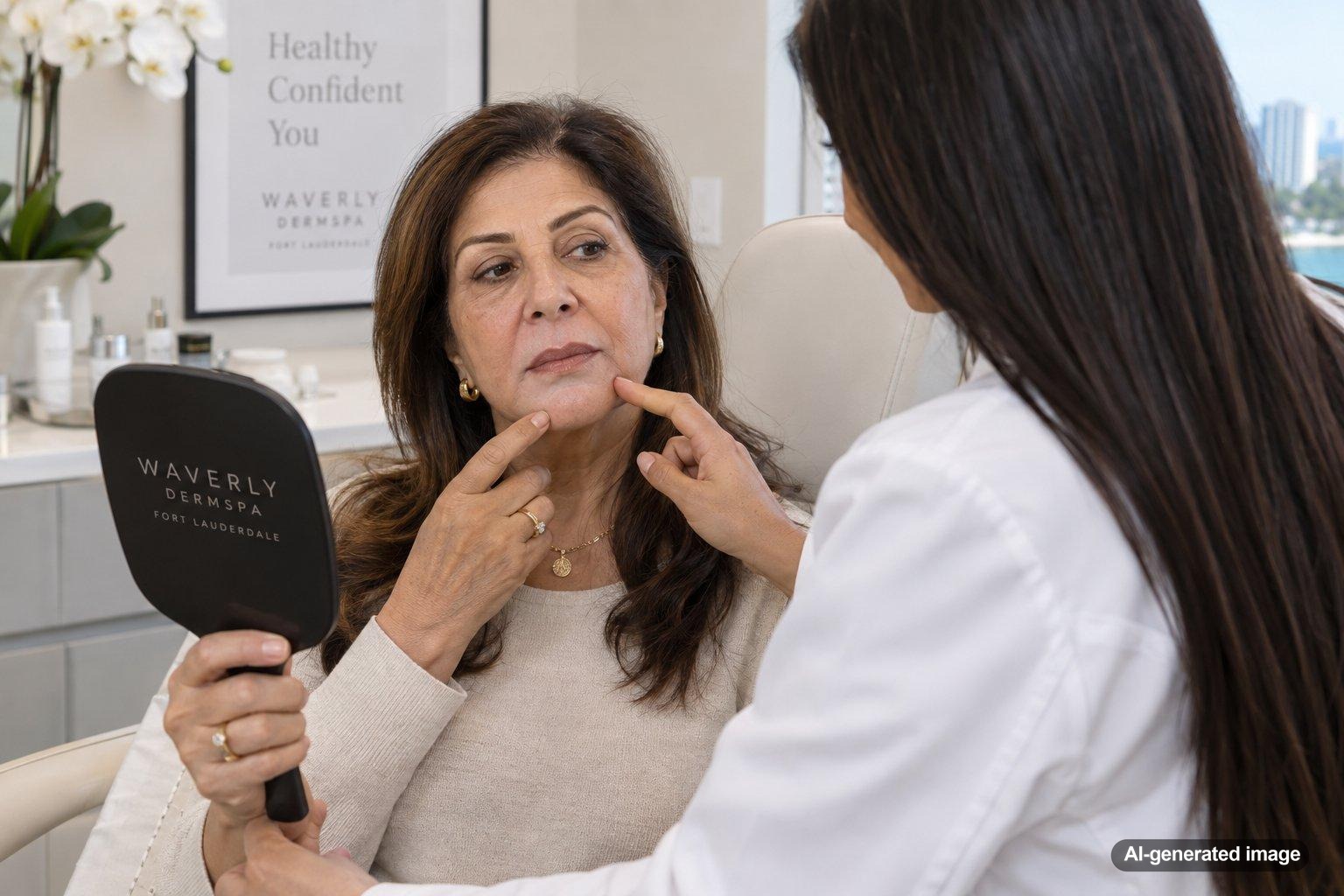
If the skin around your mouth looks noticeably paler than the rest of your face, the difference may come from the skin around the mouth losing pigment, the surrounding skin becoming darker, or simple changes in dryness, irritation, and lighting. In some cases, a clearly lighter patch can also occur with a pigment condition that deserves a dermatologist’s evaluation.
The pattern matters. A faint, even-looking contrast is different from a sharply defined white patch, and dry or irritated skin provides different clues than smooth skin with true pigment loss. Because several conditions can look similar at first, an in-person examination is the most reliable way to understand a new or persistent color change.
Quick answer
- The skin may only appear pale because nearby skin is tanned, irritated, or more deeply pigmented.
- Dryness, repeated lip licking, skin care products, toothpaste, or other irritants can change the color and texture around the mouth.
- Inflammatory rashes may leave temporary areas of lighter or darker color as the skin settles.
- A smooth, sharply defined patch that is becoming progressively lighter can be associated with pigment loss such as vitiligo and is worth having checked.
- New, spreading, persistent, or otherwise unexplained color changes should be evaluated by a dermatologist.
What does pale skin around the mouth actually mean?
What looks like paleness is not always a true loss of pigment. The area around the lips naturally has differences in color and texture, and those differences can become more noticeable after sun exposure, irritation, dryness, or changes in the surrounding complexion.
A dermatologist may look at whether the area is mildly lighter, completely white, scaly, red, itchy, sharply bordered, symmetrical, or changing over time. Those details can help separate temporary surface irritation from a more specific pigment disorder.
Common reasons the area may look lighter
- Contrast with surrounding skin: Sun exposure or uneven pigmentation elsewhere on the face can make the mouth area look lighter even when it has not actually lost much pigment.
- Dryness and skin barrier irritation: Frequent wiping, lip licking, weather, cleansers, active skin care ingredients, and other sources of irritation can alter texture and color around the lips.
- Contact reactions: Toothpaste, lip products, cosmetics, skin care products, fragrances, and other substances that repeatedly touch the area can contribute to irritation or dermatitis in some people.
- Inflammation around the mouth: Conditions such as perioral dermatitis or other rashes can change how the skin looks during a flare and as it recovers. Perioral dermatitis more commonly causes bumps, dryness, or discoloration rather than isolated smooth paleness.
- Post-inflammatory pigment change: After irritation or a rash settles, the affected skin may temporarily look lighter than the surrounding area.
- Vitiligo: Vitiligo causes loss of skin pigment and can affect the lips and skin around the mouth. Patches may look lighter than the natural skin tone or become distinctly white. This appearance cannot be confirmed from color alone, so a dermatologist should evaluate suspected pigment loss.
What can you do at home?
Until you know what is causing the color difference, keeping the routine simple can help you avoid adding more irritation.
- Use a gentle, fragrance-free facial cleanser rather than scrubs or harsh exfoliants around the mouth.
- Apply a simple moisturizer if the area feels dry, tight, or flaky.
- Try to avoid licking, rubbing, or repeatedly wiping the skin around the lips.
- Pay attention to new toothpaste, lip balm, makeup, skin care products, or dental products that appeared around the time the change began.
- Use broad-spectrum sun protection consistently. Tanning of the surrounding skin can make lighter areas appear more pronounced.
- Avoid experimenting with strong acids, bleaching products, or steroid creams on an unexplained pale patch without professional guidance.
It can also be useful to take a clear photo in similar lighting every few weeks. This gives you a more objective way to see whether the area is staying stable or changing.
How a dermatologist can evaluate the color change
A dermatologist can examine the distribution, borders, surface texture, and degree of pigment loss. Depending on what the skin looks like, the evaluation may focus on irritation, dermatitis, post-inflammatory color change, or a pigment condition.
When true depigmentation is suspected, dermatologists may use examination techniques such as a Wood’s lamp to make subtle pigment differences easier to see. Additional testing is not necessary for every patient, and your clinician can determine whether anything beyond a physical examination is appropriate.
Treatment depends on the cause. Professional options may include simplifying or adjusting skin care, managing inflammation, avoiding an identified irritant, or discussing medical treatment for a confirmed pigment disorder. Prescription therapies should be selected after an appropriate evaluation rather than based on appearance alone.
When should you see a dermatologist?
Consider scheduling an evaluation if the pale area is new and persistent, becoming more noticeable, spreading, or developing a sharply defined white appearance. It is also worth getting checked if you notice similar patches elsewhere on your face or body, loss of color on the lips themselves, white hairs within an affected area, ongoing scaling or irritation, or a rash that does not settle with gentle skin care.
If the change appeared after starting a prescription medication or prescription topical treatment, contact the clinician who prescribed it before making significant changes to how you use it.
Frequently asked questions
Can dry skin make the area around my mouth look pale?
Yes. Dry or irritated skin can reflect light differently and may look lighter, duller, or ashy compared with nearby skin. Dryness usually comes with clues such as roughness, flaking, tightness, or sensitivity.
Can the surrounding skin be darker instead of the mouth area being lighter?
Yes. This is an important possibility. Sun exposure, inflammation, or uneven facial pigmentation can darken nearby skin and create the appearance of a pale ring even when the skin around the mouth has not lost significant pigment.
Does pale skin around the mouth mean vitiligo?
Not necessarily. Vitiligo is one possible cause of true pigment loss, and it can involve the area around the mouth, but many other changes can create a lighter appearance. A dermatologist can evaluate whether the skin is actually losing pigment and whether the pattern is consistent with vitiligo or something else.
Can toothpaste or lip products cause discoloration?
Products that repeatedly contact the lips and surrounding skin can irritate susceptible skin. Toothpaste, lip products, cosmetics, fragrances, and skin care ingredients may contribute to contact reactions in some people. If irritation is suspected, a dermatologist can help identify likely triggers.
Should I try to darken the pale area with skin care products?
It is better to understand the cause before trying to alter the pigment. Strong exfoliating or pigment-targeting products may worsen irritation and can make uneven color more noticeable. A gentle routine and professional evaluation are safer starting points for a persistent unexplained patch.
Ready to get help?
Schedule an appointment or send a message and our team will get back to you.
Prefer to call? 954-666-3736
This article is for educational purposes and is not medical advice. For diagnosis and personalized treatment, please book an appointment with a board-certified dermatologist.
Sources & further reading
- American Academy of Dermatology (AAD) – Vitiligo: Signs and symptoms
- DermNet – Vitiligo: Causes, Types, and Treatment
