

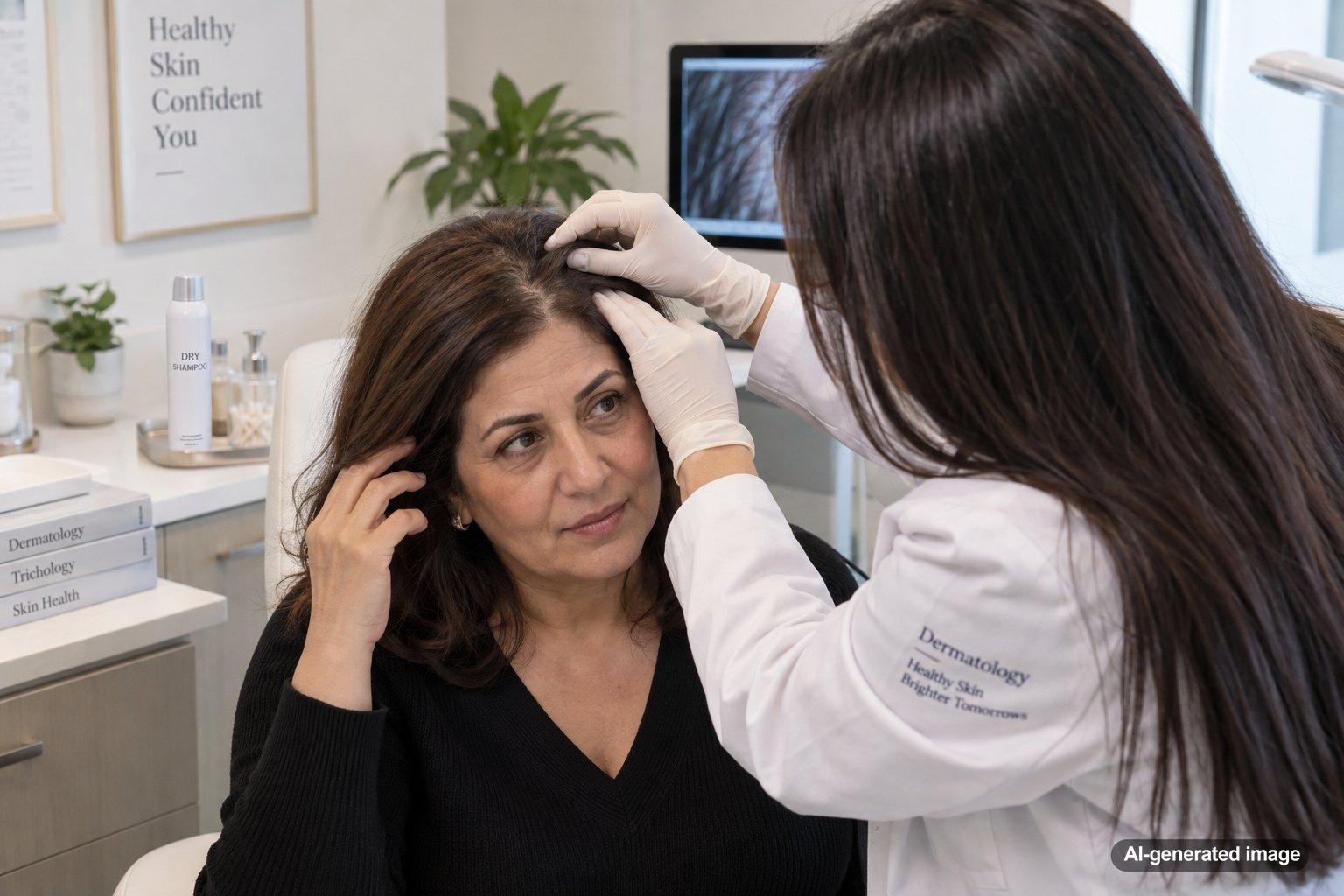
An itchy scalp after using dry shampoo can happen for several reasons. Dry shampoo absorbs oil, but it does not actually wash oil, dead skin, microorganisms, or styling residue away. If too much product collects on the scalp, or if a formula is drying or irritating for your skin, you may notice itching, tightness, flaking, burning, or tenderness. In some cases, an underlying scalp condition can also become more noticeable when your usual washing routine changes.
The most useful first step is usually to look at how often you are using dry shampoo, how much you apply, and whether the itching improves when you stop using that particular product.
Quick answer
- Dry shampoo can leave behind particles and residue that may irritate the scalp when too much accumulates.
- Some formulas may feel drying, especially if your scalp is already sensitive or prone to flaking.
- Fragrance or another ingredient may trigger irritation or contact dermatitis in some people.
- Dry shampoo should supplement regular washing rather than replace shampoo and water.
- Persistent itching, rash, scaling, pain, or hair changes are good reasons to have a dermatologist evaluate your scalp.
Why dry shampoo can make your scalp itch
Dry shampoo is designed primarily to absorb excess oil. It can make hair look fresher between washes, but it does not cleanse the scalp in the same way that shampoo and water do. When dry shampoo remains on the scalp, particles can mix with oil, sweat, dead skin, and other hair products.
For some people, that buildup simply feels gritty or uncomfortable. For others, the scalp may become dry or irritated. Applying a large amount, spraying very close to the scalp, or repeatedly layering product without washing can make irritation more likely.
Common causes and triggers
- Product buildup: Repeated applications can leave residue on the scalp, especially when regular washing is delayed.
- Dryness: Oil-absorbing products may leave some scalps feeling unusually dry, tight, or flaky.
- Fragrance or ingredient sensitivity: Personal care products can sometimes cause irritant or allergic contact dermatitis, which may involve itching, redness, burning, or a rash.
- Using too much: More product is not necessarily better. Excess dry shampoo can leave the hair stiff or gritty and may increase scalp irritation.
- An underlying scalp condition: Dandruff, seborrheic dermatitis, eczema, psoriasis, and other scalp conditions can cause itching and scaling. Dry shampoo may not be the original cause, but product buildup or a change in washing habits can make symptoms more noticeable.
What you can do at home
If the itching seems mild and clearly started after using dry shampoo, a few simple changes may help. Stop using the product for a while and wash your scalp with your usual gentle shampoo and water. Avoid scratching aggressively, which can further irritate the skin.
When you try dry shampoo again, use a small amount only where your hair is oily. Follow the product directions, distribute it evenly, and brush or comb it through as directed. If your scalp tends to feel dry or sensitive, consider a fragrance-free formula made for your hair type.
It is also important to keep washing your scalp regularly with shampoo and water. Dry shampoo is meant to extend the time between washes, not replace cleansing altogether.
Could it be contact dermatitis?
Possibly. Contact dermatitis can develop when something touching the skin either irritates it or triggers an allergic reaction. Personal care products, including hair products, can be triggers. Symptoms can include itching, burning, redness, tenderness, dryness, scaling, or a visible rash.
If your scalp consistently reacts to one specific dry shampoo, stop using it. If the reaction returns with multiple products, or you cannot identify the trigger, a dermatologist can evaluate the pattern and determine whether additional testing or treatment may be useful.
Could dandruff or another scalp condition be involved?
Yes. Itching and flaking are not always caused by dry shampoo itself. Dandruff and seborrheic dermatitis can cause an itchy, scaly scalp, while psoriasis and eczema may also affect the scalp. These conditions can sometimes look similar without an examination.
If symptoms continue even when you stop using dry shampoo, or if you have significant redness, thick scale, persistent flaking, or discomfort, it is worth having the scalp checked rather than continuing to switch products on your own.
Professional options
A dermatologist can examine the scalp and help distinguish simple product irritation from dandruff, contact dermatitis, psoriasis, eczema, or another condition. Depending on the findings, options may include changing hair care products, using an appropriate medicated shampoo, or considering prescription treatment when necessary.
The right approach depends on what is actually causing the itch, so persistent symptoms are best evaluated rather than treated by trial and error.
When to see a dermatologist
Consider making an appointment if the itching does not improve after you stop using dry shampoo and return to regular gentle cleansing. You should also seek evaluation if you notice a persistent rash, significant redness, swelling, pain, thick scaling, sores, drainage, or noticeable hair shedding or hair loss.
If you are unsure whether you are dealing with simple buildup or a scalp condition, it is worth getting checked. A dermatologist can evaluate the scalp directly and help you choose a more appropriate routine.
FAQ
Does dry shampoo actually clean my scalp?
No. Dry shampoo primarily absorbs excess oil. Regular shampoo and water are still needed to remove oil, dead skin, microorganisms, and accumulated hair products from the scalp.
Can using too much dry shampoo cause itching?
It may. Heavy or repeated application can leave residue behind and may make the scalp feel dry, gritty, irritated, or itchy.
Should I stop using dry shampoo if my scalp burns?
Yes. Burning or significant irritation is a reason to stop using the product. If the discomfort persists or worsens, a dermatologist can help determine the cause.
Can fragrance in dry shampoo irritate sensitive skin?
It can. Fragrance and other ingredients in personal care products can irritate sensitive skin or trigger allergic contact dermatitis in some people.
How often should I wash if I use dry shampoo?
There is no single schedule that fits every hair type, but dry shampoo should not replace regular shampooing with water. The American Academy of Dermatology advises washing with regular shampoo after one or two dry shampoo applications.
Ready to get help?
Schedule an appointment or send a message and our team will get back to you.
Prefer to call? 954-666-3736
This article is for educational purposes and is not medical advice. For diagnosis and personalized treatment, please book an appointment with a board-certified dermatologist.
Sources & further reading
- American Academy of Dermatology (AAD) – Dry shampoo: Dermatologists’ tips for getting your best results
- American Academy of Dermatology (AAD) – 10 reasons your scalp itches and how to get relief
