

If your skin feels comfortable while you’re showering but starts itching a few minutes after you step out, the timing can seem confusing. In many cases, the itch becomes noticeable after the shower because warm water, cleansing products, and evaporation from the skin can leave the surface drier or more irritated once the water is turned off.
That doesn’t point to one specific diagnosis. Post-shower itching can have several possible triggers, from a simple skin barrier issue to sensitivity to a product or another condition that deserves a closer look. Paying attention to temperature, products, location, and visible skin changes can help narrow down what may be contributing.
Quick answer
- Hot or long showers can remove some of the oils that help the skin retain moisture.
- As water evaporates after the shower, already-dry skin may feel tighter and itchier.
- Fragrance, cleansers, exfoliants, or residue left on the skin may contribute to irritation.
- Friction from towels or clothing can make freshly washed skin feel more reactive.
- Persistent, severe, widespread, or unexplained itching is worth discussing with a dermatologist.
Why can the itching start only after you get out?
During a shower, the skin is surrounded by water and warmth, so dryness or irritation may not be obvious. Once you step out, water begins evaporating from the surface. If the skin barrier is already dry or sensitive, that transition can make tightness, tingling, or itching easier to notice.
Temperature can also play a role. A very warm shower may feel soothing in the moment, but prolonged heat can leave some people’s skin feeling dry or reactive afterward. The sensation may become more noticeable as the skin cools and dries.
Common reasons for post-shower itching
- Dry skin: Skin that has difficulty holding onto moisture can feel especially itchy after bathing.
- Hot water: Very warm water and long showers can be harder on the skin barrier than shorter, lukewarm showers.
- Harsh cleansing: Strong soaps, frequent scrubbing, or cleansers that leave the skin feeling squeaky-clean may contribute to dryness or irritation.
- Fragrance or other product ingredients: Body washes, shampoos, shaving products, exfoliants, or bath additives may bother sensitive skin.
- Incomplete rinsing: Product residue left on the skin may become more noticeable as the skin dries.
- Towel friction: Vigorous rubbing can aggravate skin that is already dry or reactive.
- Environmental dryness: Air conditioning, low humidity, travel, and seasonal changes can make post-shower dryness more noticeable.
What you can try at home
A few simple changes may help reduce irritation without adding a complicated routine.
- Use lukewarm rather than very hot water.
- Keep showers reasonably short if long showers seem to make the itching worse.
- Choose a gentle, fragrance-free cleanser and use it where needed rather than aggressively scrubbing the entire body.
- Rinse thoroughly so cleanser, shampoo, and conditioner are not left on the skin.
- Pat the skin dry gently instead of rubbing with a towel.
- Apply a simple fragrance-free moisturizer while the skin is still slightly damp.
- Change one product at a time if you’re trying to identify a possible trigger.
If you travel frequently to or from Fort Lauderdale, you may also notice that changes in climate, humidity, water exposure, and your usual skincare products affect how your skin feels after bathing.
Could your body wash or skincare routine be the problem?
It can be. A product doesn’t have to cause immediate burning during the shower to leave the skin feeling uncomfortable afterward. Fragranced washes, exfoliating acids, physical scrubs, shaving products, and frequent use of strong cleansers may be more irritating for some people.
If the problem started after introducing a new product, simplifying your routine for a period may help you observe whether the pattern changes. Avoid testing several new products at once, since that can make it harder to identify what your skin tolerates.
What if there is no visible rash?
Itching can occur even when the skin looks relatively normal. Dryness and subtle barrier irritation are not always accompanied by obvious redness, bumps, or scaling. However, itching without a visible rash can also have causes that aren’t related to shower products or surface dryness.
If the sensation is intense, happens consistently, affects large areas of the body, interrupts sleep, or continues despite gentle skincare changes, a dermatologist can evaluate the pattern and determine whether additional investigation is appropriate.
Professional evaluation and treatment options
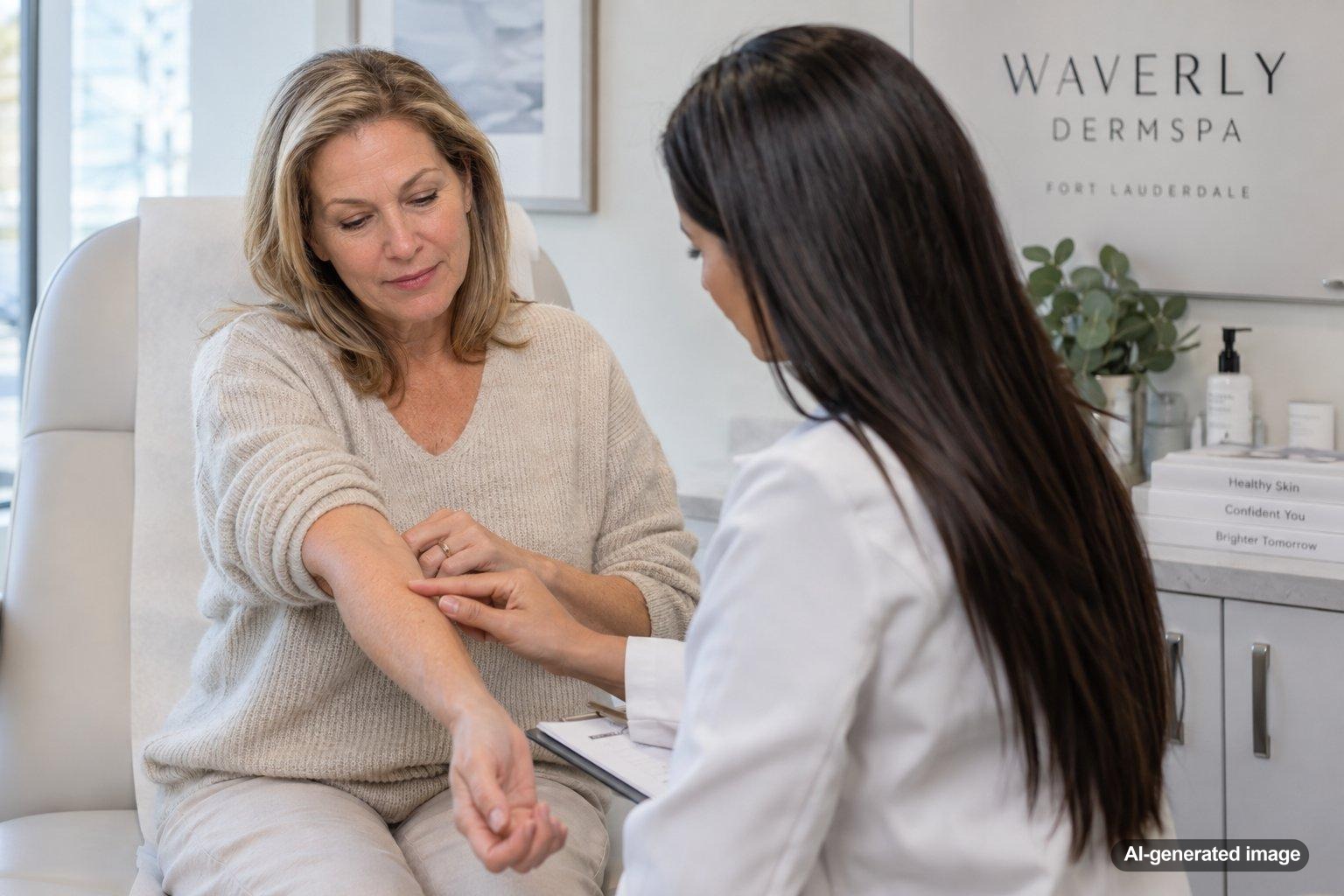
A dermatology visit can help distinguish simple dryness or irritation from other possible causes of itching. Your clinician may review where the itching occurs, whether there are subtle skin findings, what products you use, when symptoms began, and whether anything outside the shower seems to trigger them.
Depending on what is found, recommendations may include adjustments to cleansing and moisturizing, avoiding suspected irritants, or other treatment categories appropriate to the underlying cause. Prescription therapies, when needed, should be selected after an individual evaluation rather than based on itching alone.
When to see a dermatologist
Consider scheduling an evaluation if the itching is persistent, worsening, unusually intense, or not improving after reasonable changes to shower temperature and skincare. It is also worth getting checked if you develop a significant rash, swelling, open or infected-looking skin, widespread symptoms, unexplained itching in multiple areas, or itching that repeatedly disrupts sleep or daily activities.
If you’re unsure whether the issue is simple dryness or something else, a dermatologist can examine your skin and help identify a more appropriate next step.
FAQ
Why do hot showers make me itchy afterward?
Hot water can leave some people’s skin drier and more reactive after bathing. The effect may be more noticeable once water begins evaporating from the skin.
Should I moisturize immediately after showering?
Applying a gentle moisturizer while the skin is still slightly damp may help reduce moisture loss and support the skin barrier.
Can my body wash cause itching even if it doesn’t burn?
Yes. Some people notice irritation, tightness, or itching after exposure rather than an immediate burning sensation. Fragrance and strong cleansing ingredients are common reasons to consider simplifying a routine.
Why does my skin itch after showering with no rash?
Dryness or subtle irritation may cause itching without obvious visible changes. Persistent or unexplained itching can have other causes as well, so an evaluation may be appropriate if it continues.
Does hard water cause itchy skin after a shower?
Water characteristics may affect how cleansers rinse and how the skin feels afterward, but itching has many possible causes. If changing products and shower habits doesn’t help, a dermatologist can evaluate other possibilities.
Ready to get help?
Schedule an appointment or send a message and our team will get back to you.
Prefer to call? 954-666-3736
This article is for educational purposes and is not medical advice. For diagnosis and personalized treatment, please book an appointment with a board-certified dermatologist.
