

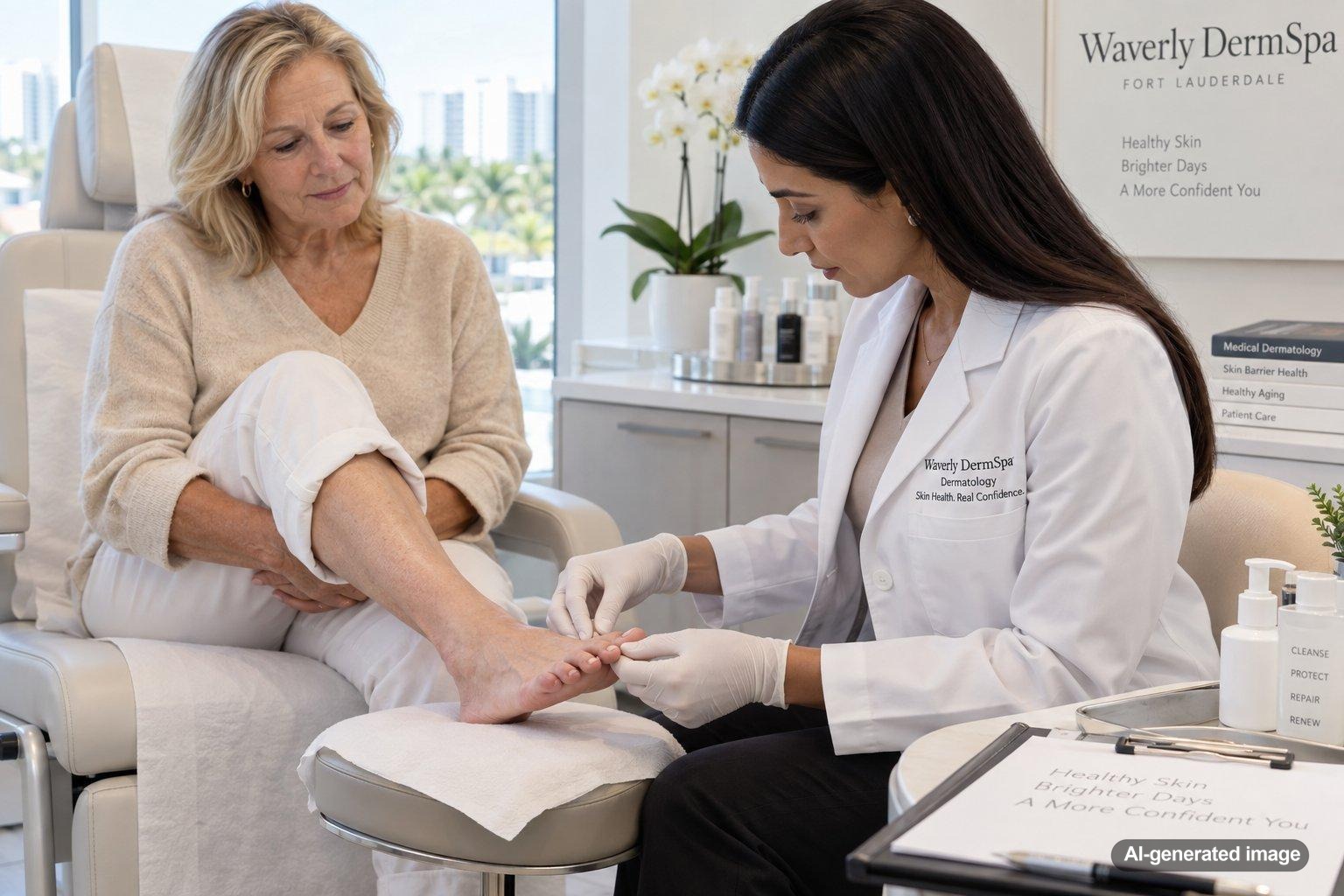
Tiny, painful cracks between the toes often develop when the skin barrier becomes irritated, softened by moisture, or repeatedly rubbed. A fungal infection such as athlete’s foot can also cause peeling, scaling, burning, and cracking in this area. The appearance alone may not reveal the cause, so recurring or worsening cracks deserve a closer look.
The spaces between the toes are especially vulnerable because they can stay warm and damp inside shoes. Once the surface of the skin becomes fragile, even a very small split can sting when you walk, shower, sweat, or put pressure on the foot.
Quick answer
- Excess moisture and sweating can soften the skin between the toes and make it easier to split.
- Friction from toes rubbing together or from footwear may contribute to tiny painful fissures.
- Irritant or inflammatory skin problems can leave the area dry, sensitive, peeling, or cracked.
- Athlete’s foot can cause itching, burning, scaling, peeling, and painful cracking between the toes.
- If the cracks keep returning, spread, drain, swell, or fail to improve, a dermatologist can evaluate the cause.
Why the skin between your toes can crack
The skin between the toes sits in a challenging environment. Shoes and socks can trap heat and perspiration, while the toes themselves create areas of close skin-to-skin contact. Too much moisture can make the outer skin soft and fragile, while repeated drying can leave it rough and prone to splitting.
These narrow spaces also receive friction whenever the toes move against one another. A crack that looks almost like a paper cut may therefore feel surprisingly sore because walking continually stretches and presses on the area.
Common causes and triggers
- Trapped moisture: Sweat, damp socks, wet shoes, or incomplete drying after bathing can keep toe-web skin overly moist.
- Friction: Tight footwear, overlapping toes, or prolonged walking and exercise may increase rubbing between the toes.
- Dry or irritated skin: Harsh cleansers, repeated washing, or environmental dryness may weaken the skin barrier and encourage fissures.
- Inflammatory skin conditions: Some forms of dermatitis can cause redness, itching, scaling, sensitivity, and cracking.
- Fungal infection: Athlete’s foot, also called tinea pedis, commonly affects the spaces between the toes and may cause peeling, itching, burning, softened skin, scaling, or painful cracks.
Could it be athlete’s foot?
It could be, but cracked skin between the toes does not automatically mean there is a fungal infection. Athlete’s foot can produce itching, burning, peeling, scaling, discoloration, softened whitish skin, or cracking between the toes. Warm, moist environments can make fungal growth easier, and shared locker-room or pool surfaces can be a source of exposure.
Other skin problems can look similar, which is why persistent symptoms are better evaluated rather than treated repeatedly based on appearance alone.
What you can do at home
Simple skin-care and moisture-control habits may help reduce irritation while you watch the area for improvement:
- Wash the feet gently and dry carefully between every toe.
- Change out of damp socks promptly after exercise or heavy sweating.
- Rotate shoes so they have time to dry between wears.
- Choose footwear that does not tightly compress or rub the toes together.
- Avoid picking, peeling, or aggressively scrubbing cracked skin.
- Keep shared shower and locker-room footwear habits in mind, especially if fungal infection is a concern.
Keeping the feet and toe spaces clean and dry and changing socks and shoes regularly can help reduce conditions that favor athlete’s foot.
Professional options
A dermatologist can examine the location and pattern of the cracking along with any scaling, redness, itching, drainage, or nail changes. If a fungal infection is suspected, your clinician can determine whether antifungal treatment is appropriate. Other causes may call for a different skin-barrier or anti-inflammatory approach.
This distinction matters because different conditions can resemble one another. Repeatedly applying treatments without knowing what is causing the cracks may delay appropriate care.
When to see a dermatologist
Consider scheduling an evaluation if the cracks are recurrent, increasingly painful, or not improving with basic moisture control and gentle care. It is also worth getting checked if you notice:
- Increasing redness, warmth, swelling, or tenderness
- Drainage, crusting, bleeding, or an unpleasant odor
- Blisters or open areas that are getting larger
- Scaling or peeling spreading to the sole or other areas of the foot
- Changes in the toenails
- Symptoms that return repeatedly after seeming to improve
If you have a medical condition that can affect wound healing or infection risk, seek individualized medical guidance rather than relying only on home care.
FAQ
Why do the cracks sting so much even when they are tiny?
A small fissure can expose sensitive tissue beneath the outer skin barrier. Walking, moisture, and movement of the toes can repeatedly pull on that split, making a very small crack feel disproportionately painful.
Does white, soggy-looking skin between the toes mean fungus?
Not necessarily. Prolonged moisture can soften and whiten skin on its own, but athlete’s foot can also cause softened or whitish skin between the toes. A dermatologist can help distinguish fungal infection from moisture-related irritation or another skin condition.
Can sweaty shoes make the problem worse?
Yes. Persistent warmth and moisture can weaken the skin barrier and create an environment that favors fungal growth. Allowing footwear to dry and changing damp socks can be useful preventive habits.
Should I assume every recurring crack is athlete’s foot?
No. Fungal infection is one possibility, but friction, excess moisture, dermatitis, and other skin problems may produce similar symptoms. Recurrent cracks are a good reason to have the area examined.
Can athlete’s foot spread?
Fungal infections that cause athlete’s foot can spread through direct contact and contaminated surfaces or objects. Avoid sharing towels or footwear when a fungal infection is suspected, and use protective footwear in communal wet areas.
Ready to get help?
Schedule an appointment or send a message and our team will get back to you.
Prefer to call? 954-666-3736
This article is for educational purposes and is not medical advice. For diagnosis and personalized treatment, please book an appointment with a board-certified dermatologist.
Sources & further reading
- American Academy of Dermatology (AAD) – Ringworm: Signs and symptoms
- Centers for Disease Control and Prevention (CDC) – Symptoms of Ringworm
Article configuration and client details were provided in the supplied Waverly DermSpa brief.
