

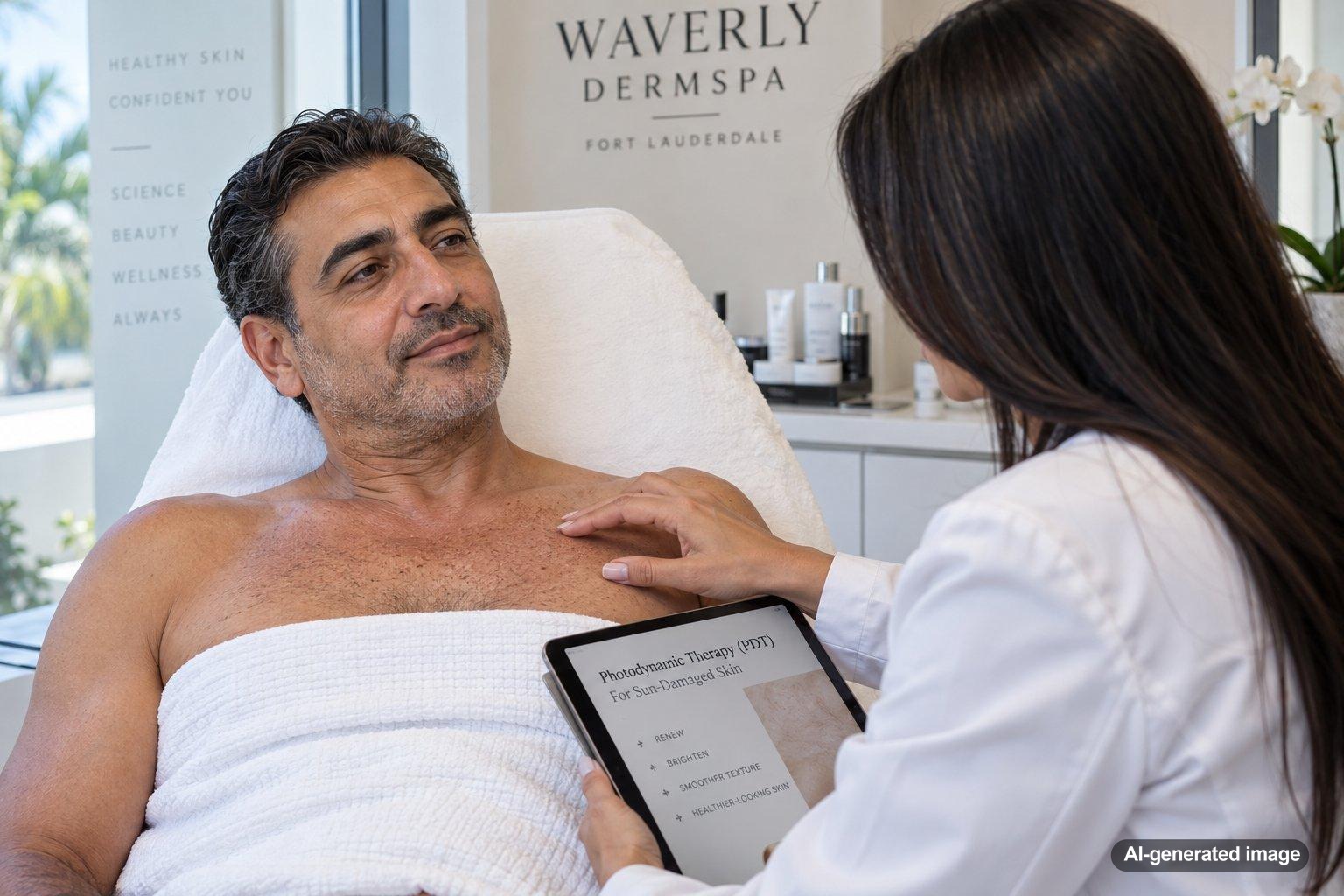
Years of sun exposure can leave the decolletage looking noticeably different from areas that receive less ultraviolet exposure. Uneven color, blotchiness, rough texture, and visible signs of cumulative sun damage are common concerns on the upper chest because this area is frequently exposed yet sometimes receives less consistent sun protection than the face.
Photodynamic Therapy (PDT) is an in-office dermatologic procedure that may be considered for certain forms of sun-damaged skin. Whether it makes sense for the decolletage depends on the specific changes present, your skin history, and a dermatologist’s evaluation.
Quick answer
- PDT combines a light-activated topical medication with a controlled light treatment.
- It may be considered for selected sun-damaged areas on the decolletage.
- The chest can react differently from facial skin, so treatment planning and aftercare should be individualized.
- Redness, sensitivity, peeling, or temporary crusting can occur after treatment.
- Careful light avoidance and sun protection are especially important during the early recovery period.
What PDT is
Photodynamic Therapy uses a photosensitizing medication that is applied to the treatment area and allowed to remain on the skin for a clinician-selected period. The area is then exposed to a specific light source that activates the medication.
Dermatologists use PDT for selected medical and cosmetic concerns involving sun-exposed skin. The exact protocol can vary based on the condition being treated, the body area, the medication used, and individual skin characteristics. Because the decolletage is not identical to facial skin in thickness, healing behavior, and cumulative exposure, a dermatologist may adjust the approach accordingly.
Why the decolletage develops visible sun damage
The upper chest often receives substantial ultraviolet exposure over many years. Common contributors include:
- Daily incidental sun exposure from driving, walking, or outdoor activities.
- Low-cut shirts and swimwear that leave the chest uncovered.
- Applying sunscreen consistently to the face but forgetting the neck and chest.
- Repeated tanning or prolonged outdoor exposure earlier in life.
- Not reapplying sunscreen during extended time outdoors.
These patterns can contribute to mottled pigmentation, persistent redness, roughness, and other visible changes. A dermatologist can examine the area to determine whether a concern is primarily cosmetic or whether any individual spots deserve separate evaluation.
What you can do at home
Daily prevention remains important whether or not you pursue an office procedure. Conservative steps that may help protect the decolletage include:
- Apply broad-spectrum sunscreen to the neck and upper chest when these areas are exposed.
- Use protective clothing or seek shade during prolonged outdoor activity.
- Avoid deliberate tanning.
- Use gentle cleansers and moisturizers if the chest is easily irritated.
- Introduce active skincare products cautiously because the decolletage can be more reactive than the face.
If you already use retinoids, exfoliating acids, brightening ingredients, or other active products on the chest, ask your clinician how they should be handled before and after a procedure.
Professional options for sun-damaged skin
PDT is one option that may be discussed after an examination. Depending on what is visible, other approaches may include topical skincare, chemical peels, laser or light-based procedures, or a combination plan. The appropriate choice depends on factors such as pigmentation, redness, texture, skin sensitivity, previous treatments, and whether any lesions need medical evaluation before cosmetic treatment.
With PDT, your clinician can explain how the medication is applied, how long it remains on the skin, which light source is used, and what aftercare is appropriate for the treated area. Treatment intensity and recovery can vary, so expectations should be individualized rather than based on another person’s experience.
What recovery may look like
After PDT, the treated decolletage may become red, warm, tender, swollen, dry, or flaky. Some people develop more noticeable peeling or temporary crusting. The intensity and duration of these changes vary based on the treatment protocol and individual response.
Light sensitivity is an important part of PDT aftercare. Follow the specific instructions provided by your treating clinician regarding avoidance of sunlight and other bright light exposure during the recommended period. Gentle cleansing, bland moisturization, and diligent sun protection may also be part of the recovery plan.
When to see a dermatologist
Before treating generalized sun damage, it is useful to have the area examined if you have a spot that is new, changing, repeatedly crusting, bleeding, painful, unusually persistent, or noticeably different from surrounding marks. Those concerns may need separate evaluation rather than being treated as part of a broad cosmetic procedure.
You should also contact your treating clinician if your response after PDT seems substantially more intense than expected, symptoms are worsening rather than gradually settling, or you have questions about caring for the treated skin.
FAQ
Can PDT be used on the chest as well as the face?
PDT may be used on selected areas of sun-exposed skin, including the upper chest in appropriate cases. A dermatologist can determine whether the decolletage is suitable based on the concern being treated and your skin characteristics.
Does PDT remove every sign of sun damage?
No single procedure addresses every type of sun-related change. Pigment, redness, rough texture, and individual lesions can have different causes and may respond differently. Your clinician can help identify which concerns PDT may reasonably address.
Is the decolletage more sensitive than the face?
It can be. The upper chest may respond and heal differently from facial skin, which is one reason treatment settings and aftercare should be planned specifically for that area.
Can I go outside after PDT?
Light avoidance is a key part of early PDT aftercare because the photosensitizing medication can remain active for a period after treatment. Follow your clinician’s instructions closely regarding sunlight, bright indoor light, clothing coverage, and sunscreen.
Should suspicious spots be treated with PDT without an examination?
A spot that is changing, bleeding, repeatedly crusting, or otherwise concerning should be evaluated by a dermatologist. An examination can help determine whether it should be managed separately from treatment for broader sun damage.
At Waverly DermSpa, we offer Photodynamic Therapy (PDT) and can help you understand whether it may be appropriate.
Ready to get help?
Schedule an appointment or send a message and our team will get back to you.
Prefer to call? 954-666-3736
This article is for educational purposes and is not medical advice. For diagnosis and personalized treatment, please book an appointment with a board-certified dermatologist.
