

If pulling on your hair feels uncomfortable in most places but produces little or no sensation in one specific area, the difference may come from the scalp rather than the hair itself. Hair shafts do not contain nerves, so the sensation you notice when hair is tugged comes from the skin, hair follicles, and nearby sensory nerves. A localized painless area can sometimes reflect normal variation, but a new or persistent change in sensation deserves attention, especially if it comes with hair loss, skin changes, tingling, burning, or true numbness.
The key question is whether the area simply feels less sensitive when the hair is pulled or whether the scalp itself has reduced sensation to touch, pressure, temperature, or other stimuli. That distinction can help a dermatologist decide what should be examined more closely.
Quick answer
- Hair itself cannot feel pain; discomfort from pulling comes from the scalp and structures around the follicles.
- One area may naturally be less sensitive than another, especially if the difference is mild and longstanding.
- Local irritation, previous injury, pressure, inflammation, changes around the hair follicles, or altered nerve signaling can also affect sensitivity.
- If the change is new, clearly one-sided, persistent, or associated with hair loss or visible scalp changes, a dermatologist can evaluate it.
Why pulling hair normally causes discomfort
Each hair grows from a follicle embedded in the scalp. The surrounding skin contains sensory nerve endings that respond when the follicle and nearby tissue are stretched or tugged. That is why pulling firmly on healthy hair usually creates pressure, tenderness, or pain even though the hair shaft itself has no sensation.
Sensitivity is not perfectly uniform across the scalp. Differences in nerve distribution, hair density, skin thickness, previous irritation, and how firmly the hair is anchored can make one region feel different from another.
What can make one area feel less sensitive?
There are several possible explanations for a localized difference in sensation. An examination is often needed to determine whether the difference is simply normal for you or whether something has changed.
- Normal variation in sensitivity: Some parts of the scalp may respond less strongly to pulling or pressure without indicating a problem.
- Temporary pressure on the area: Sleeping in the same position, tight headwear, hairstyles, or prolonged pressure can sometimes make an area feel temporarily different.
- Previous irritation or injury: A history of a cut, procedure, significant sunburn, inflammation, or other trauma can sometimes alter local sensation.
- Changes around the hair follicles: Areas with thinning, broken hairs, altered hair density, or follicle damage may feel different when hair is pulled.
- Altered nerve signaling: Sensory nerves in the scalp can occasionally become irritated, compressed, or less responsive, creating numbness, tingling, burning, or reduced sensitivity.
- Scalp skin changes: Thickening, scaling, scarring, tenderness, or other visible changes may affect how an area responds to touch and traction.
Check whether the scalp itself feels different
It may be useful to notice whether the difference appears only when you pull the hair or whether the underlying skin also feels unusual. Without repeatedly irritating the area, compare gentle touch on the affected spot with the same location on the opposite side of your scalp.
Pay attention to whether you notice reduced touch sensation, tingling, pins-and-needles sensations, burning, tenderness, itching, temperature differences, or a distinctly numb feeling. Also look for changes in the hair and scalp, including thinning, smooth patches, broken hairs, redness, scaling, crusting, bumps, or changes in skin texture.
What you can do at home
Avoid repeatedly pulling the hair to test the area. Frequent traction can irritate follicles and make it harder to tell whether the original sensation is changing.
- Wear hairstyles that do not create strong tension on the affected area.
- Avoid aggressive scratching, scalp massaging, or repeated tugging.
- Use gentle hair and scalp products if the skin seems irritated.
- Take a clear photo of the area in consistent lighting if you notice possible thinning or skin changes.
- Note when you first noticed the difference and whether it is staying stable, improving, or expanding.
If the sensation returns to normal and there are no other changes, observation may be reasonable. If it persists or becomes more noticeable, an examination can provide more useful information than repeated self-testing.
What a dermatologist may look for
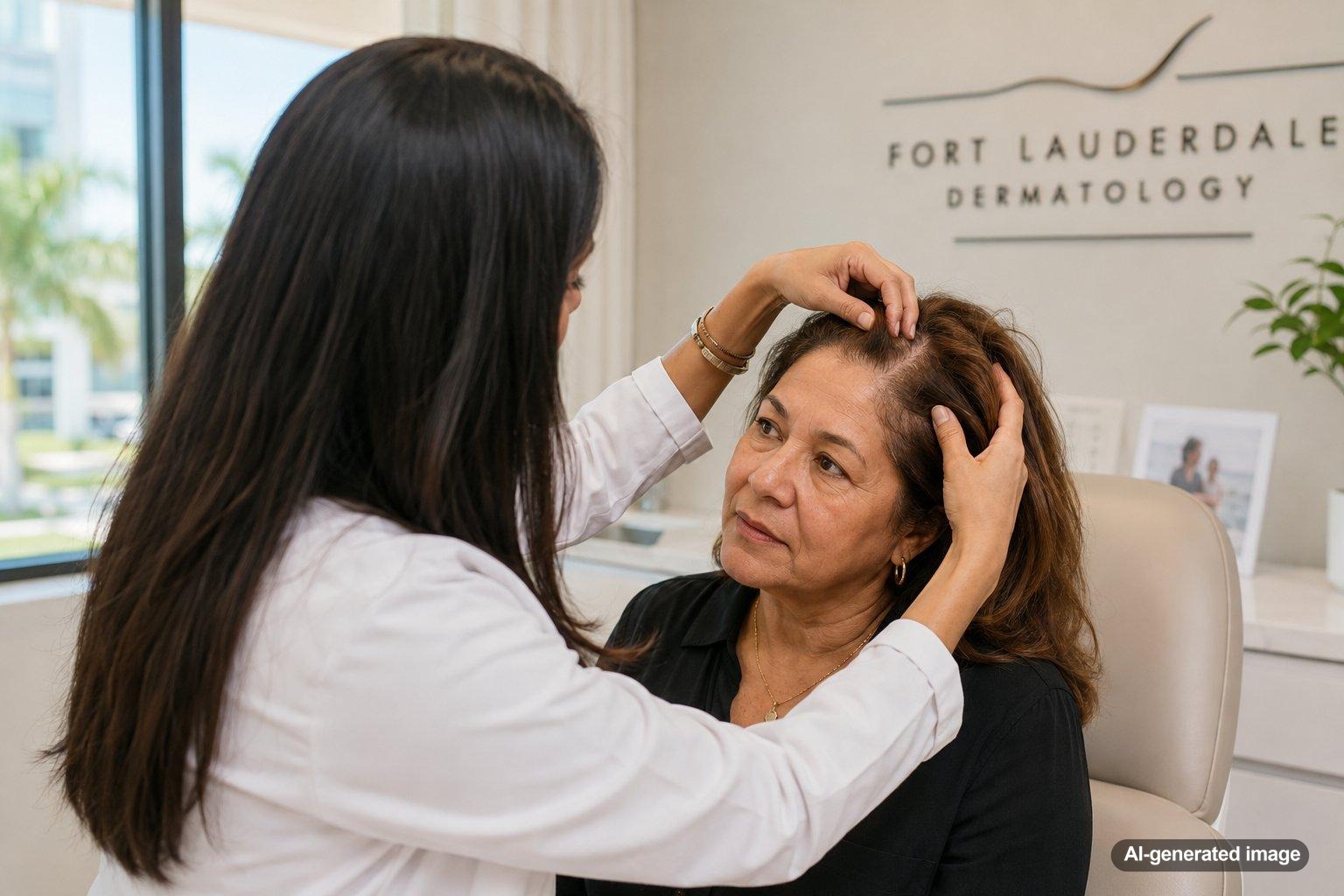
A dermatologist can examine both the hair and the scalp to see whether the follicles, skin surface, or pattern of hair growth offers clues. The evaluation may include looking closely at hair density, breakage, inflammation, scaling, scars, or changes around individual follicles.
The clinician may also ask whether the area has true numbness, whether you have experienced a recent injury or procedure, and whether there are associated sensations such as burning, tingling, pain, or itching. Depending on the findings, additional evaluation outside dermatology may occasionally be appropriate when the primary concern appears related to nerve sensation rather than the scalp itself.
When to see a dermatologist
Consider scheduling an evaluation if the reduced sensitivity is new, clearly localized, persistent, worsening, or accompanied by visible hair or scalp changes. It is also worth getting checked if the area is expanding or if you notice unexplained hair loss, broken hairs, redness, scaling, sores, swelling, or changes in scalp texture.
Seek prompt medical attention if scalp numbness develops suddenly along with facial weakness, difficulty speaking, severe headache, weakness in an arm or leg, confusion, or other sudden neurologic symptoms.
FAQ
Does painless hair pulling mean the hair follicles are dead?
No. Reduced discomfort from pulling hair does not by itself show whether a follicle is healthy or damaged. Follicle health is evaluated by examining the scalp, hair density, growth pattern, and other clinical findings.
Can a numb patch of scalp affect hair growth?
A change in sensation and a change in hair growth can occur together for different reasons, but one does not automatically cause the other. If you notice both reduced sensation and thinning or patchy hair loss, a dermatologist can evaluate the area.
Could a tight hairstyle cause this?
Repeated tension from tight hairstyles can irritate the scalp and follicles. If a specific area has been under frequent traction, loosening the hairstyle and avoiding further pulling is a reasonable conservative step while you monitor the area.
Should I keep pulling the hairs to see if sensation comes back?
No. Repeated tugging can irritate the follicles and scalp. Gentle observation is more useful, and persistent changes are better assessed during an examination.
What if the skin feels normal but pulling the hair does not hurt?
If ordinary touch feels normal and there are no visible scalp or hair changes, the difference may simply reflect variation in sensitivity or how strongly the hairs are anchored. A persistent or newly developed difference can still be discussed with a dermatologist if you are concerned.
Ready to get help?
Schedule an appointment or send a message and our team will get back to you.
Prefer to call? 954-666-3736
This article is for educational purposes and is not medical advice. For diagnosis and personalized treatment, please book an appointment with a board-certified dermatologist.
