

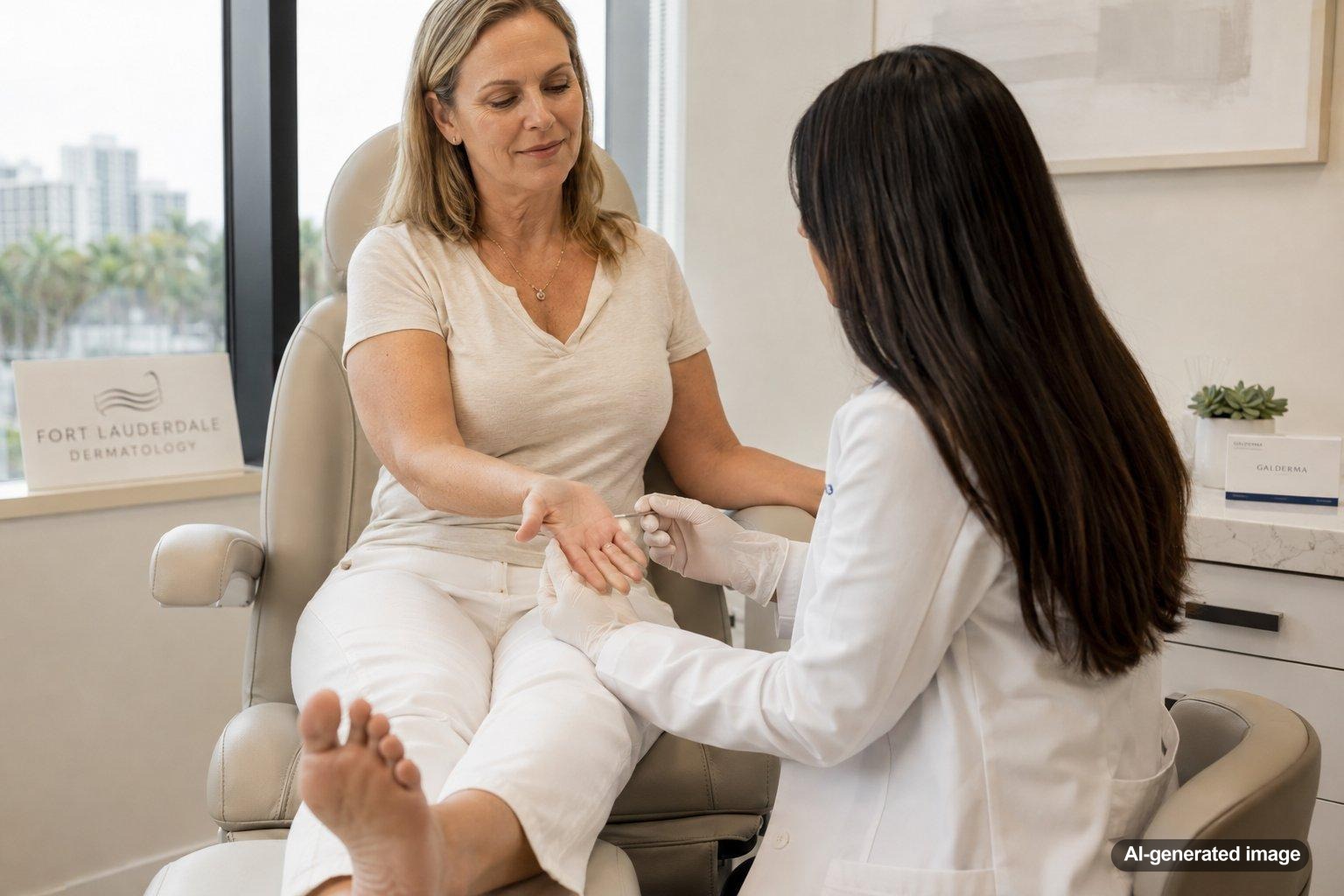
Excessive sweating of the palms and soles can be more than an inconvenience. Damp hands may make gripping objects, writing, using electronics, or shaking hands uncomfortable, while persistent foot sweating can affect shoes, socks, and everyday comfort. In South Florida, heat and humidity can make the problem feel especially noticeable, although hyperhidrosis can occur even when the body does not need cooling.
Botox, or onabotulinumtoxinA, is one option a dermatologist may discuss for localized excessive sweating. Dermatologists use botulinum toxin injections to temporarily reduce sweating in targeted areas, including the hands and feet. Treatment of palmar or plantar hyperhidrosis should be individualized after a medical evaluation because these uses differ from the FDA-approved indication for severe primary axillary hyperhidrosis.
Quick answer
- Botulinum toxin injections may temporarily reduce excessive sweating by interrupting nerve signals that activate sweat glands in the treated area.
- Dermatologists may use botulinum toxin for excessive sweating of the palms and soles, but Botox labeling specifically approves treatment for severe primary axillary hyperhidrosis that is inadequately managed with topical agents.
- Palms and soles can be sensitive injection areas, so comfort, potential side effects, and treatment expectations should be discussed before proceeding.
- Other approaches, including prescription antiperspirants and iontophoresis, may also be considered for hand and foot sweating.
- A dermatologist can help determine whether excessive sweating appears focal or whether another condition or medication could be contributing.
What excessive sweating of the palms and soles means
Hyperhidrosis is excessive sweating beyond what the body needs for temperature control. Primary focal hyperhidrosis commonly affects areas such as the palms, soles, underarms, or face. Some people notice sweating even while resting or in an air-conditioned environment.
When sweating is concentrated in the hands, it is often described as palmar hyperhidrosis. Excessive sweating of the soles is commonly called plantar hyperhidrosis. Symptoms can vary significantly from person to person, so a dermatologist may ask when the sweating began, which areas are affected, whether it occurs during sleep, and whether medications or other health factors could be contributing.
How Botox may reduce sweating
Botulinum toxin works locally by temporarily interfering with nerve signaling in the treated area. When used for hyperhidrosis, this can reduce the signals that stimulate sweat glands. The injections are placed across the area where excessive sweating occurs rather than being used as a single injection.
The response and duration are variable. Treatment does not remove sweat glands, and sweating can gradually return as the effect diminishes. A dermatologist can discuss whether repeat treatment may be appropriate based on response, tolerance, and individual circumstances.
Botox for sweaty palms
The palms contain many sweat glands and are important for grip, dexterity, and fine motor function. For that reason, treatment planning requires careful consideration of injection placement and potential effects on nearby structures.
The FDA prescribing information notes that the safety and effectiveness of Botox for hyperhidrosis in body areas other than the underarms have not been established in the approved labeling, and hand muscle weakness may occur with palmar treatment. A dermatologist can explain this distinction and discuss the potential benefits, limitations, and risks before treatment.
Botox for sweaty soles
Botulinum toxin may also be used by dermatologists for excessive sweating of the feet. The soles can be particularly sensitive, and injections across the treatment area may be uncomfortable. Your clinician can discuss strategies used in the office to improve comfort and whether another option may be more practical for your situation.
Foot sweating can also contribute to persistently damp socks and footwear. Keeping feet dry when practical, rotating shoes, changing damp socks, and using appropriate antiperspirant products may help some people as part of a broader management plan.
Why a dermatology evaluation matters first
Not every case of heavy sweating has the same cause. Primary focal hyperhidrosis often affects specific areas, while secondary hyperhidrosis can be associated with medications or underlying medical conditions and may involve more generalized sweating.
A dermatologist can review the pattern of sweating and decide whether additional evaluation is appropriate before focusing on symptom control. This is particularly important when sweating begins suddenly, becomes widespread, occurs prominently during sleep, or appears alongside other unexplained symptoms.
Other options for sweaty hands and feet
Botulinum toxin is not the only approach to palmar or plantar hyperhidrosis. Depending on the severity, location, previous treatments, and personal preferences, a dermatologist may discuss options such as:
- Antiperspirants: Products that contain sweat-blocking ingredients may be used on the hands or feet, with prescription-strength options considered when appropriate.
- Iontophoresis: This treatment places the hands or feet in shallow water while a mild electrical current passes through it. The American Academy of Dermatology describes iontophoresis as an option for hyperhidrosis of the hands and feet.
- Prescription medications: Certain oral medications may reduce sweating throughout the body, but potential side effects and suitability require individualized medical guidance.
- Botulinum toxin injections: Targeted injections may be considered when excessive sweating remains troublesome despite other measures.
What to discuss before treatment
Before considering injections, tell your dermatologist about your medications, supplements, neuromuscular conditions, previous reactions to botulinum toxin products, and any infection or irritation near the proposed injection sites. Botox is a prescription medication with important warnings and contraindications, so treatment should follow an appropriate medical assessment.
It is also useful to discuss how sweating affects your daily life. Someone primarily concerned about hand function may have different priorities than someone whose main difficulty is moisture inside footwear. Those details can help guide treatment decisions.
When to see a dermatologist
Consider a dermatology evaluation when sweating regularly interferes with work, exercise, social activities, footwear, electronics, or everyday tasks, or when over-the-counter measures have not been sufficient. Medical evaluation is also important when sweating starts unexpectedly, changes substantially, affects much of the body, occurs during sleep, or accompanies symptoms that could suggest another health issue.
At Waverly DermSpa, we offer Botox and can help you understand whether it may be appropriate.
Frequently asked questions
Is Botox FDA approved for sweating of the palms and soles?
Botox is FDA approved for severe primary axillary hyperhidrosis that is inadequately managed with topical agents. The FDA labeling states that safety and effectiveness for hyperhidrosis in other body areas have not been established. Dermatologists may nevertheless use botulinum toxin for excessive sweating of the hands and feet after evaluating the individual patient.
Does Botox completely stop hand or foot sweating?
Responses vary. Botulinum toxin may substantially reduce sweating in a treated area, but complete dryness should not be assumed and the effect is temporary.
Are injections in the palms or soles uncomfortable?
They can be. Both areas are sensitive and usually require multiple injections across the treatment zone. Your clinician can discuss comfort measures and whether the procedure is a reasonable choice for you.
Can Botox for sweaty palms affect hand strength?
Temporary hand muscle weakness is a recognized concern with palmar botulinum toxin treatment. This possibility should be discussed carefully, particularly for people whose work, sports, music, or daily activities depend heavily on grip strength and fine motor control.
What else can I try for excessive sweating of my hands or feet?
Common options can include antiperspirants, iontophoresis, prescription medications, and botulinum toxin. The most appropriate approach depends on the pattern and severity of sweating, previous treatments, medical history, and personal preferences.
Ready to get help?
Schedule an appointment or send a message and our team will get back to you.
Prefer to call? 954-666-3736
This article is for educational purposes and is not medical advice. For diagnosis and personalized treatment, please book an appointment with a board-certified dermatologist.
Sources & further reading
- American Academy of Dermatology (AAD) – Hyperhidrosis: Diagnosis and treatment
- U.S. Food and Drug Administration (FDA) – BOTOX prescribing information
