

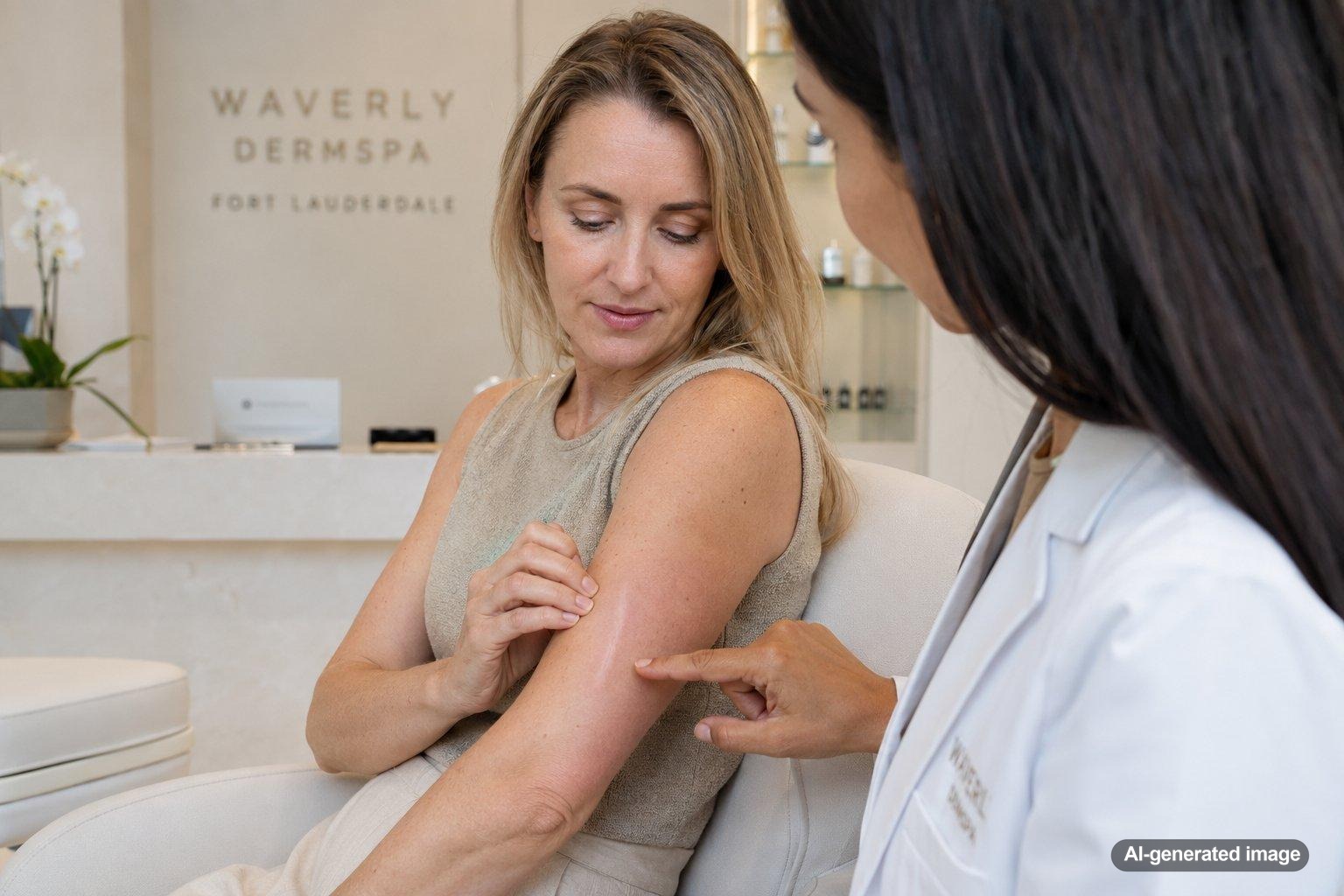
If your skin briefly turns white after you press on it, the most likely explanation is simple blanching: pressure temporarily pushes blood out of tiny vessels near the surface. Once you release the pressure, normal color usually returns quickly. Dermographism is a related but somewhat different skin reaction in which stroking, rubbing, scratching, or pressure produces visible lines, swelling, or hive-like marks.
There is also a pattern called white dermographism, in which scratching or stroking leaves a pale line rather than the more typical red, raised response. Because several different skin reactions can look similar, the timing, texture, itch, and trigger all matter.
Quick answer
- A temporary white spot immediately after firm pressure is often normal skin blanching.
- Classic dermographism more commonly causes raised lines or welts after rubbing, scratching, or pressure.
- White dermographism describes a pale line after the skin is stroked or scratched and can occur with dermatitis, including atopic dermatitis.
- Repeated itching, swelling, persistent color changes, or symptoms without an obvious trigger are worth discussing with a dermatologist.
What happens when skin turns white under pressure?
Skin color partly reflects blood flowing through small vessels close to the surface. Pressing firmly on the skin can temporarily compress those vessels and move blood away from the area. The spot may look pale or white until the pressure is released and circulation returns.
This ordinary blanching response is different from a hive. A simple blanched spot is usually flat and disappears quickly. If the area becomes raised, itchy, swollen, or develops a distinct line after rubbing or scratching, a form of inducible urticaria such as dermographism may be part of the picture.
What is dermographism?
Dermographism, also called dermatographism or dermatographia, is a type of physical or chronic inducible urticaria. In susceptible skin, rubbing, stroking, scratching, or pressure can trigger a visible reaction along the path of contact. Classic dermographism typically produces a raised wheal with surrounding redness within minutes.
The response is associated with activation of mast cells and the release of histamine and other inflammatory mediators. The exact reason some people develop a stronger response than others is not always clear.
What is white dermographism?
White dermographism is not simply another name for every white mark caused by pressure. It refers more specifically to a pale line that develops after the skin is stroked or scratched, without the typical raised wheal. DermNet notes that this pattern can be seen with atopic dermatitis and other forms of dermatitis.
That distinction matters because a flat white mark that appears only while you are pressing a fingertip into otherwise comfortable skin may simply reflect blanching. A pale line that repeatedly appears after light scratching, especially on dry, itchy, or inflamed skin, has a different clinical context.
Common triggers and patterns
Skin reactions related to dermographism can become more noticeable when the skin is repeatedly rubbed or irritated. Common situations include:
- Scratching an itchy area
- Rubbing with a towel after bathing
- Pressure or friction from snug clothing
- Very hot showers or baths
- Dry or sensitive skin
- Repeated rubbing of the same area
Not everyone reacts the same way. Some people develop only visible lines, while others notice itching, swelling, or hive-like welts.
What you can do at home
If the reaction is mild and temporary, simple skin-care adjustments may help reduce irritation. Consider using lukewarm rather than very hot water, patting the skin dry instead of rubbing vigorously, and choosing soft, loose-fitting clothing when friction seems to be a trigger.
A fragrance-free moisturizer can also support dry or sensitive skin. Try to avoid repeatedly scratching or testing the same area, since repeated friction can make a reactive patch look more dramatic and make it harder to judge what is happening naturally.
If itching or hive-like reactions are frequent, avoid starting or changing medications solely on the basis of an online description. A dermatologist can evaluate the pattern and discuss whether additional management is appropriate.
Professional options
A dermatologist can often learn a great deal from the appearance of the reaction, how quickly it develops, how long it lasts, whether it is raised, and whether itching or swelling occurs. When dermographism is suspected, controlled stroking or pressure may be used during an examination to assess the skin’s response.
For symptomatic dermographism, management may include reducing known triggers and, when appropriate, medications such as antihistamines. The right approach depends on the type and severity of the reaction, other symptoms, current medications, and your medical history.
When to see a dermatologist
Consider scheduling a dermatology evaluation if the marks are frequent, increasingly itchy, raised, painful, or disruptive, or if you are unsure whether you are seeing ordinary blanching, hives, dermatitis, or another skin change.
It is also worth getting checked if a pale or discolored area persists rather than quickly returning to its usual color, appears without pressure or rubbing, develops scaling or significant inflammation, or is accompanied by other unexplained skin symptoms. Seek prompt medical attention for widespread hives with difficulty breathing, throat tightness, dizziness, or swelling of the tongue or lips.
FAQ
Is it normal for skin to turn white when I press it?
Brief whitening from firm pressure can be a normal blanching response. The compressed area temporarily contains less visible blood. The color should generally return after the pressure is released.
Does a white pressure mark mean I have dermographism?
Not necessarily. Classic dermographism usually involves visible lines, swelling, or hive-like welts after stroking, scratching, rubbing, or pressure. A dermatologist can help distinguish that pattern from ordinary blanching or other causes of skin color change.
Why does scratching leave a white line instead of a red one?
A pale line after stroking or scratching can occur with white dermographism. This pattern has been described in association with atopic dermatitis and other forms of dermatitis, but appearance alone is not enough to diagnose the cause.
Can dermographism itch?
Yes. Symptomatic dermographism can be itchy, and friction from clothing or scratching may make the reaction more noticeable. Some people have visible skin writing with little or no discomfort.
How long do dermographism marks last?
Immediate dermographism typically develops within minutes after the trigger and often fades relatively quickly, although individual reactions vary. Marks that remain for an unusually long time or behave differently from your usual pattern are worth discussing with a dermatologist.
Should I keep pressing or scratching the area to test it?
Repeated testing can irritate the skin and intensify a friction-related reaction. If the pattern is recurring, taking note of what triggers it and discussing it with a clinician is generally more useful than repeatedly provoking the area.
Ready to get help?
Schedule an appointment or send a message and our team will get back to you.
Prefer to call? 954-666-3736
This article is for educational purposes and is not medical advice. For diagnosis and personalized treatment, please book an appointment with a board-certified dermatologist.
Sources & further reading
- DermNet – Dermographism
- American Academy of Dermatology (AAD) – Hives: FAQs
- Cleveland Clinic – Dermatographia
