

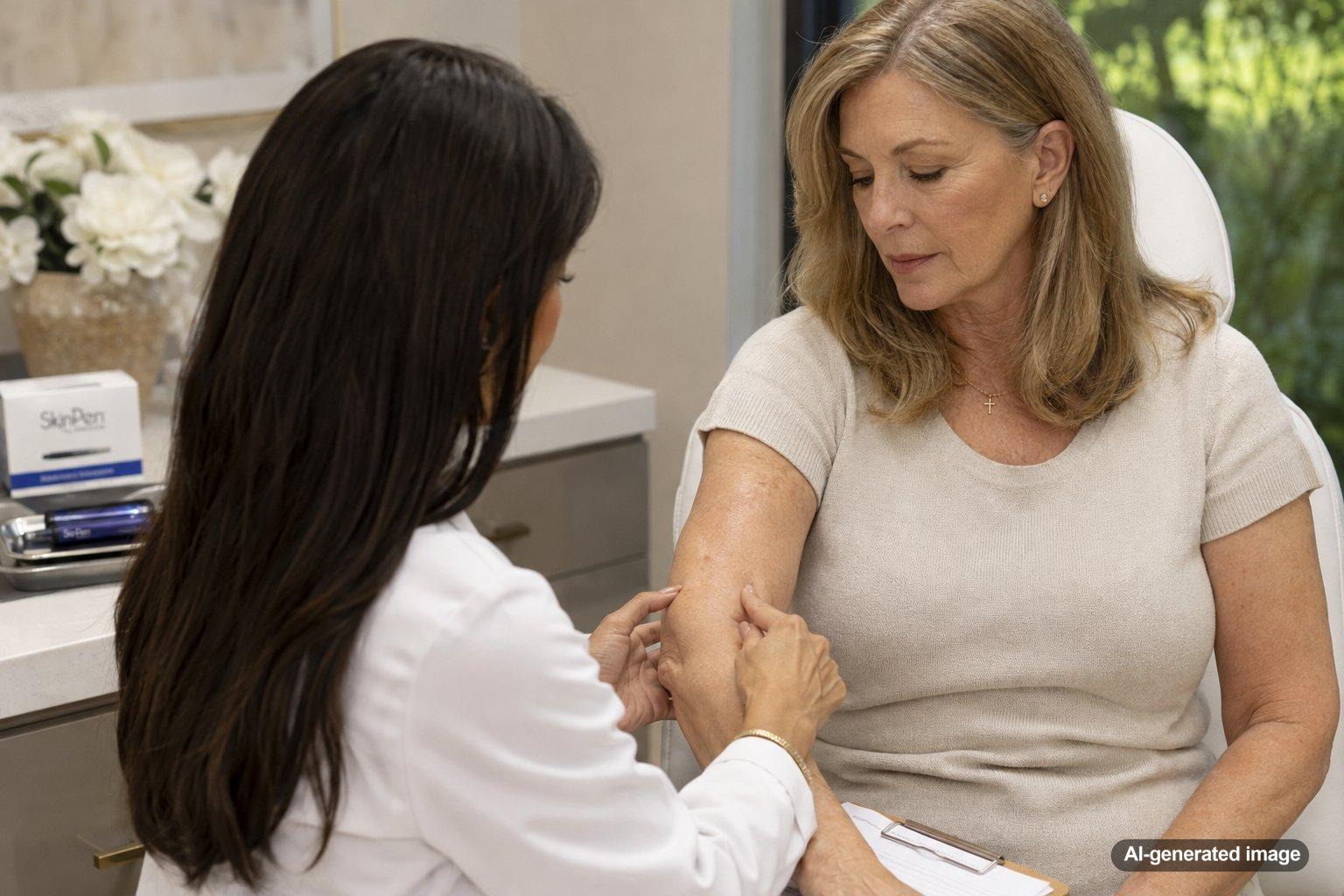
Yes, SkinPen microneedling may help improve the texture and overall appearance of some old burn scars, particularly when the scar is stable, fully healed, and appropriate for controlled microneedling. The goal is not to erase a scar. Instead, treatment may encourage gradual remodeling that can make certain scars feel smoother or look less uneven.
Burn scars vary considerably in depth, thickness, color, location, and tendency to become raised. That means SkinPen is not automatically appropriate for every old burn scar. A dermatologist or experienced clinician should first assess the scar and surrounding skin before deciding whether microneedling makes sense.
Quick answer
- SkinPen may help improve uneven texture in some mature, fully healed burn scars.
- Microneedling creates controlled micro-injuries that prompt the skin’s natural repair response.
- Raised, thick, keloid-prone, actively inflamed, or unstable scars may require a different approach.
- Improvement is usually gradual and varies with the type, depth, age, and location of the scar.
- A professional evaluation is important before treating scarred skin.
How SkinPen works on scar texture
SkinPen is a motorized microneedling device that uses very fine needles to create controlled channels in the skin. These micro-injuries stimulate a wound-healing response that includes collagen remodeling.
In mature scars, the collagen beneath the surface can be arranged differently from normal skin. Controlled microneedling may encourage remodeling over time, which is why the technique is sometimes considered for scars that feel firm, uneven, depressed, or rough.
The amount of improvement varies. A shallow scar with textural irregularity may respond differently from a deep burn scar, a contracted scar, or a thick raised scar.
Which old burn scars may be considered for microneedling?
The best way to determine whether a burn scar may be suitable is through an in-person assessment. Factors your clinician may consider include:
- Whether the burn is completely healed and the scar is mature and stable
- Whether the main concern is texture rather than active inflammation or an open wound
- The scar’s depth and thickness
- Whether the scar is flat, depressed, raised, or contracted
- Your history of keloid or hypertrophic scarring
- The location of the scar
- Your skin tone and tendency to develop post-inflammatory pigment changes
Burn scars that are still changing, painful, ulcerated, infected, or otherwise medically concerning should be evaluated before any cosmetic procedure is considered.
What SkinPen may improve
For an appropriate scar, microneedling may help with several aspects of appearance. The most realistic goal is usually improvement rather than complete removal.
- Roughness: Remodeling may make some scars feel smoother.
- Uneven surface texture: Mild depressions or irregular areas may become less noticeable.
- Scar blending: In some cases, the border between scarred and surrounding skin may appear softer.
- Overall skin quality: The treated area may gradually look more uniform as healing progresses.
SkinPen cannot recreate the exact structure of uninjured skin, and extensive or deep burn scars may remain visibly different even after treatment.
What about raised or thick burn scars?
Raised scars deserve extra caution. Hypertrophic scars and keloids involve excessive scar tissue formation, and they may require a different treatment strategy than flat or indented scars.
If you have a history of developing thick, firm, or enlarging scars after injuries, surgery, or piercings, tell your clinician. Cleveland Clinic notes that people with a tendency to form keloids should discuss that history with a healthcare provider before microneedling.
A dermatologist can determine whether microneedling is reasonable or whether another approach would be more appropriate.
Can SkinPen improve discoloration from a burn scar?
Texture and color are separate issues. Microneedling is primarily used to influence skin remodeling, and any effect on discoloration can vary. Some burn scars are darker than the surrounding skin, some are lighter, and others have persistent redness.
If color is the main concern, your clinician may recommend treating the pigment or vascular component separately. Skin type, scar depth, sun exposure, and the type of discoloration all influence which options may be considered.
What happens during a SkinPen treatment?
Before treatment, the skin is evaluated and cleansed. A topical numbing medication may be used to improve comfort. The SkinPen handpiece is then passed over the treatment area at settings chosen for the skin and scar being treated.
Temporary redness, sensitivity, tightness, pinpoint bleeding, or mild swelling can occur after microneedling. The FDA also notes potential risks including bruising, itching, peeling, pigment changes, infection, and scarring. These possibilities are one reason professional assessment and appropriate technique are important.
At Waverly DermSpa, we offer SkinPen and can help you understand whether it may be appropriate.
How many treatments might an old burn scar need?
There is no universal treatment count for burn scars. Scar remodeling is gradual, and treatment plans vary based on scar thickness, depth, location, skin response, and the degree of improvement someone hopes to achieve.
Some people may undergo a series of sessions rather than a single treatment. Your clinician can assess the scar between treatments and decide whether additional sessions are reasonable. Results and timelines vary, and complete scar removal should not be expected.
What can you do at home?
Home care cannot reproduce professional microneedling, but a simple routine can help protect scarred skin and reduce unnecessary irritation.
- Use broad-spectrum sun protection on exposed scar tissue.
- Keep the area moisturized if it feels dry or tight.
- Avoid picking, scraping, or aggressively exfoliating the scar.
- Do not use home microneedling tools on a burn scar without professional guidance.
- Pause irritating skin-care products if the scar becomes inflamed or sensitive.
Scar tissue can react differently from surrounding skin, so gentle care is usually preferable to aggressive at-home treatment.
When should a dermatologist evaluate a burn scar?
It is worth having a burn scar assessed if it is painful, itchy, rapidly changing, unusually thick, limiting movement, breaking open, bleeding, or showing signs of possible infection. A dermatologist can also evaluate a scar before cosmetic treatment if you are unsure whether it is fully mature or whether microneedling is appropriate.
Professional evaluation is especially important if you have a history of keloids, difficult wound healing, significant pigment changes after inflammation, or medical conditions that may affect healing.
FAQ
Can SkinPen completely remove an old burn scar?
No procedure should be expected to completely erase a burn scar. SkinPen may help improve texture in selected scars, but some visible difference usually remains.
Does the age of the burn scar matter?
Yes. Mature, stable scars are generally assessed differently from scars that are still actively healing or changing. The actual age of the scar is only one factor; thickness, color, location, and scar behavior also matter.
Is SkinPen appropriate for keloid burn scars?
Not necessarily. People who form keloids need individualized evaluation because additional skin injury can be a concern. A dermatologist can help determine whether another treatment approach is more appropriate.
Can microneedling make a scar worse?
Microneedling has potential risks, including irritation, infection, pigment changes, and additional scarring. Proper patient selection, sterile technique, appropriate device use, and aftercare are important.
Can SkinPen be used on burn scars anywhere on the body?
Suitability depends on the location, scar characteristics, skin thickness, and treatment goals. A clinician should evaluate the specific area rather than assuming every body site can be treated the same way.
Ready to get help?
Schedule an appointment or send a message and our team will get back to you.
Prefer to call? 954-666-3736
This article is for educational purposes and is not medical advice. For diagnosis and personalized treatment, please book an appointment with a board-certified dermatologist.
Sources & further reading
- U.S. Food and Drug Administration (FDA) – Microneedling Devices: Getting to the Point on Benefits, Risks and Safety
- Cleveland Clinic – Microneedling: What It Is, Uses, Benefits & Results
