

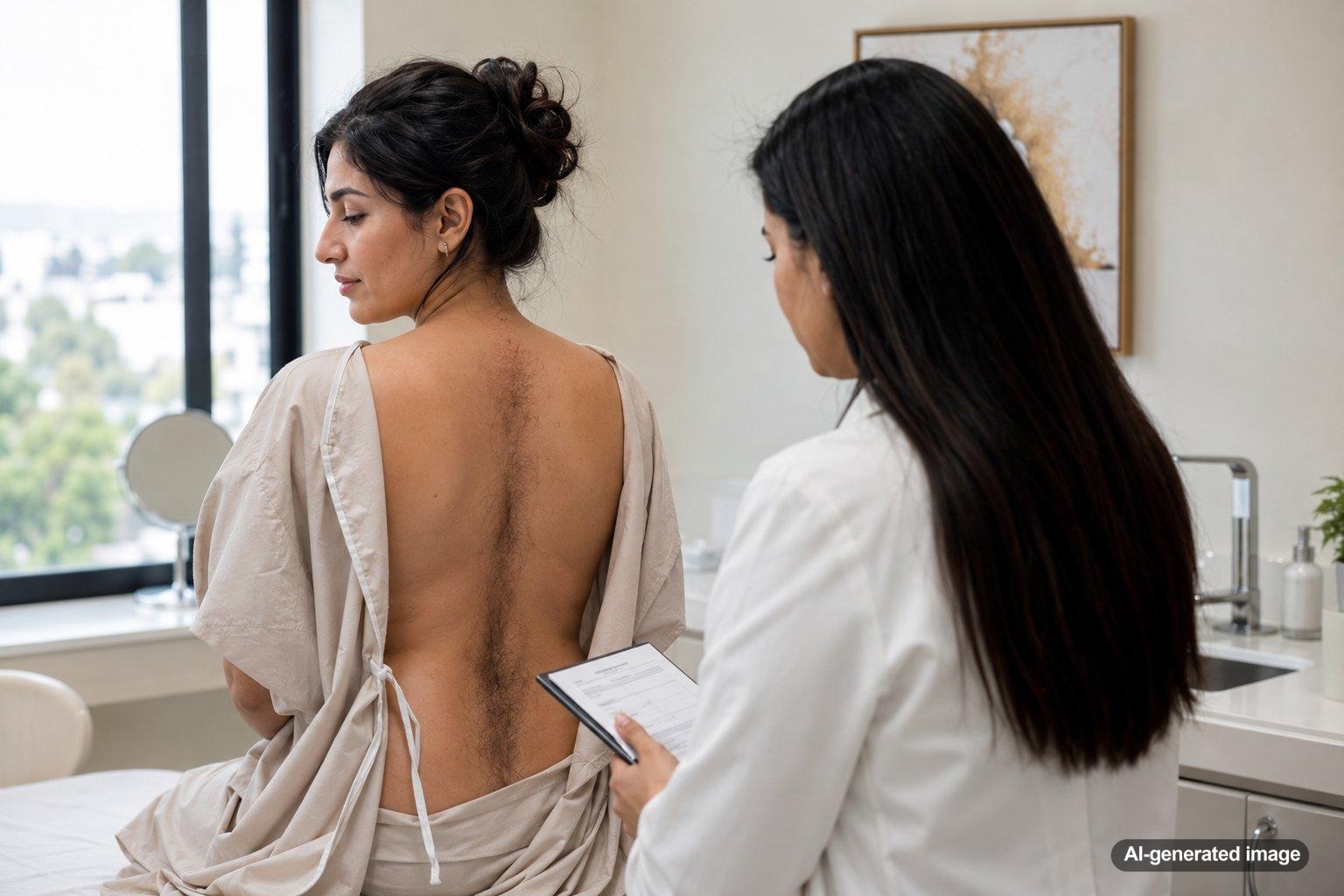
A long, dense patch of hair directly over the spine can sometimes be a form of localized hypertrichosis, meaning extra hair growth limited to one area. When a particularly thick patch appears over the lower spine, especially if it has been present since birth or childhood, clinicians may sometimes describe the pattern as a faun-tail type of hair growth.
In many people, a localized hair patch is simply a skin and hair-growth variation. However, the location matters. A pronounced patch centered over the lower spine can occasionally occur alongside differences in how the spine developed, so it is worth having the area evaluated rather than assuming it is only cosmetic.
Quick answer
- A thick, isolated patch of hair can be localized hypertrichosis.
- If the patch sits directly over the lower spine, its location may be medically relevant.
- A patch that has been present since birth may deserve evaluation even if it has never caused discomfort.
- Other nearby skin changes, back symptoms, leg symptoms, or bladder and bowel changes make medical evaluation more important.
- Hair removal can be discussed after a clinician has determined whether the area needs further assessment.
What is localized hypertrichosis?
Hypertrichosis is the medical term for more hair growth than expected for a particular area of the body. It can involve a large portion of the body or appear as one sharply defined patch. The hair may be fine and light or darker, longer, and more coarse.
A solitary patch of thicker terminal hair is sometimes called localized or naevoid hypertrichosis. It can be present at birth or become noticeable later. Many localized patches are not associated with a serious health problem, but their location and surrounding skin findings can help determine whether additional evaluation makes sense.
Why does the location over the spine matter?
A dense patch of hair centered over the lower back can occasionally be an external skin marker associated with differences beneath the skin involving the spine. This does not mean that everyone with a hairy patch over the lower back has a spinal condition. It simply means that this specific location deserves more attention than an ordinary patch of excess hair on an arm or shoulder.
A dermatologist may look at exactly where the patch sits, whether it has been present since birth, whether it is symmetrical, and whether other skin findings are nearby. Depending on the overall picture, your clinician may recommend that another medical specialist evaluate the area or that imaging be considered.
What other skin changes might a dermatologist look for?
The hair itself is only one part of the examination. A dermatologist may check for additional features around the lower spine, including:
- A deep dimple or small opening in the skin
- A birthmark or area of unusual pigmentation
- A vascular-looking red or purple mark
- A skin tag or small lump
- An unusual crease, depression, or contour of the lower back
- More than one skin finding located along the same area of the spine
None of these features automatically establishes a diagnosis. They are simply details a clinician may consider when deciding whether the hair patch is likely to be an isolated skin finding or whether further evaluation would be useful.
Can a thick hair patch appear later in life?
Yes. Localized excess hair can sometimes develop after repeated friction, irritation, inflammation, certain medications applied to the skin, or other local changes. A dermatologist can help distinguish a patch that appears to be acquired from one that may have been present since early life.
If you are unsure when the patch first appeared, older photographs can sometimes be helpful. Family members may also remember whether the area was noticeable during childhood.
What can you do at home?
You do not need to aggressively treat the hair before you know why it is there. A few simple steps can make an office evaluation easier:
- Notice whether the patch is centered over the spine or sits off to one side.
- Think about whether it has been present since childhood or appeared more recently.
- Look for nearby dimples, birthmarks, skin tags, discoloration, or lumps.
- Make note of any back pain, leg numbness, weakness, walking changes, or bladder or bowel symptoms.
- Avoid irritating the skin with aggressive waxing or repeated plucking if the area is inflamed.
Shaving the hair for cosmetic reasons generally does not change how the follicle produces hair, but removing it before an examination can make the original distribution harder to assess. If you are planning a dermatology visit soon, leaving the area visible can be helpful.
How is a patch of hair over the spine evaluated?
A dermatologist will usually begin with the history and a close examination of the skin. Important details include when the hair appeared, how quickly it changed, whether the area has other visible skin findings, and whether there are any neurologic or urinary symptoms.
If the appearance suggests that the patch may be more than an isolated hair-growth variation, your dermatologist may recommend evaluation by another clinician. Imaging of the spine may sometimes be considered, particularly when a prominent lower-back hair patch has been present since birth or appears with other concerning findings. The appropriate next step depends on age, symptoms, physical examination, and medical history.
Can the hair be removed?
Once any medical concerns have been addressed, cosmetic hair removal can be discussed. Common approaches include shaving, waxing, depilatory products, electrolysis, and laser hair removal. The most appropriate option depends on hair color, skin tone, hair thickness, the condition of the surrounding skin, and personal preference.
Laser hair removal may help reduce darker, coarse hair over time, but results vary and multiple treatments are commonly needed. A clinician should examine an unusual spinal hair patch before treating it purely as a cosmetic issue.
At Waverly DermSpa, we offer Excel HR Laser Hair Removal and can help you understand whether it may be appropriate.
When should you see a dermatologist?
Consider scheduling an evaluation if the patch is unusually dense, directly centered over the spine, has been present since birth, or has changed noticeably. It is particularly important to seek medical assessment when the hair patch occurs with other skin findings or symptoms such as:
- Persistent or significant back pain
- Numbness, tingling, or weakness in the legs
- Changes in walking or balance
- New bladder or bowel control problems
- A deep dimple, lump, drainage, or unusual opening near the lower spine
- A noticeable change in the shape or alignment of the back
If you are unsure whether a long, thick patch of hair is simply a cosmetic variation, it is worth getting checked. A dermatologist can evaluate the skin and help determine whether anything beyond hair removal should be considered.
Frequently asked questions
Is a hairy patch on the lower back always a sign of a spinal problem?
No. Many localized areas of excess hair are isolated skin findings. However, a prominent patch directly over the lower spine can occasionally be associated with an underlying developmental difference, which is why location and accompanying findings matter.
What is a faun-tail hair patch?
The term is sometimes used for a conspicuous patch of coarse or long hair over the lower back. It describes an appearance rather than establishing a diagnosis. A clinician can determine whether the finding appears isolated or deserves additional evaluation.
Does shaving make the patch grow back thicker?
Shaving cuts hair at the surface and does not change the number of hair follicles. The blunt end of newly cut hair can temporarily make regrowth feel coarser, but shaving does not create additional follicles.
Can laser hair removal be used on a faun-tail type patch?
Laser hair removal may be an option for some people after appropriate medical evaluation. Hair color, skin tone, location, and the reason for the hair growth all influence whether treatment may be appropriate.
Should an adult get a lifelong lower-back hair patch checked?
If a dense patch sits directly over the lower spine and has never been evaluated, discussing it with a dermatologist is reasonable. This is especially true if there are nearby birthmarks, dimples, skin tags, back symptoms, leg symptoms, or bladder or bowel changes.
Ready to get help?
Schedule an appointment or send a message and our team will get back to you.
Prefer to call? 954-666-3736
This article is for educational purposes and is not medical advice. For diagnosis and personalized treatment, please book an appointment with a board-certified dermatologist.
