

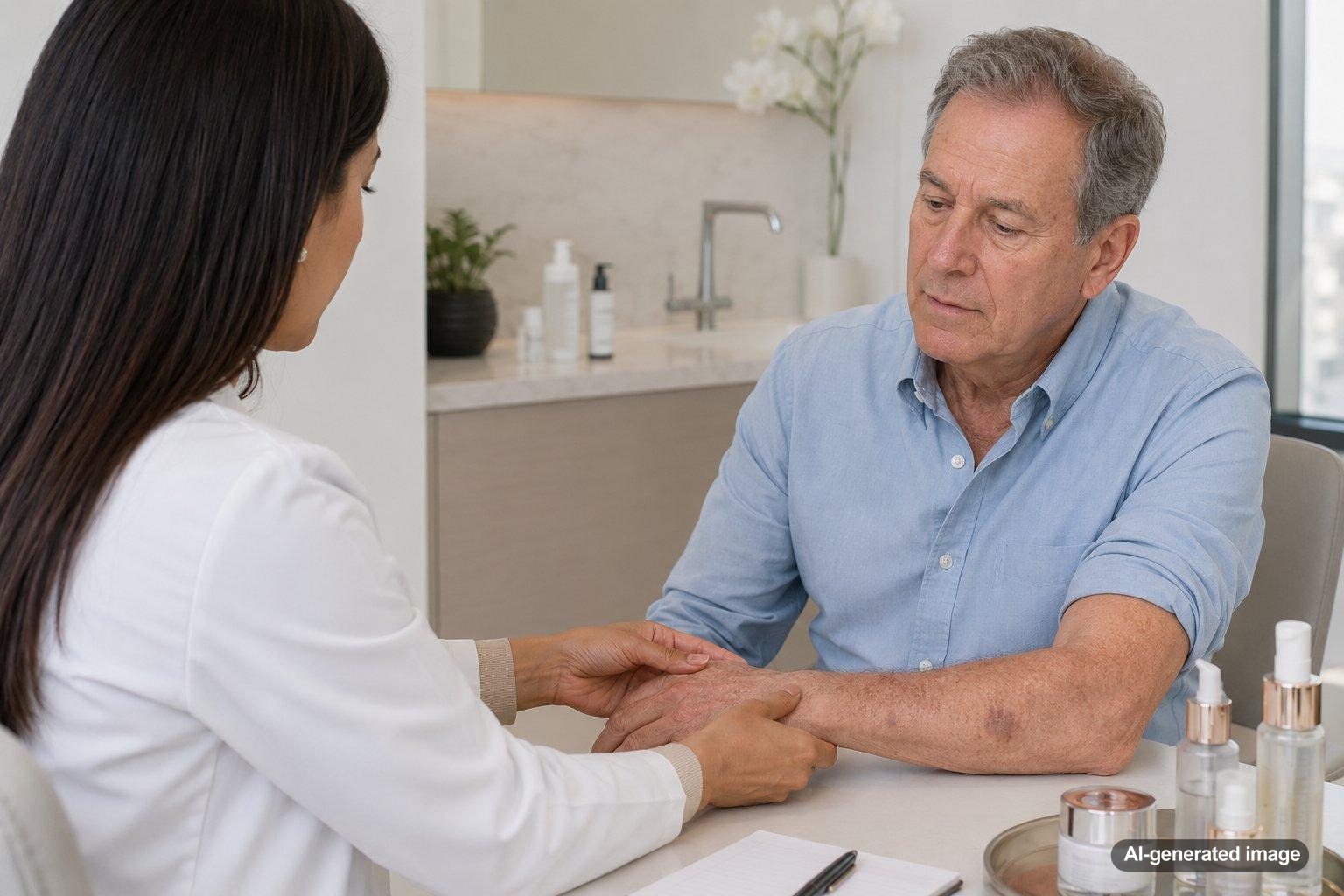
If a bruise seems to disappear but leaves behind a flat brown, rust-colored, or grayish mark, you may be seeing pigment that remains after the initial injury has healed. This can happen when components of blood break down in the skin or when inflammation stimulates extra pigment production.
These marks can linger much longer than the purple, blue, or yellow stages of a typical bruise. How long they remain varies with skin tone, the depth and severity of the original bruise, sun exposure, circulation, and how your skin responds to inflammation.
Quick answer
- Brown discoloration after a bruise can come from residual iron-containing blood pigments, sometimes called hemosiderin staining.
- Inflammation from the injury can also trigger post-inflammatory hyperpigmentation, especially in skin that pigments easily.
- The stain may fade gradually, but the timeline can vary considerably from person to person.
- Sun exposure can make lingering pigmentation look darker or more persistent.
- Frequent unexplained bruising, swelling, pain, or discoloration that keeps worsening deserves medical evaluation.
Why can a bruise turn brown instead of disappearing completely?
A bruise forms when small blood vessels beneath the skin are damaged and release blood into surrounding tissue. As your body clears that blood, the color naturally changes. A fresh bruise may look red, purple, or blue before shifting toward green, yellow, or brown.
Sometimes the visible bruise resolves while a small amount of pigment remains behind. Iron from broken-down red blood cells can be stored in the tissue as hemosiderin, producing a rusty brown appearance. In other cases, the inflammation caused by the injury can stimulate pigment-producing cells, leaving post-inflammatory hyperpigmentation.
These processes are different from an active bruise. The area may be completely flat and painless even though the color is still noticeable.
What makes brown bruise stains last longer?
There isn’t one universal reason. Several factors may influence how noticeable the discoloration becomes and how quickly it fades.
- Depth of the original injury: A deeper or more extensive bruise may leave more blood products for the body to clear.
- Skin tone and pigment response: Some skin types are more prone to developing pigmentation after inflammation or trauma.
- Sun exposure: Ultraviolet exposure can darken existing pigment and make uneven skin tone more noticeable.
- Repeated trauma: Repeated bumps or pressure in the same location may prolong discoloration.
- Lower-leg location: Brown staining on the ankles or lower legs can sometimes have a different explanation than a single bruise, particularly when swelling or circulation concerns are also present.
Is it hemosiderin staining or post-inflammatory hyperpigmentation?
Both can look brown, and it isn’t always possible to tell the difference by appearance alone. Hemosiderin staining comes from iron-containing material left after blood breaks down in tissue. Post-inflammatory hyperpigmentation develops when inflammation encourages the skin to produce or retain more melanin.
A dermatologist can evaluate the color, location, pattern, history, and surrounding skin to help determine what is most likely contributing. That distinction may matter because the most appropriate approach can depend on the underlying cause.
What can you do at home?
For a flat, painless mark that developed after a known bruise, conservative skin care is usually a reasonable place to start while you watch for gradual change.
- Use daily sun protection: Broad-spectrum sunscreen on exposed areas may help prevent lingering pigmentation from becoming darker.
- Avoid aggressive scrubbing: Exfoliating a discolored area too aggressively can cause additional irritation and potentially worsen pigmentation.
- Keep the skin moisturized: A simple, fragrance-free moisturizer can support the skin barrier while the area recovers.
- Give it time: Residual pigment may fade slowly rather than following the shorter timeline of the original bruise.
- Photograph the area occasionally: Comparing photos taken under similar lighting can make gradual improvement easier to notice.
If you are considering strong exfoliating acids, prescription lightening products, or other active treatments, a dermatologist can help you decide whether they make sense for your skin and the type of discoloration present.
What professional options may help?
When discoloration is persistent or cosmetically bothersome, a dermatologist may first determine whether the color is primarily related to melanin, residual blood pigment, vascular changes, or another process. Treatment depends on that evaluation.
Depending on the cause and your skin type, common options may include professionally guided topical treatments, carefully selected chemical exfoliation, or certain laser and light-based procedures. Not every brown mark responds to the same approach, and some treatments can aggravate pigmentation if they are not selected appropriately.
Your clinician can help you decide whether treatment is worthwhile or whether continued observation and sun protection are the better approach.
When should you see a dermatologist?
A lingering brown mark after a clearly remembered bruise is often less concerning than discoloration that appears without an obvious injury. Still, it’s worth getting checked if the pattern seems unusual or if other symptoms are present.
- You are developing frequent bruises without remembering an injury.
- The area is painful, warm, swollen, firm, or increasingly tender.
- The discoloration is spreading instead of gradually becoming less noticeable.
- You notice persistent swelling around the ankles or lower legs along with brown discoloration.
- The skin becomes open, scaly, itchy, or otherwise changes in texture.
- You are taking medications that affect bleeding or bruising and notice a significant change in your usual pattern.
- You are unsure whether the mark actually began as a bruise.
A dermatologist can evaluate persistent pigmentation and help determine whether it fits with a healed injury or deserves further investigation.
Frequently asked questions
Can a bruise really leave a stain for months?
Yes. The visible bruise itself may resolve while pigment from inflammation or broken-down blood remains in the skin. The fading process can be much slower than the healing of the original bruise and varies from person to person.
Why is the mark brown instead of purple?
Purple and blue colors are more typical of fresh blood beneath the skin. Brown coloration can develop later as blood products break down or as the skin produces additional pigment in response to inflammation.
Does a brown mark mean the bruise is still healing?
Not necessarily. A flat, painless brown mark may represent residual pigment even after the injured tissue has largely recovered. If the area remains painful, swollen, warm, or otherwise symptomatic, it is worth having it evaluated.
Can sunscreen make the stain disappear?
Sunscreen does not remove existing pigment, but protecting the area from ultraviolet exposure may help prevent the mark from becoming darker and can support a more even appearance as the skin gradually recovers.
Should I use a bleaching cream on a brown bruise stain?
It is better to understand the type of discoloration first. Products that target melanin may not address hemosiderin-related staining, and overly aggressive treatment can irritate the skin. A dermatologist can help you choose an appropriate option if treatment is desired.
Ready to get help?
Schedule an appointment or send a message and our team will get back to you.
Prefer to call? 954-666-3736
This article is for educational purposes and is not medical advice. For diagnosis and personalized treatment, please book an appointment with a board-certified dermatologist.
